



For nine months, a vanilla farmer waits. That is the time between the orchid flower and the mature bean, requiring a long period of delicate manual labor that begins with hand-pollinating every single bloom.
For years, farmers in East Sepik Province were trapped in a destructive cycle that ruined the crop’s potential. They struggled with poor farm layouts, vine diseases, and guesswork during curing and processing. Lacking proper tools or storage, farmers faced panic selling. Rushing their vanilla to market too early to beat tropical humidity and local crime, they accepted very low prices from middlemen just to get immediate cash.
Nancy Fale, a veteran grower known locally as Mama Nancy, whose family has grown vanilla for nearly 30 years, remembers these struggles firsthand.
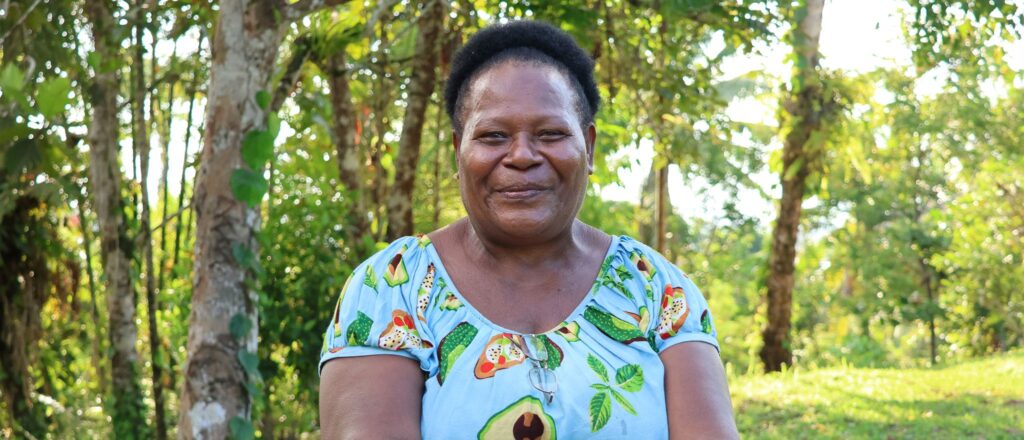
“Vanilla once gave my family good income and a better life,” she says. “It felt like a dream, but when the industry faced major calamities, we struggled financially.”
To break this cycle, the EU-STREIT PNG Programme, implemented by the Food and Agriculture Organization of the United Nations (FAO), stepped in with better methods and solutions. In the fields, the Programme introduced organic treatments for diseases alongside tools and training for precise vine care.
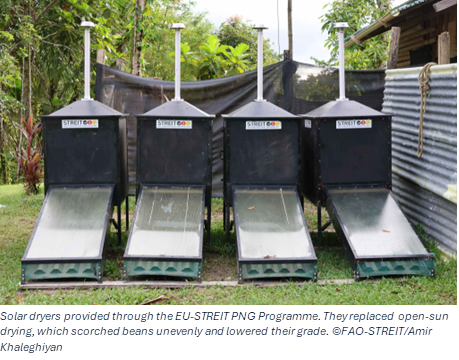
Next, the Programme focused on post-harvest processing by introducing a solar dryer with internal shelves. Traditionally, farmers dried vanilla on open mats under the direct sun, which scorched the pods unevenly and lowered quality. The solar dryer solved this by circulating heat evenly.
“The colour is now even all around,” Nancy says. “Nice, shiny black beans. That is the best quality.”
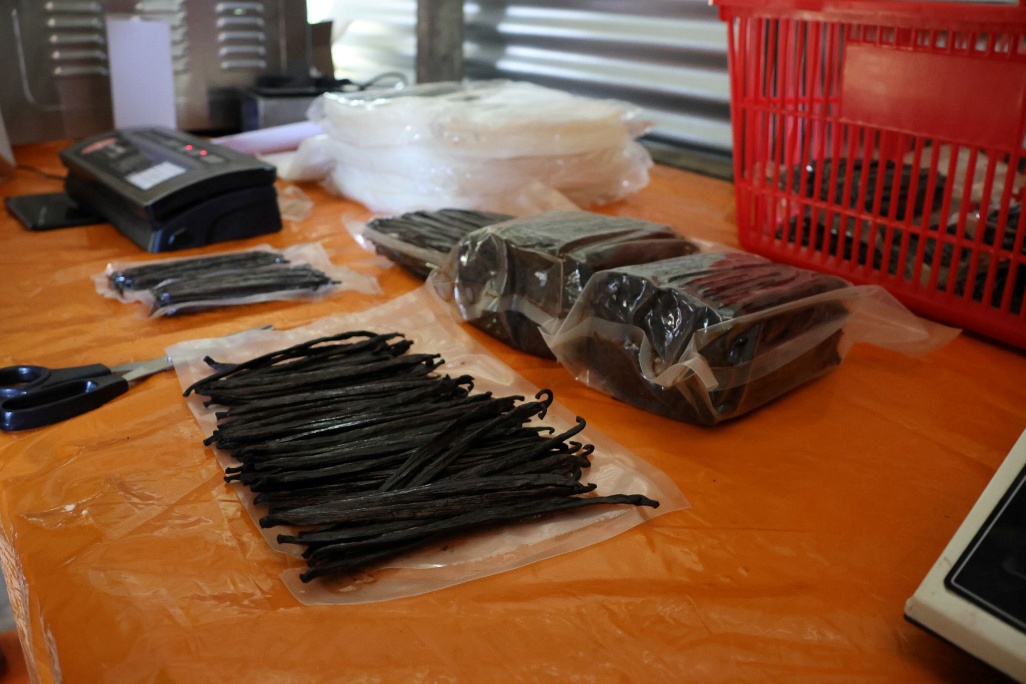
The Programme paired the dryer with a solar-powered vacuum sealer, which stopped panic selling. By sealing the cured beans airtight, Nancy can store her vanilla for years, bypass exploitative local prices, and wait for the right overseas buyers. Her prices now range between PGK350 and PGK600 per kilogram, with an export sale to Thailand hitting that top rate.
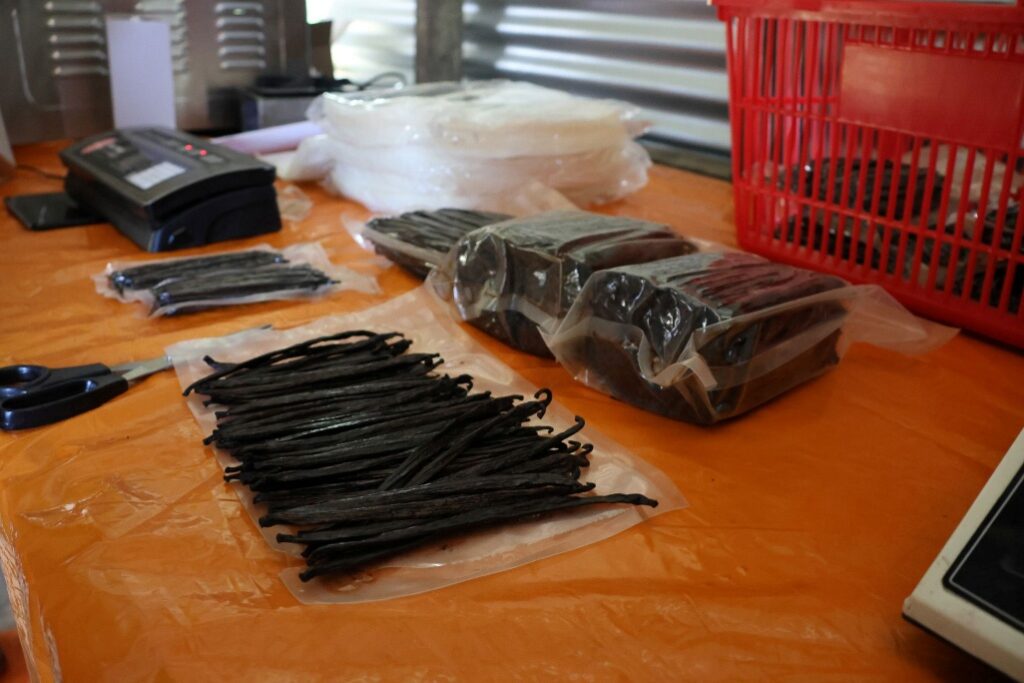
Over four years of using this setup, her business has sold roughly 200 kilograms of cured beans, worth at least PGK70,000. Nancy compares the cash flow of vanilla to cocoa.
“Cocoa is two-week sales,” she says. “It is like people’s fortnight money. But vanilla is like a once-off retirement pay. If you keep 20 kilos and a good buyer comes, you make good money in one hit.”
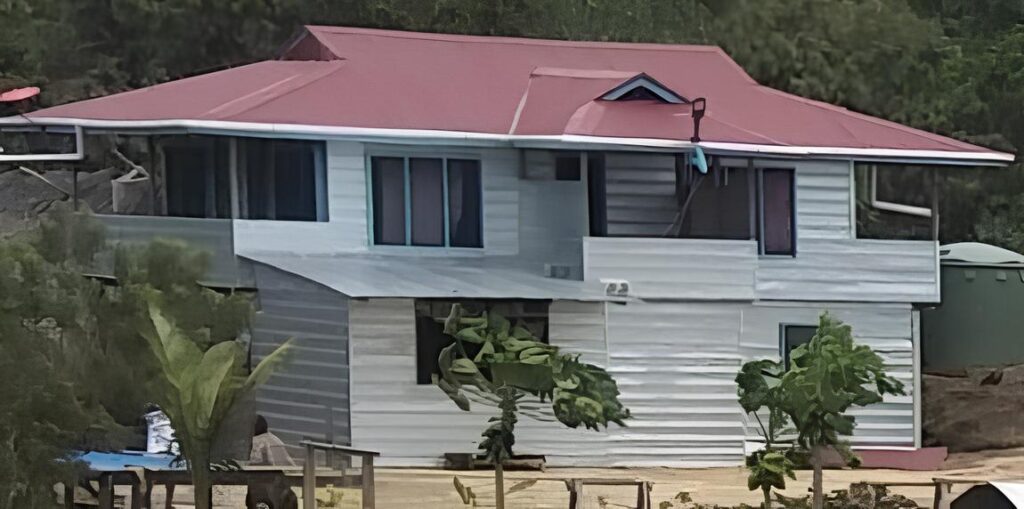
This crop now provides steady money for long-term projects. For Nancy, the earnings built her family a permanent house from timber and concrete blocks, purchased water tanks, and kept her children in school.
To protect these profits from theft, her son, Nollan, built a shade house close to the home. This setup allows more vines to grow in less space under the family’s watchful eye.
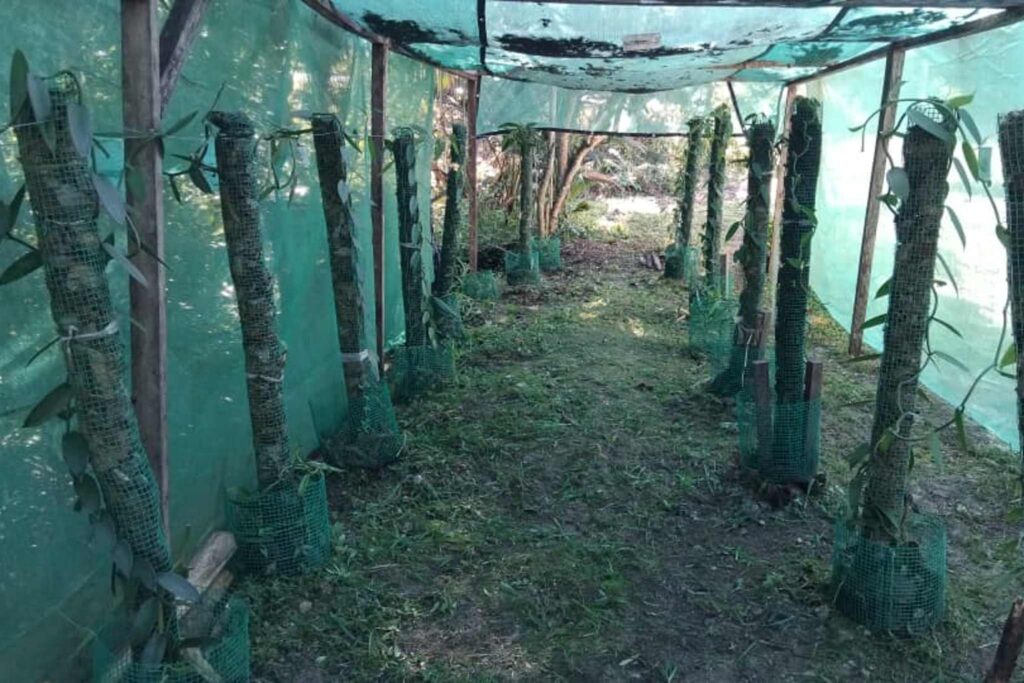
Farmers lost their love for vanilla because they kept losing their harvest, Nancy says. The Programme, she says, has brought the value back, giving them the confidence to grow it again.
The Programme also worked to share the workload and earnings fairly between men and women. Traditionally, women did the heavy daily work of pollination, maintenance, and curing, yet men claimed all the money. To correct this, the Programme introduced a Farming as a Family Business system.
Nancy embraced the training, establishing a 50-member women’s group to help widows, single mothers, and young girls.
“Farming should be a family business, not only the father’s business,” Nancy explains. “When we involve the whole family, the mindset changes.”
Under this system, families manage vanilla income together and openly discuss goals. Today, the 50 women in her group manage their own money and speak in community meetings with confidence.
Her message to the rest of the Sepik region is simple, “stop picking unripe beans, stop rushing the curing process, work as a family, and protect your vines.” Nancy has proved that a farmer who can protect her crop and choose when to sell is running a true business, now, she is waiting for the rest of the region to catch up.

Comments are closed.