
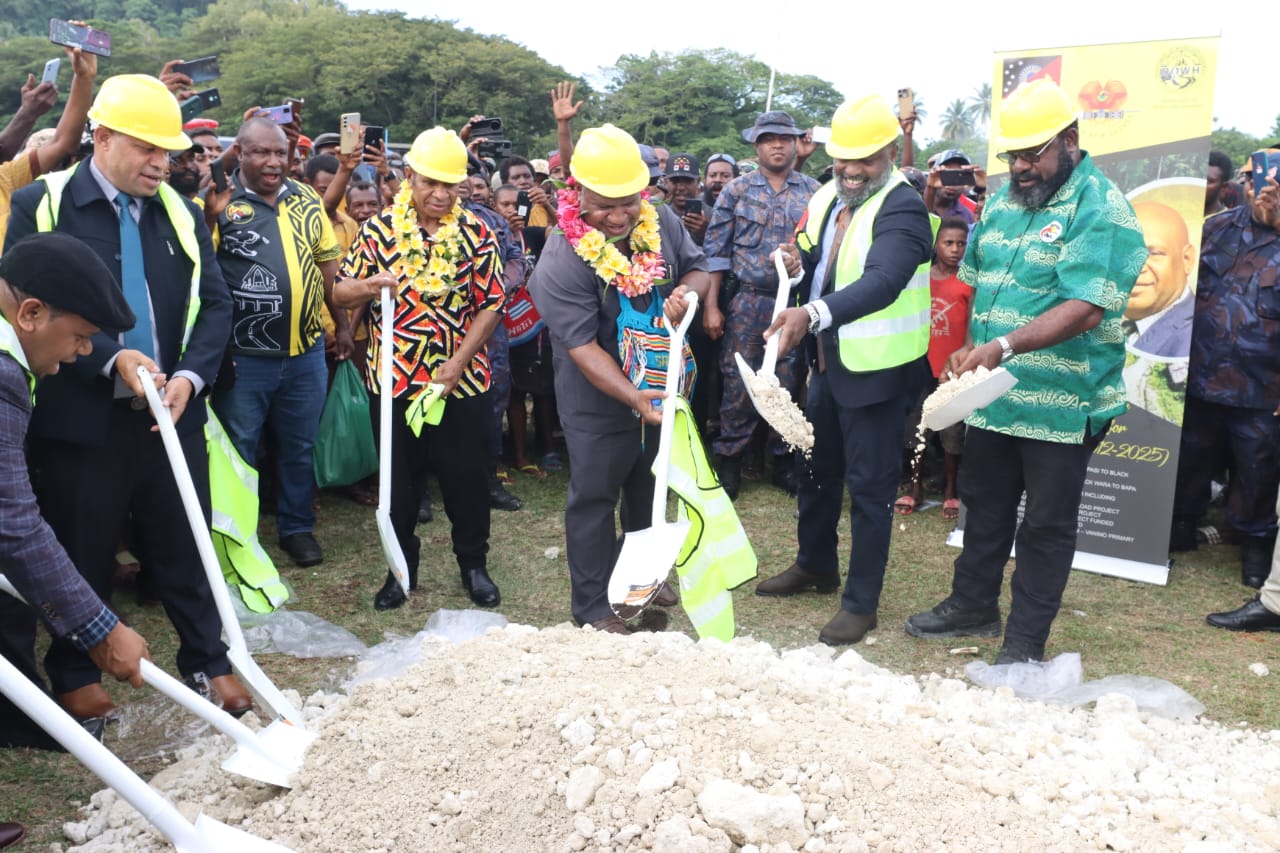
PEOPLE in West Sepik province have witnessed the commissioning of road infrastructures under the Connect PNG Road Program rolled out by the Marape Rosso Government.
Speaking during the launch for the Greater Sepik Region in Vanimo yesterday, Prime Minister James Marape said the Connect PNG Program is the most significant national infrastructure initiative since Independence.
“Our vision is clear, no part of Papua New Guinea must remain isolated,” said Marape.
Roads and bridges that fall under the Greater Sepik Region Component include East and West Sepik Highway, Vanimo to Wutung road on the PNG- Indonesian border and sealing of Passam to Angoram station in East Sepik Province.
Connect PNG is the government´s flag ship program conducted by the Works Department and provincial governments to link up communities to main towns with a road network.
The nation-wide program was launched in 2020 with a vison to build over 16,000 kilometers of road and establish economic corridors across the nation.
Some of the achievements reached so far include the rehabilitation of 3,000 kilometers of sections of the Highlands Highland and Momase Coastal Highway.
The road from Wewak in East Sepik to Aitape in West Sepik was built by the government, however the section of the road from Aitape into Vanimo town was built by logging and oil palm companies.
The Aitape to Vanimo section of the highway gives Papua New Guinean cocoa and vanilla farmers to the route to trade their produce in Indonesia and visit Jayapura.
Seeing this missing link and the economic benefits the road would provide, the prime minister encouraged farmers in the Greater Sepik Region to grow their produce.
Marape said Papua New Guinea had historically developed only about 10,000 kilometers of roads.
Since taking office, Marape said the government had significantly expanded the road network and remained committed to delivering more than 20,000 kilometers of connected roads over the next two decades.
“This is how we open up our country and create the backbone of our economy,” said Marape.
Reflecting on his own upbringing in one of Papua New Guinea’s remote rural communities, Prime Minister Marape said he understands the importance of road access.
“As a young boy in remote Oksapmin, I witnessed my mother lose her son while giving birth because help could not reach us in time. That experience has stayed with me throughout my life and reminds me that remoteness should never determine whether our people live or die,” said Marape.
