
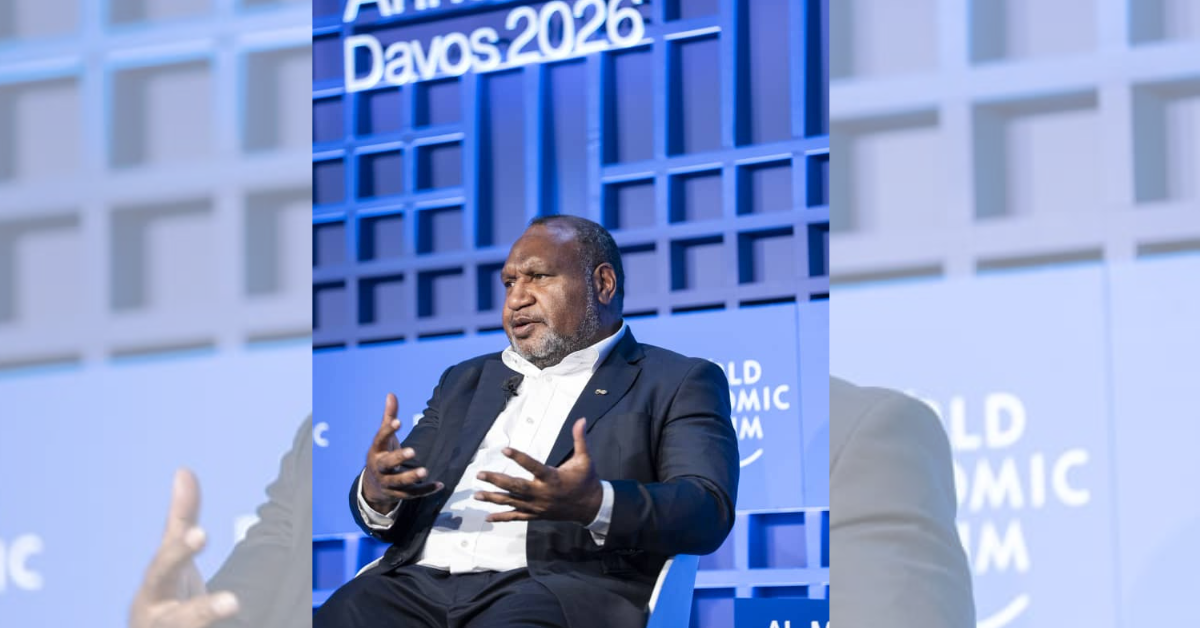
DAVOS, Switzerland – Prime Minister James Marape has positioned Papua New Guinea (PNG) as a premier destination for global capital, highlighting the nation’s strategic neutrality and consistent economic growth during the 2026 World Economic Forum (WEF).
Speaking on a high-level panel titled “Where are we with emerging markets?”, Marape highlighted PNG’s unique ability to thrive despite escalating geopolitical tensions in the Pacific region.
Addressing a global audience of business leaders and policymakers, the Prime Minister emphasized PNG’s role as a diplomatic and economic bridge.
“Papua New Guinea is placed in the middle of East and West, with our cultural affinity to the east and our democratic style of government with the west.”
He reaffirmed the nation’s steadfast foreign policy, which he credited for maintaining a stable investment climate in the five years following the COVID-19 pandemic.
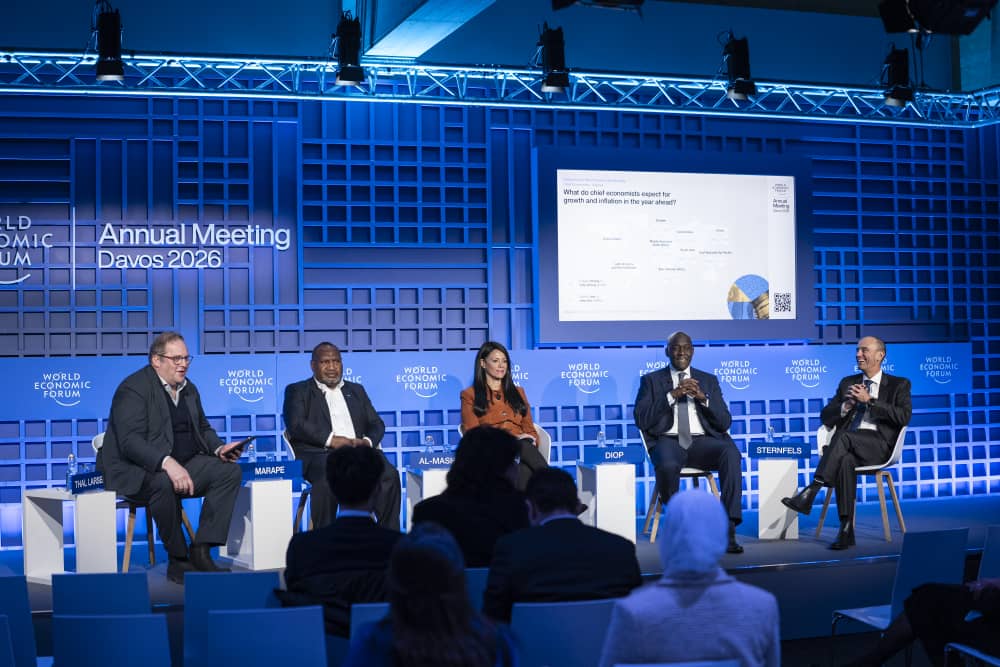
“The government of PNG tries its best to walk the fine line, with the foreign policy of ‘Friends to all and enemies to none’, developing a fine balance with how we relate as an emerging economy in the last five years after COVID.”
The Prime Minister presented a robust balance sheet for the PNG economy, noting that the country has defied global downturns through disciplined fiscal management and a pivot toward the non-resource sector.
“We have posted above 4 percent growth consistently for the first time in the last five years and kept inflation below the running average for the last 50 years.”
“Diversifying away from our traditional anchor economy area in mining and petroleum and shifting to the non-resource sector economy.”
To illustrate the country’s reliability, Marape pointed to the success of major energy players TotalEnergies and ExxonMobil. He highlighted a significant milestone for the nation’s premier LNG project as evidence of PNG’s maturity as a borrower and partner.
“ExxonMobil has operated our biggest LNG project since 2008 with first export in 2014. Seventy (70) percent of the $22billion project was bank financed and recently, that has been retired six months earlier.”
Marape concluded his address by advocating for a shift in global investment patterns toward Southeast Asia and the Pacific. He defined emerging markets as the home of fresh capital that flows toward opportunity whenever traditional markets become restricted.
“In my view, emerging markets are where fresh capital is, capital that knows no boundaries and that capital will flow elsewhere in cases where markets are squeezed or economic focus is restricted.”

Comments are closed.