
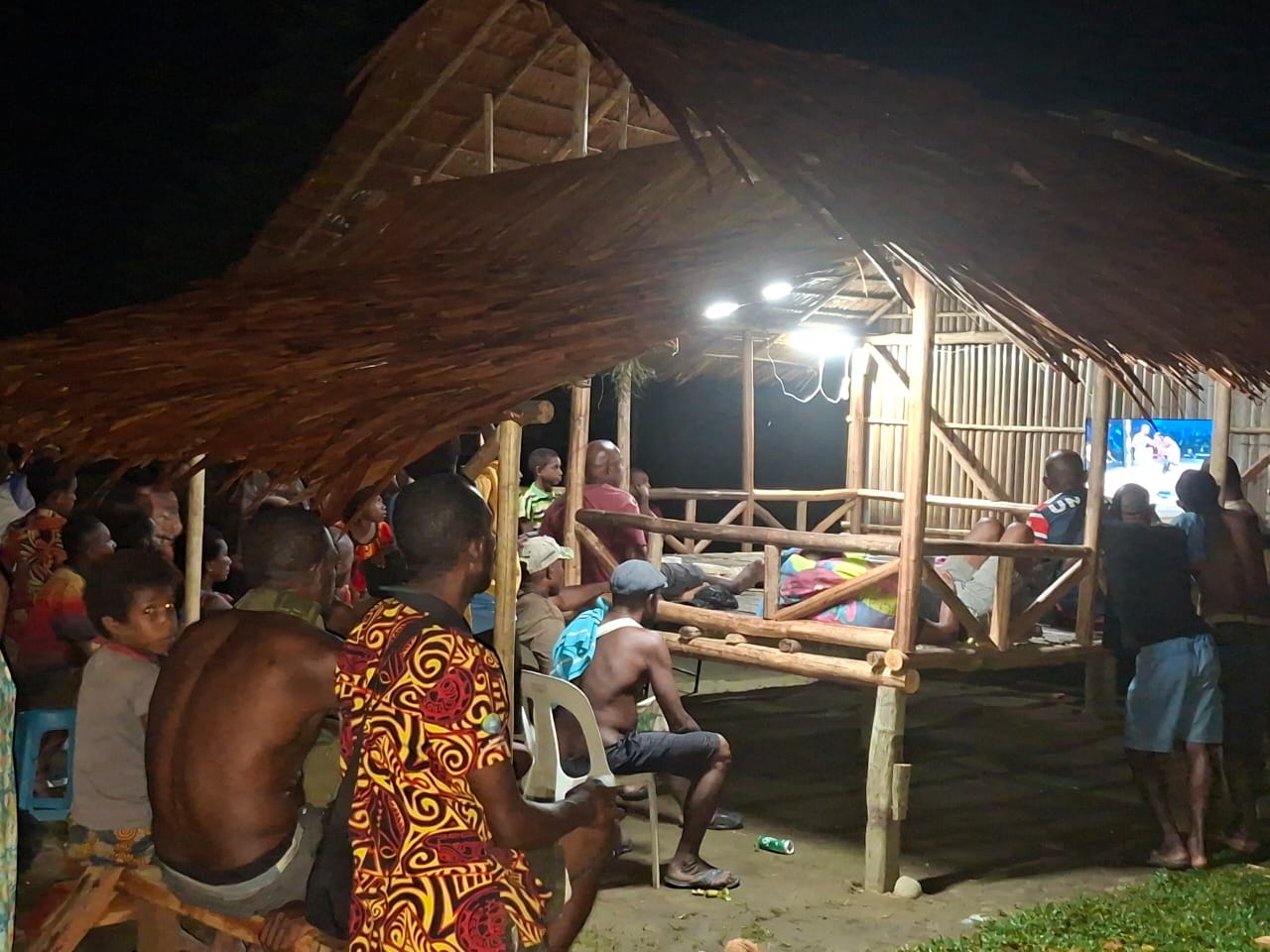
Hundreds of residents in some of Papua New Guinea’s most remote communities are experiencing television or TV for the very first time, courtesy of entrepreneur, fashion pioneer, and philanthropist Natasha Tamanabae.
The project has delivered Digi TV services to Ioma Station, Datama, Iaudari in Ward 7, and Eraga and Dabo Villages in Ward 6 within the Tamata Local Level Government (LLG) of Sohe District. For these areas, which have long lived without access to an electricity grid or telecommunications network, the arrival of television is a transformative lifeline that directly benefits local families.
Rather than just offering entertainment, the initiative connects isolated villages to the rest of the country. By bringing television to these areas, the project directly benefits local families by providing children and adults with valuable educational programming to support learning where resources are scarce. It also keeps families informed with national and international news, public awareness campaigns, and vital emergency information, while connecting remote households to major cultural and sporting moments that unite the country, such as rugby league and the FIFA World Cup.
“This is about ensuring that our people are not left behind,” Tamanabae said.
“Every Papua New Guinean deserves access to information, education and the opportunity to stay connected with our nation and the wider world. This project is about creating hope, expanding opportunities and reminding our rural communities that they matter.”
Building on a legacy of community service inspired by her family and the renowned Tamanabae brothers, Ms Tamanabae focused the project on empowering everyday people and lifting the isolation faced by remote villages.
Community members have enthusiastically welcomed the rollout, praising it as a vital step that allows families to follow national events and participate in the cultural moments that unite the country.
“This milestone is not simply about installing television,” Tamanabae added.
“It is about bringing information where there was isolation, education where there were barriers, and opportunity where there were few resources. Every child deserves the chance to learn. Every family deserves to stay informed. Every community deserves to feel connected.”
Looking ahead, Ms Tamanabae hopes this project will spur further investment in infrastructure, communications, and essential services for remote regions across the country, proving that grassroots commitment can drive lasting change.
“This is only the beginning,” stated Tamanabae.
“Our vision is to see stronger infrastructure, better education, improved healthcare, greater connectivity and sustainable economic opportunities for every rural community. Development should reach every village, regardless of how remote it may be.”
