
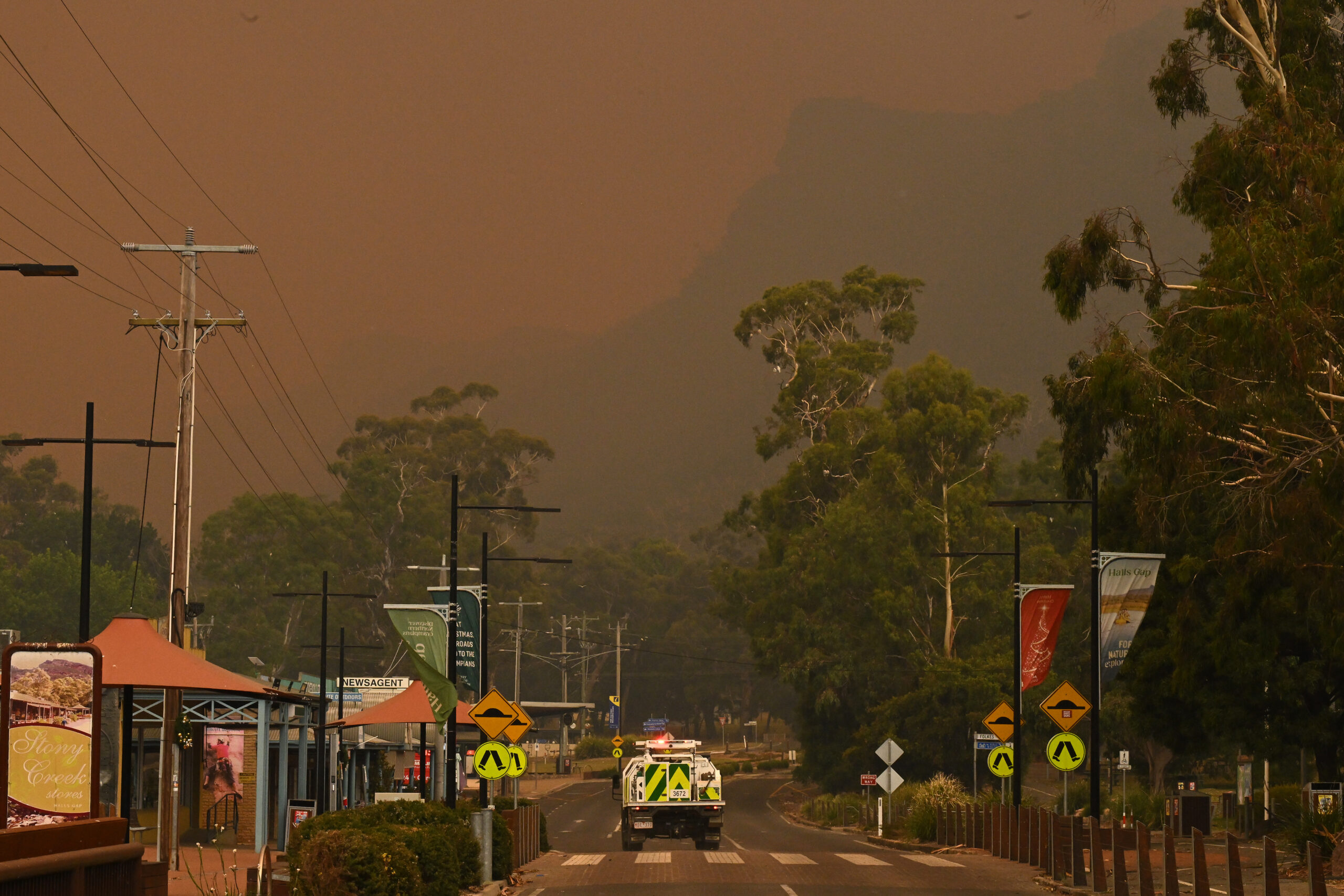
The day Troyene Evans lost her home to the Victorian bushfires, she knew there was “something bad in the air.”
The fire ripped through Harcourt, a small town in regional Victoria, in January with police blockades preventing anyone from getting near.
“The sky was just orange and flat and you could smell the smoke in the air and I was just really panicked about the dogs,” the 51-year-old care worker said.
“I managed to make it back to Harcourt the next day and everything was just black and smoking still.”
Her home, furniture, irreplaceable family photos and grandmother’s jewellery were gone.
Lifeline Australia says it has seen an uptick in extreme weather events impacting the mental health of people across the country.
A poll it released on Thursday found 53 per cent of those surveyed had changed their behaviour because of stress related to extreme weather.
This includes where they live or work, withdrawing from social activities, or giving up hobbies such as gardening; playing or watching sports; and seeing friends.
The poll, which canvassed the views of 1500 people, also found 40 per cent said their mental health or that of someone they know was harmed.
“That strikes me as being really critical knowledge,” Lifeline chief research officer Anna Brooks said.
“We know now from the data, this can really affect their risk of suicide.”
Lifeline Australia receives 400 calls per day to its dedicated 13HELP phone number for people impacted by natural disasters.
For Ms Evans, the smell of smoke has been a trigger in the aftermath of the Victorian fires.
“Campfires were always quite a comforting smell for me, and now it carries with it a bit of anxiety and a bit of stress when I smell anything smoky,” she said.
The overlap between the country’s burgeoning mental health crisis and climate change was apparent for Rebecca Huntley of think-tank 89 Degrees East, which conducted the research.
“This is not just a couple of nervous Nellie climate activists who are suffering from eco-anxiety,” Dr Huntley said.
“Extreme weather events are changing the way that Australians live.”

Comments are closed.