Author

Australian Associated Press

Browsing

A Fijian Super Round is on the radar as the Pacific favorites push for facility upgrades that would allow the rugby-mad nation to host the relaunched concept.

Ten of Super Rugby Pacific’s 11 outfits will descend on Christchurch’s new One NZ Stadium, with hosts the Crusaders to face the NSW Waratahs in the first of five games across three days on Friday.

More than 14,000 people will travel to the event that has been reborn to coincide with the stadium’s symbolic opening after the city’s deadly 2011 earthquake.

Super Round had a lukewarm, three-year lifespan in Melbourne before the Rebels’ demise killed off the concept last year.

It comes a week after Moana Pasifika‘s owners announced they would not fund the franchise beyond this year, creating a familiar uncertainty around the competition’s future.

But, with the tournament otherwise delicately poised through 10 rounds, there is buzz and an expectation the Super Round product will be easier to sell once an estimated 70,000 fans have rolled through the gates on Sunday.

“That should accelerate the discussions that are already going on, in Australia and New Zealand, for 2027 and 2028.”

“We think we’ve got something really positive to sell and a lot of those people will be at Super Round on the weekend.

“And also we’d hope Christchurch would love to host it again.”

Fiji, where the Drua are based and flourish in front of packed home crowds, is an obvious Super Round destination Mesley “has a lot of passion for”.

“It’d be such a great, unique experience and I’d love to do it, but it’s got a bit of work,” he said.

“It’s a longer term conversation because we need hard infrastructure improvements there to host ‘Bula Round’, as they’ve affectionately termed it.”

The Drua have played out of Lautoka and Suva, which holds 15,000 fans, since entering the competition in 2022.

But to host a Super Round the venues will need, at the minimum, lighting upgrades and two extra player changerooms to accommodate the double-headers on Saturday and Sunday.

“It’d be incredible … a great advertisement for the game in the Pasifika region because a lot of the talent is going to rugby league,” former Wallabies halfback Will Genia, born in Papua New Guinea, told AAP.

“League is just everywhere on TV, the (NRL’s) profile and it’s individuals are bigger.

“An event like that in the Pasifika, it just captures the audience again. It keeps them engaged.”

Facility upgrades in Fiji would also benefit the Test side, who have taken their three home games in the new Nations Championship to Europe this year as a revenue-raising initiative.

“It all links in,” Mesley said.

“We’ve met with (Fijian) government officials over past 18 months and the importance of sports tourism, they’re very conscious of it.

“In terms of extending their holiday season, they see the value and rugby is such a big part of their makeup.

“But funding for infrastructure projects is not a simple thing.”

Mesley said they were “planning for all eventualities for 2027” while a window still existed for an investor to save the embattled Pasifika.

“Things need to move quickly,” he said of the prospect of the club being taken over.

“Moana have been looking for new investors for some time, but this gives it a whole lot of publicity.

“The world now knows and there’s clearly a lot of passion out there. There’s something to grab hold of, if you have the right level of funding.”

World Rugby chair Brett Robinson will meet with Super Rugby Pacific officials while in Christchurch.

“We want to get in, have a look and see what the options are and how they benefit Super Rugby Pacific,” Mesley said of conversations around the tournament’s future structure.

“We’re tied into a pretty small window at the moment so any opportunity to get additional weeks, us and our clubs would love that.”
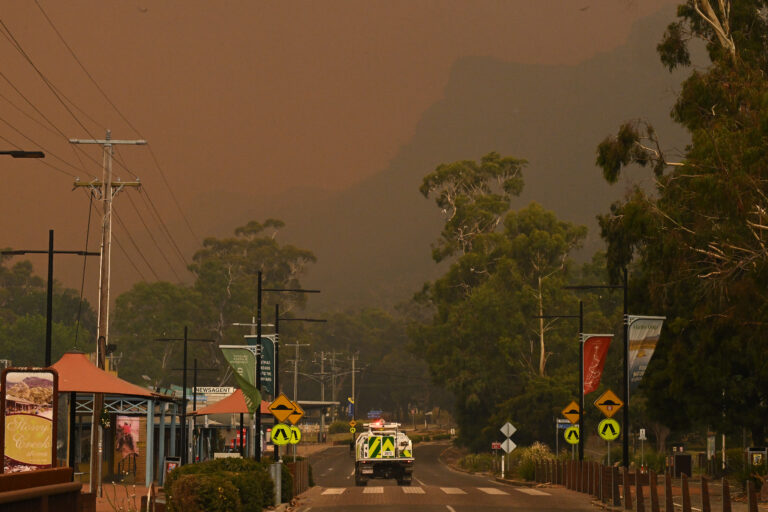
The day Troyene Evans lost her home to the Victorian bushfires, she knew there was “something bad in the air.”

The fire ripped through Harcourt, a small town in regional Victoria, in January with police blockades preventing anyone from getting near.

“The sky was just orange and flat and you could smell the smoke in the air and I was just really panicked about the dogs,” the 51-year-old care worker said.

“I managed to make it back to Harcourt the next day and everything was just black and smoking still.”

Her home, furniture, irreplaceable family photos and grandmother’s jewellery were gone. 

Lifeline Australia says it has seen an uptick in extreme weather events impacting the mental health of people across the country.

A poll it released on Thursday found 53 per cent of those surveyed had changed their behaviour because of stress related to extreme weather.

This includes where they live or work, withdrawing from social activities, or giving up hobbies such as gardening; playing or watching sports; and seeing friends.

The poll, which canvassed the views of 1500 people, also found 40 per cent said their mental health or that of someone they know was harmed. 

“That strikes me as being really critical knowledge,” Lifeline chief research officer Anna Brooks said.

“We know now from the data, this can really affect their risk of suicide.”

Lifeline Australia receives 400 calls per day to its dedicated 13HELP phone number for people impacted by natural disasters.

For Ms Evans, the smell of smoke has been a trigger in the aftermath of the Victorian fires.

“Campfires were always quite a comforting smell for me, and now it carries with it a bit of anxiety and a bit of stress when I smell anything smoky,” she said.

The overlap between the country’s burgeoning mental health crisis and climate change was apparent for Rebecca Huntley of think-tank 89 Degrees East, which conducted the research.

“This is not just a couple of nervous Nellie climate activists who are suffering from eco-anxiety,” Dr Huntley said. 

“Extreme weather events are changing the way that Australians live.”


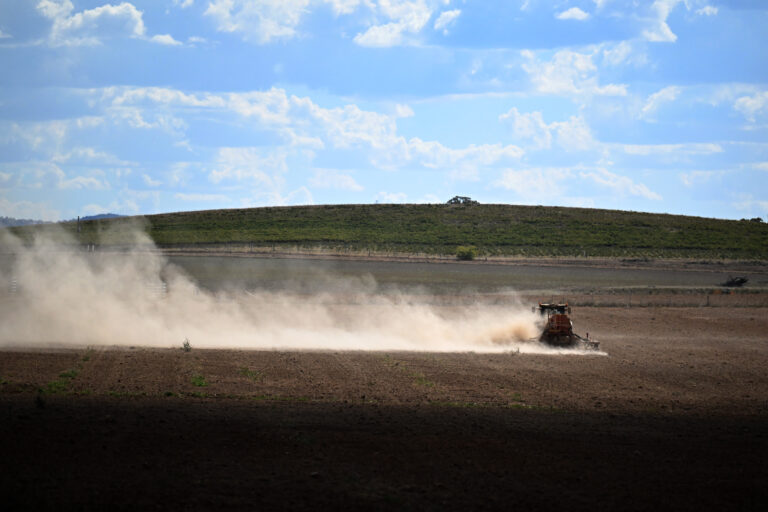
Australia has signed a deal to secure thousands of tonnes of nitrogen-rich fertiliser known as urea from Indonesia, amid disruptions caused by the conflict in Iran.

The federal government helped broker the deal between companies, Incitec Pivot Fertilisers and PT Pupuk Indonesia, amid a major trade tour in the region headed by Prime Minister Anthony Albanese.

Mr Albanese said the deal demonstrates the critical importance of strong relationships with Australia’s regional partners.

“We understand how critical fertiliser is for Australian farmers, for our food production system and the food security of our region,” he said.

Sixty per cent of the supply of urea to Australia for fertiliser travels through the Strait of Hormuz, which has remained closed since US-Israeli strikes launched on Iran in February. 

Agriculture Minister Julie Collins said she has been working around the clock with industry to support fertiliser getting to Australian farmers.

“This guarantees supply of fertiliser to Australian farmers at this critical time,” she said.

“While this is a commercial deal, the Australian and Indonesian governments have been working to support this positive outcome.”

Australia plays a major role supporting food security in Indonesia, Australia’s fourth largest export market for agriculture, fisheries and forestry exports, worth more than $4.7 billion in 2025.

Incitec Pivot President Scott Bowman said while there is more work to do to ensure farmers requirements can be fully met for the upcoming season, the additional volume will go a long way to shoring up supplies.

“This additional volume for the period May to December, at prevailing market prices, is another critical plank in servicing the needs of Australian farmers,” he said.

Mr Albanese cut his trade tour short on Thursday while in Malaysia, heading straight back to Geelong following a major fire at one of the country’s two fuel refineries.

While the fire only damaged part of the facility, there are fears it could lead to fuel shortages, particularly in parts of Victoria.

Earlier he announced Australia had secured 100 million litres of additional diesel from Brunei and South Korea using new strategic reserve powers.


A record spend on defence outside of wartime is still too complacent in the near-term and does not look at the bigger picture, a former defence force chief says.

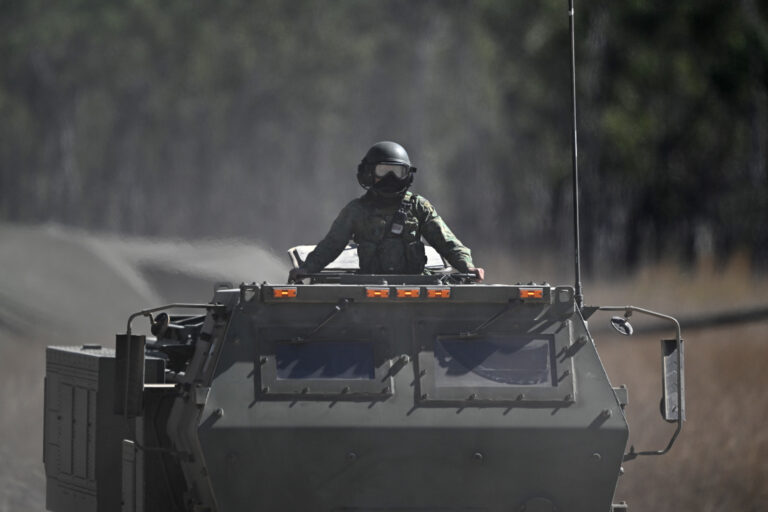
Defence Minister Richard Marles launched the military’s next two-year strategy on Thursday, with an extra $53 billion set aside in the next 10 years.

Submarines, drones and long-range missiles will be prioritised as part of defence infrastructure, as the minister warns of growing global threats.

But former Australian Defence Force chief Chris Barrie said the strategy focused on the immediate future, not the long-term goals required.

“Focusing on the immediate period and current preoccupations and downplaying bigger threats in the future is poor strategic thinking,” he said.

“What is largely missing is a clear statement of the really big issues facing Australia: extreme climate impacts, geopolitical tension, authoritarianism and disinformation, and the existence of large nuclear arsenals now form a single, interconnected security risk environment.

“These elements can reinforce one another in dangerous ways, leading to systemic breakdown.”

Mr Barrie, who is also part of the Australian Security Leaders Climate Group, said the strategy needed to include climate security risks.

“The strategy fails to fully recognise how Australia’s expanding coal and gas exports are perpetuating a cycle of fossil fuel reliance, undermining Australia’s long-term security and global leadership,” he said.

The extra money will lead Australia to increase its defence spend to three per cent of GDP by 2033, up from 2.33 per cent.

The Trump administration had called on allies such as Australia to boost defence spending to 3.5 per cent of GDP.

Australian Strategic Policy Institute executive director Justin Bassi said the defence strategy reinforced the security threats the ADF faced.

“The core theme in the strategy is an approach of self-reliance which is achieved by enhancing our own capabilities while also recognising that the US alliance remains vital to our security,” he said.

“This is a direct rebuttal of those arguing for an independent defence and foreign policy, meaning reduced collaboration with the US, and which would actually be cost-prohibitive.

“While all countries face budget constraints, investing in defence and security now will help deter adversaries and prepare Australia for crises so that we avoid having to spend even more later, which has to be the lesson of the conflicts in Europe and the Middle East.”


Of the 2200 passengers and crew aboard the Titanic, which set sail from Southampton bound for New York, just six were Australian.

But only one Australian born crew member, a young nurse from Adelaide, was among the 700 people to survive the sinking of the “unsinkable” vessel in the early hours of April 15, 1912.

Her name was Evelyn Marsden and while the story of the fateful ship has been retold countless times in the past 114 years, her tale was largely forgotten.

That is until now.

Journalist Lisa Wilkinson, known for her time as editor of bestselling magazines Dolly and Cleo before a successful career in television, now adds second-time author to her credentials with the publishing of The Titanic Story of Evelyn. 

It is a true and never-before-told story of the heroic role played by Evelyn after the Titanic fatally hit an iceberg. 

The book was officially launched at Australia’s National Maritime Museum on Tuesday night with the help of another notable South Australian, former prime minister Julia Gillard.

Ms Wilkinson was compelled to tell the story after realising every retelling of the Titanic, from movies to books to podcasts, seemed to have been written by men.

Even following the disaster the women who had survived were not asked to contribute to any of the inquiries held, as their thoughts and recollections were not deemed useful enough by the men who ran them.

“No one had ever looked at this story through the female lens,” Ms Wilkinson said. 

“Everyone’s read the Titanic story, but not this way … there are so many layers of stories that haven’t been told.” 

The idea for the book first came to Ms Wilkinson three years ago and she wrote it while in the midst of fighting a defamation claim brought by Bruce Lehrmann against Network Ten.

Lehrmann lost the case and his multiple appeal attempts have failed, most recently in the High Court which has brought finality to the case. 

While the two women did not discuss the tumultuous circumstances the book was written in, Ms Wilkinson thanked her family, including husband Peter FitzSimons, daughter Billie and sons Jake and Louis, for their support. 

The women on stage noted that in many ways the arrogance of men had led to the tragedy.

But the Titanic story was also one of duty as most men on board stood back to allow women and children into the lifeboats.

“On the one hand you’ve got men acting they way they did, leading to the outcome it did, and then on the other you’ve got so many who heroically gave up their lives so that women and children would be saved,” Ms Wilkinson said. 

The packed crowd included a number of famous faces from politics, journalism and television.

But Ms Wilkinson was most moved by the attendance of Evelyn’s great niece Patrea, who thanked her for bringing an amazing woman to life on the page.

The book would also ensure remarkable women were not lost to history, Hachette Australia and New Zealand chief executive Louise Stark noted.

“As a society, to move forward and to progress, we need to look back to understand ourselves, and if we are only looking back to the male version of our history, that understanding will never come,” she said.


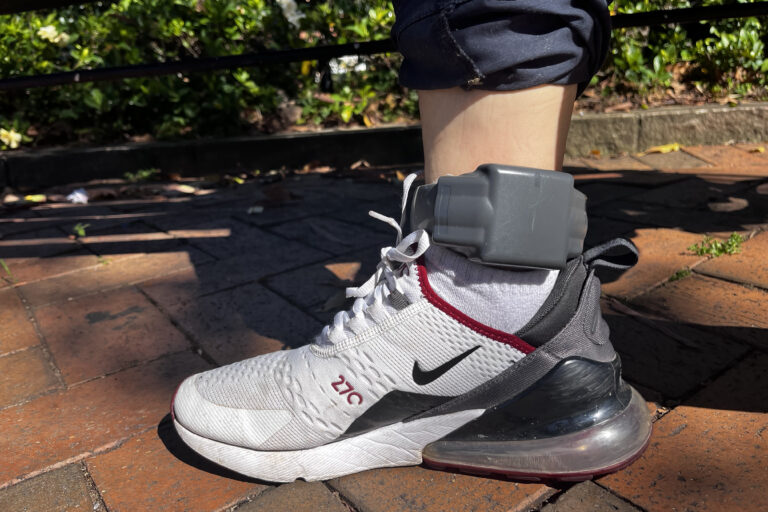
More than 40 asylum seekers, most of whom have committed crimes in Australia, will have their ankle monitors removed and curfews scrapped after the nation’s top court once again threw government policy into chaos.

The High Court ruled in favour of Papua New Guinea-born man, who argued the conditions placed on him after his release from prison were unconstitutional.

In response, 43 foreigners will have their ankle monitors removed and curfews revoked and will instead be placed on conditions similar to being on bail, requiring them to check in regularly at a set location.

The government says it will now focus on deporting the group to Nauru, rather than redrafting immigration laws for a third time.

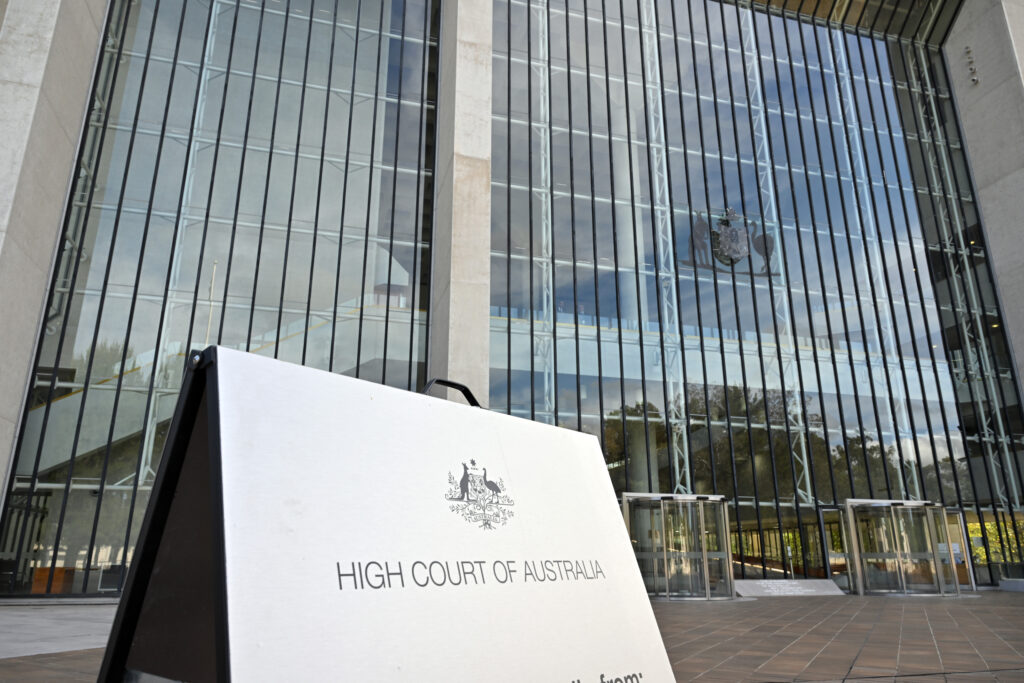
A sign in front of the Australian High Court Building.
The High Court’s latest decision is a fresh blow to government attempts to monitor ex-detainees. (Lukas Coch/AAP PHOTOS)

The 36-year-old who brought the case is known only by the pseudonym EGH19. He was convicted of murder as a child and domestic violence against his wife and her father as an adult.

While prosecuted for the domestic violence, his protection visa was cancelled. He served his prison sentence and the government tried to deport him once he was released.

The man was required to wear a monitoring device at all times and stay at a designated address between 10pm and 6am each day.

The government maintained the measures were necessary to protect the Australian community.

But the High Court, by majority, found the conditions were invalid, in yet another blow to the government’s attempts to monitor people released from indefinite immigration detention.

The monitoring regime was introduced after a landmark 2023 ruling by the same court that indefinite detention was illegal if there was no reasonable prospect of the person’s removal from Australia in the foreseeable future.

The decision led to the release of 150 immigration detainees with criminal records, some of whom had convictions for serious offences such as murder and rape.

A number were arrested for allegedly reoffending after their release, sparking fierce public and political backlash.

The government reacted by introducing laws requiring some of the former detainees to wear ankle monitors and abide by a curfew, but those measures were struck down in 2024. 

Labor was unlikely to redraft laws in response to the High Court’s decision but would instead focus on its plan to deport members of the cohort to Nauru under a secretive deal with the tiny Pacific nation, a senior government source said.

Twenty seven people have had Nauruan visas approved and a further six have travelled to the island country.

The electronic monitoring was never the government’s main focus, Home Affairs Minister Tony Burke said.

“While obviously the government would have preferred a different outcome, the government’s ambition was never about ankle bracelets. If someone has their visa cancelled they should leave,” he said in a statement.

Opposition Home Affairs spokesman Jonno Duniam called for new laws to respond to the High Court ruling to protect the community from the cohort.

“(These people) are some of the most dangerous that could possibly be in our community: convicted sex criminals, convicted murderers … we know what happens when these people are left unchecked,” he told reporters in Hobart.

Refugee advocates welcomed the court ruling, accusing the government of drafting laws on the run with no regard to fairness or the constitution.

“We work with people every day who are affected by these conditions – their lives have been turned upside down by these politicised punishments imposed on them simply because of where they were born,” Asylum Seeker Research Centre deputy chief executive Jana Favero said.

The cost of the High Court challenge will be paid by the federal government.


Copyright Australian Associated Press Ltd.

Pressure remains on Australia to increase foreign aid, a year on from the United States’ catastrophic shake-up of development support.

Tuesday marks the anniversary of President Donald Trump’s return to the White House and an unravelling of foreign aid worldwide.

On day one of his second term, Mr Trump signed a stop-work order at the world’s biggest foreign aid agency – USAID – and froze its multibillion-dollar budget.

Much uncertainty, an Elon Musk review and many legal challenges later, USAID was disbanded and tens of billions sucked from the system, worsening the lives of many of the most in-need populations around the world.

An analysis in medical journal Lancet predicted the cuts killed hundreds of thousands of children under five in 2025, making it the first year this century child mortality has grown.

Other studies suggest four to six million deaths this decade.

Australian Council for International Development chief executive Matthew Maury says the changes have brought “a sharp deterioration in humanitarian and development outcomes globally”.

The staggering impacts in developing nations extend beyond grim mortality statistics.

Reproductive rights were hit by a withdrawal in support for contraceptives, while health outcomes worsened from the axing of programs to provide clean water or treat tuberculosis and other diseases.

A documentary, Rovina’s Choice, highlights the impact of USAID cuts on one South Sudanese mother attempting to keep a sick child alive.

Pacific nations are some of the least-hit, reflecting the US investment prior to the cuts.

However, the region has suffered the ripple effects of major international agencies weakened by mass layoffs, which must re-organise to counter funding shortfalls elsewhere.

The US move also led to other nations gutting their foreign aid budgets, as hard-up governments looked for funds to increase defence spending at America’s behest.

“Probably the most concerning to our sector was when we saw the UK announce aid cuts because they were a centre-left government who was pro-aid, and yet they made cuts,” Mr Maury told AAP.

It’s not clear how much aid has been sucked from the system as the US has introduced new funding streams, notably the “America First Global Health Strategy”.

These are bilateral deals agreed between the US and poorer nations, and nakedly political ones at that, with recipient countries asked to justify how spending might benefit America and American citizens.

“Let’s be frank, governments have always shaped their foreign policy and used their aid budgets with an eye towards national interests,” Mr Maury said.

“But there’s never been such a cold or calculating kind of formula to say, ‘how does this make American citizens’ life better?'”

Australia, notably, did not raid its foreign aid kitty last year.

Foreign Minister Penny Wong marginally lifted Australia’s spending on development assistance at last year’s budget, though not enough to keep pace with inflation.

As a share of gross national income, Australia spends 0.19 per cent on aid, ranking it 28th of 32 developed nations, ahead of just Czech Republic, Greece, Slovakia and Hungary.

This is down markedly from a decade earlier, when Australia spent 0.31 per cent of gross national income, ranking it 13th among OECD nations.

Mr Maury said Australia should join Scandinavian nations which hit the UN goal of giving at least 0.7 per cent in aid.

“We are in a position where we can do more and it’s important for Australia to be seen as a trusted partner who’s going to continue to stand with the region,” he said.

“Ten of Australia’s 15 biggest trading partners were all aid recipients originally. All boats rise when you invest in the wellbeing of the region.”


Copyright @ AAP 2026

Nearly six years after the COVID-19 pandemic sent many city residents over the hills and far away, regional Australia is again experiencing sustained population growth.

Consistent growth in the regions has re-emerged in the last two years, driven largely by city escapees according to research by the Regional Australia Institute.

City residents moving to the country outnumbered migration in the opposite direction by 36 per cent in the September 2025 quarter, the think tank’s Regional Movers Index showed.

The net number of people moving to Australia’s regions increased by 11.8 per cent, slightly below a recent recorded two-year high.

“Planning and investment to accommodate this growth is a key challenge for governments, industry and communities,” the institute said in releasing the index on Monday.

Separate figures from the Bureau of Statistics showed the regional population grew by nearly 114,000 in 2023/24, with the biggest surge on Queensland’s Sunshine Coast.

The growth has long put pressure on regional housing markets and infrastructure.

Dwelling values rose by 2.4 per cent in the three months to October 2025, as buyers shunned higher prices and competitive buying conditions in the cities, according to a recent report by analytics firm Cotality.

Regional rental vacancy rates were 1.7 per cent in the final months of 2025, with rents up 6.2 per cent in the country compared to 4.8 per cent across the capitals.

The Institute has called for a greater focus on the pressures facing regional communities, creating a framework to boost livability, jobs and skills and sustainability by 2032.

The Regional Movers Index, which uses Commonwealth Bank customer data to track population movement, showed Sydney and Melbourne were losing residents to the regions at a higher rate than the other capitals.

The top five areas for regional movers were Queensland’s Sunshine and Fraser coasts, Greater Geelong and Moorabool in Victoria and Lake Macquarie in NSW.

Emerging hot spots for sea and tree-changers were Latrobe, Devonport and the Huon Valley in Tasmania and Wodonga and the Colac Otway Shire in Victoria.

The Tasmanian and Victorian regions were appealing to new residents for their industries, lifestyle and landscape, the bank’s regional and agribusiness executive general manager Kylie Allen said.

“While the outlook is positive, attracting and retaining skilled professionals remains a challenge across regional areas,” Ms Allen said.

“Even with a growing population, some sectors remain under pressure.

“Continued investment in training and upskilling will be key to meeting demand.”


Copyright @ AAP 2026

Last year was the world’s third warmest on record, underscoring a trend already fuelling destructive fires and floods in Australia in the early days of 2026.

Official confirmation from respected climate monitoring outfit Copernicus puts 2025 marginally behind 2023 and 0.13C cooler than 2024, which hangs on as the hottest year on record.

In 2025, the global surface air temperature was 1.47C above the pre-industrial level, with temperatures now averaging above 1.5C – the agreed limit set by signatories of the Paris Agreement – for three years running. 

The global climate pact has not yet been exceeded as it relies on longer-running trends.

But if warming continues as expected, the 1.5C benchmark could be reached by the 2030s – more than a decade earlier than first predicted when the landmark pact was signed.

In Australia, 2025 was tarnished by record-high ocean temperatures, driving widespread coral bleaching off the Western Australian coast and in the Great Barrier Reef.

Elevated ocean temperatures were also thought to have contributed to the intensity and rainfall extremes brought by ex-tropical cyclone Alfred as it barrelled through southeast Queensland and northern NSW.

Griffith University Emeritus professor of science, technology and society Ian Lowe said that since the 1980s, scientists had been warning of both increases in average temperatures as well as more frequent and severe extreme weather events.

“At the moment, we’re seeing appalling bushfires in Victoria and appalling flooding in Queensland,” he told AAP.

“And this is exactly what the science has been telling us.”

Australians had already been warned of a catastrophic summer of fires and another year of warmer ocean temperature could also spell trouble for coral reefs and the tourism businesses reliant on them.

“It’s getting more and more unlikely that the Great Barrier Reef can recover from the succession of bleaching events,” Prof Lowe said.

Globally, the past three years have been exceptionally warm for a few main reasons, the first being the ongoing accumulation of greenhouse gases in the atmosphere trapping in heat.

Carbon sinks, ecosystems that soak up carbon, have also been weakening.

As well, sea-surface temperatures have been particularly high, in part due to an El Nino event but also other climate change-influenced variability. 

Changes in aerosol concentrations has also contributed to the three-year run of particularly elevated global temperatures. 

A neutral to weak La Nina – a weather pattern associated with cooler global temperatures – in the equatorial Pacific contributed to lower air and sea temperatures in the tropics last year than in 2024 and 2023.

The higher temperatures of the two years prior were in part driven by a strong El Nino event, linked to warmer global temperatures. 

Cooler temperatures in some regions were countered somewhat by a warmer polar region, with Antarctica experiencing its highest annual average temperature value, and second-highest in the Arctic.

In early 2025, sea ice across the two poles was at its lowest level since satellite monitoring began in the 1970s.

Prof Lowe was critical of Australia’s commitment to slowing global temperate rise.

“At the state and national level, governments are still behaving as if we can keep approving extensions of coal mines and new new gas field project, which is literally tipping petrol on the fire.”


Copyright @ AAP 2026

Critics who laugh at Hull KR’s chances of beating Brisbane in the World Club Challenge are in for a rude shock insists England international and new Dolphins forward Morgan Knowles.

Knowles was a member of the St Helens side that stunned Penrith 13-12 in the 2023 World Club Challenge at the Panthers’ home ground.

The Robins, reigning Super League champions, will host defending NRL premiers the Broncos at MKM Stadium on February 20 at 6.30am (AEDT).

They have the chance to follow in the footsteps of the Saints and Wigan and keep the trophy in England for the third consecutive occasion.

Knowles, a St Helens legend who has joined the Dolphins in 2026, gets his back up when English Super League teams are written off.

“I think Hull KR, if they play at their best they are a red-hot chance,” Knowles said.

“Super League gets put down a fair bit and that definitely annoys us English blokes over there. So we have definitely got a point to prove.

“Obviously we beat Penrith and then Wigan beat Penrith (16-12) back in the UK as well (in 2024).

“Hull KR will be wanting to do the same. They are a good team and coached well. It will be a good game and I look forward to watching it.”

English teams have a rich history of beating Australian outfits to claim the prestigious trophy.

Wigan are equal with Sydney Roosters with five trophies in the cabinet while St Helens, Bradford Bulls, Leeds Rhinos and Melbourne are next best with three each.

The English have won the trophy 15 of the 29 times the clash has been contested, with the Storm also having the 2010 title stripped for salary cap breaches.

For Knowles, the history of the event makes a mockery of those who dismiss the Super League clubs as inferior to their NRL counterparts.

“It was the same back in 2023 when I came over with St Helens,” Knowles fired.

“Everyone was asking, ‘why are you in Australia?’ They were laughing at us saying,’ ‘it is going to be a cricket score’.

“We were quietly confident in ourselves and obviously got the win and Wigan backed it up the year after.

“The English boys will be confident and I hope Broncos take them lightly and we get another English win.”

The Broncos, captained by veteran Adam Reynolds and boasting superstars such as Reece Walsh, Payne Haas and Kotoni Staggs, will be aiming for their third title after previously winning the trophy in 1992 and 1997.

Hull have never won the title and will playing in their first World Club Challenge, but their impressive 24-6 win over powerhouses Wigan in last year’s Super League decider showcased their class and grit after they earlier won the Challenge Cup final 8-6 against Warrington.

The Robins, coached by highly regarded Australian coach Willie Peters, had four players – Peta Hiku, Mikey Lewis, Jez Litten and Dean Hadley – named in the Super League Dream Team of 2025.


Copyright @ AAP 2026

Pin It