Category

International

Category

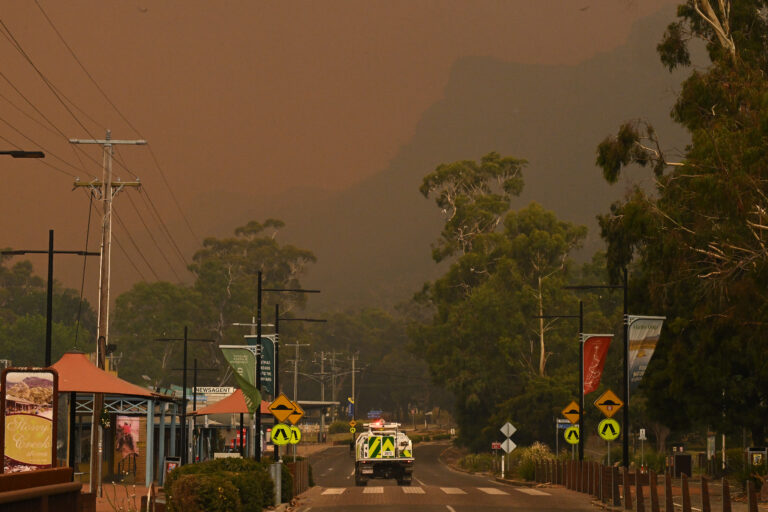
The day Troyene Evans lost her home to the Victorian bushfires, she knew there was “something bad in the air.”

The fire ripped through Harcourt, a small town in regional Victoria, in January with police blockades preventing anyone from getting near.

“The sky was just orange and flat and you could smell the smoke in the air and I was just really panicked about the dogs,” the 51-year-old care worker said.

“I managed to make it back to Harcourt the next day and everything was just black and smoking still.”

Her home, furniture, irreplaceable family photos and grandmother’s jewellery were gone. 

Lifeline Australia says it has seen an uptick in extreme weather events impacting the mental health of people across the country.

A poll it released on Thursday found 53 per cent of those surveyed had changed their behaviour because of stress related to extreme weather.

This includes where they live or work, withdrawing from social activities, or giving up hobbies such as gardening; playing or watching sports; and seeing friends.

The poll, which canvassed the views of 1500 people, also found 40 per cent said their mental health or that of someone they know was harmed. 

“That strikes me as being really critical knowledge,” Lifeline chief research officer Anna Brooks said.

“We know now from the data, this can really affect their risk of suicide.”

Lifeline Australia receives 400 calls per day to its dedicated 13HELP phone number for people impacted by natural disasters.

For Ms Evans, the smell of smoke has been a trigger in the aftermath of the Victorian fires.

“Campfires were always quite a comforting smell for me, and now it carries with it a bit of anxiety and a bit of stress when I smell anything smoky,” she said.

The overlap between the country’s burgeoning mental health crisis and climate change was apparent for Rebecca Huntley of think-tank 89 Degrees East, which conducted the research.

“This is not just a couple of nervous Nellie climate activists who are suffering from eco-anxiety,” Dr Huntley said. 

“Extreme weather events are changing the way that Australians live.”
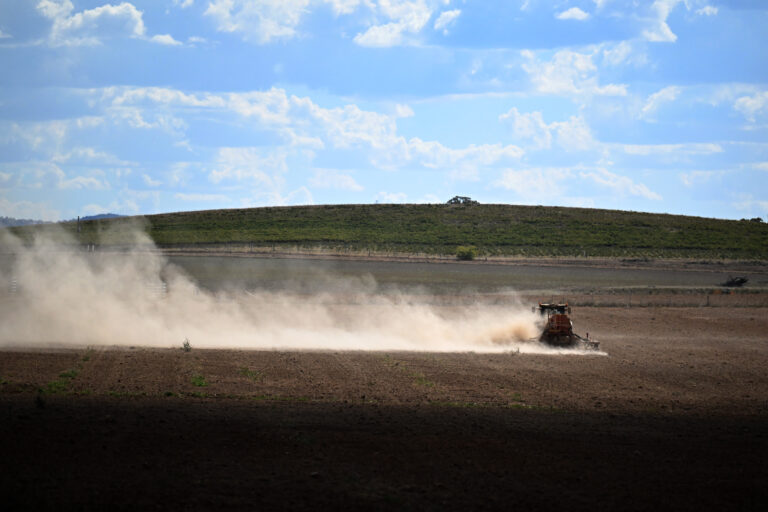

Australia has signed a deal to secure thousands of tonnes of nitrogen-rich fertiliser known as urea from Indonesia, amid disruptions caused by the conflict in Iran.

The federal government helped broker the deal between companies, Incitec Pivot Fertilisers and PT Pupuk Indonesia, amid a major trade tour in the region headed by Prime Minister Anthony Albanese.

Mr Albanese said the deal demonstrates the critical importance of strong relationships with Australia’s regional partners.

“We understand how critical fertiliser is for Australian farmers, for our food production system and the food security of our region,” he said.

Sixty per cent of the supply of urea to Australia for fertiliser travels through the Strait of Hormuz, which has remained closed since US-Israeli strikes launched on Iran in February. 

Agriculture Minister Julie Collins said she has been working around the clock with industry to support fertiliser getting to Australian farmers.

“This guarantees supply of fertiliser to Australian farmers at this critical time,” she said.

“While this is a commercial deal, the Australian and Indonesian governments have been working to support this positive outcome.”

Australia plays a major role supporting food security in Indonesia, Australia’s fourth largest export market for agriculture, fisheries and forestry exports, worth more than $4.7 billion in 2025.

Incitec Pivot President Scott Bowman said while there is more work to do to ensure farmers requirements can be fully met for the upcoming season, the additional volume will go a long way to shoring up supplies.

“This additional volume for the period May to December, at prevailing market prices, is another critical plank in servicing the needs of Australian farmers,” he said.

Mr Albanese cut his trade tour short on Thursday while in Malaysia, heading straight back to Geelong following a major fire at one of the country’s two fuel refineries.

While the fire only damaged part of the facility, there are fears it could lead to fuel shortages, particularly in parts of Victoria.

Earlier he announced Australia had secured 100 million litres of additional diesel from Brunei and South Korea using new strategic reserve powers.


A record spend on defence outside of wartime is still too complacent in the near-term and does not look at the bigger picture, a former defence force chief says.

Defence Minister Richard Marles launched the military’s next two-year strategy on Thursday, with an extra $53 billion set aside in the next 10 years.

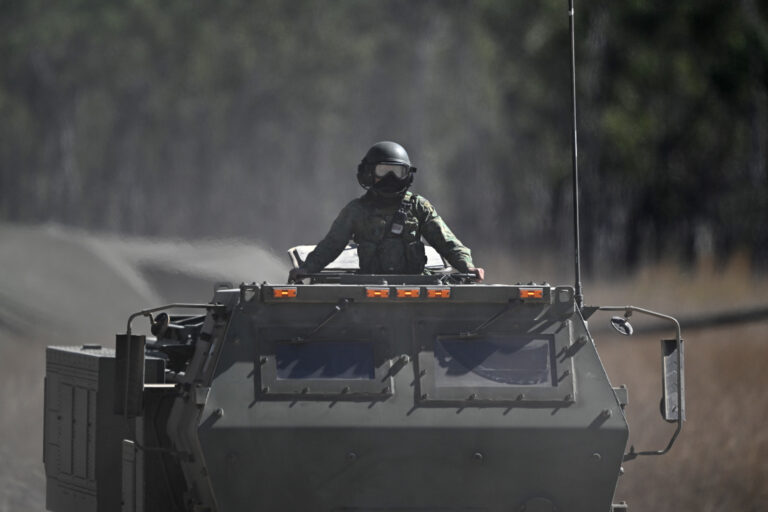
Submarines, drones and long-range missiles will be prioritised as part of defence infrastructure, as the minister warns of growing global threats.

But former Australian Defence Force chief Chris Barrie said the strategy focused on the immediate future, not the long-term goals required.

“Focusing on the immediate period and current preoccupations and downplaying bigger threats in the future is poor strategic thinking,” he said.

“What is largely missing is a clear statement of the really big issues facing Australia: extreme climate impacts, geopolitical tension, authoritarianism and disinformation, and the existence of large nuclear arsenals now form a single, interconnected security risk environment.

“These elements can reinforce one another in dangerous ways, leading to systemic breakdown.”

Mr Barrie, who is also part of the Australian Security Leaders Climate Group, said the strategy needed to include climate security risks.

“The strategy fails to fully recognise how Australia’s expanding coal and gas exports are perpetuating a cycle of fossil fuel reliance, undermining Australia’s long-term security and global leadership,” he said.

The extra money will lead Australia to increase its defence spend to three per cent of GDP by 2033, up from 2.33 per cent.

The Trump administration had called on allies such as Australia to boost defence spending to 3.5 per cent of GDP.

Australian Strategic Policy Institute executive director Justin Bassi said the defence strategy reinforced the security threats the ADF faced.

“The core theme in the strategy is an approach of self-reliance which is achieved by enhancing our own capabilities while also recognising that the US alliance remains vital to our security,” he said.

“This is a direct rebuttal of those arguing for an independent defence and foreign policy, meaning reduced collaboration with the US, and which would actually be cost-prohibitive.

“While all countries face budget constraints, investing in defence and security now will help deter adversaries and prepare Australia for crises so that we avoid having to spend even more later, which has to be the lesson of the conflicts in Europe and the Middle East.”


Of the 2200 passengers and crew aboard the Titanic, which set sail from Southampton bound for New York, just six were Australian.

But only one Australian born crew member, a young nurse from Adelaide, was among the 700 people to survive the sinking of the “unsinkable” vessel in the early hours of April 15, 1912.

Her name was Evelyn Marsden and while the story of the fateful ship has been retold countless times in the past 114 years, her tale was largely forgotten.

That is until now.

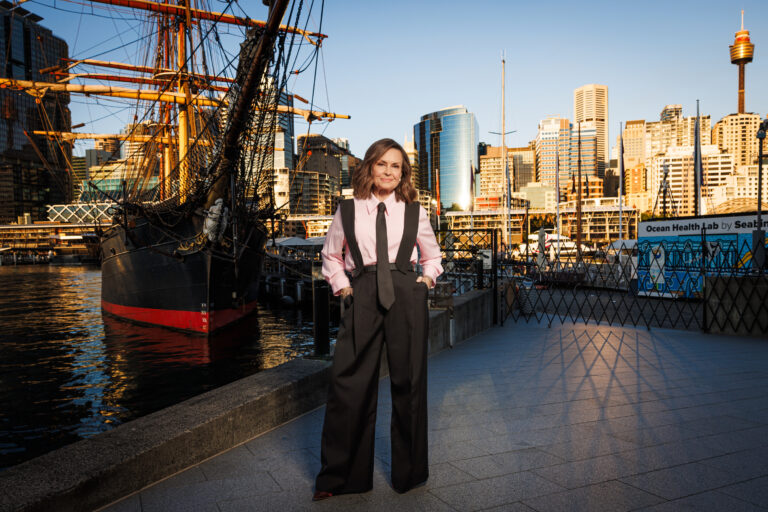
Journalist Lisa Wilkinson, known for her time as editor of bestselling magazines Dolly and Cleo before a successful career in television, now adds second-time author to her credentials with the publishing of The Titanic Story of Evelyn. 

It is a true and never-before-told story of the heroic role played by Evelyn after the Titanic fatally hit an iceberg. 

The book was officially launched at Australia’s National Maritime Museum on Tuesday night with the help of another notable South Australian, former prime minister Julia Gillard.

Ms Wilkinson was compelled to tell the story after realising every retelling of the Titanic, from movies to books to podcasts, seemed to have been written by men.

Even following the disaster the women who had survived were not asked to contribute to any of the inquiries held, as their thoughts and recollections were not deemed useful enough by the men who ran them.

“No one had ever looked at this story through the female lens,” Ms Wilkinson said. 

“Everyone’s read the Titanic story, but not this way … there are so many layers of stories that haven’t been told.” 

The idea for the book first came to Ms Wilkinson three years ago and she wrote it while in the midst of fighting a defamation claim brought by Bruce Lehrmann against Network Ten.

Lehrmann lost the case and his multiple appeal attempts have failed, most recently in the High Court which has brought finality to the case. 

While the two women did not discuss the tumultuous circumstances the book was written in, Ms Wilkinson thanked her family, including husband Peter FitzSimons, daughter Billie and sons Jake and Louis, for their support. 

The women on stage noted that in many ways the arrogance of men had led to the tragedy.

But the Titanic story was also one of duty as most men on board stood back to allow women and children into the lifeboats.

“On the one hand you’ve got men acting they way they did, leading to the outcome it did, and then on the other you’ve got so many who heroically gave up their lives so that women and children would be saved,” Ms Wilkinson said. 

The packed crowd included a number of famous faces from politics, journalism and television.

But Ms Wilkinson was most moved by the attendance of Evelyn’s great niece Patrea, who thanked her for bringing an amazing woman to life on the page.

The book would also ensure remarkable women were not lost to history, Hachette Australia and New Zealand chief executive Louise Stark noted.

“As a society, to move forward and to progress, we need to look back to understand ourselves, and if we are only looking back to the male version of our history, that understanding will never come,” she said.


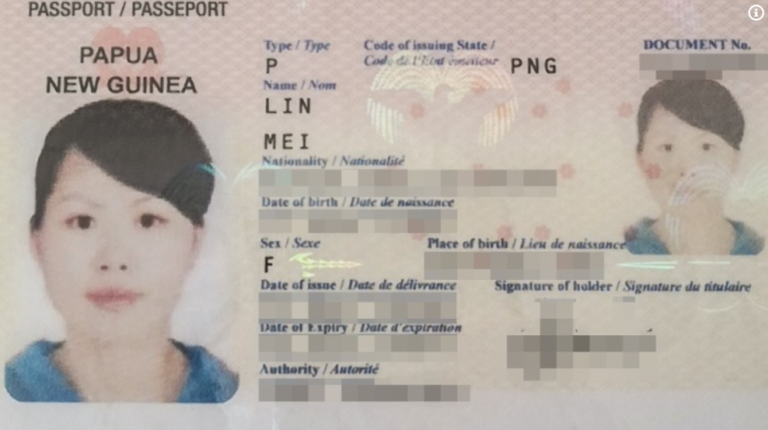
A Chinese-born Papua New Guinea businesswoman with ties to influential figures in the country will stand trial in Australia for her alleged role in orchestrating an audacious “black flight” plot to smuggle crystal methamphetamine across the Torres Strait.

Mei Lin, 43, was committed on Friday (March 20) to stand trial in the Queensland Supreme Court following a four-day hearing at the Brisbane Magistrates Court. Australian prosecutors allege that Ms. Lin oversaw the storage and transportation of more than 71 kilograms (about 156 pounds) of the drug, which was flown from a remote airstrip in Bulolo, Morobe Province to Australia’s far north in a twin-engine propeller plane in 2023.

Her arrest in Brisbane in early 2024 caused a stir PNG, where she had cultivated a sprawling business empire from her base in the port city of Lae. A 2024 investigation by Inside PNG and the Organized Crime and Corruption Reporting Project (OCCRP) revealed that her connections included the country’s former deputy prime minister, and that companies linked to her had even benefited from Australian government assistance to the country.

The looming trial comes as law enforcement grapples with a surge of illicit narcotics trafficking through the Pacific Islands. Transnational criminal syndicates are increasingly utilizing the region as a staging ground, drawn by the highly lucrative drug markets in Australia and New Zealand. 

Papua New Guinea, with its vast, rugged geography, developmental challenges, and pervasive corruption, has become an attractive waypoint. Traffickers exploit the porous border to move drugs into Australia’s remote, tropical north before distributing them southward to major population centers like Sydney and Melbourne.

The advancement of Lin’s case follows the reported convictions of at least four Australians, including the crew of the illicit flight.

Papua New Guinean authorities have independently accused Lin of being a central figure in the smuggling syndicate. Eight people, including a local police officer and a soldier, have been charged in the country and are currently awaiting trial.


More than 40 asylum seekers, most of whom have committed crimes in Australia, will have their ankle monitors removed and curfews scrapped after the nation’s top court once again threw government policy into chaos.

The High Court ruled in favour of Papua New Guinea-born man, who argued the conditions placed on him after his release from prison were unconstitutional.

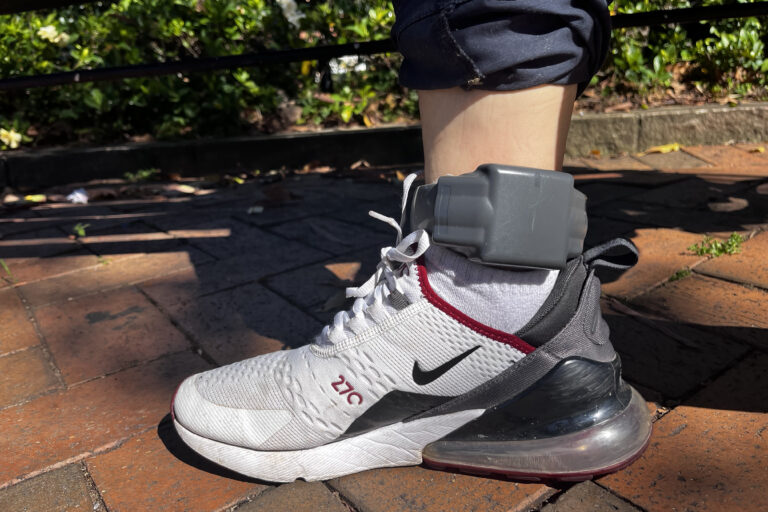
In response, 43 foreigners will have their ankle monitors removed and curfews revoked and will instead be placed on conditions similar to being on bail, requiring them to check in regularly at a set location.

The government says it will now focus on deporting the group to Nauru, rather than redrafting immigration laws for a third time.

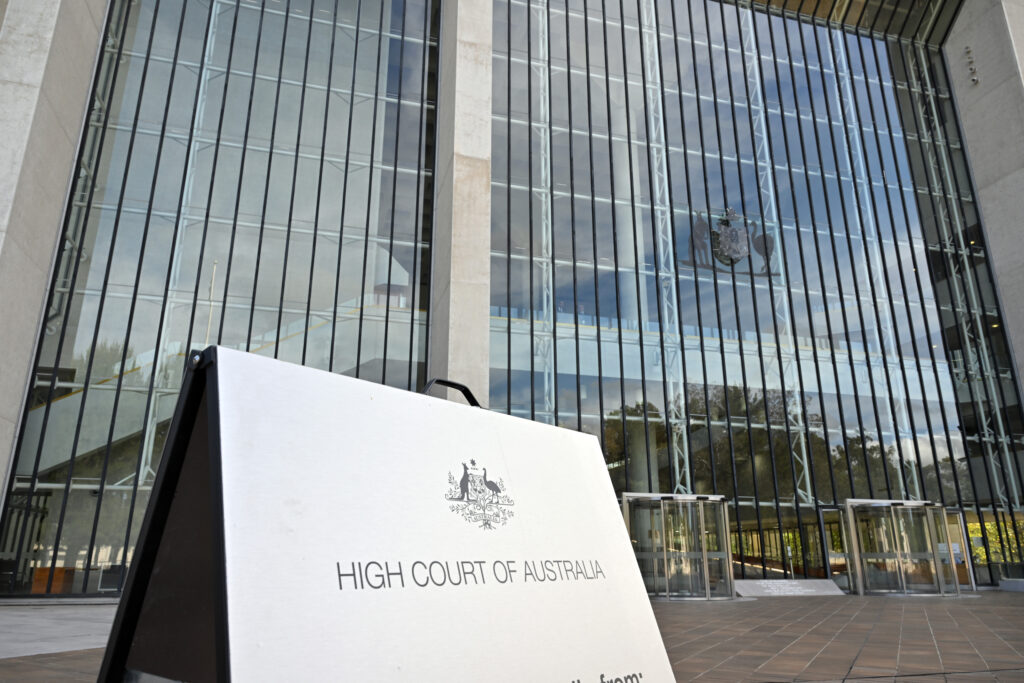
A sign in front of the Australian High Court Building.
The High Court’s latest decision is a fresh blow to government attempts to monitor ex-detainees. (Lukas Coch/AAP PHOTOS)

The 36-year-old who brought the case is known only by the pseudonym EGH19. He was convicted of murder as a child and domestic violence against his wife and her father as an adult.

While prosecuted for the domestic violence, his protection visa was cancelled. He served his prison sentence and the government tried to deport him once he was released.

The man was required to wear a monitoring device at all times and stay at a designated address between 10pm and 6am each day.

The government maintained the measures were necessary to protect the Australian community.

But the High Court, by majority, found the conditions were invalid, in yet another blow to the government’s attempts to monitor people released from indefinite immigration detention.

The monitoring regime was introduced after a landmark 2023 ruling by the same court that indefinite detention was illegal if there was no reasonable prospect of the person’s removal from Australia in the foreseeable future.

The decision led to the release of 150 immigration detainees with criminal records, some of whom had convictions for serious offences such as murder and rape.

A number were arrested for allegedly reoffending after their release, sparking fierce public and political backlash.

The government reacted by introducing laws requiring some of the former detainees to wear ankle monitors and abide by a curfew, but those measures were struck down in 2024. 

Labor was unlikely to redraft laws in response to the High Court’s decision but would instead focus on its plan to deport members of the cohort to Nauru under a secretive deal with the tiny Pacific nation, a senior government source said.

Twenty seven people have had Nauruan visas approved and a further six have travelled to the island country.

The electronic monitoring was never the government’s main focus, Home Affairs Minister Tony Burke said.

“While obviously the government would have preferred a different outcome, the government’s ambition was never about ankle bracelets. If someone has their visa cancelled they should leave,” he said in a statement.

Opposition Home Affairs spokesman Jonno Duniam called for new laws to respond to the High Court ruling to protect the community from the cohort.

“(These people) are some of the most dangerous that could possibly be in our community: convicted sex criminals, convicted murderers … we know what happens when these people are left unchecked,” he told reporters in Hobart.

Refugee advocates welcomed the court ruling, accusing the government of drafting laws on the run with no regard to fairness or the constitution.

“We work with people every day who are affected by these conditions – their lives have been turned upside down by these politicised punishments imposed on them simply because of where they were born,” Asylum Seeker Research Centre deputy chief executive Jana Favero said.

The cost of the High Court challenge will be paid by the federal government.


Copyright Australian Associated Press Ltd.

New economic data released on Tuesday shows that Australia’s underlying inflation rate rose slightly in January, putting fresh pressure on the federal government as it prepares the upcoming budget.

According to the Bureau of Statistics, trimmed mean inflation the Reserve Bank’s preferred measure that ignores extreme price swings hit an annual rate of 3.4%. This is a small increase from the 3.3% recorded in December.

While the “headline” inflation rate, which covers all goods and services, stayed steady at 3.8%, the rise in underlying prices suggests that the cost of living remains stubborn.

The biggest factors pushing prices higher in January were, Housing costs, Food prices, Recreation and culture.

Finance Minister, Katy Gallagher said that the end of certain government power bill discounts played a role in the January numbers.

“We did see last month that inflation ticked up a little and we saw largely as a result of some of those temporary energy rebates coming off that influenced those,” she said.

For many Australians, the news is a double blow. Because inflation is staying higher than the Reserve Bank (RBA) would like, experts now expect further interest rate rises later in 2026. The RBA already lifted the cash rate to 3.85% in February.

Furthermore, the spike in costs means that real wages have fallen for the first time in over two years, as paychecks fail to keep up with the rising cost of groceries and rent.

The government is currently finalizing the Federal Budget, which will be handed down in May. Minister Gallagher said these new figures will be a major factor in their planning.

“The job for the government remains the same, being conscious that the decisions we make right for the economic circumstances of the time,” she said.

“So we’ll see what that data says, and we’ll make decisions based around that.”


Source: Australian Associated Press

Nearly six years after the COVID-19 pandemic sent many city residents over the hills and far away, regional Australia is again experiencing sustained population growth.

Consistent growth in the regions has re-emerged in the last two years, driven largely by city escapees according to research by the Regional Australia Institute.

City residents moving to the country outnumbered migration in the opposite direction by 36 per cent in the September 2025 quarter, the think tank’s Regional Movers Index showed.

The net number of people moving to Australia’s regions increased by 11.8 per cent, slightly below a recent recorded two-year high.

“Planning and investment to accommodate this growth is a key challenge for governments, industry and communities,” the institute said in releasing the index on Monday.

Separate figures from the Bureau of Statistics showed the regional population grew by nearly 114,000 in 2023/24, with the biggest surge on Queensland’s Sunshine Coast.

The growth has long put pressure on regional housing markets and infrastructure.

Dwelling values rose by 2.4 per cent in the three months to October 2025, as buyers shunned higher prices and competitive buying conditions in the cities, according to a recent report by analytics firm Cotality.

Regional rental vacancy rates were 1.7 per cent in the final months of 2025, with rents up 6.2 per cent in the country compared to 4.8 per cent across the capitals.

The Institute has called for a greater focus on the pressures facing regional communities, creating a framework to boost livability, jobs and skills and sustainability by 2032.

The Regional Movers Index, which uses Commonwealth Bank customer data to track population movement, showed Sydney and Melbourne were losing residents to the regions at a higher rate than the other capitals.

The top five areas for regional movers were Queensland’s Sunshine and Fraser coasts, Greater Geelong and Moorabool in Victoria and Lake Macquarie in NSW.

Emerging hot spots for sea and tree-changers were Latrobe, Devonport and the Huon Valley in Tasmania and Wodonga and the Colac Otway Shire in Victoria.

The Tasmanian and Victorian regions were appealing to new residents for their industries, lifestyle and landscape, the bank’s regional and agribusiness executive general manager Kylie Allen said.

“While the outlook is positive, attracting and retaining skilled professionals remains a challenge across regional areas,” Ms Allen said.

“Even with a growing population, some sectors remain under pressure.

“Continued investment in training and upskilling will be key to meeting demand.”


Copyright @ AAP 2026

Australia is currently grappling with a severe mental health crisis among young men, with suicide remaining the leading cause of death for males aged 15 to 24.

Addressing this challenge requires moving beyond traditional methods that often fail to reach those most in need. Leading this shift is Headstart, a Melbourne-based, Gen Z-led organization that is transforming how young men connect with mental health support.

A New Approach: “By Boys, For Boys”

Founded in 2024 by Nick Irving, Headstart was born out of the gaps in the existing mental health system. Irving observed that traditional care often relies on a “blanket approach” that doesn’t always account for the specific factors affecting an individual.

Instead, Headstart utilizes a lived-experience model, hiring workers who have personally navigated mental health challenges, disability, or the juvenile justice system. This peer-to-peer connection is designed to break down the barriers of formal clinical settings.

“A lot of the existing mental health systems are quite one dimensional and set within their ways, but for us it comes down to showing up to what suits the individual best,” Mr. Irving said. “When young men are guided by mentors who genuinely get them, the connection is instant and that’s where growth starts.”

Breaking the Barriers of Traditional Care

For many families, the struggle isn’t just finding care, but finding care that is accessible. Julia, a mother of four, found that traditional supports were ineffective for her son, Thomas, who struggled to even leave his bedroom after the COVID-19 lockdowns.

The “relaxed way of communicating” used by Headstart proved to be the turning point for Thomas. By meeting young men where they are, rather than requiring them to visit an office, the organization fosters a level of trust that clinical environments often lack.

The impact of this relatable approach is clear:

  • 9 in 10 families report improvements in their son’s routine, independence, and wellbeing.
  • Partnerships are already established with Monash Children’s Hospital and the Victorian justice department.
  • Expansion plans are underway to move beyond Melbourne into Sydney and regional areas.

Moving Beyond the “Band-Aid”

The organization’s mission is to move away from temporary fixes toward sustainable growth. As Nick Irving explains, the current system often relies on a “Band-Aid approach” where medication is the primary response. Headstart instead focuses on relatability as the catalyst for change.

“We know that being relatable to these boys and leading with the approach that we do is critical for changing outcomes,” Irving said.

Through this Gen Z-led initiative, Australia is seeing a shift toward mental health care that prioritizes empathy, shared experience, and individual needs over rigid institutional structures.

Support Resources:

  • Lifeline: 13 11 14
  • Kids Helpline: 1800 55 1800 (for ages 5 to 25)
  • Beyond Blue: 1300 22 4636

Source: Australian Associated Press

Pin It