Category

International

Category

Last year was the world’s third warmest on record, underscoring a trend already fuelling destructive fires and floods in Australia in the early days of 2026.

Official confirmation from respected climate monitoring outfit Copernicus puts 2025 marginally behind 2023 and 0.13C cooler than 2024, which hangs on as the hottest year on record.

In 2025, the global surface air temperature was 1.47C above the pre-industrial level, with temperatures now averaging above 1.5C – the agreed limit set by signatories of the Paris Agreement – for three years running. 

The global climate pact has not yet been exceeded as it relies on longer-running trends.

But if warming continues as expected, the 1.5C benchmark could be reached by the 2030s – more than a decade earlier than first predicted when the landmark pact was signed.

In Australia, 2025 was tarnished by record-high ocean temperatures, driving widespread coral bleaching off the Western Australian coast and in the Great Barrier Reef.

Elevated ocean temperatures were also thought to have contributed to the intensity and rainfall extremes brought by ex-tropical cyclone Alfred as it barrelled through southeast Queensland and northern NSW.

Griffith University Emeritus professor of science, technology and society Ian Lowe said that since the 1980s, scientists had been warning of both increases in average temperatures as well as more frequent and severe extreme weather events.

“At the moment, we’re seeing appalling bushfires in Victoria and appalling flooding in Queensland,” he told AAP.

“And this is exactly what the science has been telling us.”

Australians had already been warned of a catastrophic summer of fires and another year of warmer ocean temperature could also spell trouble for coral reefs and the tourism businesses reliant on them.

“It’s getting more and more unlikely that the Great Barrier Reef can recover from the succession of bleaching events,” Prof Lowe said.

Globally, the past three years have been exceptionally warm for a few main reasons, the first being the ongoing accumulation of greenhouse gases in the atmosphere trapping in heat.

Carbon sinks, ecosystems that soak up carbon, have also been weakening.

As well, sea-surface temperatures have been particularly high, in part due to an El Nino event but also other climate change-influenced variability. 

Changes in aerosol concentrations has also contributed to the three-year run of particularly elevated global temperatures. 

A neutral to weak La Nina – a weather pattern associated with cooler global temperatures – in the equatorial Pacific contributed to lower air and sea temperatures in the tropics last year than in 2024 and 2023.

The higher temperatures of the two years prior were in part driven by a strong El Nino event, linked to warmer global temperatures. 

Cooler temperatures in some regions were countered somewhat by a warmer polar region, with Antarctica experiencing its highest annual average temperature value, and second-highest in the Arctic.

In early 2025, sea ice across the two poles was at its lowest level since satellite monitoring began in the 1970s.

Prof Lowe was critical of Australia’s commitment to slowing global temperate rise.

“At the state and national level, governments are still behaving as if we can keep approving extensions of coal mines and new new gas field project, which is literally tipping petrol on the fire.”


Copyright @ AAP 2026

More than half a million accounts have been wiped from Facebook, Instagram and Threads since under-16s were banned from social media in December.

Meta, the tech giant behind the three platforms, said it had removed 544,052 accounts belonging to teens in a compliance update a month after the ban came into force on December 10.

Between December 4 and 11, Meta said it took down 330,639 Instagram accounts, 173,497 Facebook accounts, and 39,916 Threads accounts it believed belonged to those under 16.

Teenagers are also banned from using other platforms such as TikTok, Snapchat, X, Reddit, Kick, and YouTube, with the onus on tech giants to detect and deactivate accounts.

Fines of up to $49.5 million apply if they fail to take “reasonable steps” to remove under-16 users.

Communications Minister Anika Wells said the ban would protect children from online harms and the negative impact of addictive algorithms.

“With one law, we can protect Generation Alpha from being sucked into purgatory by predatory algorithms described by the man who created the feature as ‘behavioural cocaine”,” she said in a National Press Club speech before the ban’s launch.

In its update, Meta took aim at the ban, arguing it failed to increase the safety and wellbeing of young Australians as they could still use platforms like YouTube in a logged-out state.

“The premise of the law, which prevents under 16 year-olds from holding a social media account so they aren’t exposed to an ‘algorithmic experience’ is false,” the tech giant said.

“Platforms that allow teens to still use them in a logged-out state still use algorithms to determine content the user may be interested in – albeit in a less personalised way that can be appropriately tailored to a person’s age.”

App stores should be required to verify age and obtain parental consent before children can download any app, Meta said.

“That is the only way to guarantee consistent, industry-wide protections for young people … and to avoid the whack-a-mole effect of catching up with new apps that teens will migrate to,” it said.

Prime Minister Anthony Albanese has said the rollout wouldn’t be perfect but other countries were following in Australia’s footsteps.

“It won’t be perfect because this is a big change,” he said before the ban kicked.

“I’ve been asked … what will success look like? Success is the fact that it’s happening. 

“Success is the fact that we’re having this discussion, parents are talking to their children around the breakfast table.”

Meta wants the government to engage with tech companies to “find a better way forward” including incentivising industry to raise the standard in providing safe algorithms.


Copyright @ AAP 2026

If you think you’re paying too much for a cup of coffee, there’s good news and bad.

The positive is that the extraordinary spike in the cost of beans, which caused cafes and supermarkets to increase prices in the past two years, has stabilised.

Drought in Brazil, the world’s dominant coffee grower, led to an 86 per cent spike in Arabica bean futures – the benchmark price for wholesale importers – since the start of 2024, Rabobank commodities analyst Paul Joules says.

As conditions gradually recover, prices have retreated from the record highs of about $US4.20 a pound in February 2025 to about $US3.70 a pound, and Mr Joules expects further falls by the end of 2026.

The bad news is that this doesn’t mean consumers will be paying any less for a cup of java any time soon.

Ben White, national sales manager at specialty roasters Padre Coffee, warns coffee drinkers should expect cafe prices to rise another $1 to $1.50 this year.

Commodity prices are still much higher than the pre-2024 average, which rarely climbed above $US2 a pound.

Even if they return to those levels, other cost pressures have been unrelenting.

For Padre, which operates five cafes across Australia and a roasting operation, raw beans account for approximately two-thirds of the cost of producing a bag of roasted coffee, with other inputs such as rent, electricity, wages and packaging comprising the remainder.

Then there’s the cost of turning the roasted beans into a cup of coffee, which means more variable costs such as milk and disposable cups, and overheads including electricity, rent and capital expenses.

“Profits have been absolutely squeezed for cafe operators,” Mr White says.

Coffee prices have undoubtedly risen as a result but despite apocalyptic warnings that Australians will soon find it hard to buy a coffee for single figures, they have not kept pace with costs.

The cost of an average flat white rose about 10 per cent nationwide between 2023 and 2025, according to digital payments data retrieved from cafes across Australia by point-of-sale software provider Square.

In Sydney, a flat white cost about $5.04 on average in 2025, up from $4.61 in 2023. 

Cafes have suppressed price rises amid tepid demand and high competition, which has seen profit margins fall from about 3.5 per cent to less than 2.5 per cent, Australian Restaurant and Cafe Association chief executive Wes Lambert says.

“This is putting a lot of pressure on the industry and the cafe segment in particular, and that’s leading us to see, according to CreditorWatch, one in nine cafes and restaurants going into liquidation in the past 12 months,” he says.

“Ultimately, unless demand increases or prices increase, the industry is going to stay in the doldrums when it comes to profitability.”

Consumers will essentially have to decide on a trade-off between low prices and quality of product and service, Mr White says.

“There’s always going to be a customer base that is price-conscious but ultimately we’ve identified that quality is a really big factor, as well as that customer experience,” he says.

It’s a similar story for chocolate makers, although relief for the industry might come sooner.

Cocoa futures shot up at the start of 2024, amid similar weather disruptions in West Africa, where the bulk of beans are produced.

After peaking at about $US12,000 a tonne, wholesale prices are back down to about $6000 a tonne following an aggressive supply response by growers, including ramping up fertilisers and pruning to boost yields, Rabobank’s Mr Joules says.

Because cocoa and coffee trees take a relatively long time to cultivate compared to other agricultural commodities such as wheat, supply chains are particularly susceptible to inclement weather and shortages take a while to resolve.

Mr Joules isn’t expecting the cocoa market to return to surplus until the 2026/27 season.

Currently, prices remain about two to three times the long-term average.

Independent chocolate makers like Li Peng Monroe and Peter Channells of Canberra-based chocolatier Jasper and Myrtle are particularly susceptible to price fluctuations.

The pair are relatively lucky to have missed out on the worst of the price spike.

They ordered their last major shipment of 150 tonnes of cocoa beans from Bougainville in Papua New Guinea in 2023, when prices were about half what they are now.

But if prices remain at current levels when they need to restock at the end of this year, the viability of the business will be at risk.

“Obviously, I’ve got to find the capital to pay for the shipment, and it’s not tens of thousands – they might be hundreds of thousands (of dollars), so not many small businesses will have that kind of money sitting around,” Ms Monroe says.

Given chocolate makers are also facing the same inflation pressures in their overheads as cafes, Mr Channells says he can’t imagine any producers dropping prices

Growth should at least stabilise now the worst of the supply challenge is over.

“But the chocolate system is highly dependent on what happens in West Africa and that can turn on a dime at any minute,” he says.


Copyright @ AAP 2026

Pacific workers who flock to Australia on temporary visas are too afraid of losing their jobs to fight for better pay and working conditions.

More than 31,000 workers from 10 island nations have signed up for the Pacific Australia Labour Mobility scheme to work across the country in roles employers cannot fill.

Regarded as one of Australia’s flagship development programs for the Pacific, employees fill jobs in industries such as agriculture, meat processing and aged care while also providing workers with desperately needed income to send home.

However, a survey of 370 PALM scheme workers by the Migrant Justice Institute found widespread issues, with many fearing retaliation for speaking up.

The study found more than 64 per cent of workers would change employers after being underpaid and facing unsafe working conditions, however the majority kept their silence because they were afraid to lose their jobs.

Another 33 per cent were worried about causing problems for co-workers, and 32 per cent were afraid they would be given fewer hours or even more challenging work.

One in four were afraid of never being allowed to return to Australia.

“Palm workers can’t talk because they don’t have any right this is due to the visa status Palm workers are holding,” a Fijian worker from NSW said. 

“They can’t leave their work if they find hardship at work.”

A Queenslander worker agreed, telling researchers they “did as they were told”.

“(We) take whatever you’re given and be thankful that you’re given a job with good money, compared to what you get in Fiji,” she said. 

Workers can access a dedicated help line within the Department of Employment and Workplace Relations and Country Liaison Officers from their home governments.

However, the survey found that these safeguards are ineffective. 

“Unless workers have the possibility to change employers when things go wrong, they won’t speak up,” said associate Professor Laurie Berg, Co-Director of Migrant Justice Institute. 

“Fear of losing their job, and their ability to participate in the program and return, are powerful forces keeping them silent – 97 per cent of workers in our survey want to work in Australia again.”

“The federal government has allocated significant resources to worker support in the PALM scheme, but these initiatives are not empowering workers to come forward with concerns about working conditions or even workplace safety.”


Copyright @ AAP 2025

Eighty years after the end of World War II, Australians have paused to reflect on the sacrifices made for peace. Commemorations for Victory in the Pacific (VP) Day were held across the nation on Friday, honoring those who served and fell.

In Melbourne, Maureen Bell proudly wore her father Bert Jones’s war medals at the Shrine of Remembrance. She recalled her dad, who served in New Guinea, often telling funny stories to ease the pain of his experiences.

“He said he was called Screamer because they would play AFL football in New Guinea,” she reminisced, later learning the nickname was due to his loud personality.

Despite her pride, Ms. Bell expressed a somber view on the state of the world today.

“It’s important to honor those that have gone before us and made incredible sacrifices,” she said.

“But we don’t seem to learn from it. We keep doing it unfortunately.”

At the Sydney service, Phil Ward honored his father, a survivor of internment and the Burma railway. He described the commemorations as a moment of “enduring gratitude” for those who defended freedom.

Prime Minister Anthony Albanese paid tribute to the nearly one million Australians who served, 40,000 of whom never returned. He called the war a “nightmare made real” by human beings.

RSL Victoria President Mark Schroffel noted the sorrow that accompanies the victory, remembering the “unsung heroes who never returned home.”

He emphasized the importance of preserving their memory, stating, “Nobody really wins.”

Australia played a vital role in the Pacific theater, initially fighting in Malaya and Singapore before focusing on the defense of the mainland after the bombing of Darwin in 1942.

Federal Veterans’ Affairs Minister Matt Keogh described VP Day as marking the end of “the most devastating global conflict in human history.”


Source: Australian Associated Press

Australians are consuming record amounts of meth, cocaine, and heroin, according to the latest wastewater analysis. The findings, released by the Australian Criminal Intelligence Commission, reveal that nicotine use is also on the rise.

This insatiable demand for illicit drugs is a boon for international crime groups and dealers who are profiting from Australia’s lucrative market. The commission’s analysis, which began in 2016, detected a surge in the consumption of major illicit drugs nationwide.

In the year leading up to August 2024, Australians consumed more than 22 tonnes of meth, cocaine, heroin, and MDMA (ecstasy). This drug consumption has fueled the illicit drug trade, with an estimated $11.5 billion spent on these substances.

Methamphetamine (ice) consumption rose to an estimated 12.8 tonnes. Use of other drugs also saw significant increases: cocaine was up almost 70%, MDMA nearly 50%, and heroin almost 15%.

According to Shane Neilson, a drug specialist with the commission, the market is rebounding after a drop in consumption due to tighter border controls and lockdowns during the COVID-19 pandemic. The high prices Australians are willing and able to pay compared to other global markets are driving the business.

Mr. Neilson explained that drug traffickers will send tonnes of product to Australia’s borders, knowing that whatever gets through will generate enough profit to outweigh any losses from seizures.

“It’s just a relentless determination of transnational and domestic serious and organized crime groups to continue to supply the Australian market,” he said.

Organised crime groups are also believed to be behind a rise in illicit tobacco, though it’s impossible to determine how much of the nicotine consumed was obtained on the black market. Ketamine use is also increasing, with forensic analysts believing most of the drug being consumed is illicit rather than for medical or veterinary purposes.

A similar situation exists with cannabis. While thousands of people are medically prescribed the drug.

“Although the number of users of medicinal cannabis is increasing, it’s small relative to the overall use of cannabis,” Mr. Neilson noted.

The crime commission stated that the multi-billion-dollar expenditure on illicit drugs sends profits solely to organized criminals.

“There is no taxation on these profits, and economically it does have an impact,” Mr. Neilson said.

The latest National Drug Strategy Household Survey found that nearly one in two Australians aged 14 and over (10.2 million people) have used an illicit drug in their lifetime. An estimated one in five (3.9 million) have used one in the past 12 months.


Source: Australian Associated Press

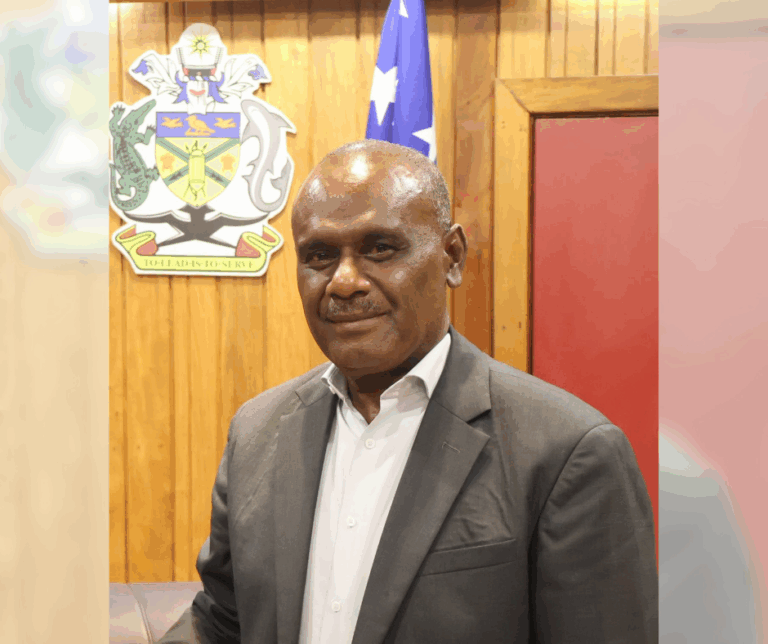
SOLOMON Islands Prime Minister, Jeremiah Manele’s recent decision to exclude global powers from the upcoming Pacific Islands Forum (PIF) leaders’ meeting has sparked considerable debate in Western media.

While some outlets have framed it as a snub or a sign of growing Chinese influence, a closer look at Manele’s background as a seasoned diplomat suggests a more strategic motivation.

Having served in various diplomatic roles prior to becoming Prime Minister, Manele is known for his measured approach and deep understanding of international relations.

His comments regarding the PIF decision, therefore, should not be dismissed as mere oversight or the result of external pressure.

Diplomatic Background drives Strategic Move

Prime Minister Manele’s decision is deeply rooted in his extensive background as a career diplomat.
For decades, he has worked to advance the Solomon Islands’ interests on the international stage, giving him a unique perspective on managing relationships with powerful nations whilst prioritizing regional unity.

He began his career as a desk officer at the Ministry of Foreign Affairs and External Trade (MFAET) in 1993.

Manele’s experience includes serving as a counselor and later Chargé d’Affaires at the Solomon Islands Permanent Mission to the United Nations in New York from 1997 to 2002.

He also held senior roles within the government, including Permanent Secretary of the MFAET and Secretary to the Prime Minister and Cabinet. These positions have given him a comprehensive understanding of the domestic and international considerations that shape his nation’s foreign policy.

In explaining the rationale behind the move, Manele explicitly referenced the 2023 Rarotonga Leaders’ Communique.

“It is a sovereign decision for Solomon Islands as the host. We are deferring the dialogue partners meeting because the process for the review and reform of the Post-Forum Dialogue is ongoing,” Manele says.

This emphasis on regional ownership and the need for a strengthened internal approach to engaging with external partners emphasizes a strategic objective.

Manele is seemingly prioritizing the unity and autonomy of the Pacific Islands Forum, while allowing member states the space to define their own terms of engagement before being potentially pulled in different directions by competing global interests.

“The deferral aims to give the region time to strengthen our collective approach to engaging with our partners,” he further elaborated.

While the potential participation of Taiwan and China’s strong opposition are widely speculated to be a contributing factor, Manele’s public statements have consistently focused on the procedural aspects and the need to reinforce the Forum’s internal processes.

This diplomatic manoeuvring could be interpreted as an attempt to prevent a divisive issue from overshadowing the core agenda of the PIF, which traditionally centers on pressing regional concerns like climate change, the protection of the Pacific Ocean, and sustainable development.

The decision has elicited varied reactions from both within, and outside the Pacific.

While some leaders have voiced concerns, others appear to understand the strategic rationale.

President of Palau, Surangel Whipps Jr, whose nation maintains ties with Taiwan, has publicly supported the deferral, suggesting a degree of regional understanding for Manele’s approach.

Ultimately, Jeremiah Manele’s diplomatic background lends assurance to the interpretation that the decision to defer dialogue partners is a calculated move, prioritizing regional solidarity and a more unified approach to external engagement.

Whether this strategic gambit will serve the long-term interests of the Blue Pacific remains to be seen, but it undoubtedly reflects a deliberate and well-meaning effort to navigate the complex geopolitical landscape with the region’s best interests at heart.


Two emerging investigative newsrooms in the Pacific – In-depth Solomons and Inside PNG – have launched a new collaboration designed to strengthen cross-border investigative journalism in the region.

As part of the partnership, two Inside PNG journalists are currently in Honiara on a two-week attachment with In-depth Solomons. 

The initiative aims to strengthen collaboration between the two newsrooms, both member centres of the Organized Crime and Corruption Reporting Project (OCCRP), the world’s leading network of investigative journalists.

In-depth Solomons co-founder and editor Ofani Eremae said the initiative is about more than just newsroom exchange.

“It’s about building lasting professional ties and working together on stories that transcend national borders,” Eremae said.

“Our vision is to strengthen collaboration between investigative journalists in the Pacific,” he added.. 

“By working side by side, sharing skills, and tackling stories together, we can better expose issues that affect our countries and the region as a whole.”

Pacific journalists from In-depth Solomons and Inside PNG with Deputy New Zealand High Commissioner to Solomon Islands
New Zealand’s Deputy High Commissioner to Solomon Islands, Her Excellency Rebecca Williams (third from right) with staff from the Organized Crime and Corruption Reporting Project (OCCRP), Inside PNG and In-depth Solomons during a lunch meeting this week, at Mendana Hotel, Honiara. The New Zealand Government is also a proud partner supporting both independent newsrooms in their mission to strengthen investigative journalism across the Pacific.

Inside PNG Managing Director, Kila Wani, who is part of the visiting team alongside colleague Helen Sea, said the partnership offers a unique opportunity for Pacific journalists to share experiences and perspectives.

“This attachment is not just about learning – it’s about collaborating on real stories and strengthening the ties between our newsrooms,” Wani said. 

“We’re excited to work with the In-depth Solomons team and explore ways to tell stories that matter to our people.”

Both newsrooms have been recognised for their fearless reporting on corruption, governance, and environmental issues. 

This partnership, Eremae says, will help amplify their impact and contribute to a stronger, more connected investigative journalism community in the Pacific.

The exchange is expected to include joint story projects, newsroom training, and ongoing collaboration beyond the attachment period.

It marks the first of its kind in the Pacific, setting a precedent for regional media cooperation on investigative reporting. It also lays the groundwork for future joint investigations into pressing issues like transnational crimes and political accountability within the region.

“We share a common mission,” Eremae said. “And together, we can make our stories – and our voices – even stronger.”


This article is a joint collaboration by Inside PNG and In-depth Solomons.

New Zealand has become the first country to withdraw from the Beyond Oil and Gas Alliance (BOGA), a global group of governments dedicated to transitioning to cleaner energy. This decision, announced by Climate Minister Simon Watts, confirms the current New Zealand coalition government’s pivot towards embracing fossil fuels.

Since coming into power in November 2023, Prime Minister Chris Luxon’s government has rolled back previous environmental policies. This includes overturning a ban on offshore oil and gas exploration, originally put in place by the Jacinda Ardern government, and fast-tracking mining projects, even for coal.

Mr. Watts explained that these actions made New Zealand’s continued membership in BOGA inappropriate.

“The New Zealand government made the decision to withdraw, in good faith, our associate membership, and informed the alliance of this decision on 21 June, 2025,” he stated.

New Zealand initially joined BOGA in late 2021 at COP26, the UN climate conference in Glasgow, after being invited by co-founders Costa Rica and Denmark. Internal government documents at the time suggested that joining would be a “useful vehicle for advancing effective global climate action” and noted that it “does not involve binding legal commitments.”

The move has drawn sharp criticism from environmental groups.

Amanda Larson, a spokesperson for Greenpeace Aotearoa (New Zealand), condemned the government’s support for both mining and “intensive livestock” agriculture, which she said were “two of the world’s most polluting industries.”

Ms. Larson also highlighted recent international scrutiny, pointing out that New Zealand’s government was criticized by the Financial Times in May for accounting practices that downplay the impact of methane emissions from agriculture.

“It is the first time in Luxon’s political or business career that he has made the front page of the Financial Times, and it was humiliating. He should expect more international criticism to come,” Ms. Larson added.

New Zealand held an associate membership in BOGA, alongside California and Belize, but has now been removed from the alliance’s website.

Resources Minister Shane Jones dismissed BOGA as “an indulgent, vanity-belief community.”


Source: Australian Associated Press (AAP)

A woman with ties to Papua New Guinea is facing serious charges in Australia, accused of luring young Papua New Guineans with promises of education scholarships and then forcing them to work on farms. She has been charged with human trafficking and debt bondage offences.

The woman, who holds dual Australian and Nigerian citizenship and is based in PNG, was arrested at Brisbane Airport in Australia on Wednesday after arriving from Papua New Guinea.

Australian federal police allege that between 2021 and 2023, fifteen PNG nationals who travelled to Australia for study were instead forced to work against their will. Some were allegedly made to work seven days a week and up to ten hours a day.

The 56-year-old woman is accused of enticing these young people, aged between 19 and their mid-30s, to Queensland, Australia, with the false promise of education scholarships.

It’s alleged that these students were forced to sign legal documents and agree to repay costs for tuition, airfares, visa applications, insurance, and legal fees.

There are also allegations that she threatened their family members back here in Papua New Guinea.

Police claim the woman made the students work on farms across Queensland, which is against their visa conditions, and that she received their wages directly as repayment for their supposed debts.

The Australian Federal Police have described these allegations as deeply troubling.

“These are individuals who are young, that’s a point of vulnerability,” AFP Detective Superintendent Adrian Telfer said.

“They’re extremely isolated. They are pursuing an education, a dream to come here to Australia, opportunities that they don’t get in their own country, and they’re placed into a position that they weren’t prepared for and didn’t know how to get out of.”

He added that some of the victims are still in Australia and are receiving support from the Red Cross.

The woman appeared in the Brisbane Magistrates Court on Wednesday and was charged with 31 offences.

These include four counts of trafficking in persons, which can lead to a maximum of 12 years in prison, and 13 counts of debt bondage, which is a form of modern slavery. She was granted bail and is expected to return to court on September 19.


Source: Australian Associated Press

Pin It