Category

Business

Category

Kina Bank is doubling down on its support for the country’s budding entrepreneurs, returning as a major sponsor for the 2026 Innovation PNG Awards.

The bank has confirmed it will again lead the Innovation PNG Award for Small Business, building on a partnership established last year. The sponsorship highlights a continued push to bring small-scale digital and operational breakthroughs into the national spotlight.

Kina Bank Chief Executive Officer and Managing Director, Ivan Vidovich said that fostering a culture of creative thinking is vital for the local economy.

“Innovation is essential to building resilient and competitive businesses, particularly in the small business sector,” Mr. Vidovich stated.

He added that by continuing to support the Innovation PNG Awards, Kina Bank is proud to recognize entrepreneurs who are solving real problems, thinking creatively, and contributing to Papua New Guinea’s economic future.

The Small Business category specifically targets enterprises with fewer than 10 employees. The award is designed to celebrate those developing new products, services, or technologies that create a tangible impact on job creation and community strength.

The race for the 2026 titles will heat up next month:

The official shortlist will be revealed during the TechBrek breakfast in May and the winners will be announced at the Innovation PNG Awards Breakfast on the 3rd of June 2026.


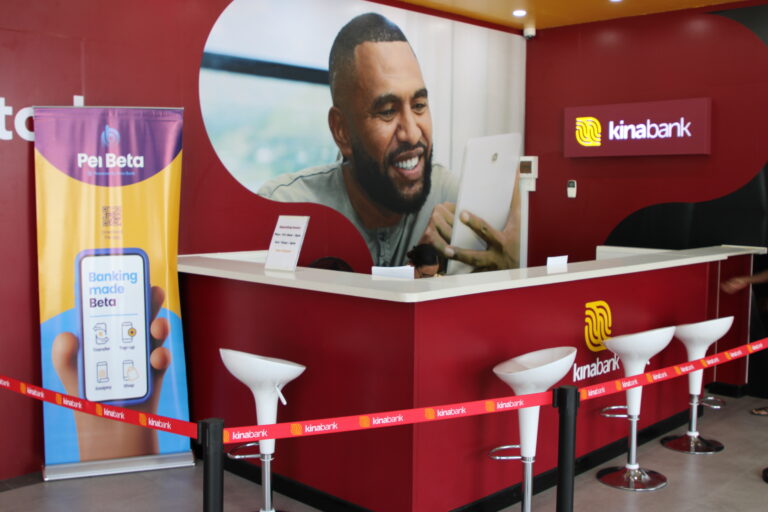
Shopping at Rangeview Plaza just got a little more productive. In a move to blend essential financial services with everyday lifestyle, Kina Bank has officially unveiled its revamped Digital Hub, now operating from a fresh, relocated space on Level 1 of the mall.

The upgraded facility resumed operations on Tuesday, 24 March 2026, moving from its previous spot on the same floor to a more streamlined, dedicated area designed to handle the hustle and bustle of Port Moresby’s retail crowd.

The reopening isn’t just about a change of scenery; it’s part of a broader strategy to ditch the long queues of traditional bank branches in favor of quick, tech-driven solutions.

Open from 9:00 am to 3:00 pm, the hub acts as a high-speed service center where customers can jump-start their digital banking journey.

Staff at the site are now processing everything from new account openings and instant Visa Debit card issuances to personal loan applications. For those still navigating the shift to digital, the hub serves as a tech clinic, helping locals register for internet banking and the increasingly popular WhatsApp banking platform.

“These hubs are designed to bring banking closer to where our customers live, work and shop. We’re focused on making our services easier to access while helping customers better understand the products available to them,” said Rayeleene Elston, Kina Bank’s Executive General Manager for Business and Retail Banking.

The Rangeview upgrade is just the first domino to fall. Kina Bank currently operates eight other Digital Hubs across Papua New Guinea, and the bank has confirmed that every single one of them is slated for a similar refresh.

By doubling down on these mall-based hubs, Kina is sending a clear message to the market: the future of banking in PNG isn’t behind a heavy glass teller window, it’s right where the people are.

As the bank continues to modernize its footprint, the focus remains on delivering a simple and convenient experience that proves digital banking doesn’t have to be daunting.

For regular Rangeview shoppers, that means one less trip to a main branch and more time spent getting things done.


The long-standing collaboration between PNG Fashion Week and Vision City Mega Mall reaches a new milestone this week as they launch the ninth annual Port Moresby Fashion Week.

Running from April 2–4, 2026, the event transforms Papua New Guinea’s busiest retail hub into a massive cultural and commercial platform. By utilizing a space that sees over 20,000 daily visitors, the event provides local designers and small businesses with immediate access to a vast consumer market.

The program remains free and open to the public, focusing on three core pillars:

  • Economic Growth: Providing designers and entrepreneurs direct access to customers to turn “visibility into income.”
  • Youth Empowerment: Building confidence through the Model Citizen Leadership and Runway Workshop and the Little Mr & Miss PNG programs.
  • Cultural Identity: Showcasing Papua New Guinea’s diverse traditions alongside modern creative design.

Brigette Kassman, Executive Officer for PNG Fashion Week, says the consistent partnership has become a major part of the event’s success.

“Over the past nine years, this partnership has allowed us to build something that is consistent, accessible, and truly impactful for our people. Vision City gives us a space where fashion meets everyday life, where designers can connect directly with customers, and where young people can see what is possible for themselves,” Kassman said.

She added that the initiative transcends the runway.

“This event is not just about showcasing clothing; it’s about creating pathways. We are seeing small businesses grow, young people step into confidence, and communities come together in a way that is both meaningful and sustainable.”

As the event returns this April, it continues to serve as a driver for local commerce and a celebration of the nation’s unique spirit.


Papua New Guinea’s extractive sector has shown a marked recovery in 2024, with subnational benefits and social expenditure lifting strongly as the country prepares for a critical international transparency audit next year.

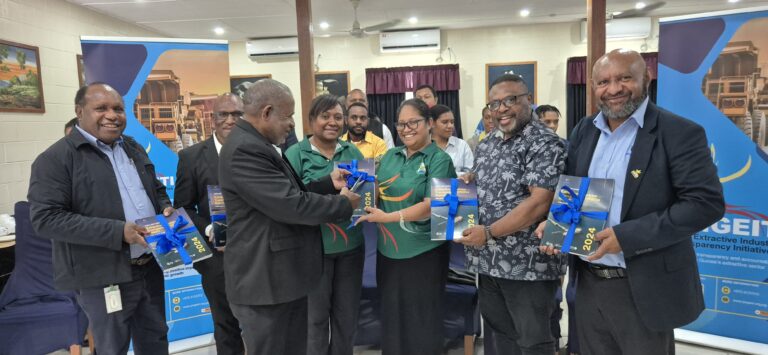
The Papua New Guinea Chamber of Resources & Energy (PNG CORE) has formally commended the PNG Extractive Industries Transparency Initiative (PNG EITI) following the launch of its FY2024 Annual Report. The launch took place during the Multi-Stakeholder Group (MSG) Quarter 1 meeting at Tuna Bay last Thursday.

The timing of the report is significant, serving as a baseline for PNG’s upcoming EITI Validation scheduled to begin in April 2026.

PNG CORE Senior Vice President, Mr. Kassman, OBE, said the report provides critical insights into the performance of the mining, oil, and gas industries, particularly regarding beneficial ownership and equitable resource management.

“The PNG EITI report clearly illustrates the continued importance of the mining and petroleum sector, and highlights the sector’s contribution to government revenue, exports, jobs and community benefits, while reinforcing the need for transparency and accountability,” Kassman said.

Data within the report reveals that while the sector’s share of GDP dipped to 27.4% in 2023, it climbed back to 28.3% in 2024. This recovery was supported by improved operations across the board, including the reopening of the Porgera mine.

Export contributions remained a key milestone of the national economy, holding a stable and dominant share of 88.3% in 2024. Direct government revenue has also remained consistently high, staying above the K4 billion mark for the last three years.

Mr. Kassman stated that the 2024 figures reflect a resilient sector.

“Between 2022 and 2024, the PNG EITI reports reaffirm the contribution of this sector central to the economy. While there was a slight dip in 2023, the sector recovered in 2024, with export contributions staying strong and government revenues consistently above K4 billion,” he said.

One of the most notable trends highlighted in the data is the surge in benefits flowing directly to local levels. Subnational benefits rose from K953.7 million in 2022 to over K1.46 billion in 2024.

Similarly, total social expenditure saw a significant jump to K649.7 million last year, up from K564.5 million the year prior.

PNG CORE is now urging civil society, government agencies, and resource owners to scrutinize the findings. The full report has been made available on the PNG EITI and PNG CORE websites.


It has been twelve years since the first LNG Gas was exported out of Papua New Guinea and it has been twelve years since the National Government promised a 4.27 percent equity to landowners and Provincial Governments impacted by the PNG LNG Project.

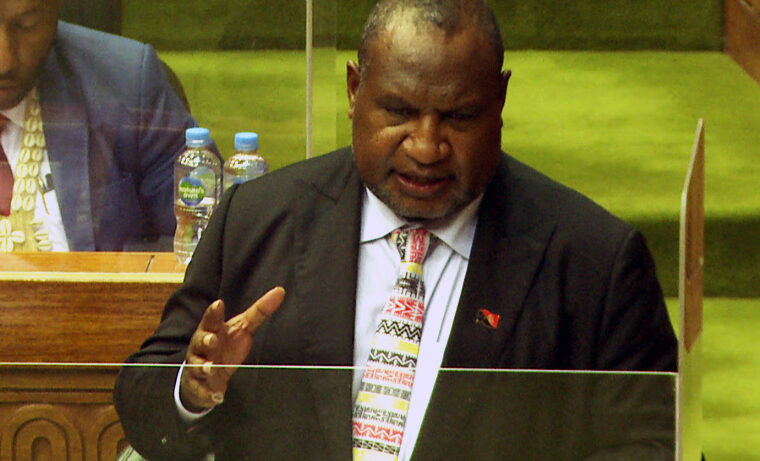
Komo Hulia MP Daniel Tindipi put the question to Prime Minister James Marape during parliament question time on Tuesday.

In response, Prime Minister James Marape reaffirmed the Government’s commitment to resolve this long-standing issues surrounding the 4.27 per cent PNG LNG equity, vowing to strengthen benefit-sharing arrangements for landowners and provinces, and advance national energy security.

Marape acknowledged that the 4.27 per cent equity component originally envisaged as a strategic benefit for landowners and the five provincial governments impacted by the PNG LNG project, remains an outstanding national issue more than a decade after the first gas production commenced in 2014.

“This equity component was intended as a meaningful participation mechanism for our landowners and provincial governments. It is now 12 years since first gas, and it is clear that this matter has not been fully resolved,” Prime Minister Marape said.

According to Marape, the 4.27 per cent equity originated from arrangements negotiated during the 2008–2009 Umbrella Benefit Sharing Agreement (UBSA), when the State, landowners, and provincial governments came together to enable the final investment decision of the PNG LNG project.

He said the equity was conceived as a form of “gifted participation” to ensure that the benefits of one of Papua New Guinea’s largest resource projects would extend beyond statutory entitlements under the Oil and Gas Act.

“This was over and above the legally mandated 2 per cent royalty and equity benefits. It was intended to give our people a stake in the project’s success and long-term returns,” he said.

However, the Prime Minister highlighted that despite the project’s significant contributions to the national economy including billions of kina in revenue since 2014 the intended beneficiaries have not been afforded the opportunity to exercise ownership or fully realize the value of this equity.

Marape confirmed that the Government has formally tasked Kumul Petroleum Holdings Limited with undertaking a full and transparent review of the 4.27 per cent equity, including its historical treatment, financial utilisation, and current status.

“We have asked Kumul Petroleum to present a complete information package to Cabinet. This includes what happened to the equity at the time of first gas, how it has been used over the years, and what value it holds today,” he said.

He stressed that the review will not be limited to the 4.27 per cent equity alone but will form part of a broader assessment of the State’s entire equity portfolio in the PNG LNG project, including the 16.57 per cent stake held through Kumul Petroleum.

“This is a holistic review. We are examining the full structure of our national equity interests to ensure accountability, transparency, and maximum benefit for our people,” he added.

Prime Minister made it clear that once Cabinet receives the full report, the Government will make a policy decision on how the 4.27 per cent equity should be allocated and managed going forward.

He emphasized that the Government is determined to ensure that landowners and provincial governments are properly recognized as beneficiaries, while also safeguarding long-term national interests.

“We will not rush this decision. It must be structured carefully to ensure fairness, sustainability, and direct impact,” he said.

The Prime Minister outlined a three-pronged approach under consideration:

  • Direct Benefit Distribution: Ensuring that a portion of the equity delivers tangible financial returns
    directly to landowners and provincial governments without unnecessary intermediaries.
  • Future Generational Savings: Establishing mechanisms to preserve part of the equity value for
    future generations, potentially through trust structures or sovereign-style funds.
  • Transparent Governance Framework: Implementing strong governance and accountability
    measures to ensure that benefits are managed responsibly and equitably.

The Prime Minister further clarified that while the 4.27 per cent equity is an important benefit, it is not a statutory entitlement under the Oil and Gas Act, unlike the 2 per cent royalty and equity provisions already being distributed.

“This component was a negotiated benefit, an additional allocation made in good faith to support landowners and provinces. That is why we must handle it carefully and responsibly,” he said.

He noted that existing benefit distribution mechanisms for statutory entitlements are already in place and could be leveraged to ensure efficient and transparent delivery of any future equity benefits.

Responding to calls for a review of existing agreements, including the Umbrella Benefit Sharing Agreement and related licence-based arrangements, Prime Minister Marape said the Government is open to reviewing these frameworks where provisions allow.

“We will seek technical advice on the review clauses within these agreements. If provisions exist for periodic review, we will activate them to ensure that agreements remain fair and relevant to present-day realities,” he said.

He acknowledged that some agreements may be overdue for review and assured stakeholders that the Government will engage constructively with landowners, provinces, and project partners.
Advancing Domestic Energy Utilisation

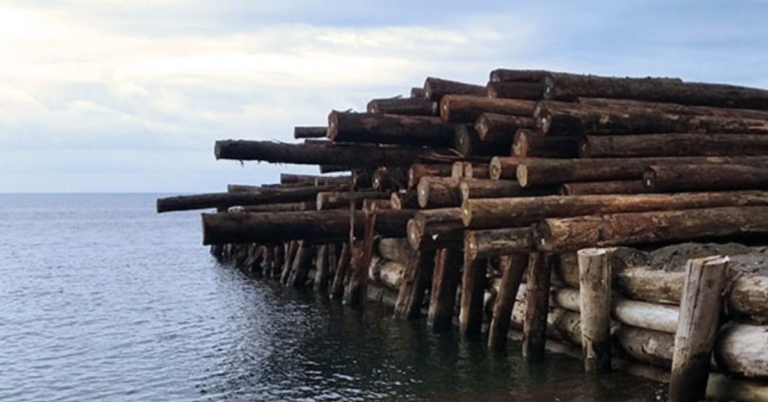
Community advocacy group ACT NOW! has once again calls on the PNG Forest Authority to publish the complete log export data for 2024 and 2025.

Campaign Manager Eddie Tanago says while the government has promised to ban all round log exports from January 2026, the PNGFA is yet to publish data on log export volumes for 2024 and 2025.

“For fifteen years detailed statistics about the volume of log exported from every logging operation across the country was available from independent monitoring firm SGS. But in 2024 SGS withdrew their services because of a backlog of unpaid invoices.

“Although the PNGFA said it was taking over the monitoring operations, since 2024 not one single report has been published and there is no monthly or annual data available for 2024 or 2025”.

ACT NOW! says with the lack of information available on log export volumes, the public will lose confidence in the Marape-Rosso governments plans to ban round log export.

“The Prime Minister has staked his international reputation on the promise to end all round log exports from PNG, it is therefore essential that PNGFA immediately publishes its data for 2024 and 2025.

In June last year, the PNGFA assured the Parliamentary Special Committee on Public Sector Reform that it would provide regular reports with all the monthly log export volumes from individual logging projects, but nothing has been produced.

ACT NOW! says the lack of log export data reflects a general failure by the PNG Forest Authority to publish even basic information on its management of forest resources.

The Forestry Act says there should be a public register of information on all commercial logging operations and logging permits but it seems this has never been established.

ACT NOW! says the lack of publicly available information on the logging industry and the lack of export data is just one reason why the sector continues to be plagued by widespread illegal logging and presents a major money laundering risk.

This has contributed to PNG’s recent grey listing by the international financial community.


Ok Tedi Mining Limited (OTML) has released its 2025 financial results, recording unaudited revenue of K9.3 billion (US$2.3 billion) and a dividend payout of K1 billion to Papua New Guinea.

The state-owned miner exceeded its production targets for the year, yielding 106,018 tonnes of copper, 298,350 ounces of gold, and over one million ounces of silver. These results follow a two-year strategic shift aimed at tightening operational execution across its sites.

The financial report highlights a reduction in company debt, which fell from K709million in 2023 to K370million by the end of 2025. This fiscal tightening occurred alongside K1.09 billion in tax payments and K178 million in royalties.

 The company also directed K766 million toward the Tax Credit Scheme and K37million into training programs.

While the figures show growth, the year was not without difficulty. OTML faced several operational setbacks, including power-related disruptions and infrastructure challenges. Management attributed the ability to maintain performance levels to revamped planning and the execution of major project shutdowns.

Expansion remained a key part of the year’s activity, marked by the acquisition of the Misima Gold project and the growth of Ok Tedi Energy.

These moves are part of the company’s “Growth 2050” strategy, which seeks to extend the mine’s relevance in the national economy.

Managing Director and CEO Kedi Ilimbit said that the year’s outcomes were a testament to the workforce’s performance.

“2025 has been another exceptional year for Ok Tedi. Our strong performance reflects the discipline, commitment, and professionalism of our workforce and reinforces the value of operating a 100% PNG owned mining company for the benefit of our people,” Mr. Ilimbit said.

Looking toward 2026, the company has adopted Disciplined Delivery as its internal theme, signaling a focus on maintaining safety and operational reliability as it continues its long-term expansion plans.


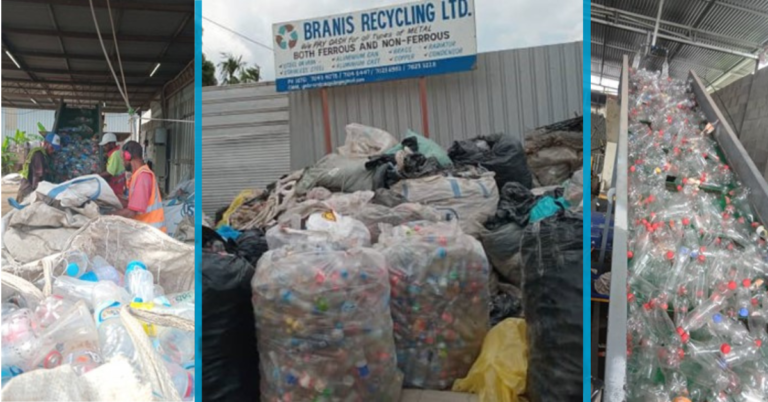
A massive environmental effort has seen over 29 million discarded containers recovered across the nation’s two largest cities throughout the past year.

Coca-Cola Europacific Partners PNG (CCEP PNG) recently confirmed that their 2025 green initiative salvaged roughly 791 tonnes of debris. The sheer scale of the reclaimed material is equivalent to the surface area of 15 football pitches or the total volume of seven world-class swimming facilities.

The venture, a collaborative project with Branis Recycling Limited, transforms everyday trash into a source of income for citizens. Individuals bringing used PET packaging to depots in Port Moresby or Lae are compensated with K1.00 for every kilo submitted.

Once gathered, the materials are processed and compacted for overseas transit. Country Director Tim Solly said the operation’s success stems from years of steady growth since its 2022 inception.

“We started this initiative to collect and recycle plastic beverage bottles back in 2022 (with the commencement of the initial pilot program), with our collection partners, Branis Recycling. This year’s results are a clear reflection of our ongoing commitment to help reduce plastic waste.”

While the cleanup happens on the ground in Papua New Guinea, the final transformation occurs abroad. Swire Shipping facilitates this by offering complimentary sea transport to Malaysia, where the scrap is converted into reusable resources.

Notably, the scheme does not discriminate based on branding; it accepts packaging from all local drink producers to maximize its ecological impact.

“We would like to see other beverage manufacturers in PNG join this program. Together we can make a real difference in reducing plastic water and preserving PNG’s environment.”

After retrieving 474 tonnes of refuse in 2024, the project expanded its reach to Lae last May. This strategic move was instrumental in hitting the record-breaking figures announced this week. By merging cash rewards with international shipping networks, the initiative provides a roadmap for how developing nations can effectively combat the global pollution crisis.


In a move to bridge corporate social responsibility with grassroots advocacy, Ok Tedi Mining Limited (OTML) has announced a new partnership with Femili PNG to combat the ongoing crisis of domestic and family violence in Papua New Guinea.

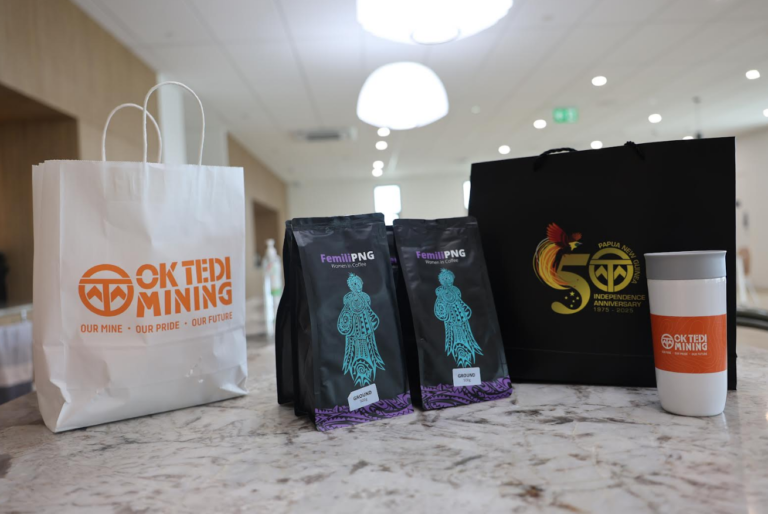
The mining giant utilized the high-profile stage of the recent PNG Investment Week conference in Sydney to spotlight the cause. Rather than traditional corporate branding, Ok Tedi purchased and distributed Femili PNG’s specialty coffee, sourced from the Western Highlands as complimentary gifts to international delegates.

The initiative serves a dual purpose to promote premium PNG exports while directly funding essential services for survivors of gender-based violence.

The collaboration comes at a critical time for PNG, where domestic violence remains a systemic challenge. According to Ok Tedi representatives, the partnership is intended to be more than just a donation; it is a public-facing commitment to community safety.

“Domestic violence continues to affect far too many families in Papua New Guinea, and we all have a responsibility to be part of the solution,’’ said Ruth Waram, Ok Tedi’s Manager for Media and Public Relations.

Waram emphasized that the coffee purchase was a strategic choice to amplify Femili PNG’s mission.

“Our purchase of these coffee packs is more than a gesture, it is a statement of solidarity and a commitment towards promoting safer, stronger communities across PNG,” she added.

Femili PNG, a leading non-governmental organization, operates on the front lines of the crisis. Proceeds from their coffee sales are funnelled directly into:

  •  Case management services for survivors.
  •  Safe accommodation and emergency housing.
  • Outreach and advocacy programs nationwide.

Jocelyn Condon, Executive Director of Femili PNG Australia, noted that corporate backing is vital for the sustainability of these services.

“Funds raised from every purchase of coffee directly supports the services Femili PNG provide to survivors who need safety, care, and a pathway to rebuild their lives,” Condon said.

“Ok Tedi’s support in this initiative, and hopefully into the future, give us all great hope for the potential of business to step forward and resource the movement for positive change.”

Looking Ahead The collaboration at the Sydney conference, hosted by the PNG Chamber of Resources and Energy, marks a growing trend of PNG’s extractives industry engaging with social issues. By integrating a non-profit’s product into a major investment event, Ok Tedi has signalled that the social in ESG (Environmental, Social, and Governance) remains a priority for the company’s operations within the country.


The Asian Development Bank (ADB) recently appointed Takafumi Kadono as its new Country Director for the Papua New Guinea Resident Mission. Based in Port Moresby, Mr. Kadono will lead the development and execution of the ADB’s upcoming country partnership strategy, steering the bank’s multifaceted engagement across the nation.

The appointment comes at a pivotal time as the ADB continues its role as one of PNG’s primary financing partners, particularly in large-scale infrastructure and social services.

“We will work with the Government of PNG to further boost economic growth and social development by supporting improvements to the country’s transport and energy sectors, increasing access to health and education services, and bolstering the competitiveness of the private sector,” said Mr. Kadono.

“ADB will continue to work closely with key partners to enhance the inclusivity and resilience of PNG’s financial and health systems to future shocks.”

Mr. Kadono, a Japanese national, brings more than 26 years of international development expertise to the role. His career spans tenures at both the World Bank Group and the ADB, most recently serving as the ADB’s Country Director for Sri Lanka.

His leadership will oversee a broad portfolio that extends beyond traditional infrastructure. The ADB’s current footprint in PNG includes:

  • Education: Partnering with the Government of Australia to fund technical and vocational training designed to align student skills with industry demands.
  • Health: Implementing policy reforms and direct investments to improve public financial management and system-wide resilience.
  • Infrastructure: Providing critical financing for the nation’s transport and energy networks.
    About the ADB.

Established in 1966 and owned by 69 members, the Asian Development Bank is a major multilateral lender focused on sustainable and inclusive growth in Asia and the Pacific. The organization utilizes innovative financial tools and strategic partnerships to address complex regional challenges, ranging from infrastructure development to climate change.


Pin It