
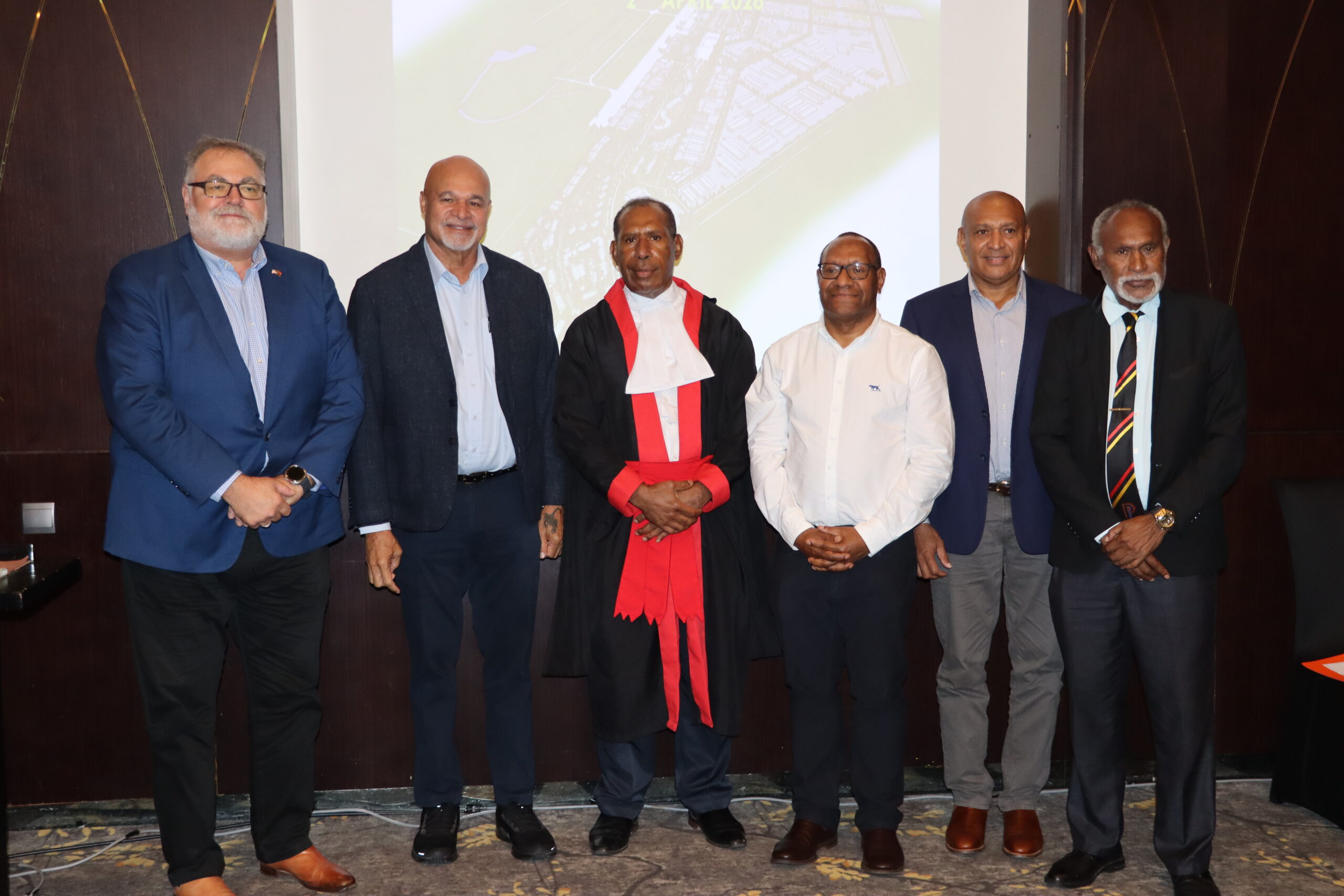
The ambitious vision to transform the Nadzab area into a bustling urban and economic area has officially transitioned from policy to practice. On Thursday, April 2, 2026, the Nadzab Land Development Authority (NLDA) Board was formally sworn in, marking a historic turning point for Morobe Province and Papua New Guinea’s land development landscape.
Established under the Nadzab Land Development Authority Act 2025, the NLDA is backed by a robust legal framework following strategic amendments to the Land Act, Land Registration Act, Physical Planning Act, Survey Act, and Valuation Act. Together, these legislative changes provide the teeth necessary for the Authority to manage large-scale urban development effectively.
The newly minted board brings together a wealth of expertise from the private and public sectors. Leading the charge as Chairman is Dr. Charles Yala, representing property development and finance. He is joined by:
- David Wissink: Representing resource sector developers.
- George Gware: Representing the private commercial and logistics sector.
- Benjamin Samson: Secretary for Lands and Physical Planning (representing the State).
- Morobe Provincial Administration Representative.
Two additional members are expected to be appointed during the board’s inaugural meeting. This team is now mandated to spearhead the master planning, infrastructure coordination, and investment mobilization required to bring the Nadzab Township to life.
Speaking on behalf of Secretary Benjamin Samson, Deputy Secretary for Customary Land, Lazarus Malesa, emphasized that the NLDA is the engine room of this vision.
“This is a momentous step forward for land development in the country. The authority is the one that will drive the actual development of the project itself,” Malesa said.
As a flagship initiative under the National Land Partnership Program, the project is designed to act as a pressure valve for Lae, reducing urban congestion while creating fresh economic corridors. Critically, it aims to integrate customary landowners directly into the development process.
Deputy Prime Minister and Minister for Lands and Physical Planning, John Rosso, made it clear that while the government sets the stage, the private sector will be the primary builder.
“Government, we do what we do best, that is policy and guidelines. The work of building should be left to private industry. They do it more efficiently than us,” Rosso said.
Minister Rosso further stressed that the project’s success hinges on three pillars: investor confidence, secure land tenure, and genuine landowner engagement.
By empowering the NLDA, the government is signaling a commitment to sustainable growth where customary landowners aren’t just bystanders, but active participants in the future of the Nadzab hub.

Comments are closed.