Archive

February 2026

Browsing

New economic data released on Tuesday shows that Australia’s underlying inflation rate rose slightly in January, putting fresh pressure on the federal government as it prepares the upcoming budget.

According to the Bureau of Statistics, trimmed mean inflation the Reserve Bank’s preferred measure that ignores extreme price swings hit an annual rate of 3.4%. This is a small increase from the 3.3% recorded in December.

While the “headline” inflation rate, which covers all goods and services, stayed steady at 3.8%, the rise in underlying prices suggests that the cost of living remains stubborn.

The biggest factors pushing prices higher in January were, Housing costs, Food prices, Recreation and culture.

Finance Minister, Katy Gallagher said that the end of certain government power bill discounts played a role in the January numbers.

“We did see last month that inflation ticked up a little and we saw largely as a result of some of those temporary energy rebates coming off that influenced those,” she said.

For many Australians, the news is a double blow. Because inflation is staying higher than the Reserve Bank (RBA) would like, experts now expect further interest rate rises later in 2026. The RBA already lifted the cash rate to 3.85% in February.

Furthermore, the spike in costs means that real wages have fallen for the first time in over two years, as paychecks fail to keep up with the rising cost of groceries and rent.

The government is currently finalizing the Federal Budget, which will be handed down in May. Minister Gallagher said these new figures will be a major factor in their planning.

“The job for the government remains the same, being conscious that the decisions we make right for the economic circumstances of the time,” she said.

“So we’ll see what that data says, and we’ll make decisions based around that.”


Source: Australian Associated Press
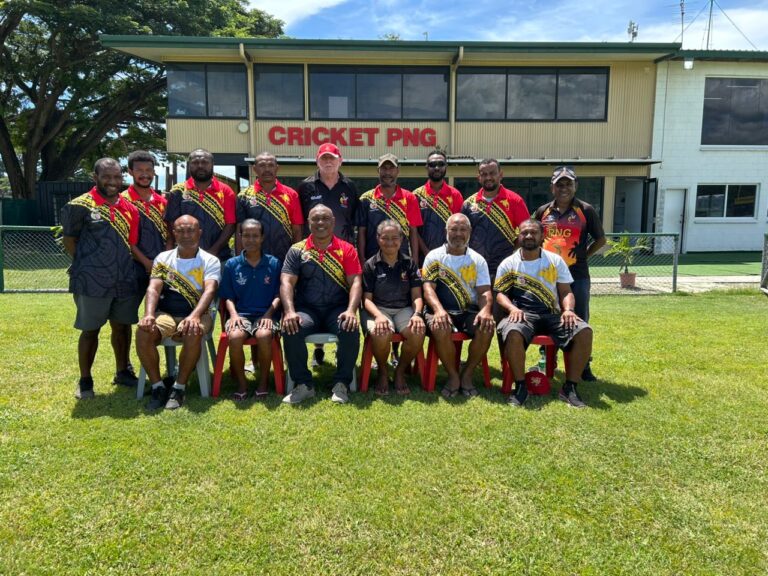
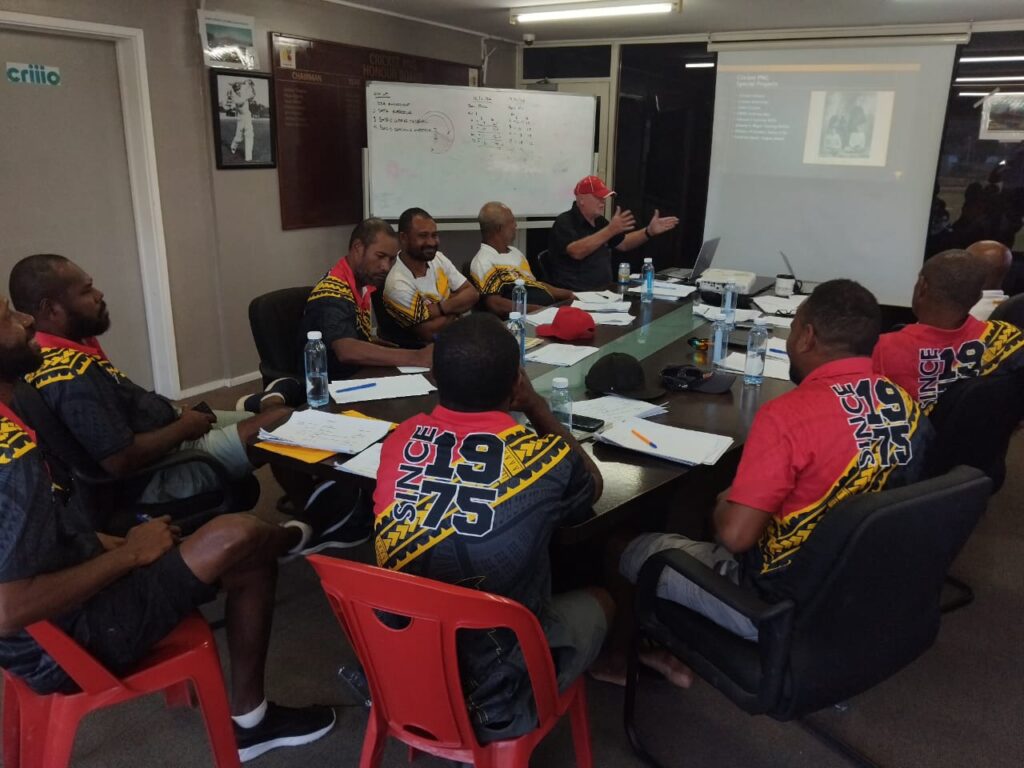
Cricket Papua New Guinea (CPNG) unveiled a strategic roadmap for 2026, headlined by a massive push to increase youth participation from 90,000 to over 150,000 children nationwide.

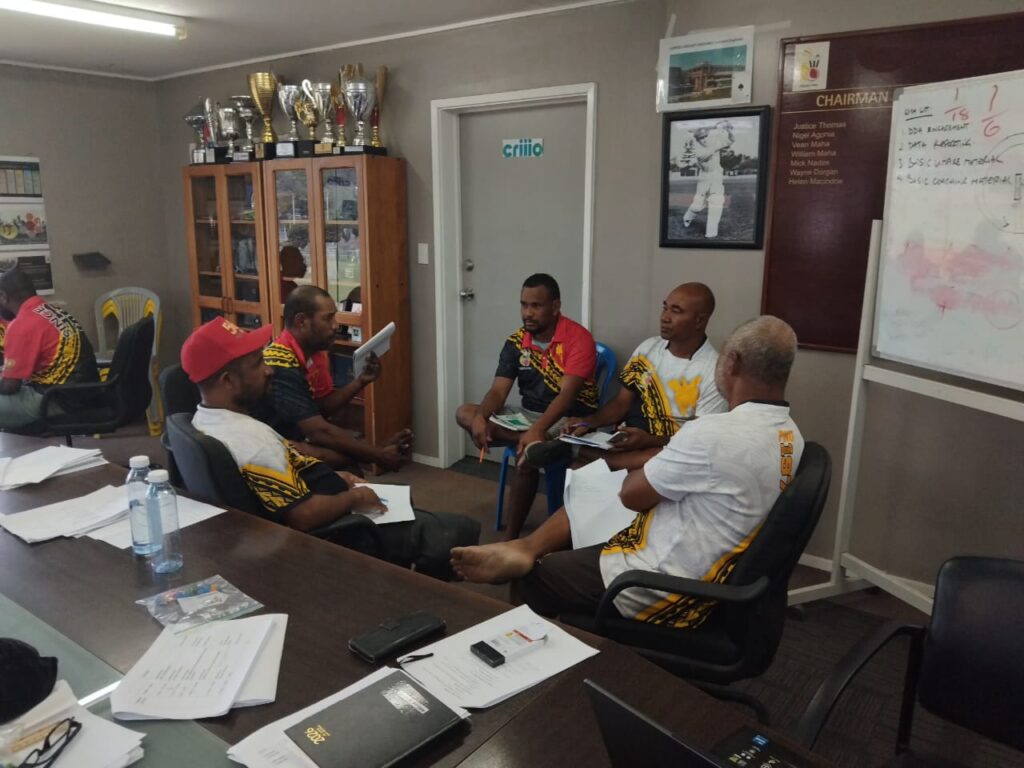
The target was established during the first phase of the 2026 Regional Cricket Managers (RCM) Conference, held at Amini Park from February 16th-17th.

The two-day summit brought together leaders from the Southern and Islands regions including NCD, Central, Milne Bay, and West New Britain to align provincial operations with national high-performance and development goals.

The conference, led by CPNG Operations Manager, Rarua Dikana, focused on shifting the organization toward a more data-driven and accountable structure. By analyzing strengths and threats across the regions, the board aims to standardize how cricket is delivered in both urban hubs and remote villages.

“The RCM’s focused on the involvement and participation planning and targets for year 2026. Last year the game development section covered up to 90, 000 children through their schools and community involvement and participation,” Dikana said.

To support this growth, the conference emphasized “engine room” logistics, the administrative, financial, and HR functions that keep regional offices running.

Office & Facility Manager, Helen Koave stressed the importance of supporting managers in areas where resources are often scarce.

One main theme of the summit was the pathway from grassroots participation to elite representation. Highlights from the sessions included:

  • Talent Identification: High Performance Manager and Barramandis Head Coach, Tim McCaskill, outlined how regional managers can better identify talent for national squads.
  • Specialized Programs: Plans were introduced for “Table Cricket” and indoor activities to make the sport more inclusive.
  • Technical Training: New coaching and umpiring certification schedules were set to raise the standard of officiating across the provinces.

While the outlook is optimistic, regional leaders highlighted the logistical hurdles of operating in PNG. Nathan Henry, the RCM for West New Britain, noted that while the new “Criiio Cricket Program” for ages 4–13 is promising, the sheer distance between rural schools remains a significant challenge for development officers.

The Port Moresby session concluded with intensive budgeting and allocation planning to ensure each region has the tools to meet its 2026 benchmarks.

The second phase of the conference will move to Goroka, where CPNG leadership will meet with managers from the Highlands and Momase regions, including Lae, Madang and Mt. Hagen to finalize the national 2026 calendar.


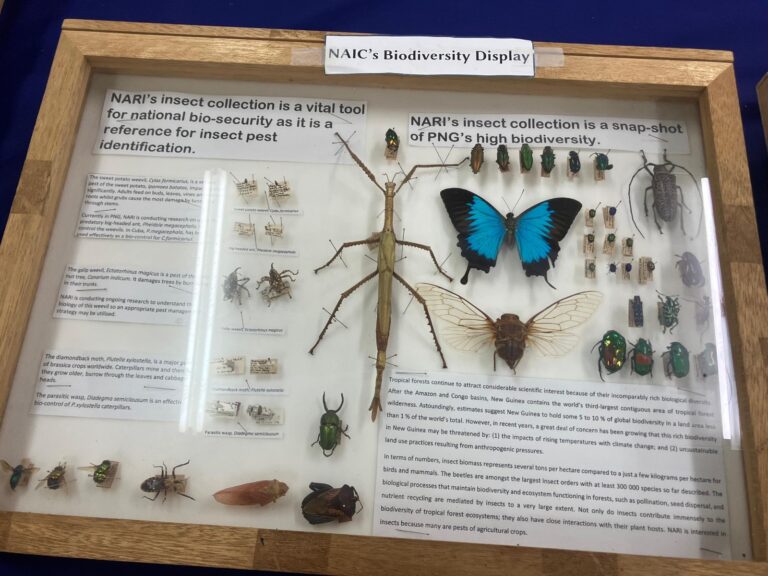
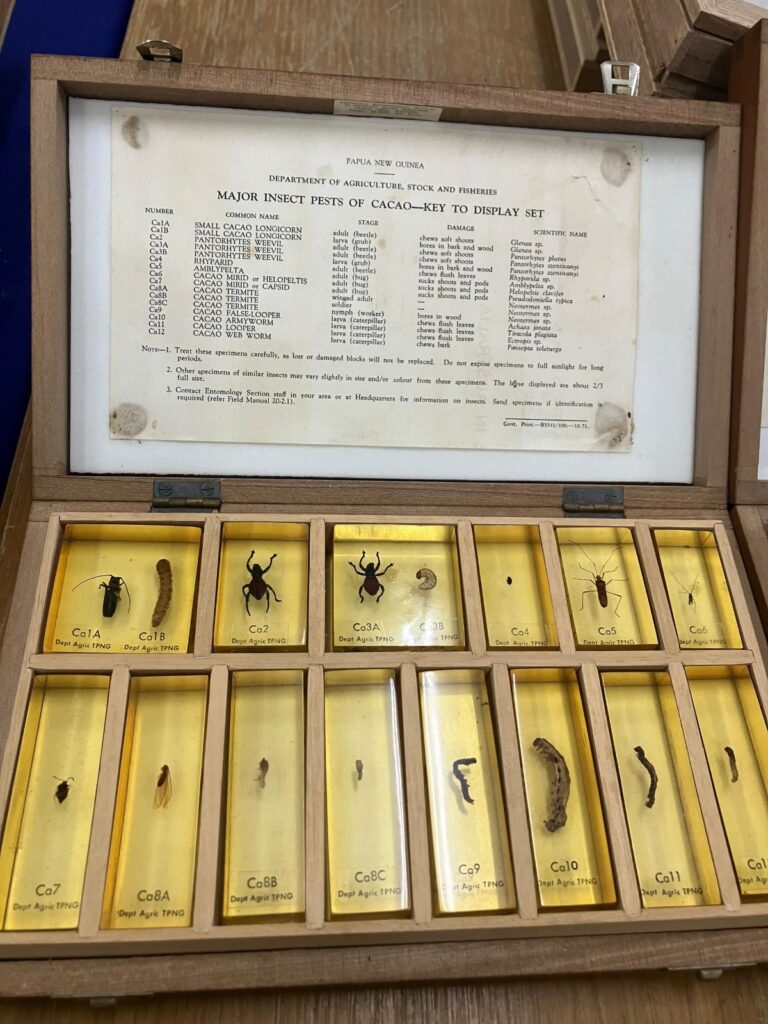
Renovation work has commenced at the National Agriculture Insect Collection Centre (NAIC) in Port Moresby.

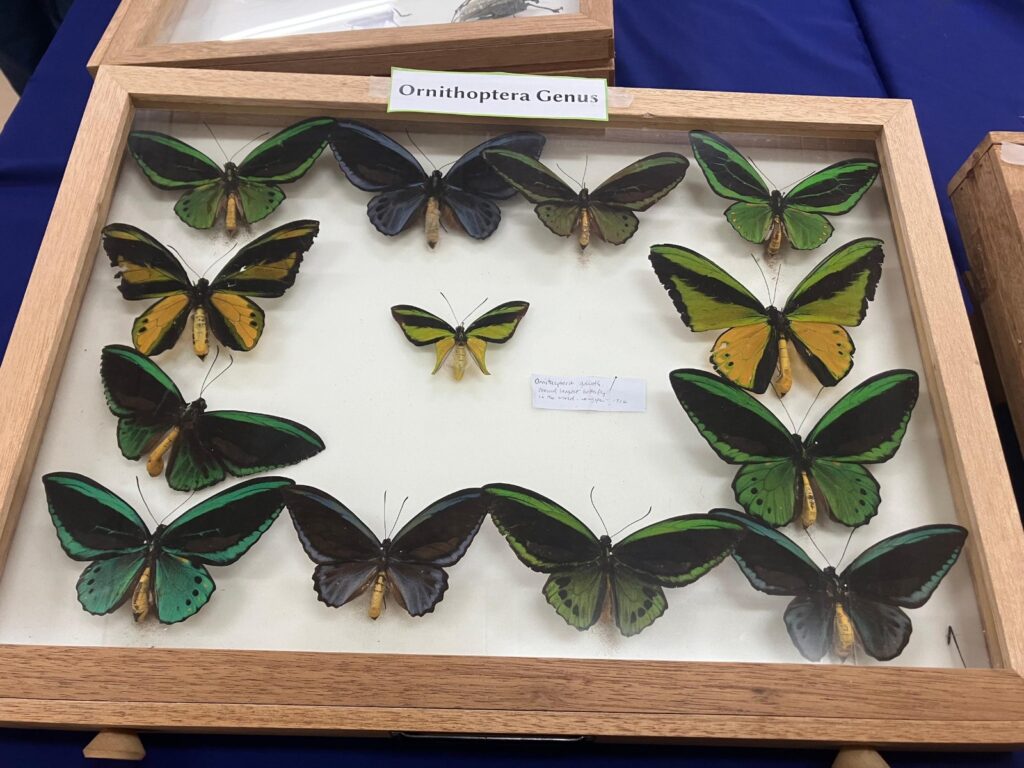
NAIC is an arm of the National Agricultural Research Institute and is the only national centre that houses over 90 000 specimens of insects.

Insect collections are essential for scientific research, education, and conservation efforts. They provide valuable resources for species identification, discovery, and monitoring of insect populations.

Properly preserved and stored specimens can be enjoyed and studied for hundreds of years, contributing to our understanding of biodiversity and the ecological importance of insects.

Development of the NAIC database began in 2018 with recording of 24 035 specimens belonging to 2 183 species from four orders: Lepidoptera, Hemiptera, Hymenoptera and Orthoptera.

The collection has now grown to 96 744 specimens with over sixteen orders.

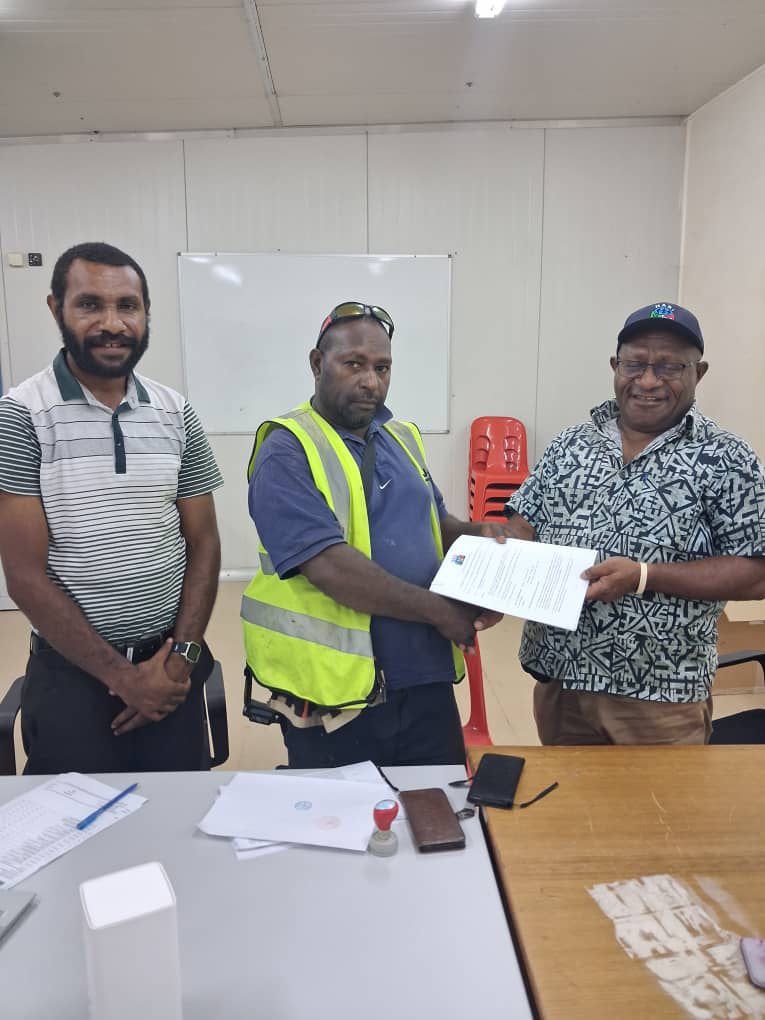
Through a tender process, NARI has awarded the contract to JS Engineering based in Port Moresby to carry out renovation works at the value of K 210,000.

The contractor was selected based on proven record of completing work on time and within budget.

The contract was signed between the contractor and the NARI Management on 2nd February 2026.

The renovation work will include purpose-built rooms to store and preserve insect specimens, work room to clean the specimens and the display room to showcase the specimens.

There is also general work to improve office and rest rooms for staff.

The Institutes Management received full funding in 2025 from the Department of National Planning, under the Public Investment Program (PIP).

Work is set to be completed in April 2026.

Preservation and data collection on the insects found in the country is key in agricultural research work. It helps scientists understand the nature of pest and diseases affecting crops.

Signing the contract on behalf of NARI, was Deputy Director General Dr. Peter Gendua.

Dr Gendua expressed gratitude to the National Government through the Department of National Planning for supporting this small but significant project.


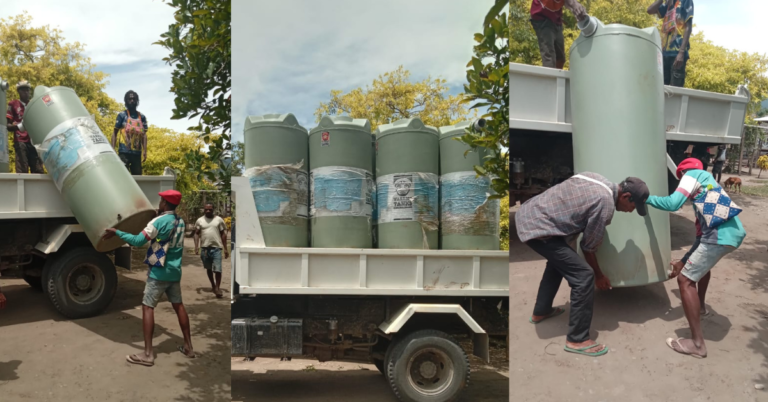
In Morobe’s Huon-Gulf District, a quiet transformation is taking place at the household level. As of February 2026, the District Development Authority has moved into the next phase of a long-term infrastructure plan, delivering 1,000-litre water tanks to families who, until now, have struggled with consistent access to clean water.

This initiative is the second half of a strategic rollout that began in 2024.

Over the last two years, the district distributed roofing iron to families, schools, churches, and health clinics. Now that those structures are complete, the district is following up with the means to make them functional with rainwater harvesting systems.

The rollout is prioritizing communities that have already utilized their previous building materials. This approach ensures that resources are not wasted and that the infrastructure translates immediately into a better quality of life.

The recent milestones include:

 – 10 water tanks delivered to families in need in Wampit.

 – 10 water tanks were delivered to Tararan village on Wednesday (February 4) morning and,

 – Zifasing in the 40 Mile area being identified as the next priority site for delivery.

By linking the roofing program directly to the water program, the district is ensuring that a sturdy roof provides more than just shelter, it provides a sustainable source of life.

Local MP, Jason Peter, who is also the Minister for Community Development, Youth and Religion, emphasized that the program is designed to serve the people for decades, not just months.

“Water is life,” he said.

“After supporting our people with roofing iron in 2024-2025, it is only right that we now follow up with water tanks so families can harvest rainwater and improve their daily living.”

“This support is for families, schools, churches, and clinics, and it will serve our people for many years to come,” Peter said.

For those who have yet to see these materials arrive, the Minister offered a guarantee of continuity.

“Those who did not receive roofing iron in 2024-2025, I want to assure you that distributions will continue this year. Once roofing iron is delivered and buildings are completed, water tanks will also follow to support proper water catchment,” the Minister added.

Managing the logistics of a district-wide distribution requires a focus on fairness. Electoral Team Project Manager, Mr. Bundy, said that the team is tracking which buildings are ready to receive the tanks to ensure the rollout remains efficient.

“Our team is delivering water tanks to communities that have completed their buildings using the roofing iron supplied in 2024-2025. For new recipients this year, roofing iron will be distributed first, and water tanks will follow. This ensures long-term benefits and fair distribution across Huon-Gulf,” Bundy explained.

The districts overarching goal indicates that a coordinated, people-centered approach to development brings health and dignity to the rural corners of Huon-Gulf.


For three decades, the promise of a Central City at Bautama has been little more than a series of groundbreaking ceremonies and stalled dreams. But yesterday, the dust finally began to rise in earnest.

Acting Prime Minister and Minister for Lands and Physical Planning, John Rosso, joined Central Governor, Rufina Peter at Bautama to move past the rhetoric of the past and launch three tangible projects which are, the Bautama Boom Toll Gate, a new Provincial Market, and a Residential Estate.

For the ordinary grassroots workers of Central Province who have long been guests in Port Moresby, this launch represents more than just infrastructure. It is a push for a home they can actually afford.

While this week’s launch marks a fresh start, the ghosts of past plans linger over the site. Former Governor, Robert Agarobe was a fierce advocate for this decentralization, often arguing that Central Province was a “stolen city” because it lacked its own administrative heart.

Agarobe’s vision was grand, a K2.5 billion city that would house the provincial government, a hospital, and a wharf, finally giving the province its own identity. While leadership has changed, the core mission remains, moving the people of Central out of the shadow of the National Capital District (NCD).

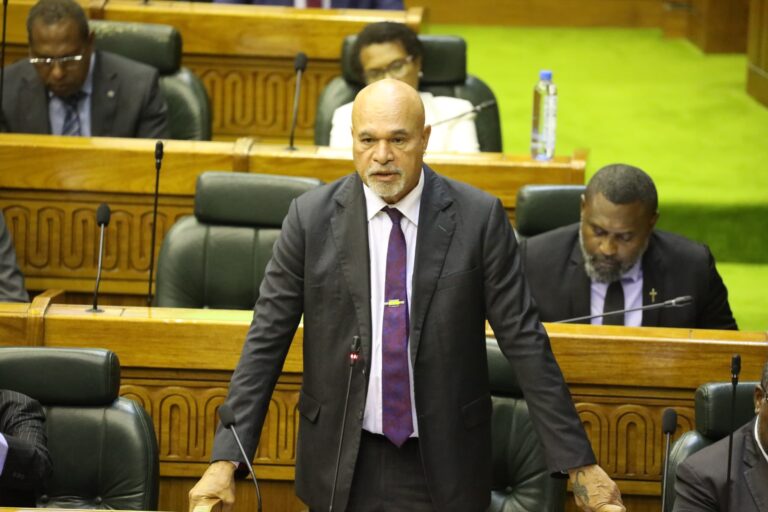
During the keynote, Rosso challenged the modern definition of affordable. He noted that while high-end developments target the wealthy, the backbone of the workforce is being left behind.

“People get confused about what affordable means,” Rosso said.

“There must also be options for low-income earners, which is under K100,000.”

He broke down the harsh reality of urban development, explaining that simply connecting power, water, and roads to a single 450-square-meter block costs a minimum of K100,000.

“Our bus drivers, taxi drivers, waitresses, and workers who cannot afford K700,000 homes should have access to allotments in the K50,000 to K100,000 range. That is where government must heavily subsidize infrastructure programs,” he added.

While the idea of Bautama is old, the additions launched this week are specific steps to make the city functional:

The Boom Toll Gate is designed for internal border security and revenue collection to fund provincial services.

The Central Provincial Market is a space dedicated to and for Central farmers to sell produce without the hassle and struggle of traveling into Port Moresby markets.

Residential Estate is the first phase of a housing project aimed at middle and low-income earners, being built in partnership with private developers like YFIG Builders.

The road to this moment has been long. Records show groundbreakings for a Central City as far back as 1995, 1998, and 2007, with much of the early funding vanishing without a trace.

Governor, Rufina Peter acknowledged this history of missed opportunities but insisted the time for delay is over. With K27 million already expended on these priority works and an estimated K300 million needed for the full city vision, the focus is now on transparency.

Rosso concluded with a plea to the traditional landowners to not sell their futures for a quick Kina.

“We must find solutions… so [landowners] do not lose their land. We need the right mix to support landowners, uphold honest government, and put roofs over our people in the name of development.”


Pin It