Author

Helen Sea

Browsing

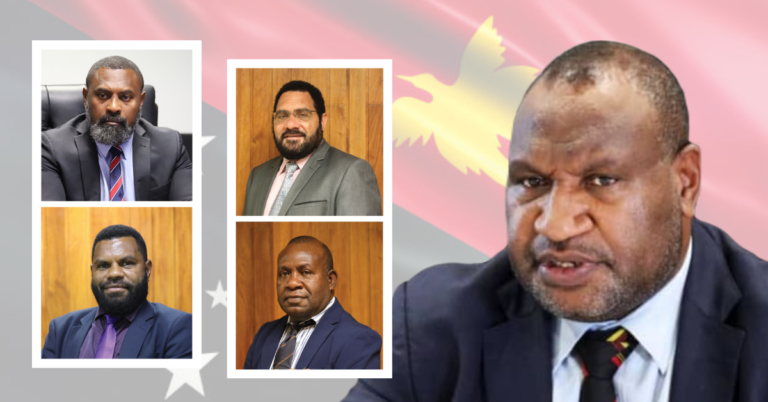
Prime Minister James Marape has signalled what he describes as a major performance-based reshuffle of his government, swearing in three new ministers on Tuesday.

While the Prime Minister framed the move as a strategic “reset” following Papua New Guinea’s 50th Independence anniversary, the reshuffle comes at a time of heightened scrutiny of government delivery and internal power dynamics within the Marape-Rosso administration.

Coalition Maintenance or Meritocracy?

The swearing-in of Kompiam-Ambum MP, Sir John Pundari, Tewai-Siassi MP, Dr. Kobby Bomareo and Menyamya MP, Solen Loifa at Government House on Tuesday, according to Prime Minister Marape, is a direct response to the growing influence of the “Our Pati” bloc.

Marape acknowledged the political necessity of the move, noting that Our Pati is now the second-largest party in the coalition.

“Some of the key reforms that were made would not have been passed without the numerical strength and contribution of Our Pati,” the Prime Minister admitted.

By elevating Solen Loifa, the Prime Minister is attempting to project an image of renewal.

“He belongs to the cadre of young emerging leaders… who must be brought into Cabinet to prepare them to lead even when some of us are out of time,” Marape stated.

While political observers often describe the elevation of younger MPs as a tactic to build personal loyalty within the executive council, Marape was quick to clarify in a statement that these are not merely political rewards.

“These are not ceremonial appointments. They come with hard tasks and clear deadlines,” he stated, emphasizing that the new ministers are entering a “decisive 20-year development window.”

Accountability and the 90-Day Housing Mandate

In a move that puts the entire front bench on notice, Marape has demanded “health and performance reports” from all ministers.

Nowhere is this pressure more evident than in the Housing portfolio. Re-appointed Minister Dr. Kobby Bomareo has been issued a 90-day deadline to deliver a comprehensive national housing and land access programme.

Marape stressed that the goal is to make home ownership achievable for the workforce by removing GST and Stamp Duty on first-home purchases under K700,000.

“This is not just about buildings. It is about making land and housing accessible to our people,” he said.

Recalling the “Old Guard” for National Security

The return of Sir John Pundari, a veteran politician whose career began in 1992, suggests that despite “reset” rhetoric, the administration remains heavily reliant on the political “old guard.” However, the appointment goes beyond mere recycling; it exposes a desperate reliance on provincial identity over systemic reform.

Marape specifically linked Pundari’s appointment to the Ministry of Police to his roots in Enga Province, framing his proximity to the chaos as a strategic asset.

“Sir John comes from a province that is rife with guns, rife with tribal fighting and criminal activity… We felt he should take this problem head-on, remove guns, stop tribal fighting and restore order,” Marape said.

This justification, however, invites a scathing critique of Pundari’s decades-long tenure. If Pundari’s deep-rooted connection to Enga is his greatest strength, one must ask why that same influence failed to stem the tide of high-powered weaponry during his thirty years in the political upper echelon.

By setting a 12-month target for national stabilization, Marape is essentially gambling on the idea that the same political machinery that watched Enga descend into gun-fuelled anarchy can now, suddenly, dismantle it.

The “Old Guard” isn’t just returning to fix the problem; they are returning to fix a crisis that matured under their long-term stewardship.

The ICT Leadership Question: Who is in Charge?

As Peter Tsiamalili Jnr moves into the heavyweight role of Works and Highways Minister, a pressing question remains for the public: Is he still the Acting Minister for ICT?

Tsiamalili has held the acting ICT role since July 2025, covering for Timothy Masiu, who was on medical leave. With Tsiamalili now tasked with a massive K1.7 billion infrastructure budget, questions arise about the status of the ICT ministry.

Who is actually steering PNG’s digital future?

This leadership vacuum comes at a critical time for the Digital Government Act 2022. The public remains anxious about how their personal information is being stored and used within the new “SevisPNG” digital ID ecosystem, especially as the government pushes for 100% digital integration by 2027.

The Starlink Standoff: Connectivity vs. Law

The lack of a permanent ICT head has intensified the debate over Starlink.

As of mid-January 2026, industry regulator NICTA has confirmed that Starlink services remain prohibited and unlawful in PNG.

Despite more than 160 active users, a 2024 Ombudsman Commission directive has legally blocked NICTA from issuing a license, and the matter is now tied up in a Judicial Review before the National Court.

Until the Ombudsman Commission withdraws its position or the courts overturn that decision, this remains the formal status of Starlink in Papua New Guinea,” stated Acting NICTA CEO Lume Polume.

For the average citizen, the standoff feels like a contradiction. While the “Reset@50” agenda promises universal internet access, the country’s most viable satellite solution is currently being “hunted” by regulators. Without a clear ministerial lead to navigate the legal battle with the Ombudsman, many fear PNG will remain a digital outlier in the Pacific; disconnected, over-regulated and left behind.

Mining: Resetting the Resource Framework

Solen Loifa takes over the Mining portfolio with a strict deadline.

Marape intends to overhaul the nation’s resource laws within the year.

“Before September 16, 2026, we want to announce to the country and to the investment community the regime under which mining, petroleum and other resource sectors will operate,” Marape said, signalling a shift toward “taking back more for PNG.”

Ministerial 90-day Performance tracker (Q1 2026)

Portfolio & MinisterPrimary 90-day TargetKey Metric & Big Bets
Housing (Dr Kobby Bomareo)National Housing & Land Access Program• Finalize removal of GST and Stamp Duty for first-time home buyers. • Identify specific state land parcels for first-home worker allocations.
Police (Sir John Pundari)Highlands Stabilization Framework• Deploy strategies to “remove guns” and stop tribal fighting in Enga, Hela, and SHP. • Integration of village court official payments into the formal system.
Mining (Solen Loifa)Resource Regime Finalization• Progress the Wafi-Golpu and Porgera strategic developments. • Draft the new “Take Back PNG” policy framework for the Sept 2026 deadline.
Works & Highways (Peter Tsiamalili Jnr)Connect PNG Implementation• Oversee the K1.7 billion infrastructure budget. • Audit existing contracts to ensure no “conflict of interest” in construction projects.

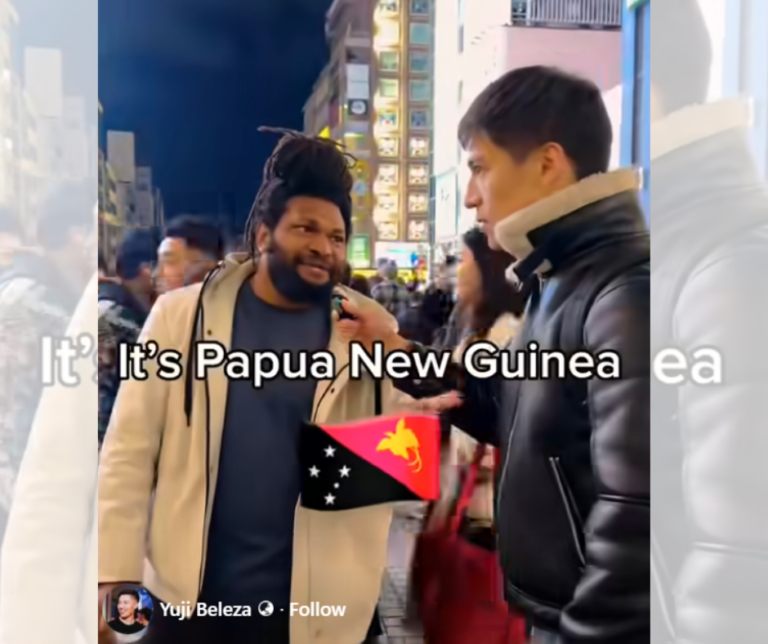
Sparks are flying on social media as a viral video creates a whirlwind of debate around Papua New Guinea and its vast linguistic landscape.

At the center of the storm is a reel uploaded by global influencer Yuji Beleza, who, during his travels in Japan, crossed paths with Papua New Guinean, Joseph Baki Kaore.

As is the nature of Yuji’s content, he asked Kaore to say something in his native language so Yuji could try to guess its origin. Kaore warned Yuji that it might be a difficult guess, but proceeded to give it a try.

@yuji_beleza

Final Language Boss 🇵🇬 . Papua New Guinea has the most languages in the world. There are nearly 850 languages. 10% of the world’s languages are in Papua New Guinea 🇵🇬 . #papua #africa #japan #papuanewguinea #languages

♬ original sound – yuji_beleza

“Rabirabi namona,” Kaore answered. A greeting in the Roro language of the Kairuku District in Central Province.

This simple exchange has seen many Papua New Guineans sharing conflicting opinions. A large segment of the audience argued that Kaore’s response did not represent the “main” language of the country, suggesting he should have spoken in Tok Pisin, the most widely used vernacular in Papua New Guinea.

Others, however, stood by Kaore. They pointed out that as a man hailing from Kairuku, a district in the Central Province, he correctly answered in his local Roro dialect. This highlights a crucial distinction: while Tok Pisin is one of Papua New Guinea’s three official recognized languages, it is not an indigenous language in the same way Roro is. Tok Pisin evolved originally as the local creole but languages like Roro are the ancient, rooted identity of the people and the land itself.

Diversity as Strength, Not Conflict

This debate is, in many ways, nonsensical. Papua New Guinea is the most linguistically diverse nation on earth, boasting over 860 distinct languages. The argument over which language “best” represents the country ignores the very fact that defines us.

One single language cannot be the defining tongue of Papua New Guinea because our 1,000+ tribes are built on the foundation of 860+ different ways of speaking.

This viral moment serves as a call to action for the people of Papua New Guinea. Rather than disputing which language is ‘official’ enough, the nation should celebrate this as a victory for all 860+ voices on the global stage. True national identity is found in honoring every local dialect and recognizing that our beauty lies in our complexity, not in a forced uniformity.

Beyond Words: The Greeting Controversy

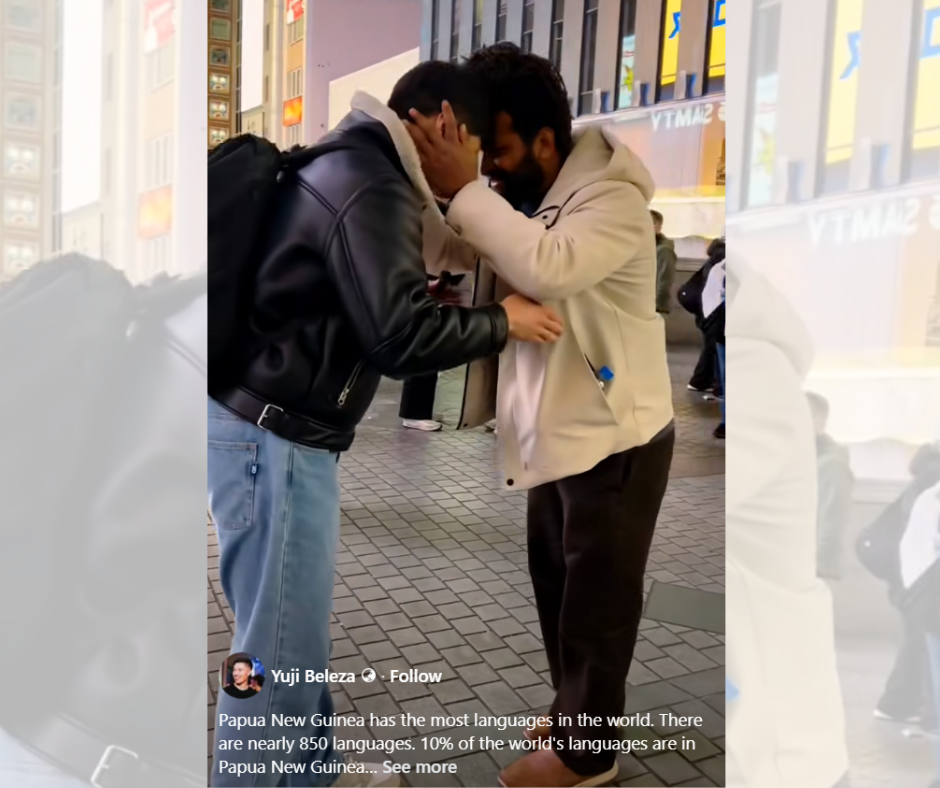
It wasn’t just the spoken words that were scrutinized. Another point of contention was the greeting Kaore displayed, a respectful act where two people touch foreheads.

Joseph Kaore showing Yuji Beleza how people greet eachother in the Kairuku way.

Critics online (largely uninformed) were quick to claim this gesture resembled the Hongi of the Māori culture. However, this form of greeting is traditional practice in the Kairuku culture of the Central Province, as well as several cultures in the Gulf Province.

Rather than labelling this gesture as pirated from Māori culture, it should be viewed as a testament to the deep cultural ties among Pacific nations. While we are geographically spread across the ocean, we share deep ancestral roots and a Pacific history that naturally results in cultural similarities.

A Call for Cultural Education

Instead of dividing ourselves through debate, this viral moment should be viewed as an opportunity to learn. It is a reminder that as people coming from such a diverse background, more education is needed regarding our own neighbors’ customs.

While schools host annual cultural shows and traditional dances are showcased every September 16th for Independence Day, we must ask: Is this enough?

Is enough being done to preserve PNG’s unique dialects and traditions, or is the country falling prey to the homogenizing influence of the Western world? When a “standard” identity is favored over tribal roots, people risk losing the very things that make them unique.

While the world marvels at Papua New Guinea’s diversity in language and cultures, Papua New Guineans must also improve their knowledge about other Papua New Guinean cultures to be able to tell the world about them.


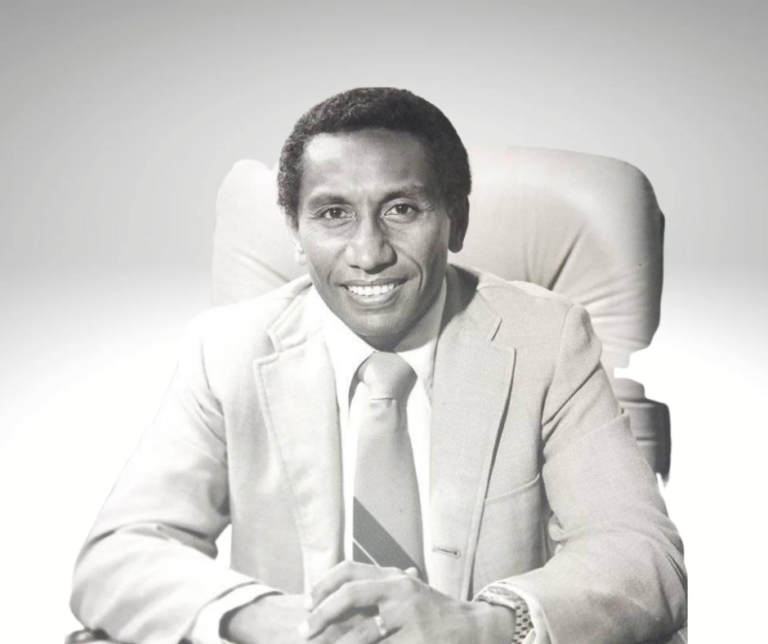
Papua New Guinea’s ‘Last Man Standing’, Sir Julius Chan, at the ripe old age of 85, has passed away quietly and peacefully at his Huris home, in Namatanai, New Ireland Province surrounded by his family.

A pioneer statesman with over 50 years in active politics, the incumbent Governor of New Ireland Province, Sir Julius’ will forever be remembered as the last voice of experience of a Papua New Guinea that now looks to a new generation of leaders in its future.

Born between two cultures on the Catholic Mission of Tanga Island in New Ireland Province on the 29th of August, on the eve of war in 1939, to a Chinese migrant father, Chin Pak, and New Ireland mother, Miriam Tinkoris, he rose from humble beginnings, exemplifying values of hard work, integrity and a deep commitment to the betterment of society.

From a hardworking father whom he watched build boats with his own hands, he learned traits that shaped him from a young boy into a man whose style of leadership would prompt a range of responses and opinions.

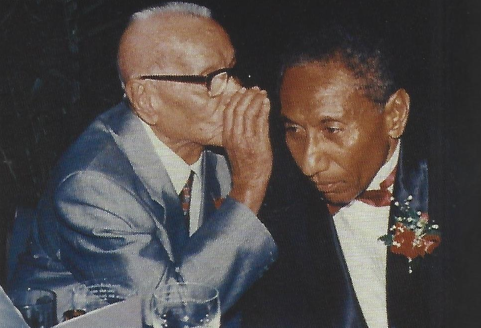
Sir Julius Chan leaning in while his father, Chin Pak, whispers into his ear.
Sir Julius Chan and his father, Chin Pak (left), at celebratory event for Sir J’s 25th anniversary in politics.[[PHOTO: Playing The Game, Sir Julius Chan/Autobiography]

Sir Julius or “Sir J” as he is affectionately known, entered national politics before Papua New Guinea gained independence in 1975.

He was first elected to represent the Namatanai district of New Ireland province in the pre-independence House of Assembly in 1968.

A seat he held consecutively for five more terms; signalling the start of a long career in PNG politics, serving twice as Prime Minister.

Like many long serving politicians, Sir J’s career was not without its own share of controversy.

Whilst many highlighted his commitment and focus on economic management and praised his championing of the Organic Law on Provincial and Local Level Governments which decentralized governance and empowered local administrations as positive contributions, others were critical of his handling of the Sandline affair in 1997; an incident which led to public protest and generated significant criticism.

This prompted him to step down as Prime Minister in the same year.

For this, he will always be known as the first Prime Minister to voluntarily relinquish his post due to a national crisis.

Navigating the often-turbulent political landscape of Papua New Guinea, characterized by frequent shifts in alliances and changes in government, presented ongoing challenges to Sir J’s leadership.

Nevertheless, he proved adept at maneuvering within this complex environment, maintaining a prominent role in national politics for many years, prioritizing resource development and economic diversification to foster stability and long-term growth. 

His long and influential career in PNG politics leaves behind a complex and multifaced legacy.

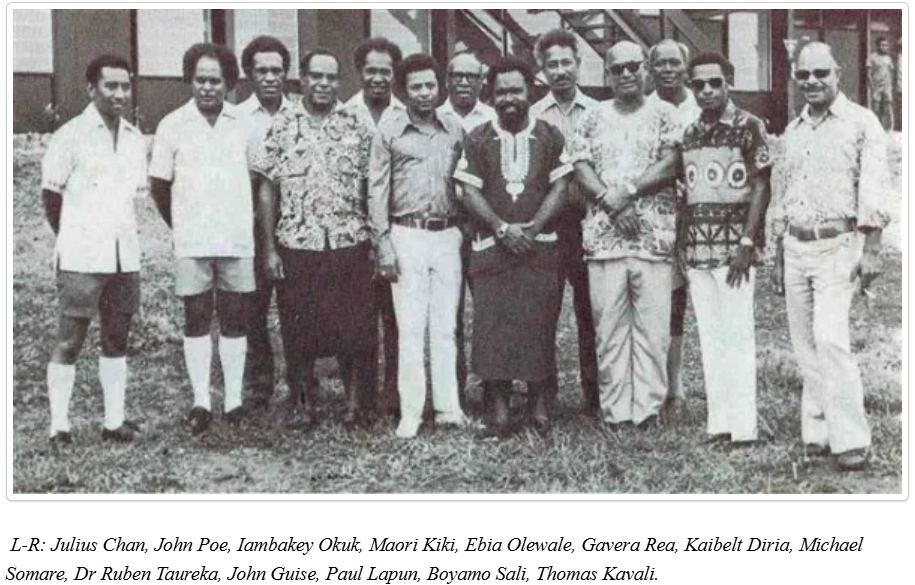
Papua New Guinea's crop of pioneer politicians.
Papua New Guinea’s crop of pioneer politicians.

A nation is now in mourning as the devastating news of his passing is shared far and wide.

Tributes have begun pouring in on Social Media from across the country and internationally, with many Papua New Guineans expressing a profound sense of loss.

Fellow politician and East Sepik Governor, Allan Bird, in a Facebook post referred to Sir J as “the last of his kind. Men set apart by destiny to do things no one else can.”

“Along with his good friend and brother Sir Michael, Sir Pita and others who left, they gave birth to this country”

“A country whose ideals they fought for all their lives. In fact, Sir Julius was still fighting for what he believed in right up until he left us.”

In similar fashion, veteran PNG journalist, Scott Waide posted, “He lived and served well without fear” shortly after he posted, “Another knowledge keeper gone”.

So many others expressing their appreciation toward the founding father, commending his immense sacrifice, commitment and contribution towards shaping the foundation of an Independent Papua New Guinea.

His passing leaves a void in the hearts of those who knew him. He takes with him his wealth of wisdom and invaluable perspectives.

But his legacy of service and dedication will remain in the history books of Papua New Guinea and inspire generations to come.

Prime Minister, James Marape, in a statement, reflected on Sir J’s legacy, describing him as one of the last great leaders from PNG’s Independence era.

“Sir Julius Chan was not just a leader, he was a statesman of great wisdom and resilience, a man who dedicated his life to the service of our country”.

“His significant role in shaping the trajectory of Papua New Guinea’s economy and governance, will never be forgotten”, James Marape, Prime Minister of Papua New Guinea.


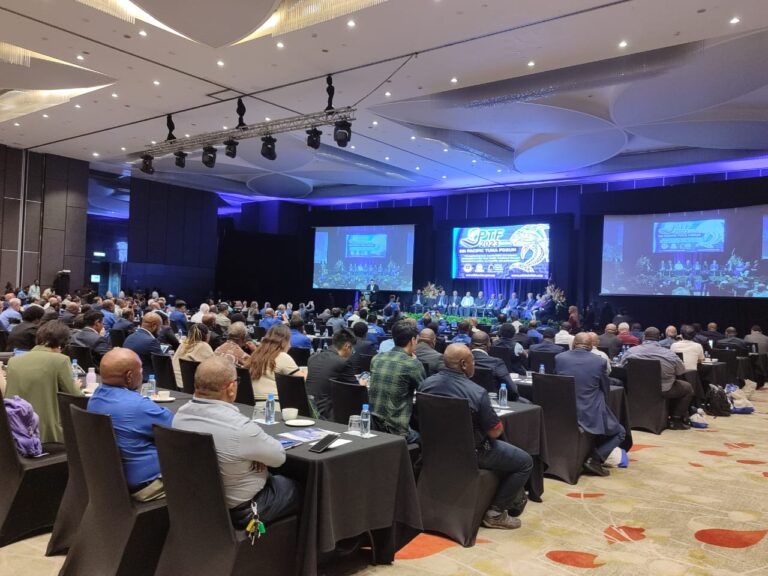
THE Acting Prime Minister of Papua New Guinea and Minister for Lands and Physical Planning, John Rosso, officially opened the 8th Pacific Tuna Forum this morning in Port Moresby in the presence of Ministers and Departmental Heads from the fisheries sectors across the Pacific region.

Under the theme, “Strengthening Tuna Sustainability and Industry development in the ‘Blue Pacific Continent’ through increased innovation, partnership and participation”, stakeholders will address challenges faced by the regional tuna industry and chart a course forward for the future of the tuna resource and whole industry.

Managing Director of the Papua New Guinea National Fisheries Authority said, the last Tuna Forum in 2019 was disrupted by Covid-19 but this year’s conference is well represented by all the Pacific nations.

“Pacific island countries value the importance of maintaining dialogue. These meetings have assisted countries in the region to come together and develop common positions and strategies to ensure the sustainable management of tuna in our region”, Ilakini said.

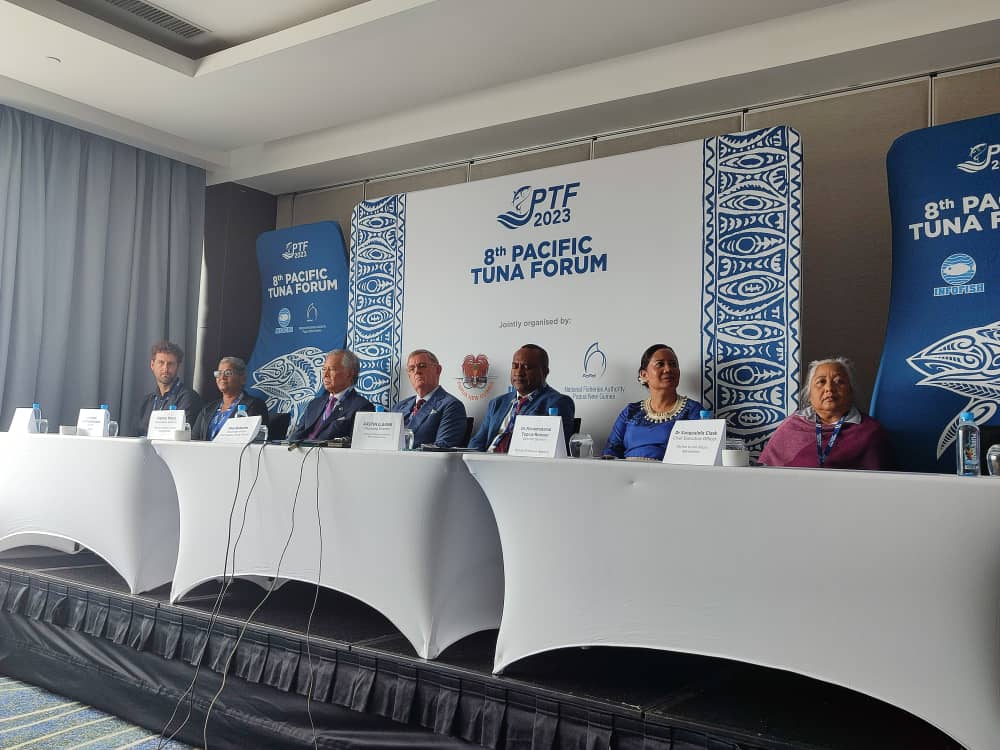
Mr Phil Roberts, Chairman of the 8th Pacific Tuna Forum and Board Director of Tri Marine International Pte Ltd, Singapore who described PNG as a ‘True leader in Pacific Industry and tuna management’ said the challenge now is maintaining the momentum whilst facing global challenges such as climate change and the developments in the industry through the creation of jobs and economic activity.

Head of event organizing Partners

“Fisheries in the Western Pacific is the best managed in the world, there’s a lot to do but I feel optimistic,” he said.

The Pacific Tuna forum is known for its impact on the sustainable management of tuna resources and preserving the Western and Central Pacific Ocean.

The two-day forum will focus on key areas including Sustainable fisheries management; Ecosystem Conservation; Climate Resilience; Market Access and Trade; and Indigenous and Local Knowledge.

Expected outcomes from the forum discussions include Policy Recommendations, Innovative Solutions, Stakeholder Collaboration and Public Awareness for Tuna Fishing and Marine Resource sectors in the Western and Central Pacific Ocean.

The 8th Pacific Tuna forum is organized by the National Fisheries authority of Papua New Guinea with INFOFISH and regional partners including the Pacific Islands Forum Fisheries Agency, Secretariat of the Pacific Community, Parties to the Nauru Agreement Organization and the PNG Fishing Industry Association.

Seven Fisheries Ministers and Heads of Fisheries Departments from the Pacific Region converged into East New Britain at the start of this month led by the Minister for Fisheries and Marine Resources of Papua New Guinea, Jelta Wong for the Pacific Island Ministers East New Britain Initiative.

The Ministers and departmental heads were all invited to sit in on two high-level meetings to discuss key issues related to fisheries management, conservation, and sustainable development in the Pacific region.

The Forum Fisheries Committee meeting based on the U.S treaty distribution of funds was the first on the agenda. This meeting provided the platform for all heads of Fisheries in the Pacific to dialogue on how best to distribute the US$6million provided by the U.S Government to island nations that are members of the Parties to the Nauru Agreement (PNA) treaty.

Pacific Island Ministers East New Britain Initiative meeting
Justin Ilakini, NFA Managing Director.

Managing Director of the National Fisheries Authority, Justin Ilakini said: “the aim of this meeting is to broker a deal amongst all parties involved to reach an agreement on an equal distribution of the funds to aid in development of the sector in smaller island nations of the Pacific Region.

The second meeting, the Pacific Island Ministers East New Britain Initiative saw PNG take the lead in providing the platform for Pacific Ministers across the region to create dialogue in addressing two key issues.

The first being climate change and the second, to tap into opportunities to maximize economic returns from the Pacific’s shared tuna resource.

Mr Ilakini in a press conference in Kokopo expressed hope that the leaders will identify practical ways of implementing the forum leaders’ development aspirations as contained in the Blue Pacific Continent.

“We are leading the initiative and providing the platform for our Pacific Island leaders to have the opportunity to have a voice in speaking from their own National Levels to see how we can collaborate as a region to drive the Pacific Island interest going forward in this multi-million-dollar industry which we have come to know as one of the most lucrative industries that we have; the tuna industry.”

To this, PNG’s Minister for Fisheries explained that the whole meet was to create a purpose for the region and showcase what the region is capable of doing in this space.

He further elaborated that the focus is on creating more wealth for the Pacific and controlling the stocks of the Pacific’s shared tuna resources against world players in the global tuna market.

“It’s better that if we stand united as one, the world will know that they can’t come and pick us off one by one”

Minister Wong said, that the initiative further aims to foster dialogue on better ways to mitigate Illegal, Unregulated and Unreported (IUU) fishing; capitalize on the tuna resource; and ensure that the Pacific gets the best value from its shared tuna resource.

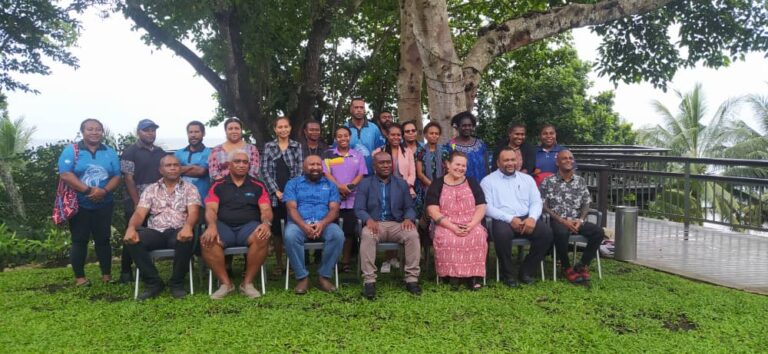
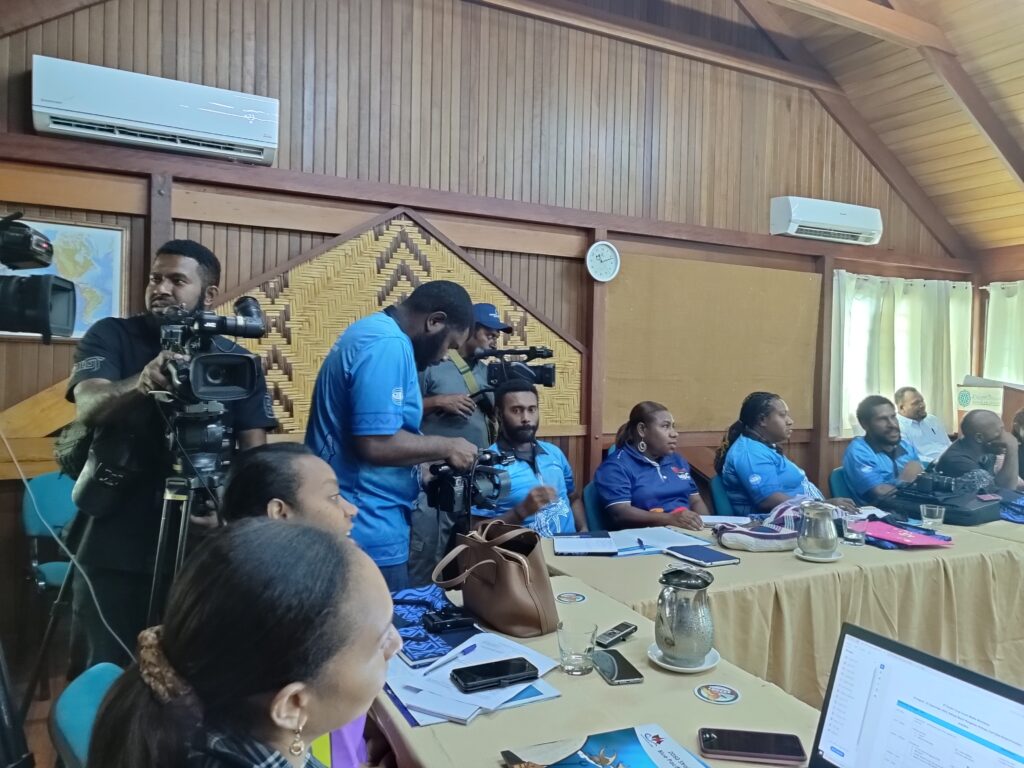
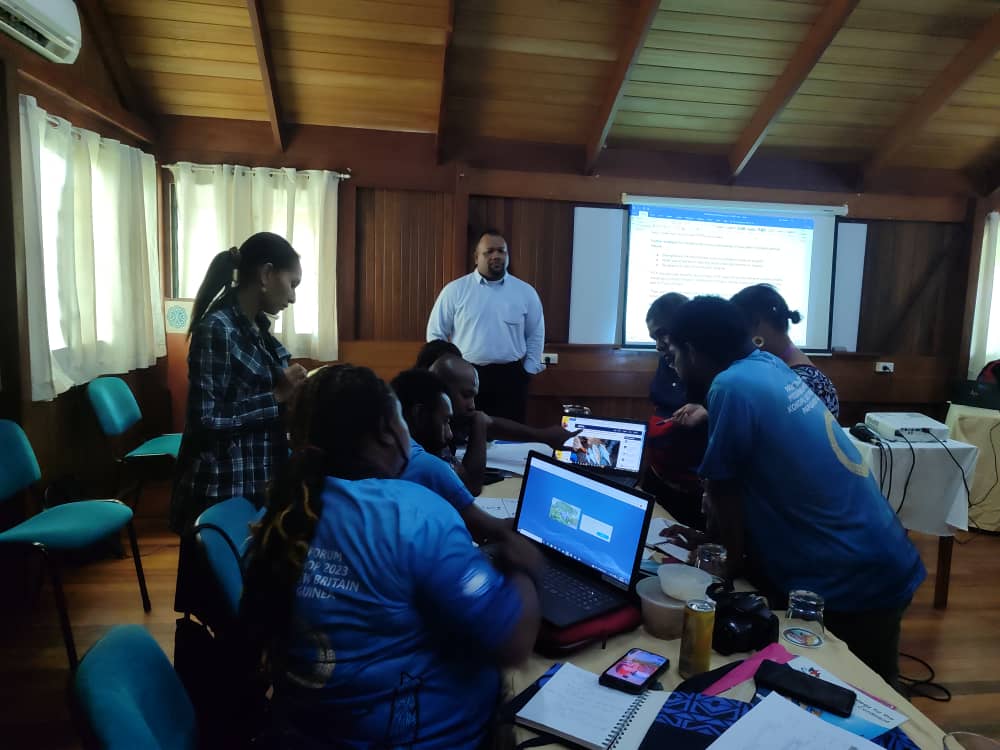
ABOUT twenty media practitioners from Port Moresby and East New Britain completed a three-day media training course on the importance of the fisheries sector in Papua New Guinea and the Pacific Region.

The aim of the media training is to ensure that journalists are better prepared to report on the  8th Pacific Tuna Forum that will be hosted by Papua New Guinea in the capital city, Port Moresby.

Part of the learnings included the growth of the National Fisheries Authority over time, their operating procedures and authoritative regulations and fishing. Among the topics of fishing was the most important, shared tuna resource of the Pacific region.

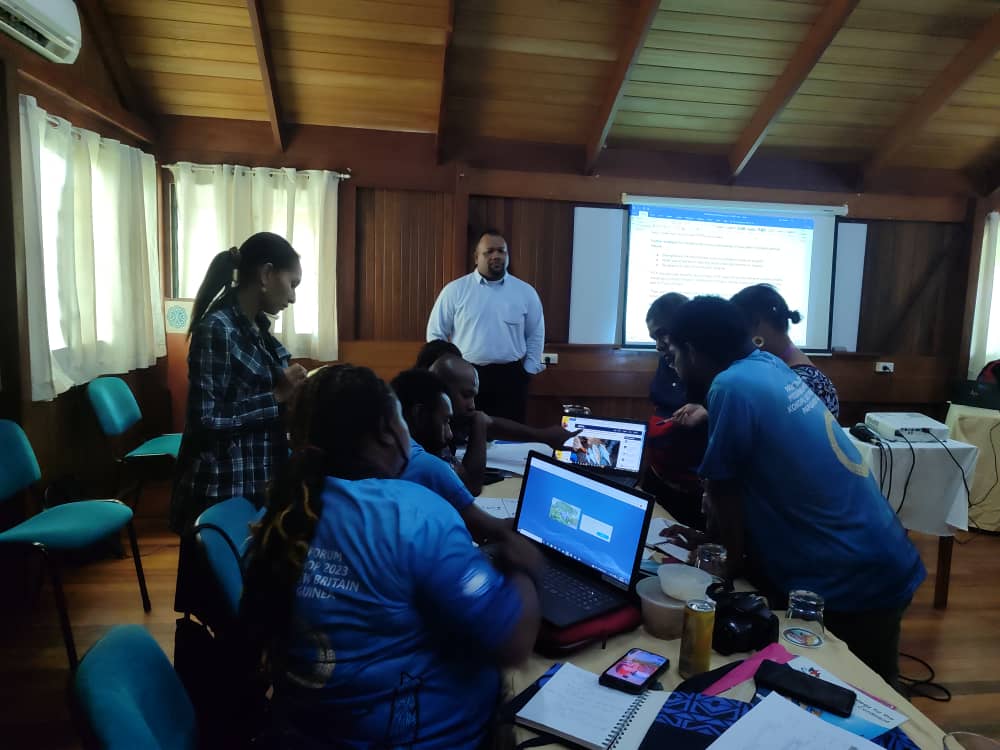
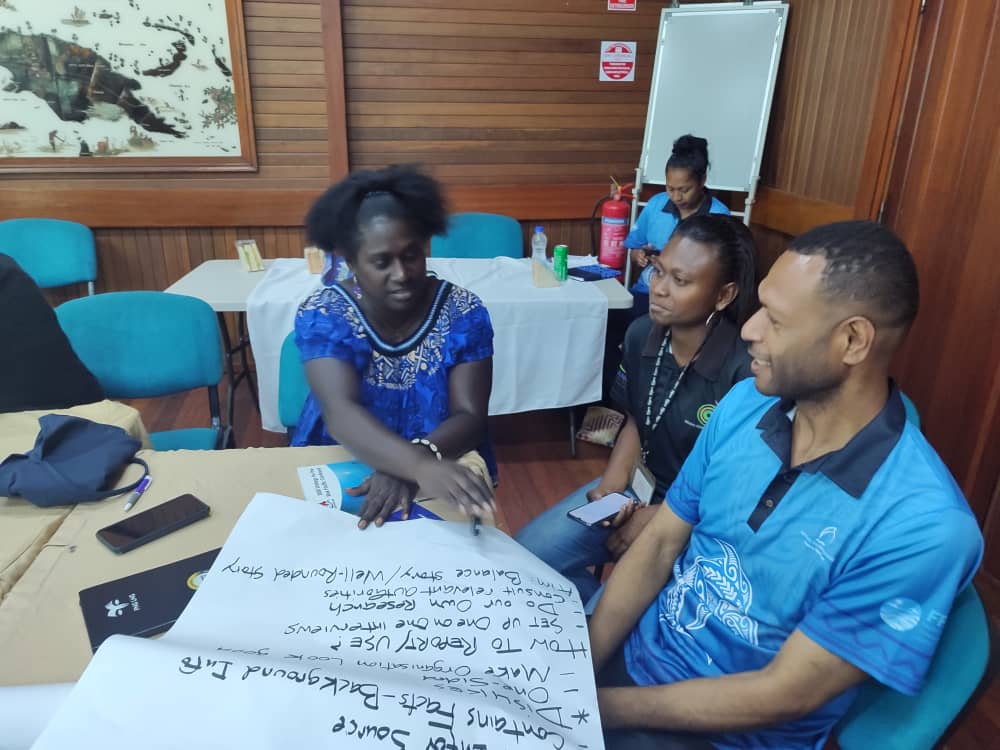
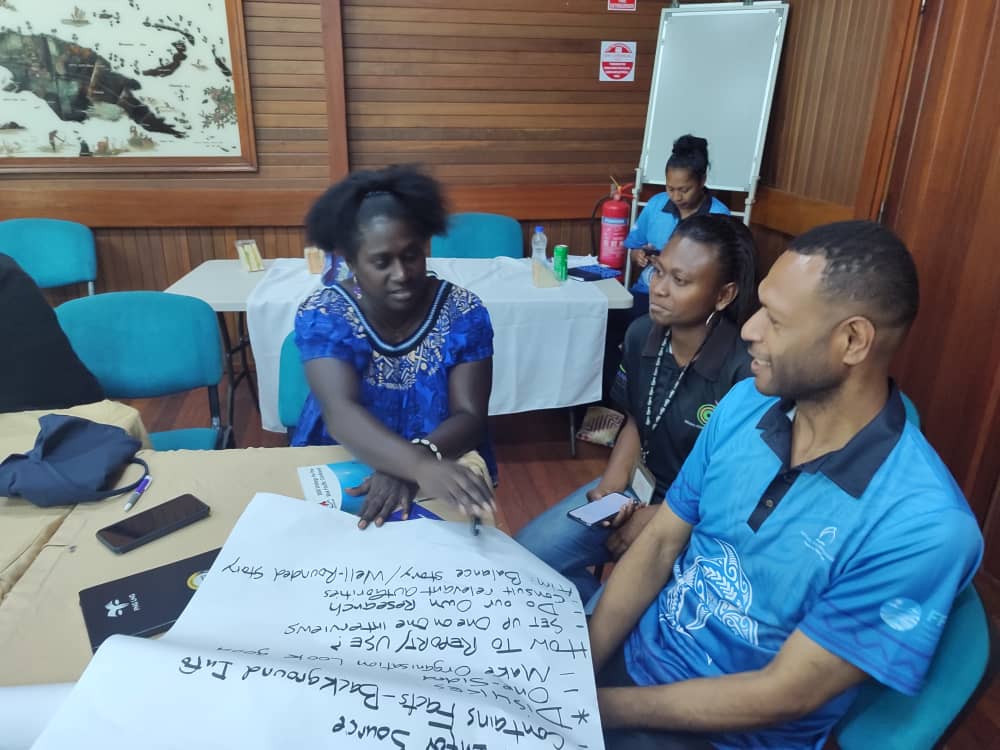
The training fostered interactive discussion between facilitators and journalists about some of the issues impacting the tuna market directly, such as Illegal, Unreported and Unregulated (IUU) fishing and the impacts of external forces such as climate change and COVID-19.

Discussions about preservation and sustainable management of the resource for the future of the country and the wider Pacific and its people were some of the key indicators of the workshop.

President of the Papua New Guinea Media Council, Neville Choi, who was one of four facilitators of the training, encouraged journalists to do more research on tuna and the industry after the workshop in order to effectively report on the topics.

“Tuna is a global market and it impacts some of the major countries who deal with business and economics in the Pacific and a key to understanding all of that is knowing about the fish. The fish in itself is important and where it’s going to be in the next 50 years is important to our own Pacific livelihoods.”

Another facilitator and long-time Pacific journalist, Lisa Williams-Lahari, who’s been covering and following the Tuna stories globally shared her experiences as a Pacific islander and a journalist covering tuna; a resource that is closer to the heart of the pacific people.

“As a journalist following the tuna story worldwide, PNG has really represented the tuna tigers of this region (Pacific) to the world; in terms of leadership and development; and in terms of following the dollars that our people will benefit from in the terms to come.”

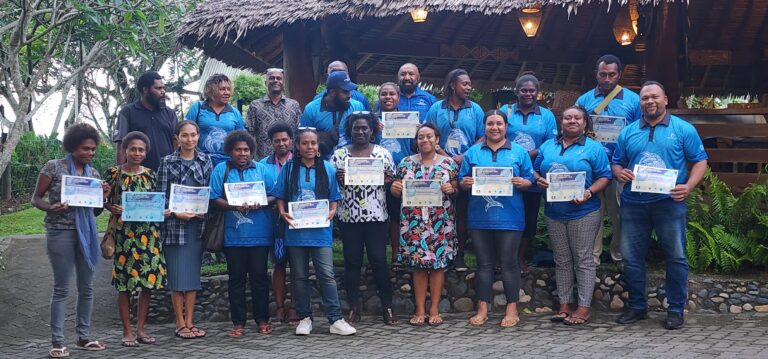
The three-day media training ended with a presentation of certificates to all participants and training facilitators.

The training was initiated and funded by the National Fisheries Authority in preparation for the 8th Pacific Tuna Forum which will be hosted by Papua New Guinea at the Stanley Hotel from the 6th-7th of September in Port Moresby.


FOURTEEN media workers from Port Moresby are joining other media workers in Kokopo for a three-day media workshop ahead of the 8th Pacific Tuna Forum to be hosted on the 6th-8th of September in Port Moresby, Papua New Guinea.

The biannual PTF is the main arena where all stakeholders gather gauge the pulse of the tuna industry in the Western and Central Pacific Ocean and the broader ‘Blue Pacific Continent’; and to keep abreast of the latest sustainable management initiatives, innovative approaches and transformational endeavors at play or that could be further harnessed for the betterment of the industry.

The media workers training is most focused tuna and the inner workings of fisheries industry and will broaden the knowledge of those in attendance.

It is also an essential step toward understanding the importance of the tuna resource in and around the Pacific Region and will help journalists and reporters better cover the event and write stories about the 8th PTF next week.

Facilitators of the trainings include representatives from the Papua New Guinea National Fisheries Authorities, Forum Fisheries Agency and Pacific Island Forum Secretariat. Representing the PNG Media Council, President, Neville Choi will be facilitating a session on media ethics around the reporting of tuna resources and story writing in today’s training session.

The media training is hosted by the PNG National Fisheries Authority at the Kokopo Beach Bungalow Resort in Kokopo, East New Britain.

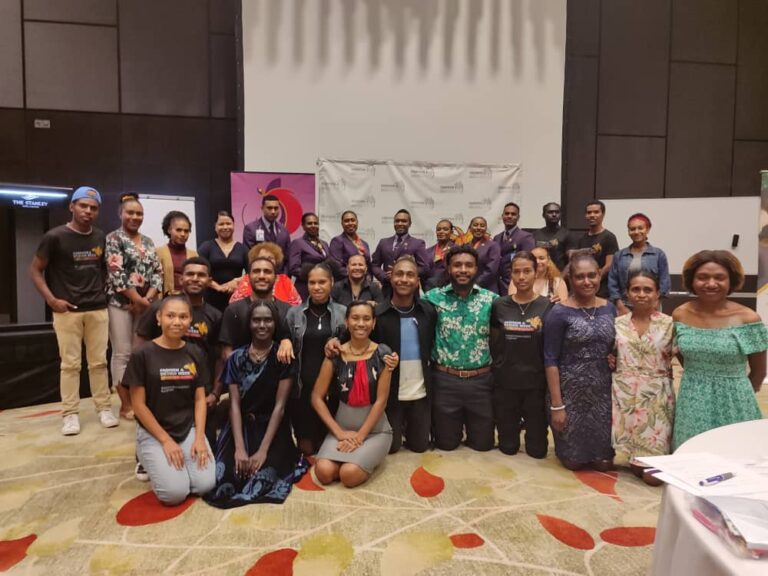
FASHION FOR PEACE is the theme for the 2023 PNG Fashion and Design Week.

This year, PNGFDW is working in close collaboration with final-year Art and Design students from the University of Papua New Guinea, promoting greater recognition and opportunities for the youth who graduate from this course into the real world.

The announcement was made by founder of PNG Fashion and Design Week Ltd, Janet Sios, who aims to highlight challenges faced by the students and utilize the fashion industry as the bridge to explore raw PNG talent and help build careers in fashion.

“We went through the Student Representative Council (SRC) and hosted a runway for them on the 29th of June at the University and it has opened up our eyes to the potential of the students that they could tap into such an industry.”

Mrs Sios explained that the creative industry is worth more than five billion in the whole world and Papua New Guinea is yet to reach and utilize its full creative potential.

Sios and her team have in the past eight years led awareness and advocacy campaigns for sustainable growth, addressing challenges such as intellectual property, market access, financing for small businesses and the preservation of PNG’s cultural heritage through fashion design.

“The creative arts students need to be aware of what we are doing in the industry, creating a culture creative industry in Papua New Guinea.”

With a vision to develop a thriving and progressive creative economy in Papua New Guinea, Sios explained that the fashion and design space is very much inclusive and not limited to models and fashion designers.

Theme: Fashion for Peace

“This is not just for models and designers only; jewelers, photographers, videographers and makeup artists can also join this sector and earn an honest living.”

“That is why we continue the work that we have started eight years ago, to bring awareness on how we manage ourselves in bringing this industry forward.”

Fashion For Peace is a very important serious topic for us”

“Our country is going through a lot; our young people are lost.

“We feel that such a platform can be a powerful tool to bring the messages of positivity.”

“We’ve challenged the designers and models to create designs that reflect the various aspects of peace,” explained Sios.

In accordance with the theme, “Fashion for Peace” UPNG Final-Year Student designer, Enoch Nalong named his ‘collection “Oneness in Nature” which exemplifies the serenity of being one with nature bringing forth a sense of peace.

Enoch is the only male out of seven student designers who will showcase their designs alongside other established and emerging designers.

They are:

  1. Anna Amos – AA Tribal
  2. Wandid Amini Korimbo – Wiska/Niugini Native
  3. Elizabeth Omeri – Denani
  4. Kenny Ng – Kenny PNG
  5. Natasha Tamanabae – Baiwa
  6. Dr Jim Kari – Kari Designs
  7. Elizabeth Wong – ELIZZ
  8. Kathryn Turbarat – JeyMal Designs
  9. Esther Sione – Tehine Designs
  10. Janet Sios/Aunty Faye Collaboration (International designer)
  11. Iki Haangana (International designer)

The PNG Fashion and Design Week show will take place on Saturday (August 19) at the Stanly Hotel in Port Moresby.

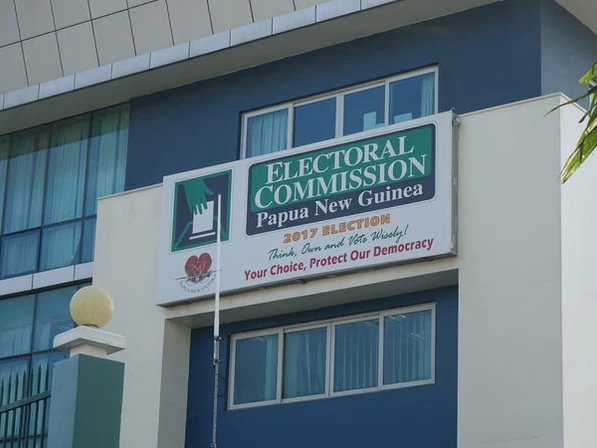
The Papua New Guinea Electoral Commission is encouraging young people to vote in this year’s National General Elections.

 During a media briefing this morning in Port Moresby, Electoral Commissioner, Simon Sinai, said the commission is targeting people between the legal voting age of 18 to 34 to be active participants in this year’s elections.

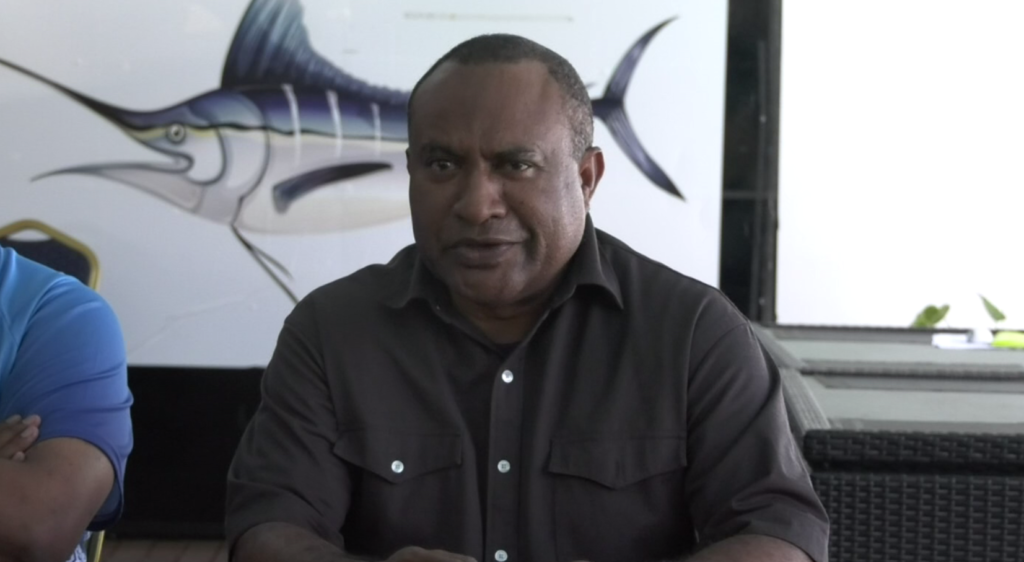
Electoral Commissioner, Simon Sinai, speaking to media personnel at Hilton Hotel in Port Moresby

“Voting is a democratic right, and in order for PNG citizens to exercise this right, they must enrol to be eligible to vote.”

Enrolment exercises are being carried out currently in all the 12 wards of the National Capital District.

Only persons who are 18 years of age and above are eligible to enrol, however, those who are currently 17 years of age and will be turning 18 before the date of the Issue of Writs (scheduled for April 28th) will be allowed Provisional Enrolment.

Commissioner Sinai urges all citizens to check the common roll to see if their names are listed, and if not, he is advising that all must enrol their names in their respective wards.

Sinai said enrolling in a school or owning a National Identification Card does not ensure one’s eligibility to vote.

Pin It