Author

Julie Badui-Owa

Browsing

A 35-year-old mother has broken her silence on the heartbreaking death of her newborn baby at Angau Memorial Provincial Hospital, alleging a serious failure in duty of care and a total breakdown of clinical protocols.

Elizabeth Narun, a first-time mother, says her daughter did not die suddenly but “deteriorated over time” while she repeatedly begged staff for medical intervention during a four-day ordeal that began on New Year’s Day.

Ms. Narun was 42 weeks pregnant when she was admitted to the Angau Labour Ward at 12:30pm on January 1, 2026. Because she was post-term, her antenatal plan was clear, she was to be assessed and induced if labor did not progress.

“That evening, I was assessed and found to be 1 cm dilated,” Narun wrote in a facebook post that is being shared among users in and around Lae and Port Moresby.

“At that time, my baby’s heartbeat was normal, and movements were good.”

However, the following day, January 2, she claims the documented plan was ignored. Despite her concerns, a different doctor performed an artificial rupture of her membranes.

“I was advised that I would be reviewed at 1:30pm, and that induction would follow,” she said.

That review never happened. Instead, Ms. Narun spent the next 24 hours in a desperate cycle of following up with nurses and midwives who she says showed “no urgency.”

System Under Siege

The tragedy comes as the Morobe Provincial Health Authority (MoPHA) admits the hospital is at a breaking point. In a general statement released this week, MoPHA Chairman David Wissink highlighted a significant funding-to-demand gap.

Angau is currently tasked with an impossible mandate, it is funded as a provincial hospital but acts as the regional referral center for all four provinces in the Momase Region (Morobe, Madang, East Sepik, and West Sepik).

“We are effectively running a national-scale operation on a provincial functional grant that is underfunded and overstretched,” Wissink stated.

He added that healthcare workers are being “asked to do the impossible with limited resources.”

“No Mother Should Have to Beg”

By the morning of January 3, the doctor who authored the original report identified a “serious error“, Ms. Narun had been wrongly transferred to the antenatal ward. Though augmentation was ordered, Ms. Narun says she waited another full day with no action.

Induction finally began at 4:24am on January 4. By then, a stress test showed the baby was in distress. While waiting for an emergency Cesarean section, Ms. Narun went into spontaneous labor.

“My baby required resuscitation at birth, cried, and was placed on oxygen,” she recalled.

“That was the last time I saw my baby breathing.”

At 2:30 pm, she was told her baby had died in the NICU.

A Call for Accountability

Distraught but determined, Ms. Narun said she is sharing her story not to cause outrage, but to ensure no other mother has to experience her pain.

“No mother should have to beg for care. No family should have to beg for answers,” she said.

“My baby did not die suddenly. This occurred in the context of missed induction and significant delays in care.”

As the MoPHA calls for a National Funding Realignment to address the regional pressure on Angau, Ms. Narun is simply asking that her daughter’s life be recognized.

“She was loved, and she deserved better,” she said. “My baby mattered.”


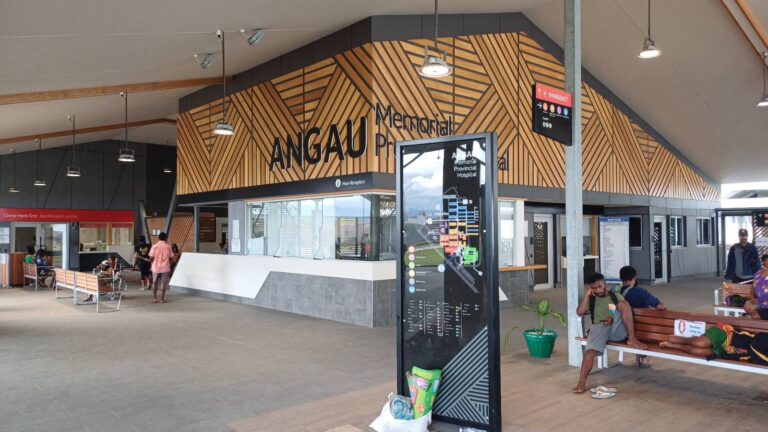
LAE, MOROBE PROVINCE – Joshua Kepas, a 28-year-old father of two residing in Lae, has raised alarms over critical medicine shortages at Angau Memorial Provincial Hospital. Mr. Kepas told InsidePNG that his family was forced to rush to a local shop last night to purchase Panadol for his elder sister, who is currently admitted at the facility after suffering severe stomach pains on Monday.

According to Mr. Kepas, the family only discovered the shortage when a senior health officer prescribed the basic painkiller as part of her treatment, noting that the hospital had no stock available. This forced the family to travel to the Food Mart shop in town to secure the medication themselves.

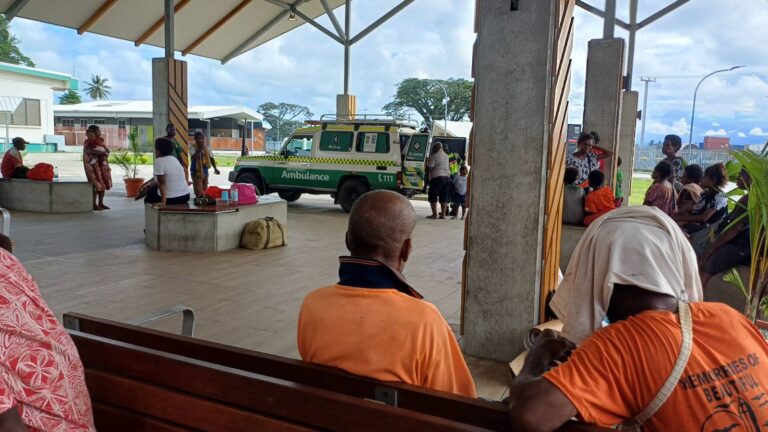
Beyond the lack of medicine, Mr. Kepas described a dire situation within the hospital’s walls. He reported that the Accident and Emergency area was heavily congested, with very sick patients and their guardians forced to sleep on hospital floors and benches in the triage and outpatient sections.

He characterized this level of overcrowding and the scarcity of essential drugs as a significant failure of government priorities.

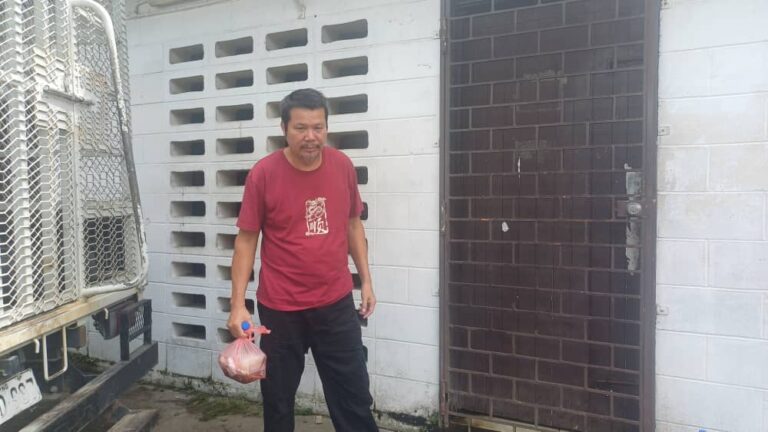
Kepas speaks of medicine shortages at Angau Memorial Provincial Hospital.
Picture of Joshua Kepas, Lae Resident.

The current crisis persists despite local efforts to bridge the gap. In December of last year, the Lae City Authority assisted the hospital with K200,000 worth of medical supplies to combat a nationwide shortage. This support is part of an ongoing initiative by Lae MP and Deputy Prime Minister John Rosso.

However, Mr. Kepas argued that while such donations provide brief relief, they are merely temporary fixes for a massive systemic problem. He warned that unless the government prioritizes healthcare funding and the Morobe Provincial Health Authority ensures effective management, more lives will be lost to diseases that are otherwise curable.

Angau Memorial Provincial Hospital serves as the primary referral center for Morobe’s ten districts and the Highlands region. It also houses the National Cancer Unit, which provides specialized care for patients from across Papua New Guinea.

The facility currently operates under the management of the Morobe Provincial Health Authority.


A local woman from the Finschhafen District in Morobe Province is calling on their local leaders of Parliament, specifically Raibo Paita and the Morobe Provincial Health Authority, to coordinate efforts in restoring basic medical services. The community is reporting a critical shortage of essential medicine, as well as the unavailability of X-ray and ultrasound services.

The Burden of Seeking Care

Speaking to InsidePNG, the woman said that seeking treatment at Angau Memorial Provincial Hospital in Lae has become very expensive. Patients arriving from Finschhafen frequently find that medicines are out of stock and diagnostic equipment is non-functional.

According to the local source, patients are regularly issued prescriptions to purchase their own supplies from private pharmacies and referred to private hospitals for scans because Angau’s ultrasound machine is non-operational.

“Finschhafen’s Butaweng Health Center couldn’t provide the X-ray and Ultra Sound services for the people to have access to due to so many reasons including the continuous blackouts,” she said.

Critical Shortages at Butaweng

Community members say that Butaweng is a major health center that requires urgent attention to prevent the need for nerve-wrecking travel to Lae. Currently, even basic consumables like Panadol and IV fluids are reportedly unavailable, and a lack of health officers and diagnostic tools has led to preventable deaths.

“Our leaders supposed to look into it. Why do we have to come to Lae here at the Angau Memorial Provincial Hospital and die? From Finschhafen up to Lae is really far and it costs us K100 per passenger by boat. In an emergency situation to seek medical treatment, we sometimes hire the boat at a cost of K1000.”

Her concern deepened as she told InsidePNG that delayed travels due to weather circumstances and funding constraints has led to some lives being lost along the way.

This situation has been a recurrence for many years where health services decline and people have to find their own way to seek treatment.

 “Sometimes we lost lives along the way to Lae from Finschaffen due to bad weather. We could’t afford air transport because it’s very expansive. We just couldn’t afford. Due to these reasons, many locals have lost their lives because they couldn’t get the medical treatment they need,” said the woman.

 “Our leaders must step in immediately and attend to our needs for health services and fix what is lacking in our District and LLG,” she added.


Editor’s Note: Rainbo Paita, who recently became the Governor for Morobe Province following the untimely passing of former Governor Luther Wenge, continues to serve as the member for Finschhafen District.

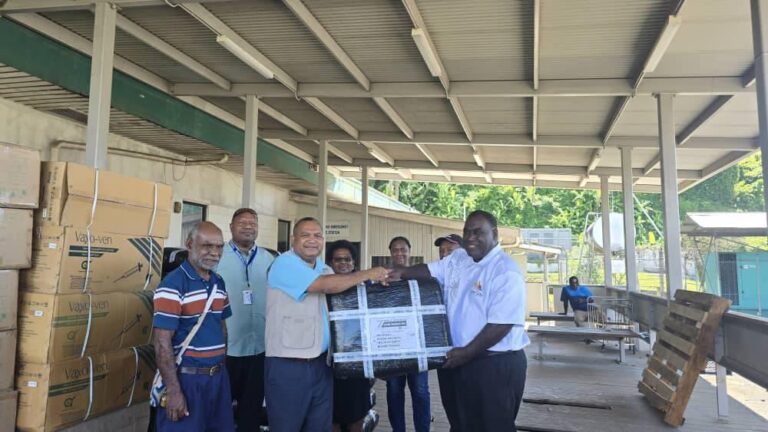
The Angau General Hospital in Lae has received a K200,000 worth of essential medicine supplies this morning from the Lae City Authority (LCA).

Urban clinics in the city also received similar supplies a week ago at a tune of K130 000.

This is an ongoing aid from LCA to Morobe Provincial Health Authority, especially Angau and Lae District clinics, to complement the support from the national government.

Meanwhile, the Morobe Provincial Health Authority is still working on addressing the issue of staff shortage at the Angau Memorial Provincial Hospital’s Emergency and Accident Unit.


Waigani District Court has struck out a high-profile cybercrime case against Ronald Banipi involving State Enterprises Minister William Duma, citing significant delays in prosecution.

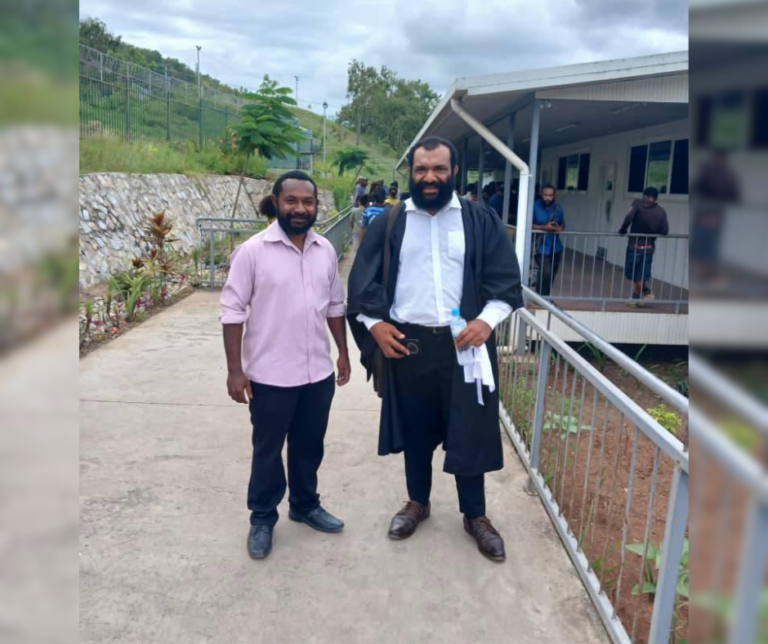
Magistrate Paul Puri Nii struck out the case today following an application by defense counsel Abednego Miori.

The defense argued for the case to be struck out under Section 37(3) of the Constitution, citing the State’s failure to produce a police file or prosecute the matter within a reasonable timeframe.

Counsel Miori noted that since Mr. Banipi’s arrest in October, the case had been subject to five adjournments without progress.

Magistrate Nii concurred with the defense’s submission, ordering the immediate refund of Mr. Banipi’s K5,000 bail.

The charges stemmed from an incident on October 12, 2025, when police apprehended Mr. Banipi in Port Moresby. The arrest followed a formal complaint by Minister William Duma regarding a social media post on Mr. Banipi’s Facebook profile.

The post in question featured a caption written by Banipi accompanying a shared news article from The National’s online page.

Arresting officer, Detective Zina Afuti charged Banipi with one count of Defamatory Publication under Section 21(2) of the Cybercrime Code Act 2016, alleging the post damaged the Minister’s reputation and credibility.

Mr. Banipi was represented pro bono by Mr. Miori, who volunteered his services after the arrest gained significant traction on social media. After spending time in the Boroko Police Station cells, Banipi was released on bail on October 13 and first appeared in the Committal Court on October 27 to maintain his innocence.

Following the court’s decision today, Mr. Banipi and his counsel expressed their gratitude to the public for their support. Mr. Miori described the outcome as a significant precedent for the protection of constitutional rights regarding timely prosecution.


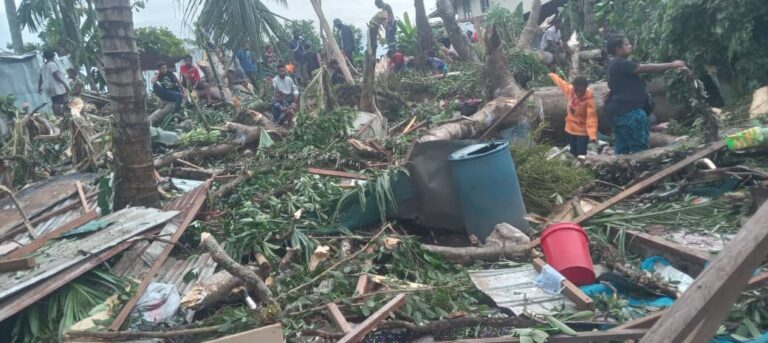
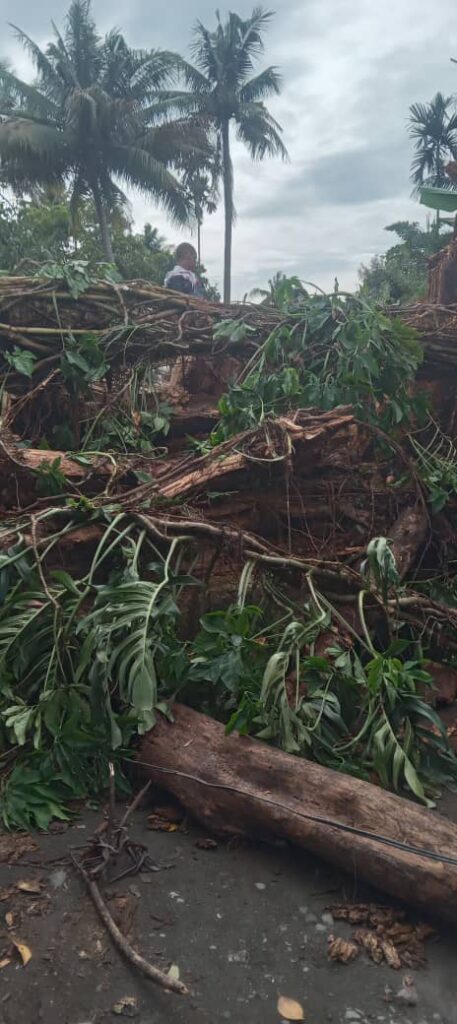
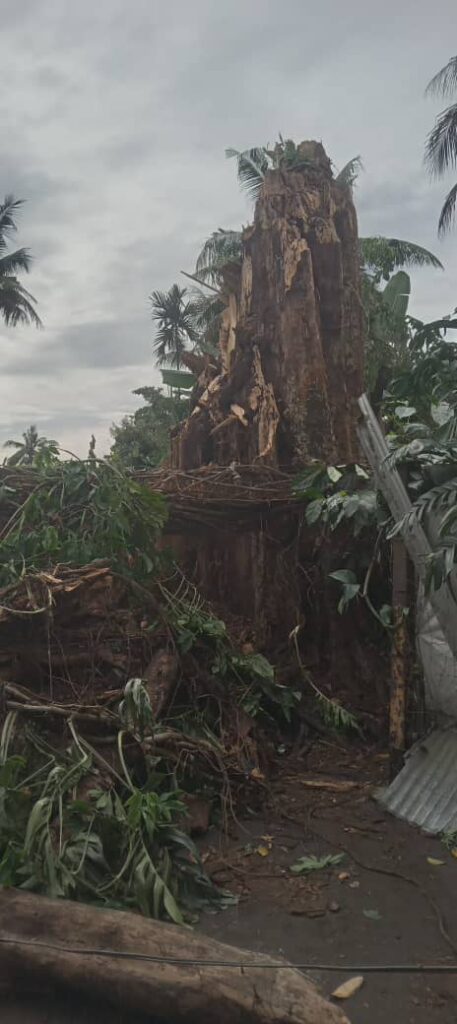
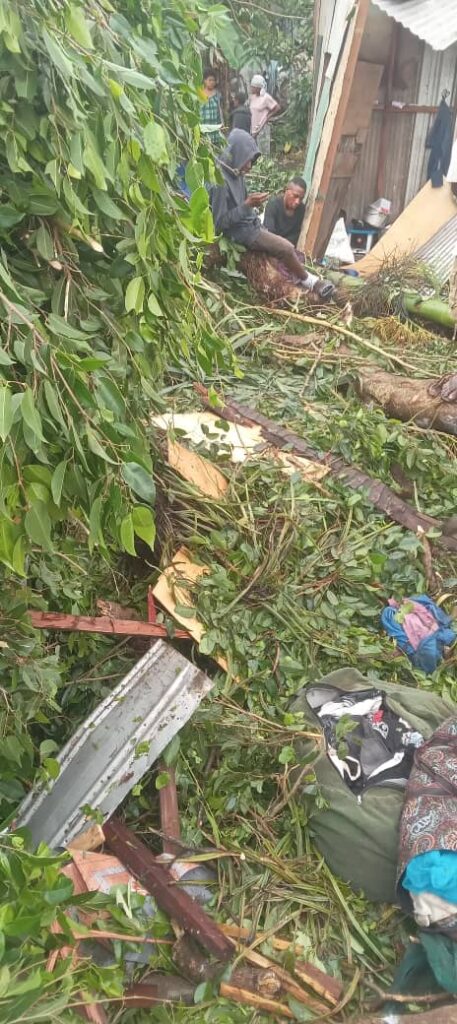
A woman and two children were tragically killed last night in Lae, Papua New Guinea, when a massive, decaying tree collapsed during a heavy downpour. The incident, which occurred in the Kamkumung Assinghu, Y2K area, Ward 15 of the Ahi Local Level Government (LLG), also left more than eight people badly injured.

The deceased children were reported to be around 9 to 11 years old. Following the tragedy, the injured were rushed to the Angau Memorial Provincial Hospital, where they are currently receiving treatment for various injuries.

The old, towering tree that fell was a structure that had long provided shade and shelter for the community. Its collapse destroyed eleven houses in total, taking the lives of the three individuals.

Ward Councillor, Awagasi Aisen, expressed his shock and sorrow, alleging that the deaths were a preventable tragedy. He emphasized the need for residents to be mindful of their surrounding environment, especially when constructing homes near huge, old, and decaying trees.

 “It is an unfortunate situation witnessed tragically by the members of the community, with two very young lives lost and that of a woman as well. Eight are currently in critical condition and are at the Angau Memorial Provincial Hospital,” he said.

Councillor Aisen called upon relevant authorities, specifically the Disaster Office, to urgently look into the matter and provide assistance to the families who lost their homes.

“I call on responsible authorities, especially the Disaster Office to look into this issue and assist the families that lost their homes last night by the falling tree.”

He further committed to working closely with authorities to ensure a thorough inspection of the Ward 15 area for potential hazards, including decaying trees and hanging tree branches, to prevent similar incidents in the future.


The Mineral Resources Authority is a government agency responsible for executing all mining-related functions on behalf of the Independent State of Papua New Guinea. The authority is the custodian of the mining sector in PNG. MRA accounts for over 60% of PNG’s export revenue. 

Established right after Independence on September 16, 1975, the Independent State of PNG had its own Parliamentary system with several Members of Parliament appointed to Ministries, including Natural Resources, which had the Department of Natural Resources. 

The department administered;

  1. Mining Development Act 1976
  2. Petroleum (Prospecting & Mining) Act 1976
  3. Continental Shelf (Living & Natural Resources) Act
  4. Mining (Bougainville Copper Agreement) Act, and
  5. Mining (Safety) Act 1977

In 1983, the Ministry of Natural Resources was realigned and renamed, to the Ministry of Mineral and Energy. The department under the ministry was the Department of Minerals & Energy that administered all legislation under the former department of natural resources. 

In 1992, during the reign of Sir Robbie Natalie as the Prime Minister of PNG, the department reviewed the Mining Development Act 1976 that resulted in the creation of a new legislation, which is the current Mining Act 1992. 

In 1998, the Government, under the leadership of former Prime Minister when late Bill Skate was the Prime Minister, the separated mineral resources and petroleum & energy.  resources and their office stations separated. All mineral resources sector and its relevant legislations were placed under the new Department of Mining and petroleum and energy legislations were under the Department of Petroleum and Energy. 

In the year 2000, the World Bank gave USD$10 million loan to the PNG Government for the Mining Sector Institutional Strengthening Project with the primary aim to strengthen the national capacity of national government agencies to attract new foreign investors to the mining sector. One of the recommendations was to establish an Authority, an organization free of political interference with its own funds from the production levies collected from the mines, which led to the birth of the Mineral Resources Authority. 

In 2005, the Government enacted the Minerals Resources Authority Act 2005. This legislation paved the way for the birth of the Mineral Resources Authority (MRA). 

Until 2007, MRA became operational, from its brand new building known as the Sir Paul Lapun Haus, commonly called the Mining Haus. Unfortunately, the building burnt down in 2014. The cause is still unknown. 

MRA currently administer the following legislations;

  1. Mining Act 1992
  2. Mining (Safety) Act 1977
  3. Mining (OkTedi Continuation Agreement) Act 2001. 

MRA FUNCTIONS & APPROACH

On 19th August 1998, the National Executive Council (NEC) considered a Policy Submission requesting approval for the creation of the Mineral Resources Authority through an Act of Parliament. On 9th November 2005 and which came into force on 1st January, 2006.

The Mineral Resources Authority (MRA) is a government institution established to regulate, grow and sustainably manage the mining (minerals) industry to maximize mineral export revenue for PNG. 

MRA’s key functions and responsibilities is to;

  1. Advise Minister on matters relating to management, exploitation, and development of PNG mineral resources in PNG. 
  2. Oversee administration and enforcement of Mining Act 1992, Mining Safety Act, Mining Development Act, Ok Tedi Acts and Bougainville Copper Agreement Act (whose responsibility is now with the Bougainville government).
  3. Promote orderly exploration and development of PNG mineral resources, and administer and manage all exploration and mining tenements in PNG.
  4. Negotiate mining development contracts and MOAs, provide liaison and facilitate meetings between stakeholders of specific exploration and mining projects.
  5. Conduct geo-scientific investigations into PNG geological resources and promote these resources to potential investors and developers.
  6. Provide small scale mining services. 

According to MRA, successful mining and exploration requires a good understanding and respect for the diversity of the country, both win terms of cultures and socio-economic contexts, as well as biodiversity and natural characteristics. 

MRA assists companies in abiding by existing legislation in this regard, and in providing overall advice, and in expertise which has been built up from work conducted throughout PNG.

Meanwhile, MRA is principally a government regulatory institution providing regulatory services to companies holding exploration and ming tenements in PNG. 

MRA is also a scientific institution conducting surveys and explorations to understand better the geology and mineralization of PNG. It is the custodian of all mineral and other earth sciences data in PNG. 

WHAT MRA DOES

The Mineral Resources Authority (MRA) is a government institution established to regulate, growth and sustainably manage the mining (minerals) industry to maximize mineral export revenue for PNG. MRA is the custodian of over 15, 000 volumes of exploration reports and over 900,000 data points of mineral data. It is the first point of contact for any businesses in the mining sector. 

As the mining business encroaches on customary land, local communities are impacted one way or the other, and with the perceptions and expectations on improvement of their lives. The MRA plays an important role in facilitating and managing these perceptions and expectations. It is the middleman for all stakeholders in the mining and exploration and related activities. 

PERMITS

The Tenements Administration Branch is headed by a manager who is also the Registrar of tenements. The Register’s Office administers the PNG Mining Act 1992 which is the Law that regulated mineral exploration and mining in PNG. 

Apart from administering permits, the branch also oversees the revenue from alluvial gold exports. It also maintains a repository of mine production and royalty data. The permitting process will be fully electronic soon should the revised Law is enacted. 

TYPE OF TENEMENTS

There are various types of Mineral Tenements provided for under the Mining Act 1992 which are issued by the Mining Minister on recommendation from the Mining Advisory Council. These tenements are;

  1. Exploration License (EL) – enables the holder to conduct mineral exploration within the area on land and offshore within the State of PNG. The license term is two years subject to extension. The area six is 1 sub block or 3.14 square kilometers minimum. The rights to develop mineral resources within the EL rests with the EL holder. Alluvial Mining lease is held only by naturalized citizens for mining 
  2. Mining Lease (ML) – a mining Lease is generally issued for small to medium scale alluvial and hard rock mining operations. The lease terms up to 20-years and can subsequently be extended for up to 10-years. The area size sis up to 60 square kilometers. Mining lease for hard rock resource development can be held 100% by a foreign entity. Mining lease for alluvial purpose with foreign interests can be had in the ration 49%:51% favouring nationals.
  3. Special Mining Lease – Large and mega mining projects are usually undertaken under a SML. The Mining Minister in considering the size of the mineral deposit, the method of treating it, the infrastructure required for the project, economic consideration and financing of the property may decide on the project being undertaken under mining development contract. The mining development contract is entered into between the State and the project proponent and it captures terms not already captured in the mining law. The decision by the Minister brings about a mining development forum where the terms of the contract are negotiated.
  4. Alluvial Mining Lease (AML) – this lease is held only by naturalized citizens for mining alluvial minerals. The citizen must be the owner of the land over which the lease falls. The area size can be up to five hectares maximum and the term of the lease is up to five years extendable Gold is the alluvial mineral usually mined under an AML. With no alluvial minerals definition in the mining law, it is generally perceived all other alluvial minerals are inclusive. 
  5. Lease for Mining Purpose (LMP) – LMPS are leases that hold infrastructure that support mining projects. The lease is usually issued outside but adjacent to a primary mining tenement, if the primary tenement cannot hold all the infrastructure required for the mining project. The term of the LMP is tied to the term of the primary tenement. The area size of the LMP can go up to 60 square kilometers maximum. 
  6. Mining Easement (ME) – A tenement that serves as an easement for infrastructure that supports a mining project. An easement may overlap other establishments. The intent is to excise certain land areas from the establishments for the purpose of the easement. Easements usually caters for infrastructure that requires narrow lateral extent but covers long distances such as roads, railway, power transmission lines, pipelines, waterways, to name a few.

PROCESS FOR APPLYING FOR A MINING LEASE

  1. Register on the MRA Portal
  2. Submit a lease application with supporting documents including proposals, financial and technical capacity evidence, land title information;
  3. Mining Warden Hearing where community views are recorded, and 
  4. Recommendation by the Mining Advisory Council
  5. Final grant or refusal by the relevant authority. 

MRA Use of Templates/Forms

Form 4: For a standard Mining Lease

Form 5: For an Alluvial Mining Lease

Form 3: For a Special Mining Lease

Form 8/17: Used for application particulars and boundary descriptions

Form TMP1: For online portal registration. 

These forms are available from the MRA website or head office in Port Moresby. 

MRA has five (5) Divisions

  1. Development Coordination Division
  2. Regulatory Operations Division
  3. Geological Survey Division
  4. Corporate Services Division
  5. Office of the Managing Director 

The Managing Director is responsible to the Board for matters relating to administration and institution of the MRA including its day to day operation and activities.  The Managing Director is responsible for the Minister relating to the implementation of the provisions of the Mining Act 1992 and all mining regulatory or policy matters.

A Chinese mine manager convicted earlier this month by the Lae District court over a shooting in Lae at Eriku’s residential area was sentenced to three-years imprisonment.

Senior Magistrate, Nasaling Bingtau said Li Dezhang, the General Manager of Guancai Mining Limited, will serve three years at the Buimo Prison. Dezhang will then be deported to China after serving his term.

Li Dezhang moved to the Papua New Guinea shortly after serving a prison sentence in China for a series of violent extortions, according to Chinese legal records.

Li Dezhang, 56, was found guilty by Lae’s District Court in Morobe Province on May 1st for unlicensed possession of a firearm, unlawful discharge, and assault over a mid-April incident in which he fired a Chinese-made pistol at another Chinese citizen who had confronted him about unpaid bills.

Li had worked as a manager of Guangcai Mining Limited, which operated three unlicensed gold mines in Bulolo, Morobe Province, which had been the subject of complaints of environmental destruction from the local communities.

Earlier this month, immigration authorities and police detained 19 workers at one of the company’s mines and deported most of them after finding that they didn’t have the proper work permits, according to Lae’s police commander, Chief Superintendent Chris Kunyanban.

Li was responsible for bringing the illegally employed workers into the country, Kunyanban said.

Before his arrival in PNG, Li already had a criminal history in China for a series of offenses he had committed in West Africa, according to Chinese court documents.

Li was arrested in Ghana and repatriated to China in early 2020 for using violent threats to extort a casino investor in the country out of 100,000 cedi (about $7,400), as well as the kidnapping and assault of another man who owed him a debt, according to announcements from a court in Li’s home province of Guangxi.

He served just over three years in prison and was released in early 2023, court records show.

Records in a separate civil case also show that Li was successfully sued for fraud in China for failing to deliver paid-for mining equipment to clients in Ghana.

Environmental destruction from mining has long been a public concern in resource-rich PNG.

PNG Immigration Minister, John Rosso told Inside PNG and OCCRP that the raid on Gunagcai’s mine earlier this month had to be done with officers that were “handpicked to avoid compromise.”

“We cannot practice double standards,” Rosso said.

“Once they are processed, anyone breaching immigration laws will be deported immediately.”


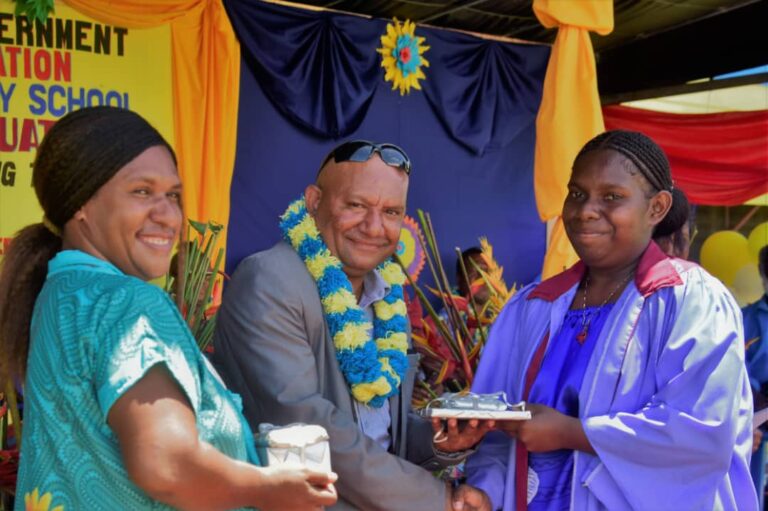
A total of two-hundred and fifty-nine (259) Grade Eight students graduated at the St Paul’s Lutheran Primary School in Lae today.
 
School Head Teacher, Alfred Norman Lewong says this the graduation is significant in marking the end of the traditional grade eight graduations for primary schools in the country.
 
“With the proposed phasing out of examinations for students passing out of grade eight, this is a memorable occasion for our school,” says Mr Lewong.
 
Mr Lewong further thanked the board, parents, stakeholders and sponsors for their continuous support to the school throughout the year outlining funding delays from the government.
 
“We haven’t had a graduation ceremony for some years and I am grateful to our corporate sponsors who had came on board this year to make this graduation a success,” added Mr Lewong.
 
One of the sponsors, the Owner of Wonderful Taxi and Hire Cars Services and Gabensis Guest House, Chris Donald says he is proud to sponsor some awards at the graduation because education plays a vital role in the development and growth of the nation.
 
“As a Lutheran devotee,  I am happy to be supporting one of our pioneer schools in Lae and Morobe province,” says Mr Donald.

Mr Donald also represented PC & JY Woo company who sponsored the grade eight dux award which was presented to top student, Ms. Grace Totabun.
 
St Paul’s Primary School is one of the biggest schools in Lae with a total of 1,648 students.
 
Mr Lewong says as a Level 8 school, it would be a massive challenge if they are chosen to accept Grade nine students in 2025.
 
“Under the 1-6-6 Policy, we would have to accept grade one to grade nine students and that would be a burden on the limited learning infrastructures we have in the school,” says the Head Teacher.
 
Meanwhile, Education Minister Lukas Dekena this week says examinations will continue and will not be used as means to select students to continue or being left out.


IMAGE: Supplied by Sylvester Gawi

The Morobe Provincial Administration has set up a Special Committee, headed by the Deputy Provincial Administrator Social Sector, Mr. Robin Bazinuc for the establishment of a new cell block for Lae’s Buimo Prison to address the issue of overcrowding.

According to the Provincial Administrator, Max Bruten, the Committee had sent out letters requesting the Chief Executive Officers of the 10 District Development Authorities to assist the Provincial Administration with money to build a new cell block for Buimo Prison.

This follows the intervention of the Ombudsman Commission on the issue of overcrowding at Lae’s Buimo Prison last year through a media article published in Post Courier, one of the two daily news papers.

Buimo Correctional Service to receive new cell block

According to Morobe’s Provincial Administrator, Mr Bruten, the Provincial Administration was summoned by the Ombudsman Commission and interrogated by the Ombudsman Commission’s Chief Executive Officer, Richard Pagen on why the Administration has not done anything to address the issue of overcrowding at Buimo Prison.

The issue of overcrowding has always been a health risk in Lae’s Buimo Jail, the second largest prison in PNG. Initially, the prison was designed to accommodate 600 prisoners. However, it currently accommodates over 900 inmates.

The completion of the new cell block will ease the issue of overcrowding, health risks, inadequate food supplies, and jail breakout.

Meanwhile, Buimo Prison Administration and Health Center is working really hard to attend to very sick inmates.

Pin It