by Duncan Gabi (Freelance Blogger)
Many people with cataract problems in Papua New Guinea (PNG) have not been able to seek professional treatment because of the inaccessibility of the service in most centres around the country. East Sepik Province (ESP) has one of the highest numbers of cataract patients.
Without a residential ophthalmologist at Boram General Hospital in Wewak, many patients are referred to the Fred Hollows Foundation Eye Clinic at the Modilon General Hospital in Madang and the Goroka Eye Unit at Goroka Base Hospital in Eastern Highlands Province. However, not many go for cataract operations because of the costs involved in traveling to another centre to receive professional treatment.
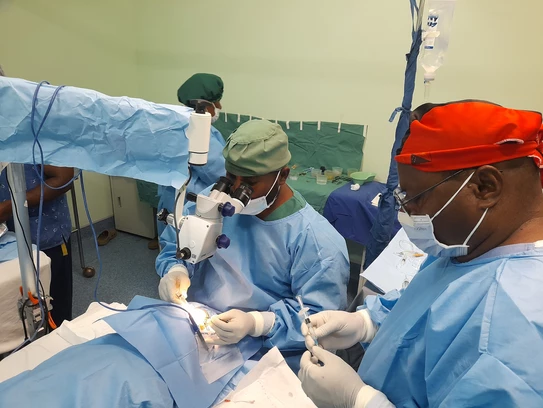
Recently, a team of specialist ophthalmologists in the country conducted a two weeks cataract outreach clinic in Maprik district, ESP upon invitation by the Boram Eye Clinic and Callan Services. The outreach was an answered prayer for those with cataract problems in the province. The outreach came about as a result of cataract screenings which has been ongoing for the last two years in the province to identify patients with cataract. The outreach was made possible by the partnership between non-government organizations and provincial health authorities in the country.


The cataract outreach team is made up of four ophthalmologists; Dr. David Pahau, Dr. Kerek Apisai, Dr. Magdalene Mangot and Dr. Waimbe Wahamu, with support staff from Callan Services Inclusive Eye Health, Callan Services Maprik, Fred Hollows Foundation, Boram Eye Clinic, Port Moresby General Hospital Eye Unit and the Goroka Eye Unit.
According to Cataract outreach team leader, Senior Ophthalmologist Dr. David Pahau of the Fred Hollows Foundation, eye care in PNG is at the bottom of the list and mainly overlooked.
Many people with cataract do not get the treatment they need because there is none available to them. That is why the outreach was initiated for the team to travel to rural areas and provide the services to the people. Callan Services Maprik Program Coordinator Chanel Luwe stated that the outreach was important and timely because it brought services right to the people in the rural areas, who for years have not had the access to eye care.


The team noted that the number of patients coming to the centre was increasing by day. The outreach was scheduled for two weeks, however, with the increasing number of patients coming from districts within the province and patients’ backlog, the team extended the outreach for another week to ensure they treated all the patients.
The team screened over a thousand patients with an estimated number of 400 patients undergoing eye surgery. “Our expected target was 300 successful operations by the end of the outreach. But we have exceeded that target and by the end of the third week of the outreach, we would have treated over 500 patients”, Dr. Pahau said.
Damien Sungu, Officer in Charge of the Goroka Eye Clinic said “From the cataract screenings, we were able to determine the severity of the cataract in patients. Those with more severe problems were given priority for eye surgery”. The ophthalmologists performed 30-40 operations daily and a cataract operation takes about 15-20 minutes. The ophthalmologists were praised for their dedication as they worked late into the night and on some days ended the clinic at around 2-3 AM in the morning.


The main challenge the team faced during the first week of the outreach was electricity. Without electricity at the health centre, the doctors were not able to perform operations. Maprik District Health Manager Mr. Raymond Pohonai in addressing the challenges said they were able to solve the issue so the doctors could carry out surgeries.
The cataract outreach was a partnership between Callan Services National Unit for Persons with Disabilities (CSNU), Christian Blind Mission New Zealand (CBM NZ), East Sepik Provincial Health, Eastern Highlands Provincial Health, Western Highlands Provincial Health, Fred Hollows Foundation, Maprik District Health and the Department of Health.
The bigger support for the cataract clinic came from The Network of Callan Services for Persons with Disability through its funding partnership with Christian Blind Mission New Zealand (CBM NZ). NZ Government Ministry of Foreign Affairs and Trade’s (MFAT) objective under the Manaaki (“Uplifting mana, through listening, supporting and empowering”) fund is to reach the vulnerable and marginalized people and groups. This was achieved through this activity.
Callan Services Inclusive Eye Health Coordinator Br. Desmond Taboeya when acknowledging the partners said “With good collaboration and partnership in all sectors, we can do more in eye care in PNG”. He encouraged collaboration and partnerships for more successful eye clinics in the country while Mr. Luwe advocated for inclusivity in eye care.
The team of doctors intend to do another eye clinic outreach in Eastern Highlands Province in the near future.