Archive

January 2026

Browsing

Last year was the world’s third warmest on record, underscoring a trend already fuelling destructive fires and floods in Australia in the early days of 2026.

Official confirmation from respected climate monitoring outfit Copernicus puts 2025 marginally behind 2023 and 0.13C cooler than 2024, which hangs on as the hottest year on record.

In 2025, the global surface air temperature was 1.47C above the pre-industrial level, with temperatures now averaging above 1.5C – the agreed limit set by signatories of the Paris Agreement – for three years running. 

The global climate pact has not yet been exceeded as it relies on longer-running trends.

But if warming continues as expected, the 1.5C benchmark could be reached by the 2030s – more than a decade earlier than first predicted when the landmark pact was signed.

In Australia, 2025 was tarnished by record-high ocean temperatures, driving widespread coral bleaching off the Western Australian coast and in the Great Barrier Reef.

Elevated ocean temperatures were also thought to have contributed to the intensity and rainfall extremes brought by ex-tropical cyclone Alfred as it barrelled through southeast Queensland and northern NSW.

Griffith University Emeritus professor of science, technology and society Ian Lowe said that since the 1980s, scientists had been warning of both increases in average temperatures as well as more frequent and severe extreme weather events.

“At the moment, we’re seeing appalling bushfires in Victoria and appalling flooding in Queensland,” he told AAP.

“And this is exactly what the science has been telling us.”

Australians had already been warned of a catastrophic summer of fires and another year of warmer ocean temperature could also spell trouble for coral reefs and the tourism businesses reliant on them.

“It’s getting more and more unlikely that the Great Barrier Reef can recover from the succession of bleaching events,” Prof Lowe said.

Globally, the past three years have been exceptionally warm for a few main reasons, the first being the ongoing accumulation of greenhouse gases in the atmosphere trapping in heat.

Carbon sinks, ecosystems that soak up carbon, have also been weakening.

As well, sea-surface temperatures have been particularly high, in part due to an El Nino event but also other climate change-influenced variability. 

Changes in aerosol concentrations has also contributed to the three-year run of particularly elevated global temperatures. 

A neutral to weak La Nina – a weather pattern associated with cooler global temperatures – in the equatorial Pacific contributed to lower air and sea temperatures in the tropics last year than in 2024 and 2023.

The higher temperatures of the two years prior were in part driven by a strong El Nino event, linked to warmer global temperatures. 

Cooler temperatures in some regions were countered somewhat by a warmer polar region, with Antarctica experiencing its highest annual average temperature value, and second-highest in the Arctic.

In early 2025, sea ice across the two poles was at its lowest level since satellite monitoring began in the 1970s.

Prof Lowe was critical of Australia’s commitment to slowing global temperate rise.

“At the state and national level, governments are still behaving as if we can keep approving extensions of coal mines and new new gas field project, which is literally tipping petrol on the fire.”


Copyright @ AAP 2026

Critics who laugh at Hull KR’s chances of beating Brisbane in the World Club Challenge are in for a rude shock insists England international and new Dolphins forward Morgan Knowles.

Knowles was a member of the St Helens side that stunned Penrith 13-12 in the 2023 World Club Challenge at the Panthers’ home ground.

The Robins, reigning Super League champions, will host defending NRL premiers the Broncos at MKM Stadium on February 20 at 6.30am (AEDT).

They have the chance to follow in the footsteps of the Saints and Wigan and keep the trophy in England for the third consecutive occasion.

Knowles, a St Helens legend who has joined the Dolphins in 2026, gets his back up when English Super League teams are written off.

“I think Hull KR, if they play at their best they are a red-hot chance,” Knowles said.

“Super League gets put down a fair bit and that definitely annoys us English blokes over there. So we have definitely got a point to prove.

“Obviously we beat Penrith and then Wigan beat Penrith (16-12) back in the UK as well (in 2024).

“Hull KR will be wanting to do the same. They are a good team and coached well. It will be a good game and I look forward to watching it.”

English teams have a rich history of beating Australian outfits to claim the prestigious trophy.

Wigan are equal with Sydney Roosters with five trophies in the cabinet while St Helens, Bradford Bulls, Leeds Rhinos and Melbourne are next best with three each.

The English have won the trophy 15 of the 29 times the clash has been contested, with the Storm also having the 2010 title stripped for salary cap breaches.

For Knowles, the history of the event makes a mockery of those who dismiss the Super League clubs as inferior to their NRL counterparts.

“It was the same back in 2023 when I came over with St Helens,” Knowles fired.

“Everyone was asking, ‘why are you in Australia?’ They were laughing at us saying,’ ‘it is going to be a cricket score’.

“We were quietly confident in ourselves and obviously got the win and Wigan backed it up the year after.

“The English boys will be confident and I hope Broncos take them lightly and we get another English win.”

The Broncos, captained by veteran Adam Reynolds and boasting superstars such as Reece Walsh, Payne Haas and Kotoni Staggs, will be aiming for their third title after previously winning the trophy in 1992 and 1997.

Hull have never won the title and will playing in their first World Club Challenge, but their impressive 24-6 win over powerhouses Wigan in last year’s Super League decider showcased their class and grit after they earlier won the Challenge Cup final 8-6 against Warrington.

The Robins, coached by highly regarded Australian coach Willie Peters, had four players – Peta Hiku, Mikey Lewis, Jez Litten and Dean Hadley – named in the Super League Dream Team of 2025.


Copyright @ AAP 2026

The stars have aligned for England international Morgan Knowles to start the NRL season at lock forward where he has such a rich pedigree.

The 28-year-old has reunited at the Dolphins with his former St Helens coach Kristian Woolf, with whom he won three consecutive Super League grand finals and a Challenge Cup final.

Hooker Jeremy Marshall-King set to miss up to four months with a knee injury so versatile Kurt Donoghoe, who mostly played No.13 in 2025, is set to start the season at hooker.

Max Plath, another lock option, is not expected to return from an ACL rupture until round three, while captain Tom Gilbert is likely to initially slot into the back-row after his pectoral/shoulder comeback.

Knowles played in the the recent Ashes series at lock and was named in the Super League Dream Team in the position.

“That’s my position …loose forward,” Knowles said.

“Ideally that’s where I want to play but the competition is fierce and there are loads of great players.

“First and foremost for myself I want to earn the respect of my teammates. Selection will come off the back of it.”

Leaving Saints was not easy for a man who played 246 games for the club and describes himself as “proudly Cumbrian and proudly English”.

Knowles watched the likes of the Burgess brothers and James Graham make the jump from Super League to NRL with distinction and is determined to do the same.

“I’ve only known one club. I came through the academy at Saints and had my full career there,” Knowles said.

“It’s refreshing being at a new club and a new competition in the NRL. Obviously I had a relationship with Woolfy from working with him over in England. I trust him so when the opportunity came up I jumped at it.

“It was a tough decision. I love the club at St Helens. I was just ready for a new challenge, to take myself out of my comfort zone and come over here and prove myself again. 

“If I could do a quarter of what some of those English boys have come over and done I’d be very happy.”

Knowles has forged a reputation for being mobile, tough and hard-working.

The NRL should suit him.

“The ruck is a little bit different (in the NRL) and the boys are used to training at that speed so that is something I will have to try and catch up with,” Knowles said.

“I am a lighter middle forward so it suits my game a little bit more.”

The no-nonsense approach of Knowles gells with coach Woolf and it is a partnership the Saints legend knows will work a treat. 

“It was pretty daunting coming over to a different competition, different country and not knowing anyone,” he said.

“Having the comfort of him knowing the player I am and person, and me likewise having that trust, was a big reason behind my decision.

“Woolfy thinks a lot of St Helens too so (contract negotiations) were always respectful but we kept in contact since he left. 

“He said, ‘if you ever want to come out I want to be in the conversation’.  I was coming to the end of my contract at St Helens and I trust him, so when the opportunity came up I jumped at it.”


Copyright @ AAP 2026

The Asian Development Bank (ADB) recently appointed Takafumi Kadono as its new Country Director for the Papua New Guinea Resident Mission. Based in Port Moresby, Mr. Kadono will lead the development and execution of the ADB’s upcoming country partnership strategy, steering the bank’s multifaceted engagement across the nation.

The appointment comes at a pivotal time as the ADB continues its role as one of PNG’s primary financing partners, particularly in large-scale infrastructure and social services.

“We will work with the Government of PNG to further boost economic growth and social development by supporting improvements to the country’s transport and energy sectors, increasing access to health and education services, and bolstering the competitiveness of the private sector,” said Mr. Kadono.

“ADB will continue to work closely with key partners to enhance the inclusivity and resilience of PNG’s financial and health systems to future shocks.”

Mr. Kadono, a Japanese national, brings more than 26 years of international development expertise to the role. His career spans tenures at both the World Bank Group and the ADB, most recently serving as the ADB’s Country Director for Sri Lanka.

His leadership will oversee a broad portfolio that extends beyond traditional infrastructure. The ADB’s current footprint in PNG includes:

  • Education: Partnering with the Government of Australia to fund technical and vocational training designed to align student skills with industry demands.
  • Health: Implementing policy reforms and direct investments to improve public financial management and system-wide resilience.
  • Infrastructure: Providing critical financing for the nation’s transport and energy networks.
    About the ADB.

Established in 1966 and owned by 69 members, the Asian Development Bank is a major multilateral lender focused on sustainable and inclusive growth in Asia and the Pacific. The organization utilizes innovative financial tools and strategic partnerships to address complex regional challenges, ranging from infrastructure development to climate change.


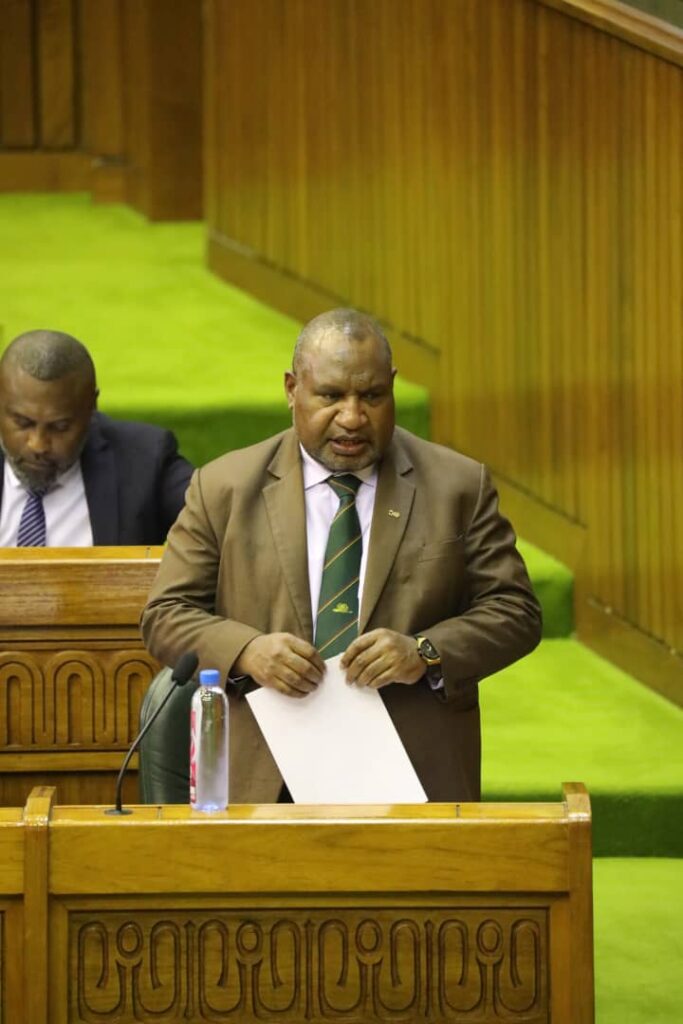
Prime Minister, James Marape has issued a stern directive to Papua New Guinea’s public sector, calling for a total “reset” of the government machinery as the nation transitions from its Golden Jubilee celebrations into its 51st year of independence.

Speaking ahead of tomorrow’s Public Service Opening and Dedication Service, the Prime Minister emphasized that the event is a mandatory call to action for all Ministers, departmental heads, and public servants, rather than a mere ceremonial tradition.

A Shift from Celebration to Delivery

Following the conclusion of PNG’s 50th Independence Anniversary, Marape signaled that the period of national festivities has ended, and a period of aggressive implementation must begin.

“We have celebrated our past. Now we must build our future,” the Prime Minister stated.

“Our people have given us a mandate. Our development framework is clear. Our priorities are set in MTDP IV. There is no excuse for delay, confusion or complacency.”

The Prime Minister’s remarks highlight a sense of urgency, noting that the country’s success depends on the efficiency of its workforce. He warned against the loss of productive time to “unnecessary delays” and “inefficiencies,” stressing that the responsibility of nation-building extends beyond the executive level.

“When it is work time, it must be work time,” he said.

“This country cannot be built by just the Prime Minister, Ministers or department heads. It must be built by every officer, from the highest executive to the front-line public servant.”

The “Critical” 20-Year Window

The Prime Minister framed the current era as a pivotal 20-year phase that will ultimately define the country’s trajectory for future generations. He identified this period as the window in which PNG must maximize economic growth, bolster infrastructure, and eradicate systemic corruption.

“The next 20 years will decide everything; how big our economy becomes, how strong our infrastructure is, how safe our communities are, and how clean and efficient our public service will be,” Marape said.

“This is when we must grow our economy the fastest, build our infrastructure the greatest, strengthen our law-and-order system, protect our sovereignty, and eliminate corruption.”

Accountability and Action

Central to this vision is the performance of the public service. Marape noted that while policies are firmly in place through the Medium Term Development Plan (MTDP) IV, the burden of proof now lies in the execution of those plans.

“Every ministry, every department, every agency already knows what it must do,” he said.

“Our national priorities are clearly set out in MTDP IV. We do not need more talk. We need action.”

Tomorrow’s dedication service in Port Moresby is expected to see full attendance from government leadership and board members of State-Owned Enterprises, serving as the formal launch of what the Prime Minister described as the “next leg” of the national journey.

“This is our reset moment,” Marape concluded.

“The work starts now. The expectations are high. And every public servant has a role to play.”


Sparks are flying on social media as a viral video creates a whirlwind of debate around Papua New Guinea and its vast linguistic landscape.

At the center of the storm is a reel uploaded by global influencer Yuji Beleza, who, during his travels in Japan, crossed paths with Papua New Guinean, Joseph Baki Kaore.

As is the nature of Yuji’s content, he asked Kaore to say something in his native language so Yuji could try to guess its origin. Kaore warned Yuji that it might be a difficult guess, but proceeded to give it a try.

@yuji_beleza

Final Language Boss 🇵🇬 . Papua New Guinea has the most languages in the world. There are nearly 850 languages. 10% of the world’s languages are in Papua New Guinea 🇵🇬 . #papua #africa #japan #papuanewguinea #languages

♬ original sound – yuji_beleza

“Rabirabi namona,” Kaore answered. A greeting in the Roro language of the Kairuku District in Central Province.

This simple exchange has seen many Papua New Guineans sharing conflicting opinions. A large segment of the audience argued that Kaore’s response did not represent the “main” language of the country, suggesting he should have spoken in Tok Pisin, the most widely used vernacular in Papua New Guinea.

Others, however, stood by Kaore. They pointed out that as a man hailing from Kairuku, a district in the Central Province, he correctly answered in his local Roro dialect. This highlights a crucial distinction: while Tok Pisin is one of Papua New Guinea’s three official recognized languages, it is not an indigenous language in the same way Roro is. Tok Pisin evolved originally as the local creole but languages like Roro are the ancient, rooted identity of the people and the land itself.

Diversity as Strength, Not Conflict

This debate is, in many ways, nonsensical. Papua New Guinea is the most linguistically diverse nation on earth, boasting over 860 distinct languages. The argument over which language “best” represents the country ignores the very fact that defines us.

One single language cannot be the defining tongue of Papua New Guinea because our 1,000+ tribes are built on the foundation of 860+ different ways of speaking.

This viral moment serves as a call to action for the people of Papua New Guinea. Rather than disputing which language is ‘official’ enough, the nation should celebrate this as a victory for all 860+ voices on the global stage. True national identity is found in honoring every local dialect and recognizing that our beauty lies in our complexity, not in a forced uniformity.

Beyond Words: The Greeting Controversy

It wasn’t just the spoken words that were scrutinized. Another point of contention was the greeting Kaore displayed, a respectful act where two people touch foreheads.

Joseph Kaore showing Yuji Beleza how people greet eachother in the Kairuku way.

Critics online (largely uninformed) were quick to claim this gesture resembled the Hongi of the Māori culture. However, this form of greeting is traditional practice in the Kairuku culture of the Central Province, as well as several cultures in the Gulf Province.

Rather than labelling this gesture as pirated from Māori culture, it should be viewed as a testament to the deep cultural ties among Pacific nations. While we are geographically spread across the ocean, we share deep ancestral roots and a Pacific history that naturally results in cultural similarities.

A Call for Cultural Education

Instead of dividing ourselves through debate, this viral moment should be viewed as an opportunity to learn. It is a reminder that as people coming from such a diverse background, more education is needed regarding our own neighbors’ customs.

While schools host annual cultural shows and traditional dances are showcased every September 16th for Independence Day, we must ask: Is this enough?

Is enough being done to preserve PNG’s unique dialects and traditions, or is the country falling prey to the homogenizing influence of the Western world? When a “standard” identity is favored over tribal roots, people risk losing the very things that make them unique.

While the world marvels at Papua New Guinea’s diversity in language and cultures, Papua New Guineans must also improve their knowledge about other Papua New Guinean cultures to be able to tell the world about them.


More than half a million accounts have been wiped from Facebook, Instagram and Threads since under-16s were banned from social media in December.

Meta, the tech giant behind the three platforms, said it had removed 544,052 accounts belonging to teens in a compliance update a month after the ban came into force on December 10.

Between December 4 and 11, Meta said it took down 330,639 Instagram accounts, 173,497 Facebook accounts, and 39,916 Threads accounts it believed belonged to those under 16.

Teenagers are also banned from using other platforms such as TikTok, Snapchat, X, Reddit, Kick, and YouTube, with the onus on tech giants to detect and deactivate accounts.

Fines of up to $49.5 million apply if they fail to take “reasonable steps” to remove under-16 users.

Communications Minister Anika Wells said the ban would protect children from online harms and the negative impact of addictive algorithms.

“With one law, we can protect Generation Alpha from being sucked into purgatory by predatory algorithms described by the man who created the feature as ‘behavioural cocaine”,” she said in a National Press Club speech before the ban’s launch.

In its update, Meta took aim at the ban, arguing it failed to increase the safety and wellbeing of young Australians as they could still use platforms like YouTube in a logged-out state.

“The premise of the law, which prevents under 16 year-olds from holding a social media account so they aren’t exposed to an ‘algorithmic experience’ is false,” the tech giant said.

“Platforms that allow teens to still use them in a logged-out state still use algorithms to determine content the user may be interested in – albeit in a less personalised way that can be appropriately tailored to a person’s age.”

App stores should be required to verify age and obtain parental consent before children can download any app, Meta said.

“That is the only way to guarantee consistent, industry-wide protections for young people … and to avoid the whack-a-mole effect of catching up with new apps that teens will migrate to,” it said.

Prime Minister Anthony Albanese has said the rollout wouldn’t be perfect but other countries were following in Australia’s footsteps.

“It won’t be perfect because this is a big change,” he said before the ban kicked.

“I’ve been asked … what will success look like? Success is the fact that it’s happening. 

“Success is the fact that we’re having this discussion, parents are talking to their children around the breakfast table.”

Meta wants the government to engage with tech companies to “find a better way forward” including incentivising industry to raise the standard in providing safe algorithms.


Copyright @ AAP 2026

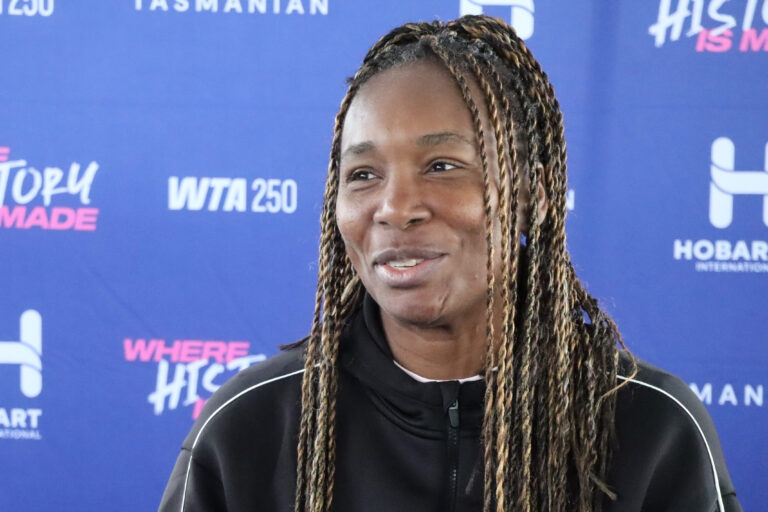
Perhaps not surprisingly, 45-year-old Venus Williams views age as just a number.

The seven-time grand slam champion will this month become the oldest woman to feature in the main draw of the Australian Open, after being granted a wildcard.

Williams, who hasn’t played outside North America since 2023 having battled health and injury problems, is also competing in the Hobart International starting Monday.

Ranked 582, she played Auckland last week and took a set off world No.52 Magda Linette in an opening-round loss.

“(I’m) hitting the ball so well. Had a lot of opportunities to take control of that match and let some slide away,” Williams said in Hobart on Sunday.

“It’s great to be in those positions to actually cross the line. I can’t expect to be perfect … as much as I want to be.”

Williams has played more than 1000 top-level singles matches since turning professional in 1994 as a 14-year-old and spent 11 weeks at world No.1.

Williams and younger sister Serena, the winner of 23 grand slam singles titles including seven Australian Opens, have been credited with redefining women’s tennis and attracting new audiences.

The veteran now comes up against players more than half her age who have grown up with modern string and racquet technology.

“I feel like Serena and I were part of a big change in women’s tennis. Over time too the equipment has changed,” Williams said.

“I’ve had to adjust my game based on (things like) new strings. I think I’m a student of the game, I like to watch and learn from other players.

“(But) when you walk on the court, I’m so focused on what I want to accomplish. Winning and losing knows no age.”

Williams hasn’t played in Melbourne, where she made the final in 2003 and 2017, for five years and will break the age record set by 44-year-old Kimiko Date in 2015.

She was coy on whether it would be the last time people would see her on Australian soil.

“I don’t know and even if I did know I wouldn’t say. Right now I’m focused on the moment,” she said.

In her first visit to Tasmania, wildcard Williams will meet fellow veteran, 38-year-old German world No.43 Tatjana Maria, in the Hobart first round.

“When I first got here … in the air you could smell eucalyptus and I was like ‘this is my place’. I was like, we’ll get my passport changed,” she joked.

She said she was hoping to draw on the rage of Serena, who lost in the quarter-finals in Hobart in 2007 before going on to win her third Australian Open title.

“I remember how upset she was, I’ll never forget that,” Williams said.

“She was able to channel all that … to being able to play well in the Australian.”

Williams returned to the tour in July less than a year after having surgery for uterine fibroids and said her motivation remained high.

“It’s a beautiful sport. I love what I do and it’s a blessing and honour to keep doing it,” she said.


Copyright @ AAP 2026

If you think you’re paying too much for a cup of coffee, there’s good news and bad.

The positive is that the extraordinary spike in the cost of beans, which caused cafes and supermarkets to increase prices in the past two years, has stabilised.

Drought in Brazil, the world’s dominant coffee grower, led to an 86 per cent spike in Arabica bean futures – the benchmark price for wholesale importers – since the start of 2024, Rabobank commodities analyst Paul Joules says.

As conditions gradually recover, prices have retreated from the record highs of about $US4.20 a pound in February 2025 to about $US3.70 a pound, and Mr Joules expects further falls by the end of 2026.

The bad news is that this doesn’t mean consumers will be paying any less for a cup of java any time soon.

Ben White, national sales manager at specialty roasters Padre Coffee, warns coffee drinkers should expect cafe prices to rise another $1 to $1.50 this year.

Commodity prices are still much higher than the pre-2024 average, which rarely climbed above $US2 a pound.

Even if they return to those levels, other cost pressures have been unrelenting.

For Padre, which operates five cafes across Australia and a roasting operation, raw beans account for approximately two-thirds of the cost of producing a bag of roasted coffee, with other inputs such as rent, electricity, wages and packaging comprising the remainder.

Then there’s the cost of turning the roasted beans into a cup of coffee, which means more variable costs such as milk and disposable cups, and overheads including electricity, rent and capital expenses.

“Profits have been absolutely squeezed for cafe operators,” Mr White says.

Coffee prices have undoubtedly risen as a result but despite apocalyptic warnings that Australians will soon find it hard to buy a coffee for single figures, they have not kept pace with costs.

The cost of an average flat white rose about 10 per cent nationwide between 2023 and 2025, according to digital payments data retrieved from cafes across Australia by point-of-sale software provider Square.

In Sydney, a flat white cost about $5.04 on average in 2025, up from $4.61 in 2023. 

Cafes have suppressed price rises amid tepid demand and high competition, which has seen profit margins fall from about 3.5 per cent to less than 2.5 per cent, Australian Restaurant and Cafe Association chief executive Wes Lambert says.

“This is putting a lot of pressure on the industry and the cafe segment in particular, and that’s leading us to see, according to CreditorWatch, one in nine cafes and restaurants going into liquidation in the past 12 months,” he says.

“Ultimately, unless demand increases or prices increase, the industry is going to stay in the doldrums when it comes to profitability.”

Consumers will essentially have to decide on a trade-off between low prices and quality of product and service, Mr White says.

“There’s always going to be a customer base that is price-conscious but ultimately we’ve identified that quality is a really big factor, as well as that customer experience,” he says.

It’s a similar story for chocolate makers, although relief for the industry might come sooner.

Cocoa futures shot up at the start of 2024, amid similar weather disruptions in West Africa, where the bulk of beans are produced.

After peaking at about $US12,000 a tonne, wholesale prices are back down to about $6000 a tonne following an aggressive supply response by growers, including ramping up fertilisers and pruning to boost yields, Rabobank’s Mr Joules says.

Because cocoa and coffee trees take a relatively long time to cultivate compared to other agricultural commodities such as wheat, supply chains are particularly susceptible to inclement weather and shortages take a while to resolve.

Mr Joules isn’t expecting the cocoa market to return to surplus until the 2026/27 season.

Currently, prices remain about two to three times the long-term average.

Independent chocolate makers like Li Peng Monroe and Peter Channells of Canberra-based chocolatier Jasper and Myrtle are particularly susceptible to price fluctuations.

The pair are relatively lucky to have missed out on the worst of the price spike.

They ordered their last major shipment of 150 tonnes of cocoa beans from Bougainville in Papua New Guinea in 2023, when prices were about half what they are now.

But if prices remain at current levels when they need to restock at the end of this year, the viability of the business will be at risk.

“Obviously, I’ve got to find the capital to pay for the shipment, and it’s not tens of thousands – they might be hundreds of thousands (of dollars), so not many small businesses will have that kind of money sitting around,” Ms Monroe says.

Given chocolate makers are also facing the same inflation pressures in their overheads as cafes, Mr Channells says he can’t imagine any producers dropping prices

Growth should at least stabilise now the worst of the supply challenge is over.

“But the chocolate system is highly dependent on what happens in West Africa and that can turn on a dime at any minute,” he says.


Copyright @ AAP 2026

South Sydney have offered an NRL lifeline to free agent Adam Elliott, the veteran forward signing in 2026 for the Rabbitohs on a one-year deal.

The 31-year-old suffered an arm injury with Newcastle in round 12, ending his campaign last year. His contract was not renewed by the Knights at the end of the season.

Elliott has played 173 NRL games since making his debut for Canterbury Bulldogs against Manly in 2016 and also had a season with Canberra before landing in Newcastle.

Souths’ head of recruitment Mark Ellison said Elliott would add experience and depth to their forwards ranks.

“Adam has been a consistent performer at the NRL level for a decade now and we feel he will add experience and create more depth within our forwards stocks this season,” Ellison said.

“He is renowned as a hardworking and aggressive forward, a punishing defender, and he has a reputation as a leader of men and a player that teammates want to play with.”

Souths recently suffered a blow when Kangaroos star Keaon Koloamatangi signed a five-year deal with St George Illawarra Dragons from next year.  

Wayne Bennett’s men were ravaged by injury last season with captain Cameron Murray, Latrell Mitchell, Cody Walker and Campbell Graham all enduring lengthy spells on the sidelines, leading to the Rabbits’ 14th-placed finish. 

But all are expected to return and join Elliott, who represented the Indigenous All Stars in 2019 and 2024, as well as Country Origin in 2017.


Copyright @ AAP 2026

Pin It