Author

Inside PNG

Browsing

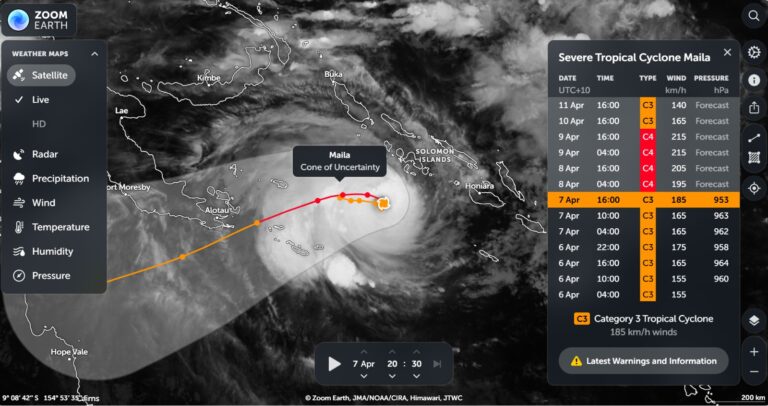
The PNG National Weather Service has issued a severe weather warning as Tropical Cyclone Maila approaches the Southern Region. Currently a Category 3 system, the cyclone is expected to track toward Milne Bay by Thursday and could potentially intensify into a Category 4 storm.

The cyclone is currently situated in the Solomon Sea, northeast of Rossel Island, east of Woodlark Islands, and south of the Autonomous Region of Bougainville (AROB).

The National Weather Office has warned residents in coastal areas and outer islands to prepare for destructive winds, extreme rain, severe flooding, and dangerous storm surges. Impacted regions include:

  • Milne Bay and Central Province
  • National Capital District (NCD)
  • East and West New Britain
  • Morobe and AROB

Authorities have advised that all fishing trips and sea transport should be suspended until the storm passes.

Electricity Disruptions Expected

PNG Power Limited (PPL) has issued a warning regarding electricity supply disruptions across the affected provinces. The utility provider is appealing for patience as fallen trees and flooding are expected to impact infrastructure.

PNG Power’s Chief Technical Officer, Tony Koiri, said that severe weather has already caused damage over the last 48 hours in Madang, Morobe, Kimbe, and East New Britain. Flooding at Warangoi, Lake Hargy, and Ru Creek has also contributed to outages.

“Our teams are working tirelessly in Madang, Morobe, Kimbe, and East New Britain to connect communities,” Koiri said.

“Despite the dangerous conditions, PPL staff are maintaining operations at critical sites such as the Warangoi Dam, while also repairing fallen lines and clearing storm debris. Safety remains our top priority, and we urge the public to stay away from fallen powerlines and allow our crews to carry out their work.”

The public is strictly urged not to touch or interfere with fallen poles or lines during or after the storm.

Seasonal Outlook

Milne Bay remains particularly vulnerable to such systems due to its distance from the equator and its islands’ exposure to the open sea. However, PNG National Weather Service Assistant Director Benjamin Malai says that the threat of tropical cyclones should subside by the end of April.

Forecasters expect the cyclone to lose strength as it moves closer to mainland Papua New Guinea and Australia.

(Video: Assistant Director Benjamin Malai provides a weather update)


The long-standing collaboration between PNG Fashion Week and Vision City Mega Mall reaches a new milestone this week as they launch the ninth annual Port Moresby Fashion Week.

Running from April 2–4, 2026, the event transforms Papua New Guinea’s busiest retail hub into a massive cultural and commercial platform. By utilizing a space that sees over 20,000 daily visitors, the event provides local designers and small businesses with immediate access to a vast consumer market.

The program remains free and open to the public, focusing on three core pillars:

  • Economic Growth: Providing designers and entrepreneurs direct access to customers to turn “visibility into income.”
  • Youth Empowerment: Building confidence through the Model Citizen Leadership and Runway Workshop and the Little Mr & Miss PNG programs.
  • Cultural Identity: Showcasing Papua New Guinea’s diverse traditions alongside modern creative design.

Brigette Kassman, Executive Officer for PNG Fashion Week, says the consistent partnership has become a major part of the event’s success.

“Over the past nine years, this partnership has allowed us to build something that is consistent, accessible, and truly impactful for our people. Vision City gives us a space where fashion meets everyday life, where designers can connect directly with customers, and where young people can see what is possible for themselves,” Kassman said.

She added that the initiative transcends the runway.

“This event is not just about showcasing clothing; it’s about creating pathways. We are seeing small businesses grow, young people step into confidence, and communities come together in a way that is both meaningful and sustainable.”

As the event returns this April, it continues to serve as a driver for local commerce and a celebration of the nation’s unique spirit.


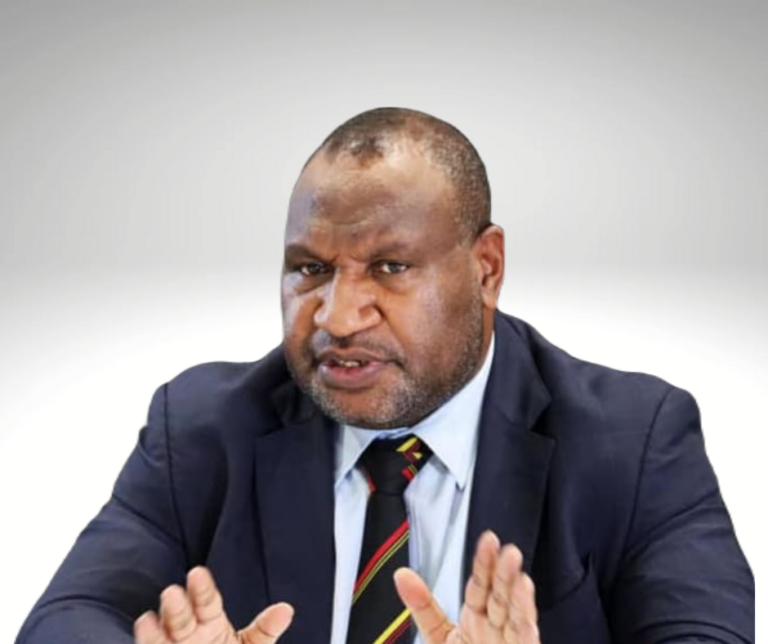
Prime Minister James Marape has issued a firm call for an immediate slowdown of eviction exercises across the National Capital District, appealing for “compassion and responsibility” as the state scrambles to find a humane way forward for displaced settlers.

The Prime Minister’s intervention comes amid a wave of court-sanctioned evictions that have left many families in the city’s informal settlements reeling. While acknowledging the legal weight of these orders, Marape urged title holders to hit the brakes to allow the National Government and NCD authorities the breathing room to intervene.

“I respectfully ask all those in possession of court orders for eviction to slow down the process. Let us allow both the National Government and the NCD authorities the time and space to find proper, humane, and lasting solutions for our people,” Marape said.

Addressing the issue, the Prime Minister stated that the growth of these settlements is a direct result of rural-urban migration and the pursuit of a better life. He says, even if legal titles are missing, the human element cannot be ignored.

“Many of our people have come into the city in pursuit of a better life. While some settlements may have been established outside formal legal processes, we must approach this issue from a humanitarian perspective,” he stated.

He expressed concern that the Government has been kept in the dark regarding some of these exercises, leading to a lack of coordination. He emphasized that the state must be given the chance to facilitate “relocation where necessary, with dignity and planning.”

Marape recalled the Garden Hills evictions as a cautionary tale. He highlighted the irony of land being cleared only to sit idle and undeveloped while former residents suffer.

“In some cases, people have been evicted but the land has not been developed. This raises important questions about timing, planning, and responsibility. Land will not run away but people’s lives are directly affected,” the Prime Minister said.

To prevent further aimless displacement, the Government now intends to hold developers accountable. Marape indicated that title holders may soon be required to prove they have the means and intent to build.

“Those holding land titles will be asked to present their development plans as soon as possible. Government is prepared to work with landowners to ensure that development proceeds responsibly, while also ensuring that affected communities are properly relocated,” he said.

The Prime Minister confirmed that formal instructions would be sent to the Police Commissioner, with copies to NCD Governor Powes Parkop, to ensure that enforcement on the ground aligns with this humanitarian stance.

“We must manage urban development in a way that protects both legal rights and human dignity. We cannot allow our people to be displaced abruptly without proper alternatives in place,” Marape stressed.

As the city continues to expand, the Prime Minister’s message to landowners and authorities stands clear; orderly, fair, and lasting solutions must take priority over immediate displacement.


In the heart of Hanuabada, a village where the sound of leather hitting willow is as constant as the tide, a leader was forged. This past weekend at Amini Park, that leader, Lega Siaka, showed exactly why he remains one of Papua New Guinea’s most formidable cricketing icons.

Captain of the Boroko Motors Isuzu Men’s T20 Smash champions, the Cassowaries, Siaka didn’t just lead his team to an undefeated title run; he dominated the field, sweeping the tournament’s top individual honors with his outstanding skill and leadership.

The 33-year-old veteran, with over a decade of experience representing the Barramundis, steered the Cassowaries through a flawless campaign. The team won all four of their fixture matches, culminating in a clinical victory during the Grand Final on Sunday, March 29.

Siaka’s personal statistics were nothing short of elite. He highlighted his class at the top of the order, finishing with 161 runs at an average of 53.67. With a strike rate of 137.61, his aggressive yet calculated approach saw him clear the ropes seven times and find the boundary on seven other occasions.

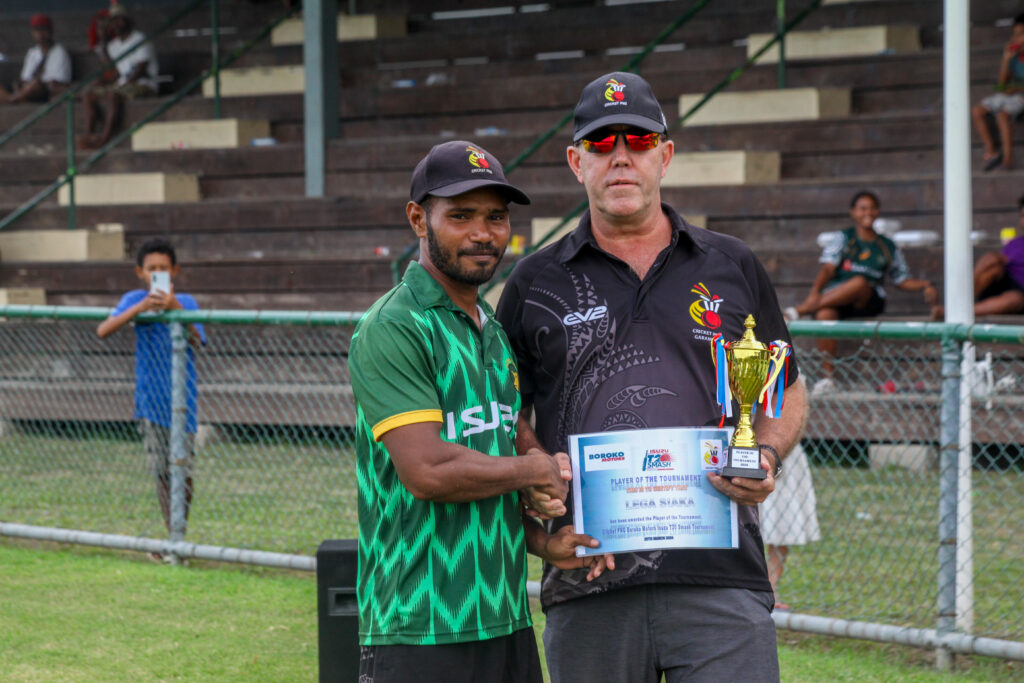
PNG Cricket player, Lega Siaka receiving award.

His efforts were rewarded with both the Player of the Tournament and Best Batsman awards. Despite the individual accolades, Siaka says the victory belongs to the collective.

“I want to thank the Cassowaries team for the great team support and effort,” he shared, reflecting the humble nature often found in the “Big Village” cricketers.

For Siaka, this tournament was about more than just a domestic trophy. It was a platform to prove that his hunger for the international stage has not waned. Having been a key player of PNG cricket for years, he is now making a loud case for a recall to the national side.

“I wanted to prove myself to the coaches and selectors that I can lead a team and play my best,” Siaka admitted.

“I do hope the selectors see the effort, skill, and commitment I put into this tournament. I want them to believe in me.”

Siaka says his sights are firmly set on the next international tour, hoping his performance at the Smash serves as a reminder of his reliability under pressure.

While his focus remains on his own return to the Barramundis, the tournament also provided Siaka a chance to observe the rising tide of talent across the country. He highlighted the impressive skills shown by cricketers coming out of Milne Bay and Lae-Morobe, stating that even a seasoned campaigner like himself can still learn from the energy of the youth.

“It is interesting, as watching helped me develop some new techniques too,” he added.

As the celebrations settle in the Cassowaries camp, the message from Amini Park is that Lega Siaka isn’t finished yet. He is a man in form, a leader in demand, and he is ready to wear the national colors once again.


Papua New Guinea’s extractive sector has shown a marked recovery in 2024, with subnational benefits and social expenditure lifting strongly as the country prepares for a critical international transparency audit next year.

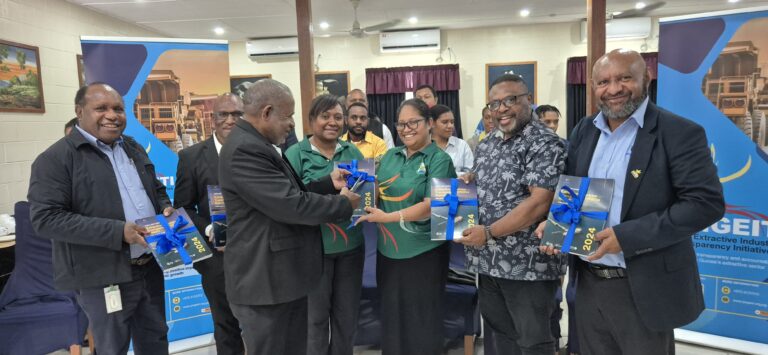
The Papua New Guinea Chamber of Resources & Energy (PNG CORE) has formally commended the PNG Extractive Industries Transparency Initiative (PNG EITI) following the launch of its FY2024 Annual Report. The launch took place during the Multi-Stakeholder Group (MSG) Quarter 1 meeting at Tuna Bay last Thursday.

The timing of the report is significant, serving as a baseline for PNG’s upcoming EITI Validation scheduled to begin in April 2026.

PNG CORE Senior Vice President, Mr. Kassman, OBE, said the report provides critical insights into the performance of the mining, oil, and gas industries, particularly regarding beneficial ownership and equitable resource management.

“The PNG EITI report clearly illustrates the continued importance of the mining and petroleum sector, and highlights the sector’s contribution to government revenue, exports, jobs and community benefits, while reinforcing the need for transparency and accountability,” Kassman said.

Data within the report reveals that while the sector’s share of GDP dipped to 27.4% in 2023, it climbed back to 28.3% in 2024. This recovery was supported by improved operations across the board, including the reopening of the Porgera mine.

Export contributions remained a key milestone of the national economy, holding a stable and dominant share of 88.3% in 2024. Direct government revenue has also remained consistently high, staying above the K4 billion mark for the last three years.

Mr. Kassman stated that the 2024 figures reflect a resilient sector.

“Between 2022 and 2024, the PNG EITI reports reaffirm the contribution of this sector central to the economy. While there was a slight dip in 2023, the sector recovered in 2024, with export contributions staying strong and government revenues consistently above K4 billion,” he said.

One of the most notable trends highlighted in the data is the surge in benefits flowing directly to local levels. Subnational benefits rose from K953.7 million in 2022 to over K1.46 billion in 2024.

Similarly, total social expenditure saw a significant jump to K649.7 million last year, up from K564.5 million the year prior.

PNG CORE is now urging civil society, government agencies, and resource owners to scrutinize the findings. The full report has been made available on the PNG EITI and PNG CORE websites.


A delegation from Vanuatu has visited the Department of Personnel Management (DPM) to see firsthand how Papua New Guinea manages its public service “engine room,” with a specific focus on new housing projects.

The team from Vanuatu was in Port Moresby for the 7th Pacific Urban Forum. They used the visit to talk about the housing challenges facing the region and to look for new ways to provide homes for their own government workers back home.

The main goal for the Vanuatu group was to find practical ways to improve living conditions. DPM Secretary, Taies Sansan welcomed the visitors, highlighting that working together is the only way for Pacific nations to grow.

“Together, we can explore practical strategies to improve public service housing and ensure public servants have access to quality and sustainable living conditions,” Sansan said.

During the meeting, DPM Executive Manager, Nancy Levi explained the current plans for modern and affordable homes. She made it clear that giving staff a decent place to live is about more than just buildings, it’s about making sure the workforce is happy and productive.

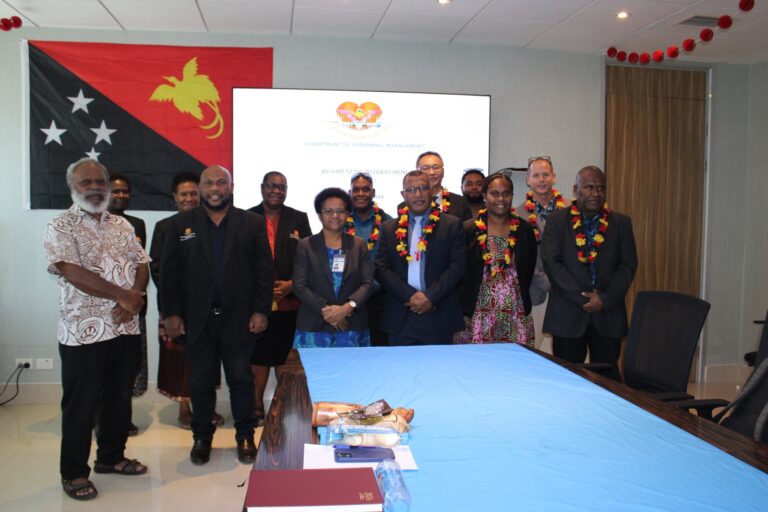
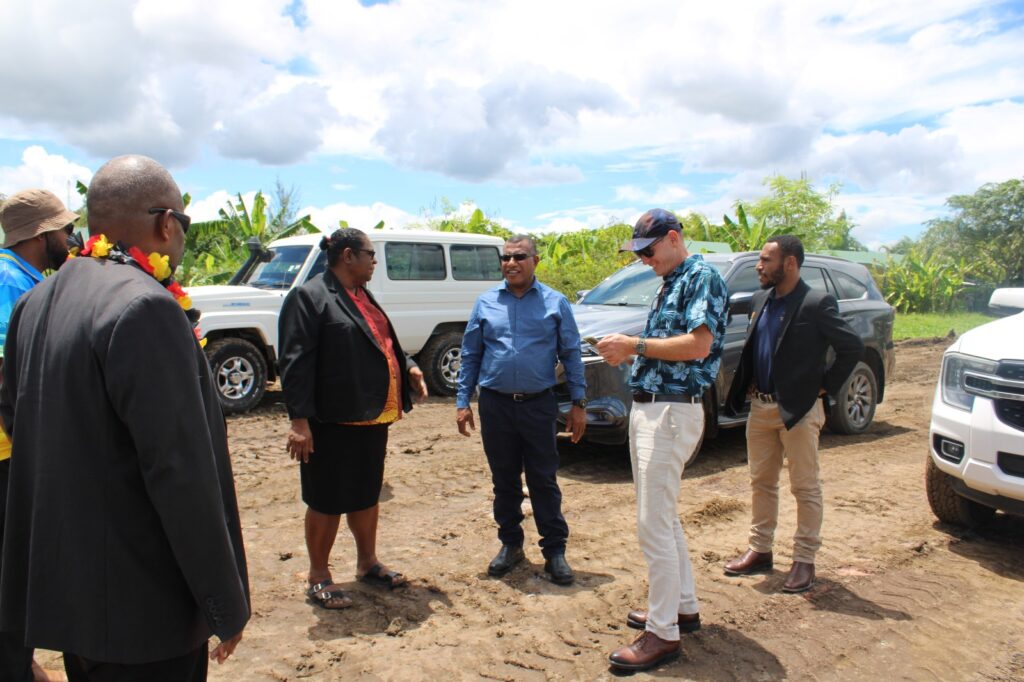
Vanuatu delegation at proposed housing plan site in PNG

To get a better idea of the work being done, the delegation visited the proposed housing site at Bomana in the National Capital District. The visit showed off plans that mix modern design with environmental care, highlighting PNG’s role in leading these kinds of developments.

The site visit offered the Vanuatu team a look at:

  • Modern and affordable housing for government workers.
  • New designs that focus on the needs of families.
  • Long-term planning for public service growth.

The Vanuatu delegation said the experience was an “eye-opening learning opportunity.” They expressed their thanks to the DPM for the presentations, saying that the visit has opened doors for PNG and Vanuatu to work together more closely in the future.

Sansan added that the initiative is an investment in people. The DPM remains focused on finding housing solutions that actually meet the needs of the people serving the country.


Landowners of the Panguna Special Mining Lease area are not pleased with the current negotiations by the Government of the Autonomous Region of Bougainville.

In a statement, the landowners claim they are being left out in the current negotiations.

The Panguna Osikayang Coalition, a civil society group representing the people who are directly impacted by the mine, are calling for a fair representation in consultations with the developers.

This week, the group demanded the ABG Government including developer Bougainville Copper Limited and partner, Lloyds Metals and Energy Limited to immediately halt all activities directly or indirectly concerning the mine, “these includes all ABG led community awareness programs that involve the planned dissemination of information relating to agreements and activities that indigenous resource owners were NOT involved in, are not ‘a party to’.”

Six key reasons were highlighted as references to cease activities concerning the reopening of the mine.
The reasons include:
• Unresolved Panguna Legacy issues
• Lessons learnt from the first BCL agreement and the need to be inclusive
• Lack of inclusive and equitable participation, and representation
• Lack of transparency and accountability
• Process and Governance Gaps and
• Legal and Rights Considerations

The group emphasised the need for the ABG Government and the developer and its partners to have an open dialogue and be transparent with negotiations and agreements.

The Panguna Osikayang Coalition explained in the statement that their concerns stem from a wider community based stakeholder engagement and consultation meeting in Panguna, put together by a Technical Working Group comprising of concerned citizens of the impact communities.

Meanwhile, the ABG Government through the Media Office, says it remains committed to ensuring that landowners are empowered as key stakeholders in development.

The ABG community engagement program is already underway, and concerns raised by various interest groups will be addressed through this community engagement and dialogue.


In a move to ensure that every Kina of public funding translates into tangible service delivery, Certified Practicing Accountants Papua New Guinea (CPAPNG) has moved to professionalize the nation’s subnational financial systems.

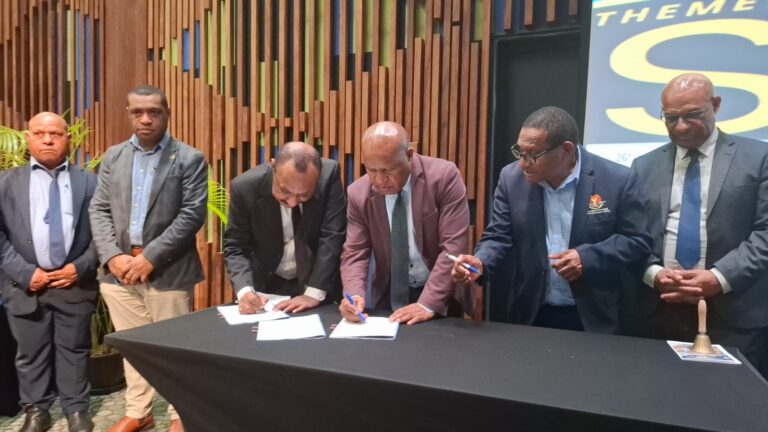
The 51-year-old institution has entered into a landmark Memorandum of Understanding (MOU) with the Department of Provincial and Local Government Affairs (DPLGA), positioning its nearly 10,000 members as the front-line defenders of accountability in provincial and district administrations.

The agreement, signed on Tuesday at the Hilton Hotel, signals a shift from administrative oversight to a rigorous, certification-led intervention.

The partnership is part of the base work of the PNG Reset @50 20-Year Roadmap, specifically targeting the national priority of transparency. CPAPNG President, James Gore emphasized that the association is stepping beyond internal affairs to act in the broader public interest.

“This partnership stands as one of CPAPNG’s key initiatives aligned with these national priorities,” Gore said.

“We remain politically neutral and work collaboratively with the government of the day.”

For the first time, a clear framework has been established to upskill and certify accountants specifically within the public sector. This move aims to fix the implementation gap that often stalls development projects at the district level.

According to President Gore, the MOU is not just about training, but about a fundamental structural change supported by proposed amendments to the Accountants Act.

“The MOU sets out a clear framework for capacity building, upskilling, and ultimately certifying public sector accountants under the CPAPNG umbrella,” Gore explained.

“This will be supported by proposed amendments to the Accountants Act, ensuring a robust pathway for professionalization within the public sector.”

By focusing on provincial and district finance personnel, the reform targets the very people responsible for planning, budgeting, and acquittals. The goal is to ensure that funds intended for schools, roads, and healthcare are managed with a high level of ethical and professional rigor.

“Through this collaborative framework, CPAPNG and DPLGA will support improvement in public sector accounting performance, support policy and legislative reforms, and deliver specialized training and capacity building for provincial and district finance personnel,” Gore said.

As Papua New Guinea ventures into its next 50 years as a sovereign independent nation, the pressure for transparent governance has never been higher. CPAPNG is now mobilizing to ensure the public sector meets the expectations of citizens and international partners alike.

“Together, we can lay the foundation for lasting reform and stronger financial stewardship across Papua New Guinea,” Gore concluded.


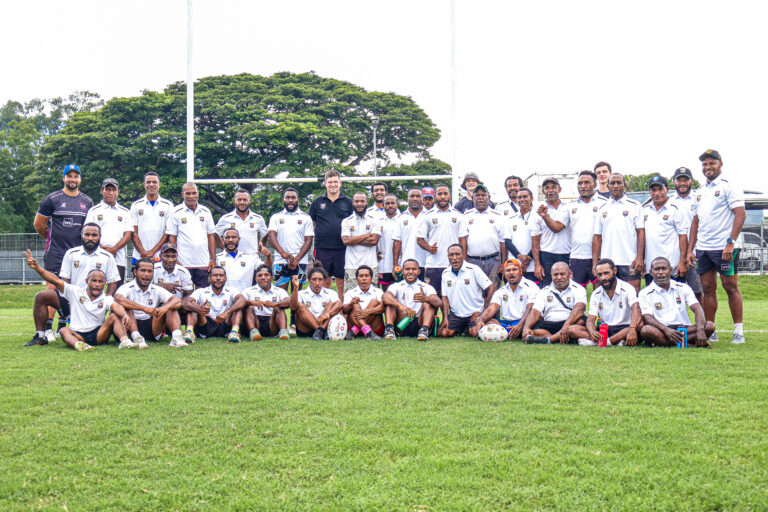
With the national rugby league season just weeks away, 37 match officials have officially secured their credentials to take the field. The group, consisting of referees and touch judges, completed the PNGRFL Better Development Accreditation workshop this week in preparation for the April 12 kickoff.

The intensive two-day program, hosted at the Santos National Football Stadium, saw participants from across Papua New Guinea tackle 16 training modules. The cohort includes three women, marking a significant step in the PNGRFL’s push for inclusive representation within the sport’s officiating ranks.

The accreditation is a collaborative effort between the PNGRFL, Queensland Rugby League (QRL), the National Rugby League (NRL), and PacificAus Sport. By aligning with international benchmarks, the program ensures that PNG officials are equipped to perform on both local and regional stages.

Greer Beck, QRL Development Coach for Match Officials, facilitated the sessions and emphasized the value of global consistency.

“At the moment, we’re focusing on ensuring PNG referees are accredited under NRL guidelines. This ensures they hold the correct accreditation standards so that if they were to officiate games in Australia, they would already meet Australian accreditation requirements,” Beck said.

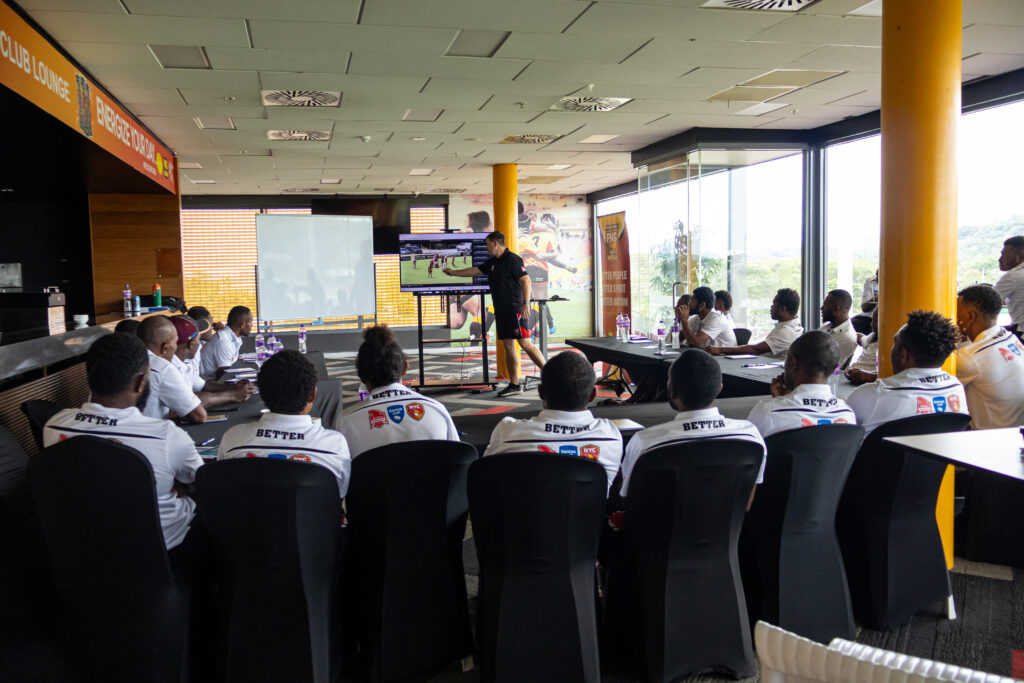
Greer Beck, QRL Development Coach in a training session with Match Officials.
Greer Beck – QRL Development Coach – in a training session with match officials. [PHOTO/PNGRFL Media]

The 37 newly accredited officials are now eligible to oversee all five competitions under the PNG National Rugby League Competition (PNGNRLC) banner. For PNGRFL CEO, Stanley Hondina, the workshop is a cornerstone of the league’s commitment to professionalism.

“I’m pleased to see all of you complete this two-day workshop, and I thank Greer Beck for facilitating these sessions since last year,” Hondina said during the closing remarks.

“Workshops like this are important in preparing referees for our five competitions. Congratulations to all of you for making the cut for the 2026 season. Take ownership of your development, prepare thoroughly, and deliver at a high standard.”

For the officials, the training offered a chance to refine technical skills. James Tau Amos, a veteran referee from the Lae Rugby League with seven years of experience, said there is always room for growth.

“This would be my seventh time attending such a workshop since I started refereeing. One area I want to improve on after this is working more effectively with the touch judges and improving referee positioning during matches,” Amos said.

The workshop also highlighted the growing role of women in the sport. Heavenly Paul, who officiates across the Santos Cup, National Youth Competition, and the Digicel ExxonMobil Cup, views her role as a blueprint for others.

“I have been officiating since 2021 and have attended several workshops since then,” Paul shared.

“Although this can be a challenging career, I proudly stand as a representative and role model for other women who wish to follow this path. If men can play and officiate the game, women can too.”


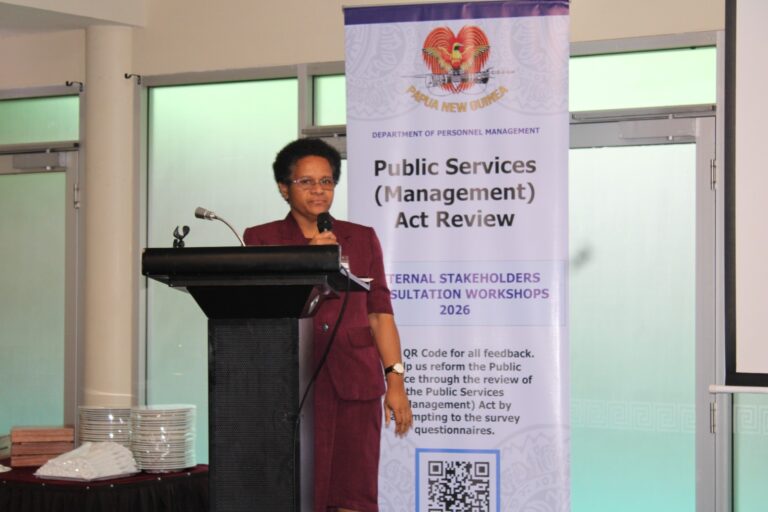
As part of the Government’s ongoing efforts to modernise and strengthen public sector governance, the Department of Personnel Management (DPM) commenced a public review of the Public Service Management Act (PSMA) on Monday.

DPM began the external consultations with agencies in the Social and Administration Sector this week, marking the first phase of wider national engagement.

Secretary for the Department of Personnel Management, Taies Sansan, told participants that the review aims to critically assess the existing Act, identify gaps and overlaps, highlight areas requiring improvement, and recommend reforms that will enhance efficiency, transparency, accountability, and professionalism across the public service.

“The Public Service Management Act is the cornerstone legislative framework governing the administration, management, and operations of the public service in Papua New Guinea.

Since its enactment in 1995, it has guided appointments, employment conditions, organizational structures, and the implementation of constitutional provisions related to State Services and Provincial Administrations,” Sansan said.

She stated that the PSMA has undergone several amendments and reviews since its inception, most notably in 1998, 2002, 2003, 2020, 2022, and a consolidation in 2024.

However, with the public service landscape rapidly evolving, a comprehensive review is now necessary to ensure the Act remains relevant, effective, and aligned with national priorities.

Sansan emphasised her vision for a “smarter, leaner, technology-driven public service” staffed with well-remunerated public servants who can contribute meaningfully and efficiently to national development.


Pin It