
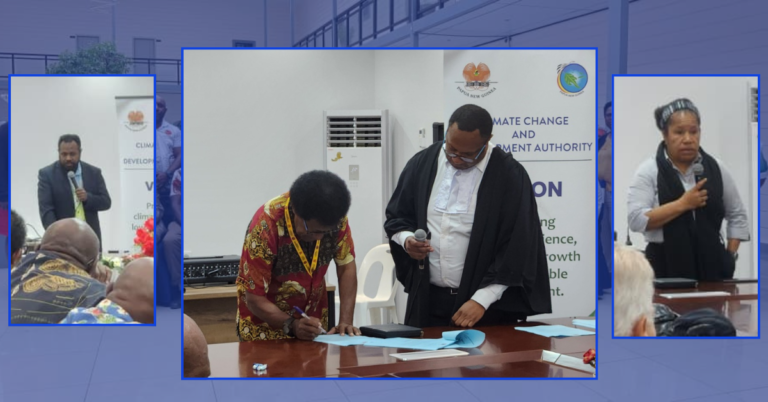
Actions to strengthen climate governance at the Fly River Provincial Government has been backed up by the Climate Change and Development Authority (CCDA).
In a partnership between the Fly River Government and CCDA, members of the Western Provincial Climate Change Committee (WPCCC) will lead climate change activities in the province.
An induction ceremony held in Daru forms the basis of the commitment by the provincial government to strengthen systems for climate governance in the Western province.
The Committee will serve as a dedicated platform to coordinate climate change adaptation and mitigation initiatives while ensuring that provincial development priorities are aligned with national climate objectives.
This Committee will focus on three key priorities:
- Providing a platform for collaboration among provincial government agencies, customary landowners, development partners, civil society, communities, and the private sector to coordinate climate action.
- Institutionalizing climate governance through the formal establishment and operationalization of the Provincial Climate Change Committee.
- Building technical capacity to strengthen climate knowledge and align provincial actions with national climate policies, Papua New Guinea’s Nationally Determined Contributions, and the Medium-Term Development Plan IV.
Under the Climate Change (Management) Act 2015, the CCDA leads the country’s response to climate change and implementation of Papua New Guinea’s Nationally Determined Contributions (NDCs) outlined in the Paris Agreement.
Achieving these national commitments, however, requires strong coordination and ownership at the provincial and local levels, and in recognizing this, the Climate Office has prioritized establishing Provincial Climate Change Committees (PCCCs) across all 21 provinces and Bougainville.
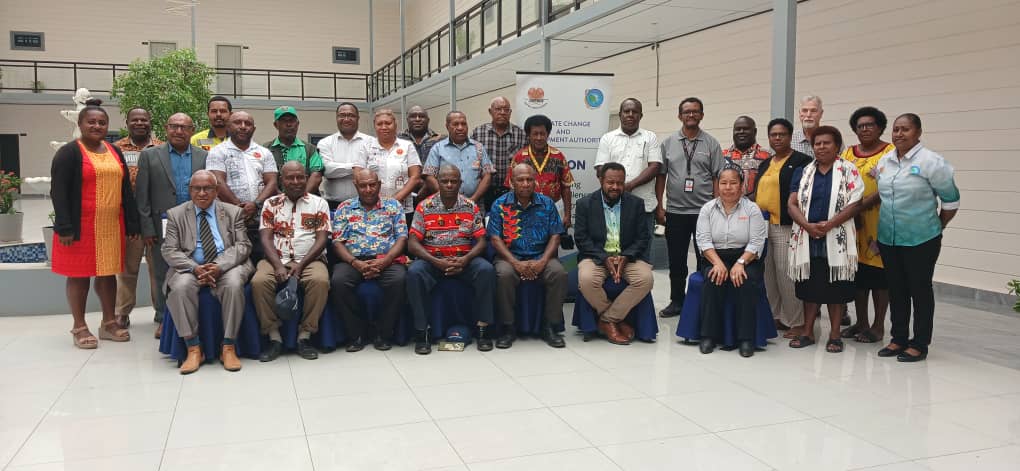
These committees provide an inclusive multi-stakeholder platform for integrating climate change into provincial planning, strengthening institutional coordination, and aligning provincial initiatives with national climate policies and international commitments.
The consultation un Daru brought together representatives from provincial government agencies, the private sector, and civil society organizations, demonstrating a shared commitment to coordinated climate action in Western Province.
Despite not signing the planned Memorandum of Understanding (MoU) between CCDA and the Fly River Provincial Government, both parties have committed to formalizing the agreement at a later date.
Once signed, the MoU will provide a clear institutional framework for cooperation by defining roles, responsibilities, and coordination mechanisms between the two institutions. CCDA also highlighted the critical importance of strengthening partnerships to successfully implement the Green Climate Fund Results-Based Payments (GCF RBP) Pilot Project in Western Province.
The pilot project recognizes and rewards efforts to reduce emissions from deforestation and forest degradation while promoting sustainable forest management and community participation. Again, the success of such programs depends on strong collaboration between national government agencies, the Fly River Provincial Government, customary landowners, local communities, and private sector partners.