Archive

July 2026

Browsing


PNG Power Limited CEO, Paul Bayly says PPL will be reviewing details of a National Court Decision that ordered PPL to pay independent power producer, Dirio Gas and Power Company Limited, a sum of K180 million.

Bayly released a statement after the court’s ruling stating PPL will lodge an appeal citing among other matters, the Capital Cost Recovery which has inflated the billings.

The statement described the legal battle as a historical contest with Dirio in relation to the commercial terms in the Power Purchase Agreement (PPA) that will run from 12 September 2019 to 11 September 2044, a 25-year period.

The Court’s decision handed down on 7th July by Justice John Carey is based on the Power Purchase Agreement that PNG Power and Dirio Gas and Power Company Limited entered into in 2019.

The Dirio plant is located west of Port Moresby towards the PNG LNG site and would supply electricity to PNG Power’s Port Moresby Grid, as agreed to in the Power Purchase Agreement.

The court heard that payments by PPL for the utility ceased since September 2022, three years after the agreement was established and the debt continued to increase.

In 2023, local media reported that Dirio Board Chairman Issac Lupari said PNG Power is understood to owe Dirio Power Limited K180,778.463.68. In that same report, Lupari said he wrote to the then PPL chairman McRonald Nalet stating that continued non-payment by PNG Power would result in Dirio’s evasion of its operational contracts.

Documents presented in court showed that PNG Power wrote a letter to Dirio Gas and confirmed it had an outstanding of K142.6 million. The evidence suggests that in spite of the accumulating charges, the utility continued to receive full electricity.

The court heard that by December 2022, the debt had increased to over K180 million and by May 2025, it reached K278 million.

The court found that PNG Power did not follow requirements under the Power Purchase Agreement by not issuing formal dispute notices against monthly invoices.

However, CEO Bayly when responding to the court’s decision said the cost and other pass-through costs should never be passed onto a single source power buyer such as PPL even if tariffs are adjusted for.

“The Appeal against the Decision will be filed in Court sooner than the prescribed 40-day period,” said Bayly.
On the other end of the court ruling, Dirio Power have welcomed the Court decision in its favor saying the judgment confirms Dirio Power’s long-held position that the contractual obligations entered with PNG Power must be honored.

Dirio Gas and Power CEO James Nelson said the decision was an important result for contractual certainty and the future of Papua New Guinea’s energy sector.
“Dirio is grateful to the National Courts for their time and focus in resolving the matter of the unpaid bills,” said CEO Nelson.

Board Chairman of Dirio Gas and Power Company, Isaac Lupari said the ruling provides the certainty needed for Dirio to move beyond the dispute and refocus on delivering for Papua New Guinea.

“We thank the National Court for upholding the rule of law and recognizing the contractual obligations that underpin investor confidence in Papua New Guinea,” said Lupari.


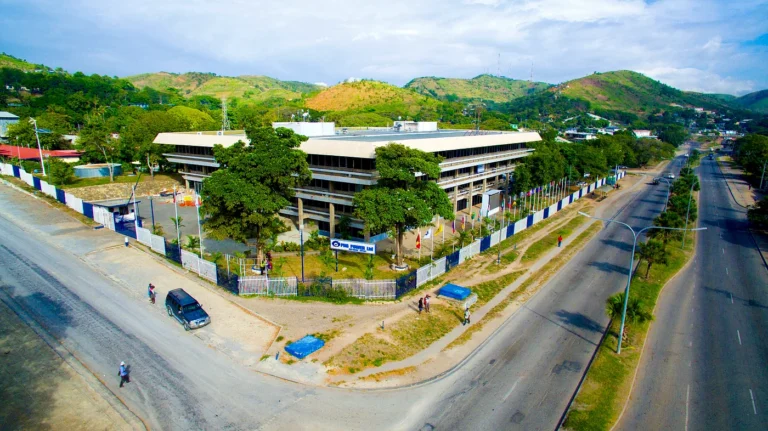
PHOTO FILE: Sourced from PPL website gallery
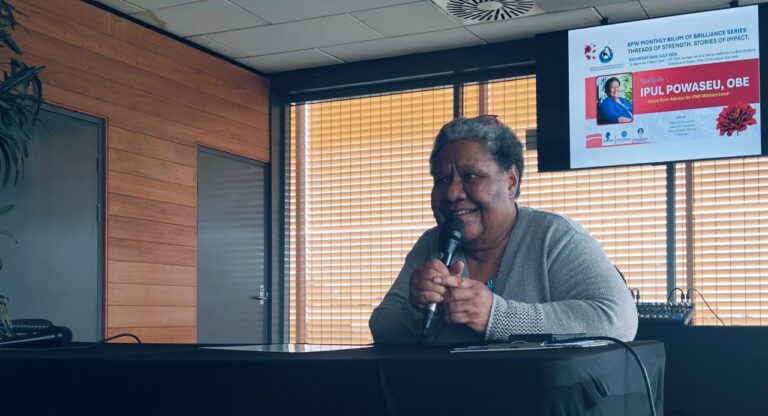
The July Bilum of Brilliance Series featured Ipul Powaseu, a woman champion who advocates for disability inclusion and awareness on disability rights.

Powaseu contracted the polio virus as an infant that caused partial paralysis which resulted in her needing mobility aid growing up.

But her love for learning created the pathway that took her to Passam National High School, then onto the University of Papua New Guinea, then to Australia and even taking up a job at the Secretariat of the Pacific Communities in Fiji.

Powaseu did all these with the aid of a wheelchair and her challenge to members of the “Business and Professional Women” (BPW) was to continue its sponsorship program.

“My story is a story of resilience. It is a story of persistence,” said Powaseu.

Her journey is amongst those of many Papua New Guinean women who chose education as a way out.

Despite needing mobility aid, Powaseu has gone on to becoming the only sibling in her immediate family to complete University.

“I am the first girl from the (my) village to attain a university degree, and even the first to attain a Masters and now pursuing a PhD,” Powaseu said.

She recalled that her mother cried the whole day, when she left her Island home for studies at the Passam National High School in East Sepik Province.

“So when you talk about the children living with disability, the impact on them also affects their family members, if they are grown up and they have children, it affects them as well,” said Powaseu”

After spending close to 30 years in the agriculture sector, Powaseu left formal employment in 2009 to advocate for inclusion. She says education will take you places.

Her work in the disability rights include PNG Government´s action to ratify the Conventions of Rights for Persons with Disability in 2013, she headed the National Assemble of Disabled Persons for nine years and she is now setting up networks for women with disability across 20 provinces.

“I left my profession because I realized that people especially girls with disabilities were not able to go to school because of discrimination and stigma” said Powaseu.

In Papua New Guinea where there is a lack of facilities for people living with disabilities, it becomes harder for people with special needs to move around on their own.

“For me with a disability, I had to overcome everything,” said Powaseu.

She also spoke of three women with disabilities in Morobe who face challenges when trying to access health services, market spaces or when traveling on public transport.

Her appeal to the BPW Vabukori Community Cluster was to include women in disabilities in their meetings going forward.

“There are women with disabilities in your community, who also don´t just want your prayers, they want you to involve them in your groups as well,” she said.

The Business and Professional Women-Port Moresby Club, is affiliated to BPW International and holds monthly meets for its members.

The Bilum of Brilliance Series will have its next meeting on the 1st of August.


The Papua New Guinea Tourism Promotion Authority (PNGTPA), in collaboration with the National Capital District Commission (NCDC), has officially launched the National Capital District Accommodation Inventory & Capacity Survey.

The initiative was unveiled during a stakeholder workshop at the Holiday Inn in Port Moresby, where government officials and industry leaders gathered to map out a strategy for a more data-driven tourism sector.

The survey aims to establish a comprehensive, real-time database of all accommodation establishments throughout the National Capital District. According to PNGTPA officials, this move is essential for evidence-based decision-making, helping to guide future destination planning, attract targeted investment, and promote sustainable growth.

“Quality tourism planning begins with quality data,” said Mr. Kennewton Kennedy, PNGTPA Executive Manager for Partnership & Product Development.

“This initiative is about more than counting rooms. It is about understanding our tourism capacity, identifying opportunities for investment, and ensuring Port Moresby is well-prepared for major national and international events.”

A primary driver for the survey is the city’s preparation for upcoming high-profile events, most notably the PNG Chiefs Rugby League Games in 2028. By securing accurate information on room availability and capacity, authorities hope to streamline logistics and enhance the visitor experience.

Mr. Busa Jeremiah Wenogo, NCDC Economic and Business Development Manager, emphasized that the benefits of this project extend beyond the capital.

“Port Moresby is the gateway to explore the rest of Papua New Guinea,” Mr. Wenogo said.

“When we strengthen tourism in the National Capital District, we also strengthen tourism opportunities for every province.”

PNGTPA has issued a strong appeal to accommodation providers across the district to participate by providing accurate figures. To encourage transparency, the authorities have assured that all data collected will be handled confidentially and used exclusively for planning and development purposes.


One in three Australian workers are using artificial intelligence or AI to get ahead without telling their employer, and even more say using the technology makes them feel like they are cheating.

But their guilty secret is increasing productivity in the workplace, a study has found, and businesses could benefit more if they openly supported its use.

Software provider Employment Hero released the findings on Tuesday from a study of more than 2600 employees and employers, which also found many workers were training themselves to use AI tools with material found online.

The results comes after the National AI Centre reported almost half of Australian organisations were adopting the technology, but 19 per cent said they were still unsure how to use it.

The report, called AI Paradox at Work, surveyed more than 1000 Australian business leaders and 1600 workers about their use and experiences with artificial intelligence tools.

It found three in four Australian workers thought AI had improved their productivity (75 per cent) and almost as many said it had improved the quality of their work (74 per cent).

But one in three employees used AI tools in secret, without company approval, and employers reported many staff were using personal AI accounts at work (44 per cent).

More than half of workers using AI were teaching themselves how to do it, Employment Hero Asia Pacific managing director James Keene said, which could lead to poor outcomes.

“Most of them are going straight to TikTok and YouTube and various blogs and websites rather than any company-owned material about how to actually use AI in the best way,” he said.

“If you’d imagined this five years ago, surreptitiously employees having to go to their own sources to make them more productive for the business they are working for, it’s a pretty interesting place we find ourselves.”

Many employees were hiding their AI use out of guilt as two in five said using the tools felt like cheating, Mr Keene said, while others were concerned about job losses prompted by AI.

Businesses could change these attitudes by openly discussing ways to use the technology, he said, and setting clear guidelines.

“There’s a real lesson for employers here, which is that if you genuinely want to be encouraging your employees to be using this technology, you need to be demonstrating it to them yourself,” he said.

Unclear guidance could create a stressful environment for workers, UNSW Sydney researcher Dr Anna Kiaos said, but one that could be fixed by leadership.

“The only thing holding the workforce back now isn’t the technology, it’s uncertainty about whether employees are actually allowed to use it in the ways that work for them,” she said.


Pin It