
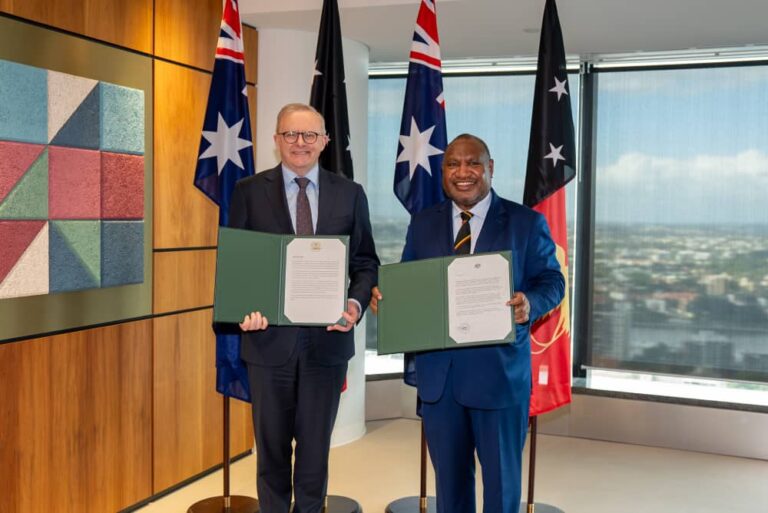
PAPUA NEW GUINEA and Australia are now, formally allies with the, entry into force of the Pukpuk Treaty. This means the articles outlined in the Bilateral Security Deal are now legally binding and can be implemented.
The announcement made on 11th July by both Prime Ministers will strengthen the integration between PNG and Australian Defence Forces.
For Papua New Guinea, the Pukpuk Treaty makes Australia the first country in its´ history to sign a security deal of this level.
While for Australia, PNG becomes the fourth country of alliance, 70 after Australia and the United States became allies.
Under this treaty, Papua New Guineans can join the Australian Defence Force and serve in the Australian Army, the Australian Defence Force will have access to agreed military bases in PNG and both countries will defend each other if a conflict arises in the region.
PNG Prime Minister James Marape, who attended the annual PNG-Australia Leader´s Dialogue said his government deliberately elevated this relationship from traditional cooperation to equal partnership.
“The real objective is to strengthen connections between our people, expand business-to-business engagement, increase investment flowing both ways, and create more opportunities for Papua New Guineans and Australians alike,” Marape said.
Australian Prime Minister, Anthony Albanese said the alliance between the two countries reflect the deep trust both countries share as the closest of neighbors, partners and friends.
“In an uncertain world, this treaty demonstrates our shared commitment to a region that is peaceful, stable and prosperous,” said Albanese.
This Treaty is underpinned by a mutual defence commitment, that recognized that an armed attack on either country is a threat to both nations, and the security of the region.
It commits both countries to consult, cooperate, and if required, act to meet a common danger, while explicitly safeguarding sovereignty.
In the last decade, Australia has been increasing its presence in the Pacific Island countries through security and economic agreements. This is desired to counter the growing concerns of China´s influence in the region.
In attempts to maintain a strong and active Australian presence, Canberra is looking beyond Papua New Guinean waters.
Earlier this week, the Australian Prime Minister and his delegates visited a number of the Melanesian countries.
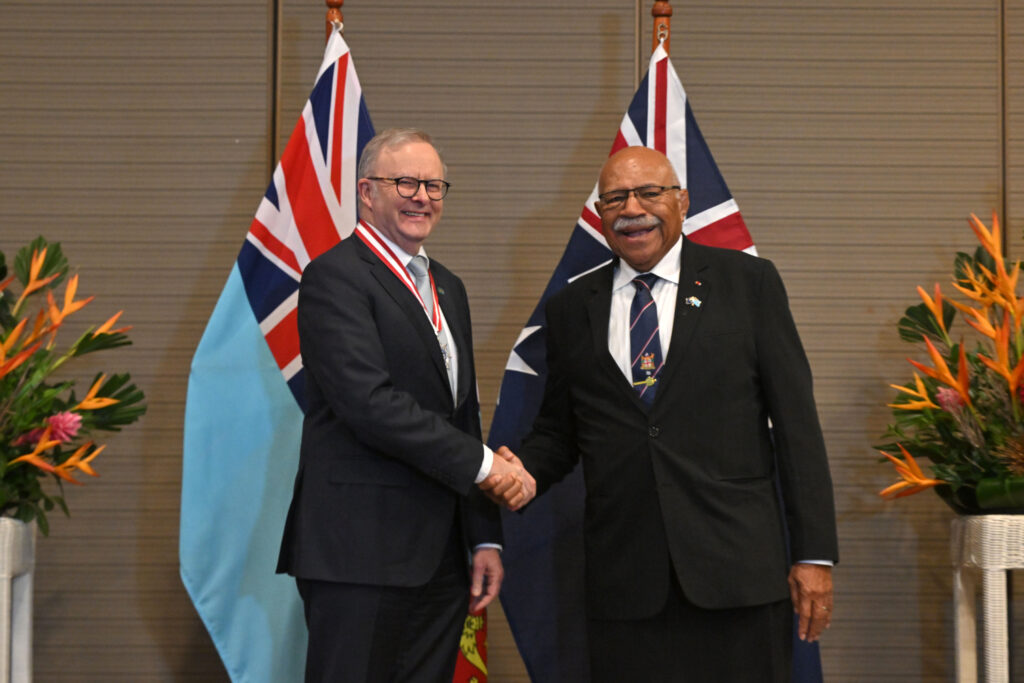
Starting in Fiji, Australian Prime Minister Anthony Albanese and Fiji Prime Minister, Sitiveni Rabuka signed two deals in Suva.
Similar to the Pukpuk Treaty, the Ocean of Peace Alliance or the Veitacini Treaty between Fiji and Australia is a defence pact and a broader statement for security in the pacific region.
The second deal, called the Vuvale Union is closely tied to education services, workforce mobility, skills development and economic integrations.
In June, Australia also signed the Nakamal Agreement with Vanuatu. The agreement prevents foreign military bases to be established in the Melanesian country.
Solomon Island remains the only Melanesian Country yet, to sign a security deal with Australia. But this could change.
Talks between the Australian and Solomon Islands Prime Ministers during Solomon Islands the 48th Independence Anniversary suggests the two countries may start negotiations on a similar agreement like the Pukpuk Treaty
At the moment, Solomon Islands remains the only Pacific nation to have signed a security deal with China in 2022.