Author

Australian Associated Press

Browsing

Pacific workers are being urged to chase up “many millions” in lost superannuation from their stints in Australia, with that problem also leading to calls for reform.

Difficulties navigating Australia’s complex tax system, particularly for foreigners, mean Pacific Australia Labour Mobility (PALM) workers often leave their hard-earned super languishing.

During a nine-month stint in Australia at the guaranteed base wage levels, PALM workers typically accumulate around $3,800 in pre-tax superannuation.

Like other guest workers, PALM workers can apply to access those funds once they’ve left the country, but most either do not – or can not.

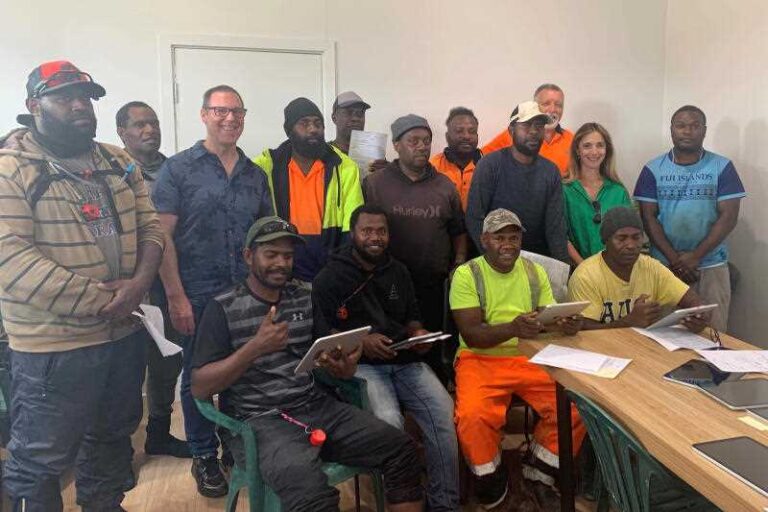
Group of young Pacific PALM workers sitting at a table.
All guest workers can apply to access their superannuation once they’ve left, but many do not. (University of South Australia/AAP PHOTOS)

“PALM workers are collectively leaving many millions of dollars in superannuation unclaimed,” Robert Whait, University of South Australia senior lecturer told AAP.

The PALM scheme has expanded in recent years to average around 30,000 workers from 10 Pacific nations in Australia at any one time, doing jobs that employers cannot fill.

Industries includes agriculture and food processing, but also aged care, hospitality, tourism, and even a pilot in early childhood education.

Dr Whait manages the UniSA tax clinic, which offers advice “to help vulnerable Australians with their taxes”, and on the foreign affairs department’s suggestion, widened to take in PALM workers.

“PALM workers have the same rights we do … but the main issue is that under the current law, they can only access that superannuation when they leave Australia and their visa is canceled,” he said.

“Either they’re not aware of it, or the process to put in the forms is difficult because of various barriers, so lots of money is left unclaimed which they could be taking home with them to use, directly with their families and helping out their lives.”

Barriers include the unavailability of key forms in languages other than English, the reliance on internet and computer access, and verification.

PALM workers also get slugged with extra taxes that effectively claw back half of their earnings: the 15 per cent tax on contributions and a 35 per cent “departing Australia superannuation payment” tax.

The messy situation has led Dr Whait, with Connie Vitale from Western Sydney University, to author a paper looking at policy reforms, especially given super primarily exists to fund the retirement of Australian workers.

Options canvassed include adding super into their take-home pay (as occurs in New Zealand) or sending it to a super fund in the worker’s home country, either as they earn, or when they head home. 

Dr Whait believes the latter options would better serve the primary of purpose of super – to assist workers in retirement – and allow Pacific super funds greater pools of funding to invest at home.

“The money from PALM superannuation could be used to help infrastructure in their countries and help their communities, so that was probably the tipping point in in recommending that approach,” he said.


Written by: Ben McKay (AAP)

STATE OF ORIGIN‘S MOST UNLIKELY COMEBACKS:

MAGUIRE’S MIND GAMES LEAD TO HEIST OF 2024

Just last year NSW were able to pull off exactly what the Maroons are attempting to do. After A series-opening flogging at home where Joseph-Aukuso Suaalii was sent off, Michael Maguire began throwing barbs at Billy Slater and the series turned. NSW demolished the Maroons in Melbourne, before winning a decider at Suncorp for the first time since 2005.

THURSTON DOES IT WITH ONE ARM IN 2017

Queensland looked shot after Andrew Fifita led an assault on Suncorp Stadium and NSW won the series opener there 28-4. The Blues then led 16-6 at halftime in Sydney, before Johnathan Thurston engineered a comeback while playing with a season-ending shoulder injury. Momentum had swung, and the Maroons won comfortable in Cameron Munster’s debut in Brisbane.

QUEENSLAND SAVE STATE OF ORIGIN IN 2006

There were genuine fears over the future of State of Origin when NSW won a thrilling game one in Sydney and looked on track for a fourth straight series win. The Maroons hit back with a 30-6 flogging in Brisbane, before Darren Lockyer’s famous effort to intercept a Brett Hodgson pass late in Melbourne secured a win for the Maroons and forever altered the course of Origin history with seven more consecutive series wins to follow.

JOHNS’ LAST HURRAH IN 2005

NSW had a mountain to climb after another all-time classic in the series opener, coming back from 19-0 down to lose 24-20 in golden point. Enter Andrew Johns. The Newcastle legend came back from injury set up a 32-22 win in Sydney before a 32-10 domination in Brisbane three weeks later. It would prove the champion halfback’s last Origin match, and the end of an era of Blues’ domination before Queensland’s dynasty began the following year.

BLUES’ 1994 RESURRECTION AFTER MAROONS MIRACLE

Mark Coyne scored the most famous try in State of Origin history to take Queensland to victory in game one, but it was NSW who pulled off the ultimate miracle over the next month. Defence won the game for the Blues in Melbourne, before a second straight victory on the road at Suncorp Stadium won them the series for the third straight year. It marked the first time a team came from 1-0 down to lift the shield.


Written by: Scott Bailey (AAP)

A defiant Billy Slater has declared that the Queensland Maroons won’t be pressured into kicking off to NSW firebrand Spencer Leniu in State of Origin II.

As Maroons prop Tino Fa’asuamaleaui said he was not scared of Leniu on Tuesday, Slater would not be drawn on whether the Maroons would kick to the Blues front-rower.

Of the four long kick-offs from Queensland in their game one loss, none went to Leniu or Payne Haas, in what has since been labelled by some as a pre-determined plan.

The situation left Leniu fuming, with the Sydney Roosters prop appearing to swear in frustration as the Maroons changed the direction of their kick to avoid him.

Haas has largely stayed away from the debate over the past week, but on Monday said he would want the ball kicked off to Leniu if he was in the Maroons side, since he’d want the chance to take down a powerful rival.

Former NSW front-rower Willie Mason has also accused the Maroons of being “s**t scared” of Leniu, while Braith Anasta labelled Queensland “weak”.

Slater dodged a question on Tuesday on whether Leniu would have the chance to take a hit-up from a kick-off at Optus Stadium.

But the Maroons coach did defend his team’s right to prioritise their own tactics over the entertainment factor.

“We don’t ask Nathan (Cleary) to kick to a specific corner. He does what he wants,” Slater said of the Blues halfback. 

“He gets his game on. So, we’ll be getting our game on.

“I get all the dilemma about it, but at the end of the day, it’s about building a game and a game plan that best suits you.  

“It’s not about what (the media) want or anyone else wants.”

Asked about the issue, Maroons front-rower Fa’asuamaleaui rejected any suggestion Queensland’s pack were scared of Leniu.

“I’m not scared of anyone,” Fa’asuamaleaui said.

“I just want to do my job for Queensland and I’m not going to back down from anyone and that’s our whole team. 

“We’re just going to get out there, get our game on and do what we do best and play our game.

“(We’re) not backing down from anyone.”

Slater wouldn’t say whether the Maroons would make late changes to their pack, or if Kurt Mann could start at hooker in place of Harry Grant.

The Maroons have won six of eight games when Grant has come off the bench, as opposed to a 0-4 record with him starting.

NSW second-rower Angus Crichton had accused Queensland of mind games last week, refusing to believe Jeremiah Nanai and Pat Carrigan weren’t starting.

Hamiso Tabuai-Fidow has already let slip that he will move to the right wing at Optus Stadium, after playing left centre in the series-opening 18-6 loss in Brisbane.

That defeat has piled the pressure on Slater, who has already axed captain Daly Cherry-Evans and replaced him with Tom Dearden in the halves.


Written by: Scott Bailey (AAP)

Pacific media outlets In-depth Solomons and Inside PNG face existential threats, while Benar News has already gone under, as America withdraws from the region.

America’s retreat from foreign aid is being felt deeply in Pacific media, where pivotal outlets are being shuttered and journalists work unpaid.

The result is fewer investigations into dubiously motivated politicians, glimpses into conflicts otherwise unseen and a less diverse media in a region which desperately needs it.

“It is a huge disappointment … a senseless waste,” Benar News’ Australian head of Pacific news, Stefan Armbruster, told AAP after seeing his outlet go under.

Benar News, In-depth Solomons and Inside PNG are three digital outlets which enjoyed US support but have been cruelled by President Donald Trump’s about-face on aid.

Benar closed its doors in April after an executive order disestablishing Voice of America, which the United States created during World War II to combat Nazi propaganda.

An offshoot of Radio Free Asia (RFA) focused on Southeast Asia and the Pacific, Benar kept a close eye on abuses in West Papua, massacres and gender-based violence in Papua New Guinea and more.

The Pacific arm quickly became indispensable to many, with a team of reporters and freelancers working in 15 countries on a budget under $A1 million.

“Our coverage of decolonisation in the Pacific received huge interest, as did our coverage of the lack women’s representation in parliaments, human rights, media freedom, deep sea mining and more,” Mr Armbruster said.

In-depth Solomons, a Honiara-based digital outlet, is another facing an existential threat despite a proud record of investigative and award-winning reporting.

Last week, it was honoured with a peer-nominated award from the Foreign Correspondents’ Club of Japan for a year-long probe into former prime minister Manasseh Sogavare’s property holdings.

“We’re just holding on,” editor and co-founder Ofani Eremae told AAP.

A US-centred think tank continues to pay the wage of one journalist, while others haven’t drawn a salary since January.

“It has had an impact on our operations. We used to travel out to do stories across the provinces. That has not been done since early this year,” Mr Eremae said.

A private donor came forward after learning of the cuts with a one-off grant that was used for rent to secure the office, he said.

Its funding shortfall – like Port Moresby-based outlet Inside PNG – is linked to USAID, the world’s biggest single funder of development assistance, until Mr Trump axed its multi-billion dollar budget.

Much of USAID’s funding was spent on humanitarian causes – such as vaccines, clean water supplies and food security – but some was also earmarked for media in developing nations, with the aim of bolstering fragile democracies.

Inside PNG used its support to build an audience of tens of thousands with incisive reports on PNG politics: not just Port Moresby, but in the regions including wantaway province Bougainville that has a long history of conflict.

“The current lack of funding has unfortunately had a dual impact, affecting both our dedicated staff, whom we’re currently unable to pay, and our day-to-day operations,” Inside PNG managing director Kila Wani, told AAP.

“We’ve had to let off 80 per cent of staff from payroll which is a big hit because we’re not a very big team.

“Logistically, it’s become challenging to carry out our work as we normally would.”

AAP has confirmed a number of other media entities in the region which have suffered hits, but declined to share their stories.

The funding hits are all the more damaging given the challenges faced by the Pacific, as outlined in the  Pacific Islands Media Freedom Index.

The latest report listed a string of challenges, notably weak legal protections for free speech, political interference on editorial independence, and a lack of funding underpinning high-quality media, in the region.

The burning question for these outlets – and their audiences – is do other sources of funding exist to fill the gap?

Inside PNG is refocusing energy on attracting new donors, as is In-depth Solomons, which has also turned to crowdfunding.

The Australian and New Zealand governments have also provided targeted support for the media sector across the region, including ABC International Development (ABCID), which has enjoyed a budget increase from Anthony Albanese’s government.

Inside PNG and In-depth Solomons both receive training and content-focused grants from ABCID, which helps, but doesn’t fund the underpinning costs for a media business or keep on the lights.

Both Mr Eremae, who edited two major newspapers before founding the investigative outlet, and Mr Armbruster, a long-time SBS Correspondent, expressed their dismay at the US pivot away from the Pacific.

“It’s a huge mistake on the part of the US … the world’s leading democracy. The media is one of the pillars of democracy,” Mr Eremae said.

“It is, I believe, in the interests of the US and other democratic countries to give funding to media in countries like the Solomon Islands where we cannot survive due to lack of advertising (budgets).

As a veteran of Pacific reporting, Mr Armbruster said he had witnessed US disinterest in the region contribute to the wider geopolitical struggle for influence.

“The US government was trying to re-establish its presence after vacating the space decades ago. It had promised to re-engage, dedicating funding largely driven by its efforts to counter China, only to now betray those expectations,” he said.

“The US government has senselessly destroyed a highly valued news service in the Pacific. An own goal.”


Written by: Ben McKay (AAP)

Between Australia and New Zealand sits a chain of underwater volcanoes that are home to an abundance of fish, ancient corals and other marine life.

Known as Lord Howe Rise, the vast underwater landscape largely exists outside state maritime boundaries, beneath the high seas.

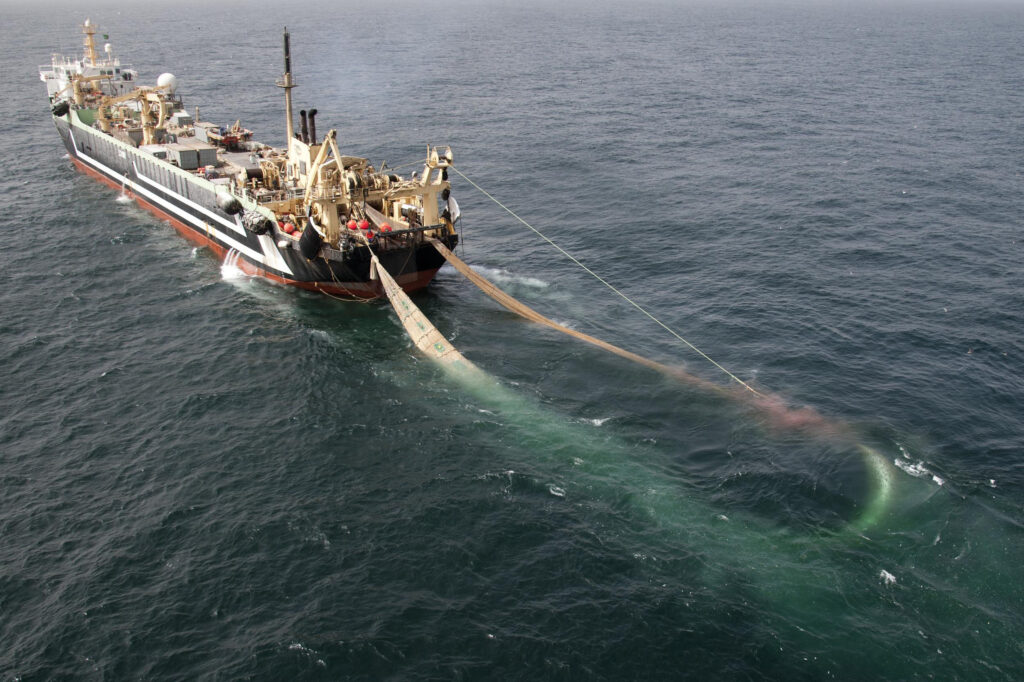
That makes the ecologically-rich habitat fair game for industrial fishing, including long-lining and bottom-trawling techniques in the spotlight following the latest instalment from acclaimed nature documentarian David Attenborough.

Footage in Ocean powerfully reveals to viewers for the first time, trawlers dragging heavy nets across the sea bed in an indiscriminate search for just a few prized species.

As well as scooping up vast volumes of bycatch, such trawling has been found to churn up carbon that would have otherwise stayed locked in place on the sea floor, some of which ends up in the atmosphere to fuel climate change.

The documentary lands ahead of a major United Nations ocean conference in France in June.

Conservation groups are hopeful the film will help garner support for a landmark treaty to better protect the roughly two-thirds of marine habitat outside the boundaries of individual countries.

The high seas biodiversity agreement would lay the foundations to safeguard 30 per cent of the world’s oceans by 2030 in marine sanctuaries, helping preserve threatened species and support fish stocks for communities reliant on the food source.

According to the Department of Climate Change, Energy, the Environment and Water, Australia, a founding signatory to the agreement in 2023, and the re-elected Albanese government have promised to ratify its commitment “as quickly as possible”.

“Australia is one of a small number of countries that requires implementing legislation to be in place before the treaty can be ratified,” a spokesperson says.

A multi-agency government delegation still being finalised is set to attend to conference in France.

To bring the treaty into force, 60 countries need to enshrine the treaty in national law via ratification.

So far, about 40 have either done so or signalled that they will. 

 WWF-Australia head of oceans and sustainable development Richard Leck is confident the treaty will come into force. 

“But it means countries like Australia, who have indicated they support the treaty, really need to step up to their parliamentary processes and make sure that that actually gets through their systems,” he says.

Greenpeace Australia Pacific senior oceans campaigner Georgia Whittaker says marine animals are being “pushed closer to the brink of extinction” every day that passes without stronger protections.

Fresh analysis of fisheries data from the environmental campaigners reveals damage caused by industrial longline fishing – long stretches of baited hooks – to shark populations.

Almost half a million near-threatened blue sharks were taken as bycatch in the the central and western Pacific in 2023, the highest number ever recorded and double 2015 numbers.

Greenpeace has been angling for a marine sanctuary in the Lord Howe Rise and Tasman Sea region in anticipation of the oceans treaty going ahead.

Marine scientist and Research Connect Blue director Rachel Przeslawski says there is still much to learn about the diverse underwater tracts off Australia’s east coast.

The mighty chain of seamounts – underwater mountains – experience an inverse relationship to biodiversity to that of their on-land cousins.

Life is most abundant higher on the peaks, where there’s more sunlight and nutrients, with visiting humpback whales and other migratory species among the creatures found in their midst.

The deeper waters of the surrounding abyssal plains tend to host sparser populations of “weird critters” that have adapted to dark, nutrient-poor and hostile conditions. 

Some seamounts are as shallow as 200m and a few breach the surface, Lord Howe Island and Middleton and Elizabeth reefs among them.

Australian trawlers are no longer active in the area but vessels from other countries are causing damage, Dr Przeslawski tells AAP, with sea beds taking years or even decades to recover.

She says any marine sanctuaries devised under a high seas agreement would ideally be completely no-take.

Many existing marine parks are only partially protected, with permitted sections to be fished or mined.

“Is it going to be toothless?” Dr Przeslawski asks.

“Or will it actually have some bite and the ability to affect some of these really ecologically damaging activities?”


Written by: Poppy Johnston (AAP)

Developing nations, including those in the Pacific, will pay China $A34 billion this year as Beijing comes calling for repayments on project funding.

China is now “the world’s largest single destination for developing country debt payments” and outstripping the whole of the West, says a new report shows from Australian think tank The Lowy Institute.

Under its Belt and Road Initiative, China has rapidly increased investments in infrastructure since 2013, partnering with dozens of nations primarily in the developed world.

In more recent years Beijing has changed tack, providing a heavier portion of grants – which do not need to be repaid – into its mix of development assistance.

However, with standard lending terms including the delay of payments for several years before a maturation of loans at 15-20 years, it appears crunch time has arrived for repayments.

“China’s earlier lending boom, combined with the structure of its loans, made a surge in debt servicing costs inevitable,” report author Riley Duke said.

“Because China’s Belt and Road lending spree peaked in the mid-2010s, those grace periods began expiring in the early 2020s. It was always likely to be a crunch period for developing country repayments to China.”

Mr Duke says some of the world’s poorest people are likely to bear the brunt.

“The high debt burden facing developing countries will hamper poverty reduction and slow development progress while stoking economic and political instability risks,” he said.

The analysis is incomplete, given data is only available for 54 of 120 developing countries and China does not routinely disclose funding.

Mr Duke says this means his figure of $US22 billion ($A34 billion) to be repaid in 2025 to China and its many state-controlled lending arms is likely an understatement.

It is also unclear whether China would defer debt repayments as it did during the COVID-19 pandemic, when it joined with G20 nations to provide relief.

That move was helpful at the time, according to Mr Duke, but the effect was to mount costs into a heightening of the current repayment spike.

Several countries across the Pacific, which have benefited from Chinese investment in infrastructure, are likely to be among the countries affected.

The report comes ahead of a significant summit between China and the Pacific in Xiamen, beginning on Wednesday when Foreign Minister Wang Yi hosts representatives of 11 nations.

Kiribati Prime Minister Taneti Maamau and Niue Premier Dalton Tagelagi will join with the foreign ministers of Tonga, Nauru, Micronesia, Solomon Islands, Vanuatu, Papua New Guinea and Cook Islands, and representatives from Fiji and Samoa for the two-day meeting.

“There will be an in-depth exchange of views on interactions and cooperation between China and Pacific island countries (PICs) in all aspects and international and regional issues of mutual interest,” China foreign ministry spokesperson Mao Ning said.

“China highly values its ties with PICs and hopes that this meeting will help drive the implementation of the important common understandings reached between leaders of the two sides, enhance solidarity and coordination, unite efforts for development and prosperity, and galvanize an even closer community with a shared future.”

The 11 nations attending the summit make up the entire Pacific Islands Forum membership, excepting the three countries with diplomatic ties to Taiwan, the two France-aligned nations, Australia and New Zealand.


Written by: Ben McKay © Australian Associated Press

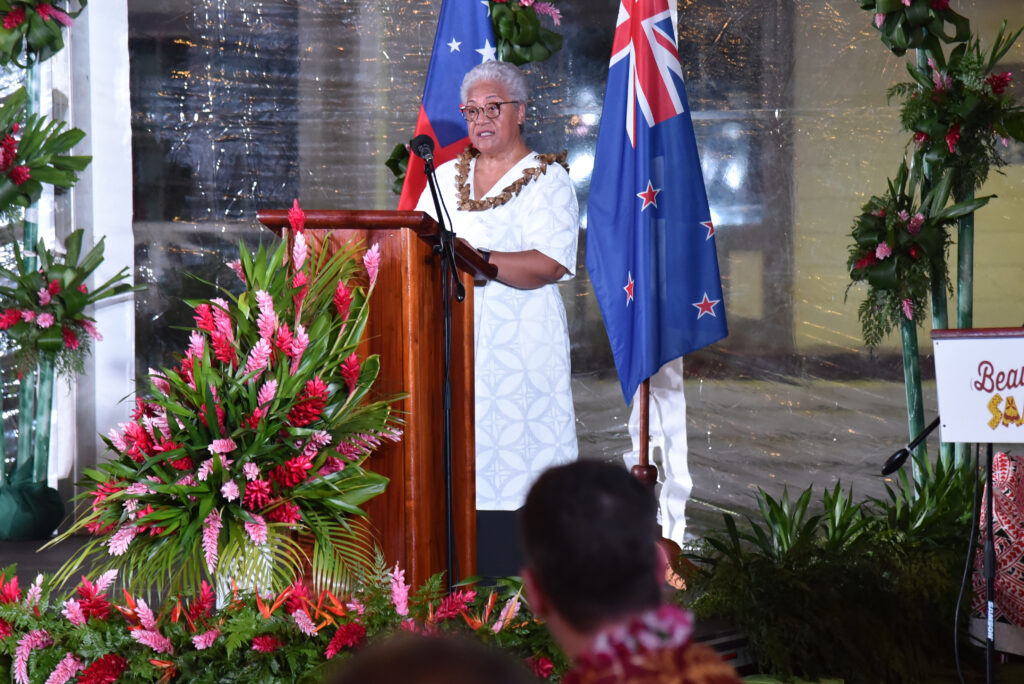
THE people of Samoa will go to the polls to elect a new parliament after former members of Fiame Naomi Mata’afa’s FAST party joined with opposition MPs to defeat her government’s budget.

Fiame won a groundbreaking election in 2021, ending four decades of rule by the Human Rights Protection Party (HRPP) and becoming the first woman head of government in Samoa.

The long-serving politician and high chief struck trouble in January when she demoted minister La’auli Leuatea Schmidt, the FAST party chairman, from cabinet after he was charged with criminal offences.

While ministers and MPs followed La’auli to the crossbench, Fiame’s government’s survived two no-confidence motions earlier this year.

Her government did not manage a third escape act, with La’auli-aligned MPs joining with the Tuilaepa Sailele Malielegaoi-led opposition HRPP to defeat her budget.

The Samoa Observer reports the vote was 16-34, and marks the first time a government budget has failed in 40 years.

The vote is set to trigger an election inside 90 days, which would mean a polling day before late August.


Written by: Ben McKay © Australian Associated Press 2025

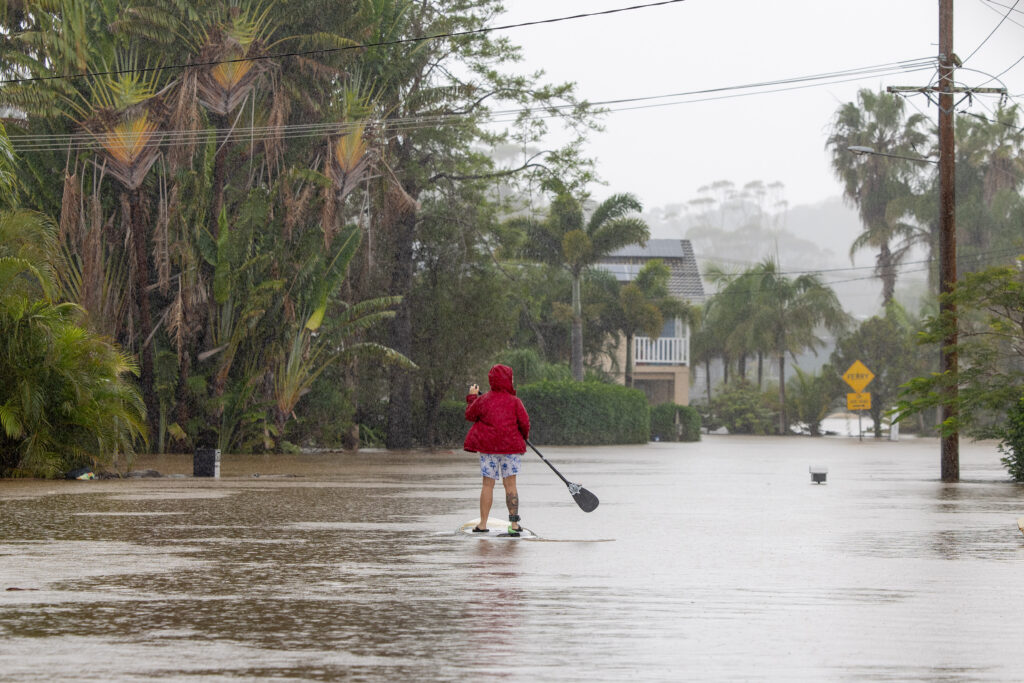
Recovery crews face a mammoth task to assess damage to tens of thousands of homes as waters recede from deadly and record-breaking floods.

An estimated 50,000 people in more than a dozen towns across the NSW Hunter and mid-north coast regions remain cut off and many emergency warnings are still in place despite most river levels falling.

Five flood-related deaths have been confirmed since the latest bout of flooding hit the state.

Efforts are under way to clean up and help the hardest-hit communities, including in Taree, Kempsey, Dungog, Port Macquarie and Coffs Harbour, with essential supply drops delivered by boat and helicopter.

Early estimates indicated at least 10,000 properties had been damaged in the floods, the NSW State Emergency Service said on Saturday.

Crews were prioritising starting washouts and performing damage assessments in areas where floodwaters were beginning to subside, SES chief superintendent Paul McQueen said.

“We will have an increased number of volunteers out in force today to start the damage assessment process,” he said.

Before any evacuation orders were revoked, assessors needed to evaluate access and safety issues.

“This is still a dangerous situation where significant impacts to infrastructure and properties are likely to have occurred,” Mr McQueen said.

The state will face more settled conditions over the weekend after severe weather warnings were cancelled late on Friday evening.

“This is welcome news for those in clean-up and recovery operations,” Bureau of Meteorology senior meteorologist Helen Reid said.

But as floodwaters start subsiding in some locations, other areas downstream face renewed threats.

A moderate flood warning for Tuggerah Lake, on the Central Coast, has forced a community evacuation, while there were numerous minor flood warnings in place on Saturday morning.

The Pacific Highway was closed between Coopernook and Purfleet, near Taree, due to flooding, while a section of the highway was closed at Charmhaven on the Central Coast.

Motorists are advised to avoid non-essential travel in flood-affected areas.

Farmers are also beginning to take stock of their losses after cattle were washed down rivers and many properties suffered significant damage.

Prime Minister Anthony Albanese and NSW Premier Chris Minns will tour flood-impacted areas on Saturday.

More than 1600 insurance claims had already been made, according to the Insurance Council of Australia.

Assistance grants of $180 per person or $900 for families are expected to roll out in the coming days and those unable to work will have access to a disaster recovery allowance from Monday.

The flood-related death toll stands at five, while the SES conducted 85 flood rescues in the 24 hours to 5am.

A man believed to be in his 80s was found inside a burnt-out vehicle in the shed of a Cooplacurripa property, about 50km northwest of Taree.

Severe weather conditions stopped emergency crews from accessing the man’s home when a concern for his welfare was raised two days earlier.

The body of a man in his late 70s was also found on Friday after his vehicle appeared to be swept off a causeway at Nana Glen, near Coffs Harbour.

Another man died at a flooded home near Taree, as did a driver west of Port Macquarie and a 60-year-old woman near Coffs Harbour.

Volunteers are focusing on getting supplies to the 50,000 people still isolated by floodwaters.

“We ask you to be patient, remain in a safe location and please don’t be tempted to drive through flood waters or go sightseeing,” Mr McQueen said.


Written by: William Ton and Samantha Lock © Australian Associated Press 2025

A new development pact between Vanuatu and Australia is in the works, with Vanuatu’s prime minister urging Anthony Albanese to visit and sign the deal in September.

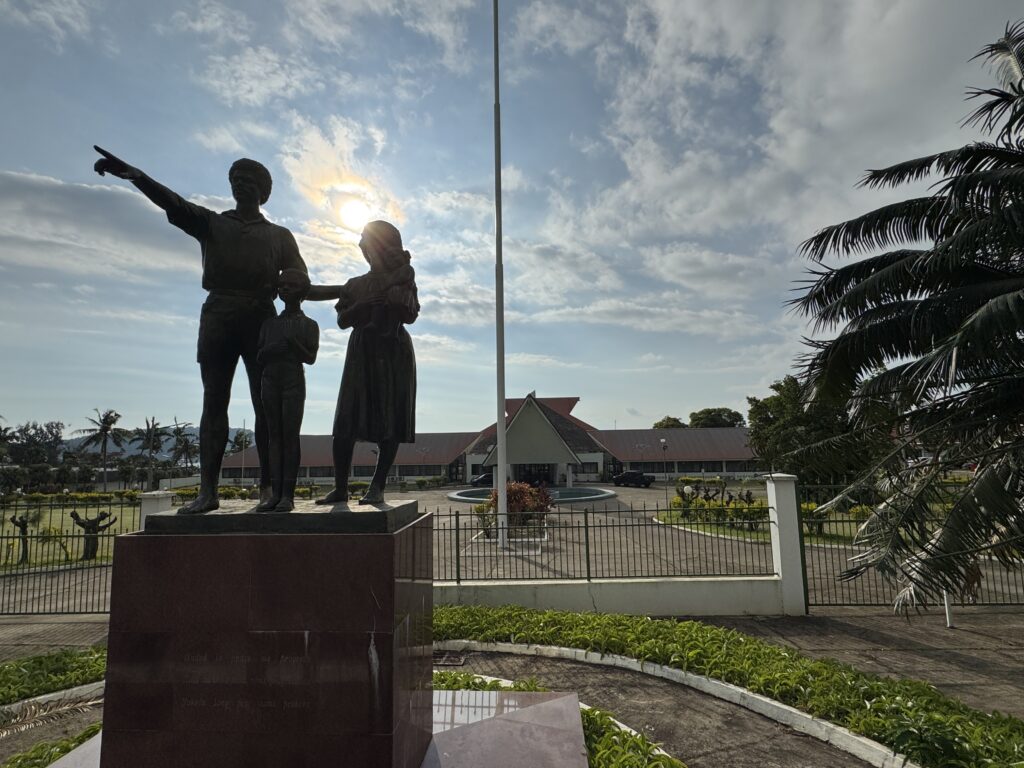
Jotham Napat has revealed discussions on the “Nakamal” agreement, taking in infrastructure planning, economic development and climate planning, are in the final stages, after meeting with Foreign Minister Penny Wong in Port Vila.

“We are hoping that we will sign this Nakamal agreement this coming September, and I’m hoping that the prime minister of Australia would fly over so that we can sign this agreement,” he said.

The agreement takes its name from the Bislama word “nakamal”, which means a traditional meeting place, such as a house, in Vanuatu.

Mr Napat said the bilateral relationship had “unshakable foundations”, a fitting phrase given Vanuatu’s attempts to rebound from December’s devastating earthquake.

Senator Wong announced $6 million towards engineering support and rebuilding schools damaged in the 7.3 magnitude tremor.

“Some 45 schools and over 100 classrooms have been damaged and we want to help rebuild them,” she said.

Australia – which has given financial aid and technical support following that disaster – is Vanuatu’s top development assistance partner by a distance.

Australia spent $US1 billion ($A1.6 billion) on projects in Vanuatu in the 15 years to 2022 according to the Lowy Institute, more than double the second-most generous nation, China, with $US449 million ($A697 million).

Senator Wong foreshadowed talks to take place on the partnership before she left on her three-nation tour of the Pacific this week, including stops in Fiji and Tonga.

There was no mention of a stalled security agreement signed between Mr Albanese’s government and a prior Vanuatu administration, headed by Ishmael Kalsakau, in late 2022.

Vanuatu has opted against ratifying that deal, with subsequent governments believing it compromises its non-aligned strategic outlook.

Senator Wong also travelled with the First Nations ambassador Justin Mohamed and met with the National Council of Chiefs.

“What I would say to the leader of Vanuatu, to the prime minister and to his cabinet, to the chiefs and to the people, is that ‘we are a steadfast partner. You can count on us’,” she said.

“You can count on us to act on climate change. You can count on us to help rebuild. You can count on us to work with you as we walk together.”

Mr Albanese already has two Pacific diplomatic engagements this September: the 50th anniversary of Papua New Guinean independence, and the Pacific Islands Forum leaders’ summit in Solomon Islands.


Written by: Ben McKay © Australian Associated Press 2025

Australia is spending $5 million towards vaccinations in Papua New Guinea after the declaration of a polio outbreak in its close northerly neighbour.

The World Health Organisation (WHO) has announced circulating vaccine-derived poliovirus type 2 has been detected in stool specimens of two healthy children in PNG earlier in May.

It is the first outbreak of the debilitating virus in PNG since 2018, with the WHO testing centred on the city of Lae, in New Guinea’s north.

Wastewater samples have also picked up the highly-infectious virus – particularly in regions with poor sanitation – in the capital of Port Moresby.

Australia’s Pacific Minister Pat Conroy said his government would fund vaccines through WHO with the potential to reach three million children.

“Vaccination is the most effective way to prevent the spread of polio,” he said.

“That’s why we are working closely with the government of Papua New Guinea to step up vaccination efforts to protect children and ensure a healthy region.”

PNG vaccination rates are estimated at around 44 per cent, given rise to the potential for outbreaks.

Polio, which is often carried without symptoms, primarily affects children, with a small number of cases causing paralysis and even death.

Rates of the virus have plummeted in recent decades owing to a global eradication program, with polio now endemic in only Pakistan and Afghanistan.


Written by: Ben McKay © Australian Associated Press 2025

Pin It