Targeted consultations with Panguna landowners and their representative groups will resume on Monday, April 20, 2026, as the Autonomous Bougainville Government moves to address grievances raised over lack of proper consultation on the EL01 licence.
The announcement follows a protest last Friday by landowners in the Panguna Mine Pit area who opposed the reopening of the mine, citing unconsented entry and lack of consultation with actual mine site owners.
President Ishmael Toroama, who is also Minister for Mining, said engagement activities had been temporarily suspended for two weeks due to Cyclone Maila, which affected accessibility and community readiness.
“The ABG, in coordination with relevant stakeholders, will now recommence its structured engagement program following these disruptions,” President Toroama said.
The consultations will involve Panguna landowners, Community Government representatives, Ward Members, and other local authorities. They mark the continuation of stakeholder and landowner engagement efforts disrupted by the cyclone.
President Toroama said this phase will focus on addressing key issues and grievances identified during earlier consultations. This includes strengthening understanding of the Cooperation Agreement between Bougainville Copper Limited (BCL) and Lloyds Metals & Energy Ltd (LMEL), and clearly outlining the roles and responsibilities of all parties.
“The process will also seek to build consensus among landowners and ensure that engagement is carried out in an inclusive, transparent, and orderly manner,” he said.
In parallel, the ABG, through the Central Parliamentary Committee (CPC), will undertake constituency-level engagements across Central Bougainville focused on the dissemination of factual information on Panguna-related matters. These are intended to strengthen communication between leaders and communities, said President Toroama.
Toroama stated the Representatives from BCL and LMEL will participate in the engagement program to provide further clarification on their respective roles and responsibilities under the Cooperation Agreement.
President Toroama acknowledged there are differing views within the community regarding developments at Panguna.
“A key priority of this engagement process is to promote inclusive participation, including constructive engagement with individuals and groups who may have concerns or who oppose aspects of the current process. The Government remains committed to ensuring that all voices are heard,” he said.
In the announcement made yesterday, the ABG will also provide further clarity on grievance mechanisms available to landowners under the Bougainville Mining Act 2015, as well as those outlined in the Land Access and Compensation Agreement (LACA) signed between Panguna Landowners and Bougainville Copper Limited in late 2024. The agreement applies to BCL and any entity authorised by BCL to undertake activities under the EL01 Panguna licence, including LMEL under the Cooperation Agreement.
“The Autonomous Bougainville Government reiterates its commitment to a peaceful, inclusive, and transparent process that reflects the aspirations and best interests of the people of Bougainville,” President Toroama said.
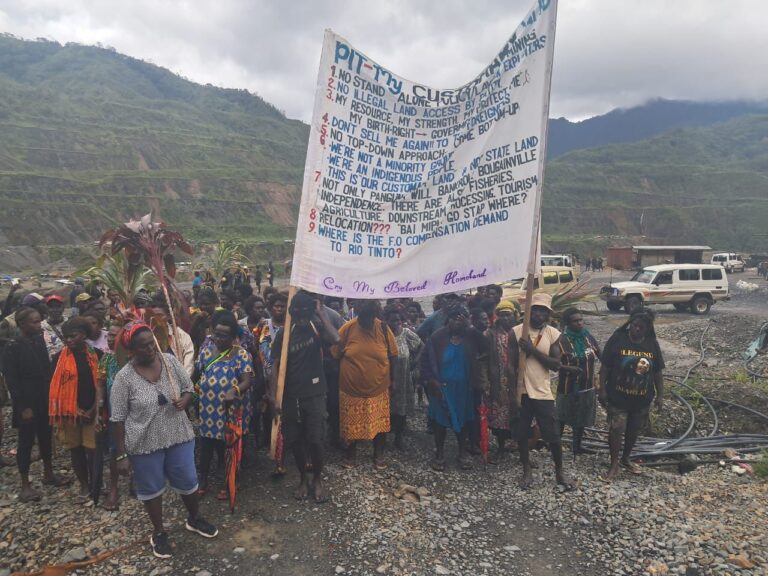
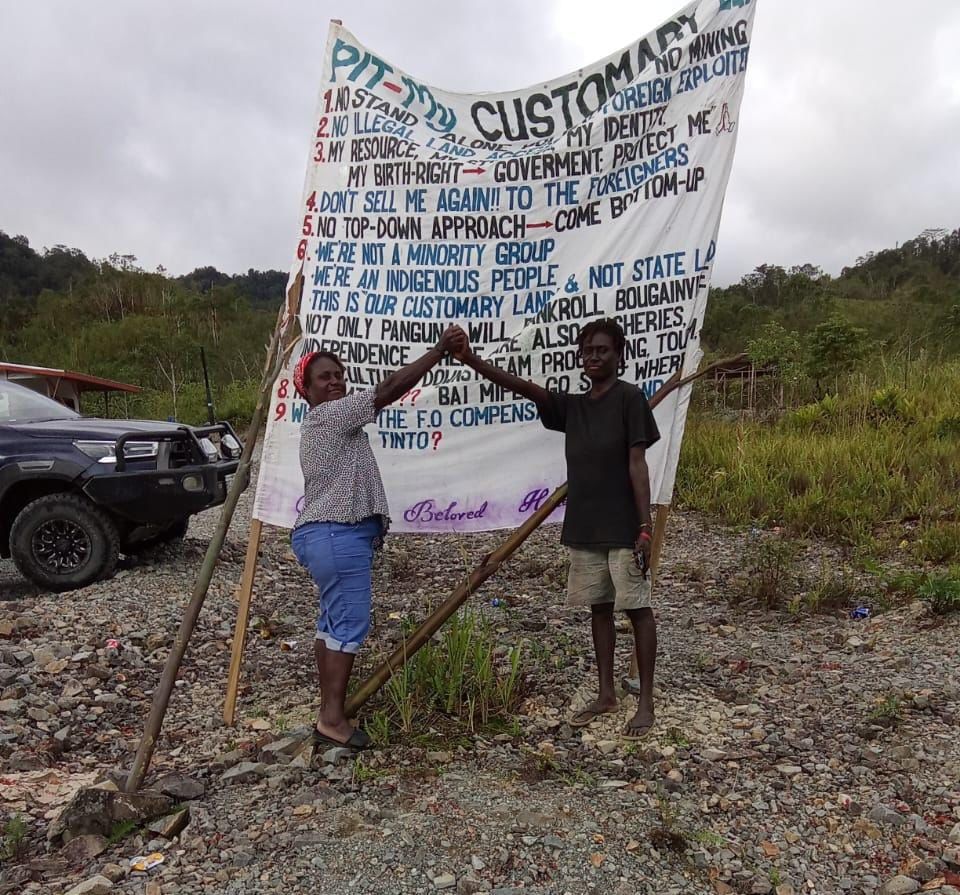
Traditional landowners from Bougainville staged a protest on Friday against plans by the region’s autonomous government to let an Indian company reopen the long-shuttered Panguna gold and copper mine.
At least several dozen staged a protest near the mine site in central Bougainville against Autonomous Region of Bougainville (AROB) President Ishmael Toroama’s plans to allow India-based Lloyds Metals and Energy Limited (LMEL) restart the mine, which was shut down by a local uprising over 35 years ago.
Female landowners from the villages of Guava and Moroni led the protest, which involved the ceremonial placement of a plant in the ground.
“To the Lloyds company and BCL (Bougainville Copper Limited) and others, we are planting this as a cultural symbol: we don’t want the Panguna Mine to reopen. This is a cultural ritual to put a stop to the reopening of the mine,” Chieftess Genevieve Ampa’oi said.
Picture supplied by Panguna Osikaiang
The protest comes amid opposition from prominent Bougainvillean community leaders including Domana Ward member and former rebel commander Moses Pipiro. Critics say Toroama has not properly consulted with the local land and resource owners of the Panguna mine site.
Community members have also raised concerns about what they say is the engagement of veterans from other areas of central Bougainville as security for LMEL, which they fear could lead to conflict.
Toroama’s office declined to comment when contacted by Inside PNG.
Experts estimate that tens of billions of dollars of mineral wealth remains in the mine site, but plans to reopen the mine over the years have been stymied by community opposition and deliberations over cleanups and compensation related to environmental damage from the mine’s previous operations.
The Panguna mine made a fortune but left war and pollution in its wake. A new lawsuit backed by anonymous investors is now seeking billions in compensation – and raising concerns about who stands to benefit.
By Aubrey Belford (OCCRP)
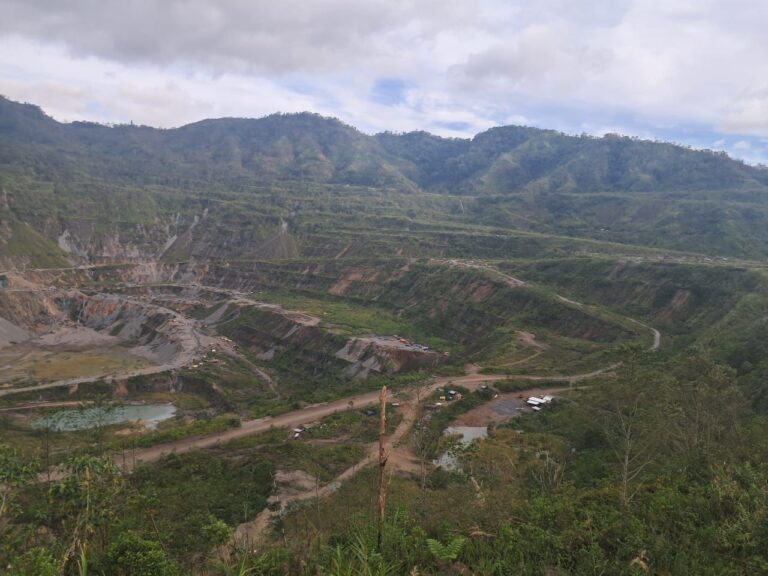
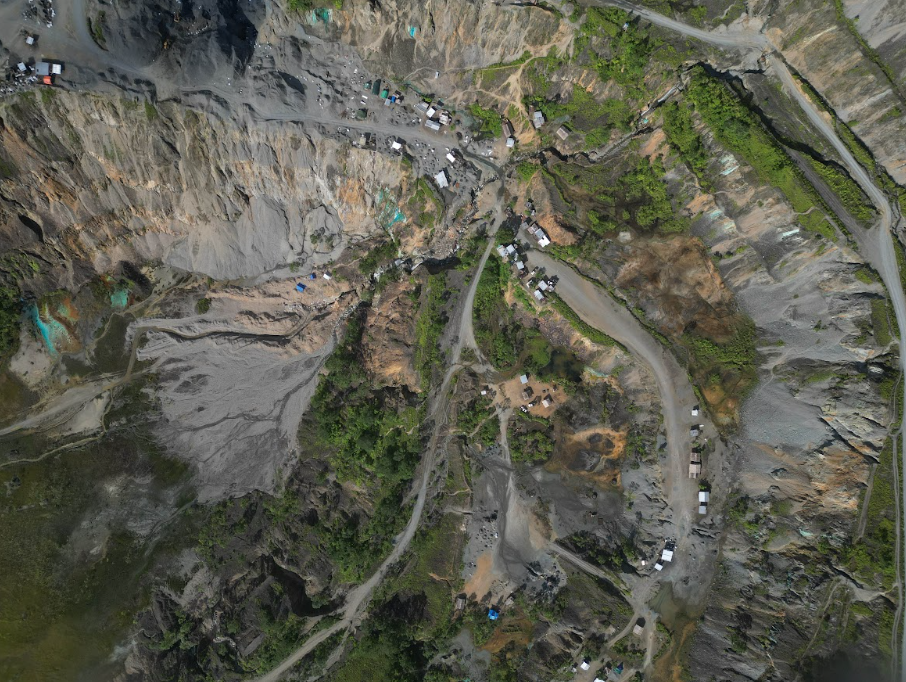
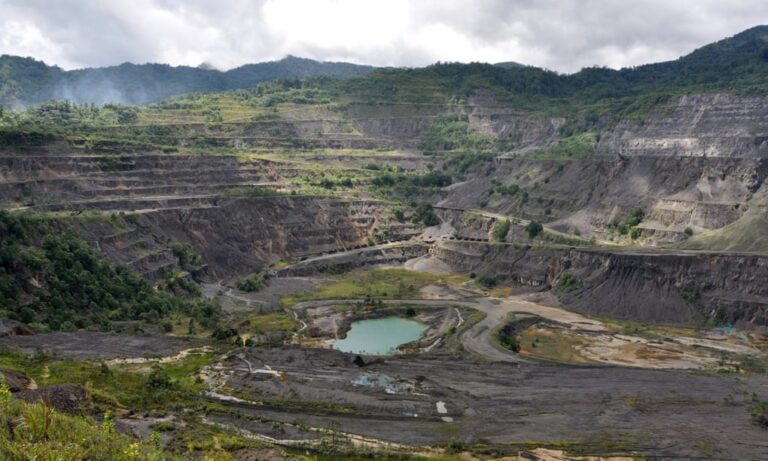
High in the forested mountains of Papua New Guinea’s Bougainville Island lies an abandoned, kilometer-wide crater cut deep into the earth.
Formerly one of the world’s largest gold and copper mines, the open pit now serves as an unsightly monument to the environmental and social chaos that underground riches can create.
Run for years by a subsidiary of Anglo-Australian giant Rio Tinto, the Panguna mine earned millions for Papua New Guinea (PNG) and helped bankroll its newfound independence. But it also poured waste into local waterways and fuelled anger among locals who felt robbed of the profits. When an armed uprising ultimately shuttered the mine in 1989, the impoverished island was left reeling.
Nearly three decades later, in late 2022, human rights activists, the local government, and the mine’s former operators joined forces to produce a definitive assessment of the mine’s toxic legacy. Their report, due to be released later this month, will become the basis for negotiations aimed at getting the mining companies to finally clean up the mess and compensate affected communities.
But its supporters now worry their efforts will be undermined by a class-action lawsuit launched in May against the mine’s erstwhile operators. The legal effort is being championed by former rebel leaders — and backed by anonymous offshore investors who stand to make hundreds of millions of dollars if it succeeds.
The lawsuit is part of a worldwide boom in litigation financing that seeks to take multinational companies to task for ecological or social damage while potentially reaping a fortune for lawyers and funders.
Critics in Bougainville worry the lawsuit will reopen old wounds at a time when the island is making a push to break free of Papua New Guinea and become the world’s newest sovereign nation. Many Bougainvilleans are hoping to reopen the mine, using its wealth to fund their own independence this time around.
The region’s government and many local leaders believe the class action could put the mine’s revival at risk. There are also concerns the lawsuit would leave many Bougainvilleans empty handed, while the anonymous foreign investors would walk away with a significant share of the payout.
Unlike the official assessment, which seeks to identify everyone who needs to be compensated, the class action will only share its winnings — which could potentially be in the billions of dollars — with the locals who have signed on. Others will get nothing.
“There’s already fragmentation in the community and families are already divided,” said Theonila Roka Matbob, who represents the area around Panguna in the island’s parliament and has helped lead the government-backed assessment process as a minister in the Autonomous Bougainville government.
She speaks from personal experience. The chief litigant in the class-action lawsuit, Martin Miriori, is her uncle. The two are no longer on speaking terms.
A Losing Deal
Gouged from Bougainville’s lush volcanic heart, the Panguna mine in its heyday supplied as much as 45 percent of PNG’s export revenue, providing it with the financial means to achieve independence from Australia in 1975.
The windfall, however, didn’t extend to Bougainvilleans themselves. Ethnically and culturally distinct from the rest of PNG’s population, they saw Panguna as a symbol of external domination. The mine delivered only a miserly 2-percent share of its profits to their island — along with years of environmental havoc.
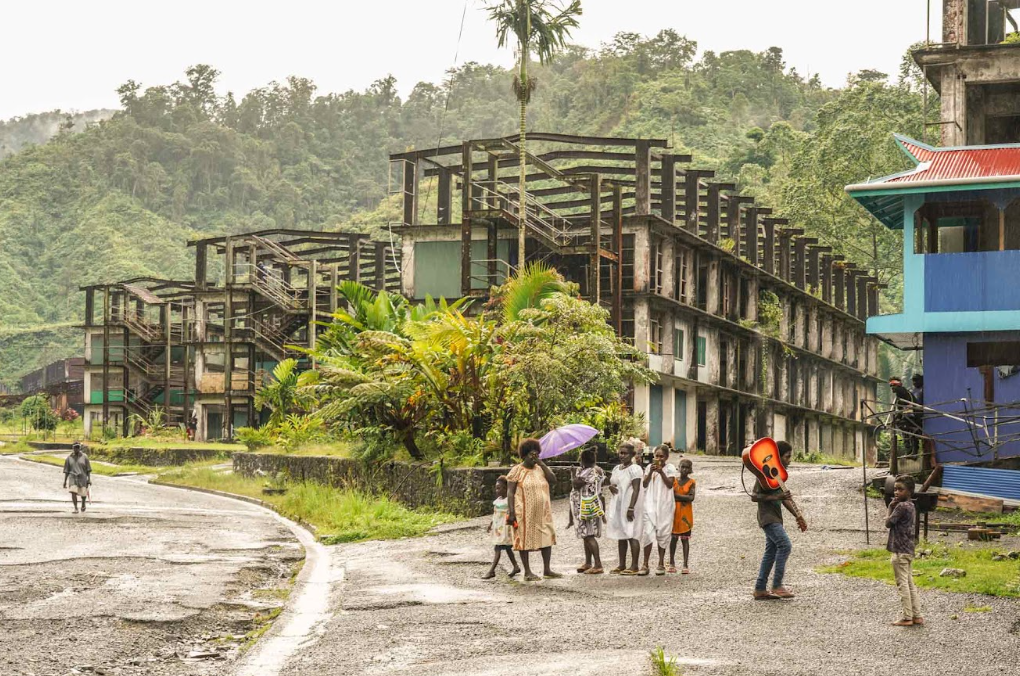
Locals walk by buildings left abandoned by a subsidiary of Rio Tinto at the Panguna mine site. [[PHOTO: Aubrey Belford/OCCRP]]
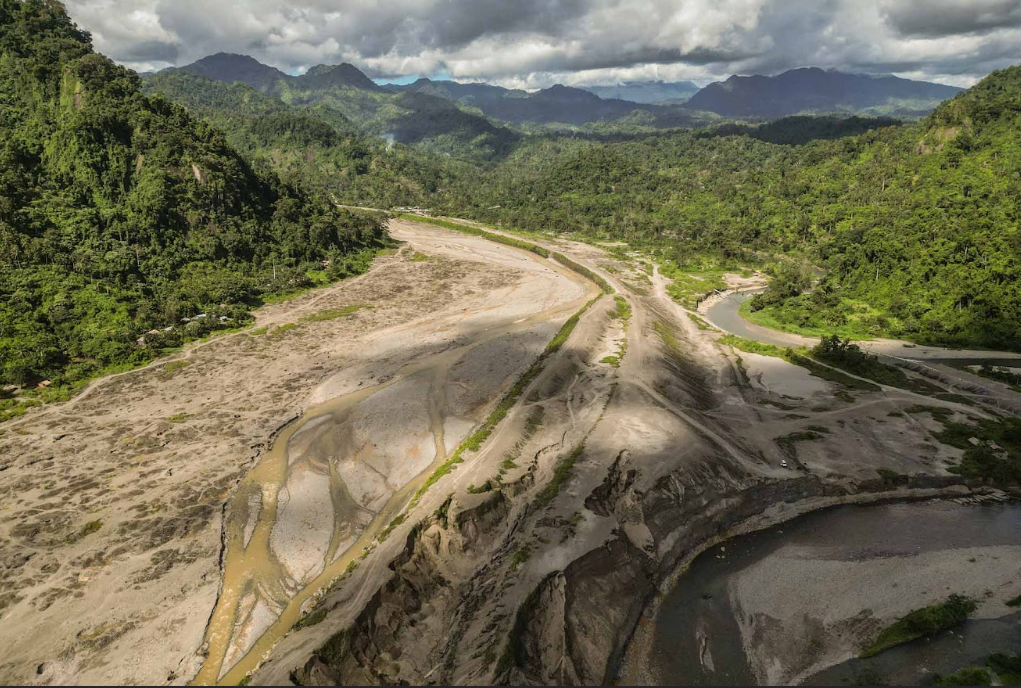
During the 17 years of Panguna’s operation — from 1972 to 1989 — over a billion metric tons of toxic mine waste and electric blue copper runoff flooded rivers that flowed downstream towards communities of subsistence farmers. The result was poisoned drinking water, infertile land, and children who were drowned or injured trying to cross engorged waterways.
In 1989, enraged Bougainville locals launched an armed rebellion against the PNG government. The mine was shut down, closing off a vital source of revenue for the national government in Port Moresby. A brutal civil war raged on for nearly a decade, leaving more than 15,000 people dead, while a naval blockade by PNG’s military obliterated the island’s economy.
A peace deal in 2000 granted Bougainville substantial autonomy. But nearly a quarter-century later, the legacy of Panguna and the war it provoked is still deeply felt.
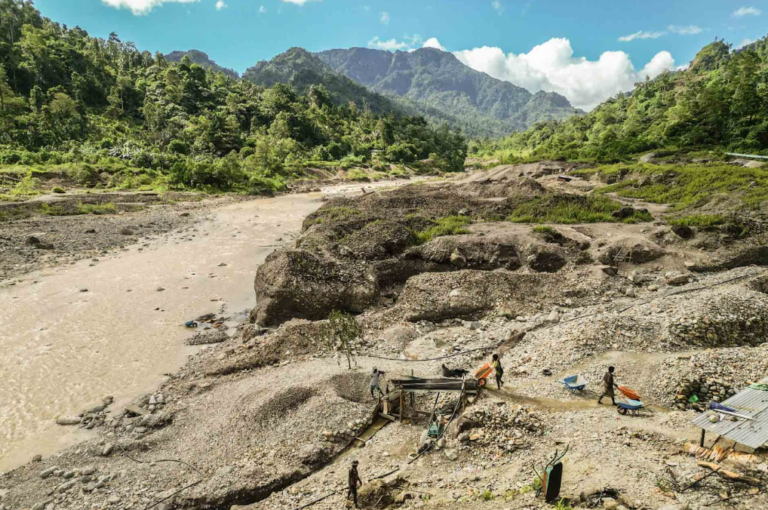
There are few paved roads and bridges in the island’s interior. Residents earn a modest living through cocoa and coconut farming, or by unregulated artisanal mining in and around the abandoned Panguna crater. Rivers polluted by years of runoff are still an otherworldly shade of milky blue.
At least 300,000 people are estimated to live on Bougainville, including as many as 15,000 who live downstream of the mine. Of those, some 4,500 have joined Miriori — Roka’s estranged uncle and a tribal leader whose brother, Joseph Kabui, served as the first president of autonomous Bougainville — in seeking restitution through the class-action suit.
“We’ve got to make people happy,” Miriori said. “They’ve lost their land forever, environment forever. Their hunting grounds. Their spiritual, sacred grounds.”
Martin Miriori, the primary litigant in the class action lawsuit. [[PHOTO: Aubrey Belford/OCCRP]]
‘Alert to Opportunities’
Miriori took many by surprise when he became the public face of the suit filed in PNG’s National Court in May against Rio Tinto and its former local subsidiary, Bougainville Copper Limited.
While the tribal leader and former rebel is a well-known figure in Bougainville, the funders of the lawsuit are not. They have managed to keep their identities secret in part because the company behind the suit, Panguna Mine Action LLC, is registered on Nevis, a small Caribbean island that does not require companies to publicly disclose their shareholders and directors.
Miriori declined to comment on who was behind the company, saying, “I will not tell you where the funding is based … you can source that from our people down there [in Australia].”
James Sing, an Australian based in New York, is Panguna Mine Action’s chief public representative. He initially agreed to an interview, but later referred reporters back to a London-based public relations agency, Sans Frontières Associates. The agency declined to reveal Panguna Mine Action’s investors.
Litigation funding documents obtained by OCCRP, however, shed some light on the history of the case. The documents show that Panguna Mine Action began to investigate the possibility of a class-action suit as early as July 2021. The Bougainvillean claimants, led by Miriori, were formally brought into an agreement with the company and its Australian and PNG lawyers in November 2022. The suit was publicly announced this May.
The lawsuit’s investors stand to profit handsomely from any eventual settlement: Panguna Mine Action is poised to receive a cut of 20 to 40 percent of any payout resulting from the suit, with the percentage increasing the longer the process takes, the funding documents show. In interviews and statements, both Miriori and Panguna Mine Action have put the potential value of any award in the billions of dollars.
The lawsuit’s financiers defend their substantial share of the potential benefits as standard practice. “The costs of launching and running the class action against a global miner are significant, and almost certainly could not be met from within Bougainville without funding from an external party,” the company said in its statement. Panguna Mine Action added it would bear sole responsibility for costs if the lawsuit is unsuccessful.
According to Michael Russell, a Sydney-based class action defense lawyer, such funding arrangements are typical in the burgeoning world of litigation finance, where investors seek out cases that promote virtuous social causes while offering huge potential payoffs.
A similar case is unfolding in Latin America, where more than 720,000 Brazilians are seeking $46.5 billion as part of a gargantuan class action against mining giant BHP and its local subsidiary for their role in a 2015 dam collapse.
In such cases, funders can justify walking away with significant cuts of any winnings because of the substantial risk they face of losing their investment if a case fails, Russell said.
Such cases are rarely initiated at the grassroots level by the victims themselves, he added.
“Most of the time, either the plaintiff firms or the funders will be the catalyst for a claim,” he said. “They are very alert to opportunities.”
Rival Restitution Plans
Government officials including Miriori’s niece, Roka, say the class-action case, which is due to hold opening arguments in October, threatens to derail the ongoing impact assessment aimed at calculating the full cost of the mine’s environmental impact and developing recommendations for addressing the damage.
The assessment, which counts community members among its stakeholders and bills itself as an independent review, is supported by Australia’s Human Rights Law Centre, who has hailed the project as “an important step” towards rectifying the mine’s devastating impact on thousands of Bougainvilleans.
However, while Rio Tinto and Bougainville Copper are both funding the project, they have not yet committed to paying for any compensation or cleanup. Roka said she was concerned the lawsuit could reduce the company’s willingness to engage with the process, since it could view the assessment as a tool that could be used against them in the courtroom.
The island’s president, Ishmael Toroama, backs the impact assessment and has lambasted the class action suit as the work of “faceless investors… taking advantage of vulnerable groups.” (His office did not respond to an interview request.)
He also expressed concern that the court proceedings threaten to “disrupt” his government’s efforts to reopen the mine, which still holds an estimated $60 billion in untapped deposits. Bougainville’s leaders see the mine as key to securing the island’s economic future as it sets out to form an independent state – a dream that drew overwhelming public support in a 2019 referendum.
Earlier this year Toroama’s government granted Bougainville Copper a five-year exploration license for the Panguna site.
The lack of media and polling in Bougainville make it hard to measure public opinion on plans to reactivate the mine, but many locals appear to support reopening it under local control as an essential tool for achieving independence.
Bougainville Copper’s brand is still toxically associated with Rio Tinto and its past abuses, despite the fact that the international mining giant gave away its majority stake for no money in 2016. The publicly traded company is now majority co-owned by the governments of PNG and Bougainville, and Port Moresby has pledged to hand over all its shares to the autonomous region in the near future.
Panguna Mine Action acknowledges that its effort effort could stand in the way of the mine’s reopening — but the company says that’s a good thing.
“It is our understanding that the people of Bougainville do not wish mining to be recommenced under any circumstances or, alternatively, unless Rio Tinto and Bougainville Copper acknowledge the past, pay compensation and remediate the rivers and surrounding valley,” the company said in a statement.
Rio Tinto declined to comment. Mel Togolo, the chairman of Bougainville Copper, told OCCRP that the lawsuit was the work of “a foreign funder who no doubt is seeking a return on an investment.”
View of the tailings located downstream of the Panguna mine.[[PHOTO: Aubrey Belford/OCCRP]]
‘Only Those Who Have Signed Will Benefit’
The fight over Panguna adds even more uncertainty to long-running anxiety over Bougainville’s future.
With global copper prices soaring on high demand for renewable energy and electric vehicles, the Panguna mine would be an attractive prize for both Western mining companies and firms from China, which is dramatically expanding its influence in the South Pacific.
Since a future Bougainvillean state would be economically dependent on the mine’s revenue, some have raised concerns that control of the mine could become a proxy battle for geopolitical influence in the broader region.
For his part, Miriori expressed little concern that a multibillion-dollar payout might stir resentment by reaching only a fraction of the people affected by the mine’s environmental destruction.
“Only those who signed will benefit,” he said, adding that the opportunity was made “very clear to people” through awareness campaigns.
“Those who have not signed, it’s their freedom of choice.”
An aerial view of the abandoned Panguna mine pit.[[PHOTO: Aubrey Belford/OCCRP]]
Among those who didn’t sign is Wendy Bowara, 48, who lives in Dapera, a bleak settlement built on a hill of mine waste. Bowara said she is looking to the government-backed assessment, not the lawsuit, to deliver compensation and clean up Panguna’s toxic legacy.
“We are living on top of chemicals,” she said. “Copper concentration is high. I don’t know if the food is good to eat or if it’s healthy to drink the water.”
But while it may seem odd given her grim surroundings, Borawa says she strongly supports reopening the mine.
“It funded the independence of Papua New Guinea,” Bowara said. “Why can’t we use it to fund our own independence?”
Panguna Mine issues took center stage at the recent CANCONEX Resource week hosted by the Papua New Guinea Camber of Resources and Energy (PNG CORE).
Despite being closed for more than 30 years the mine is in the stages to re-open but legacy issues that have been left by Bougainville Copper Limited’s operations until its closure need to be addressed.
The President and his cabinet of the Bougainville Executive council granted an extension of the exploration license, EL_01 to Bougainville Copper Limited (BCL) on the 28th of January, 2024.
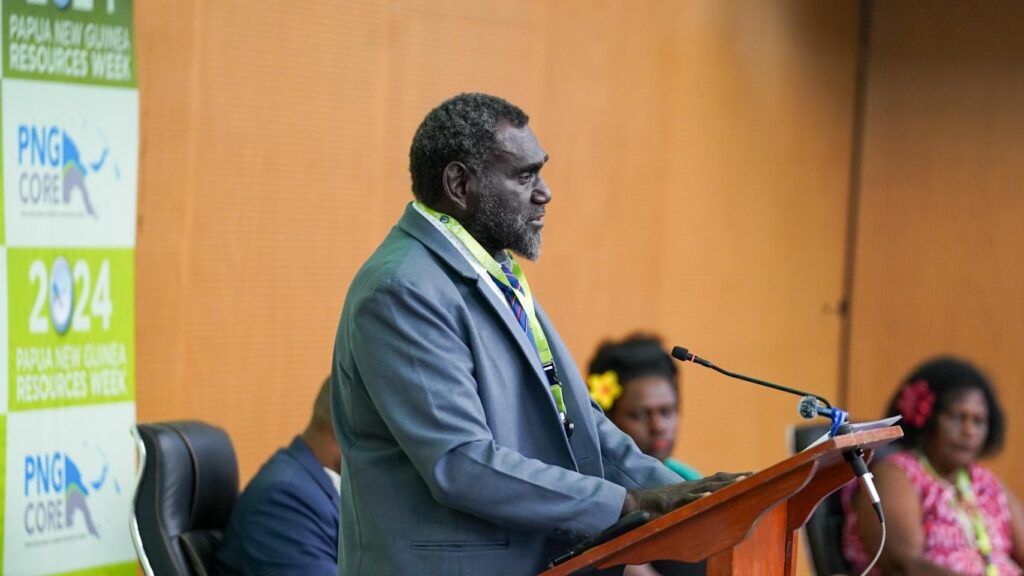
President of the Autonomous Region of Bougainville, Ishmael Toroama speaking during CANCONEX. [[Photo: PNG Media]]
The Panguna Project is already licensed under an Exploration License for a term of five years.
What the Land owners and the people directly affected by the mine want, is to get some closure to the legacy issues, which include the environmental destruction caused by the mine.
Present at CANCONEX was President of the Autonomous Region of Bougainville, Ishmael Toroama, who gave an overall report on the legacy issues of the mine including the way forward to reopening Panguna.
Theonila Roka Matbob, member for the Ioro Constituency in Central Bougainville, is a Panguna mine landowner and she is very vocal about the legacy issues left by the mine.
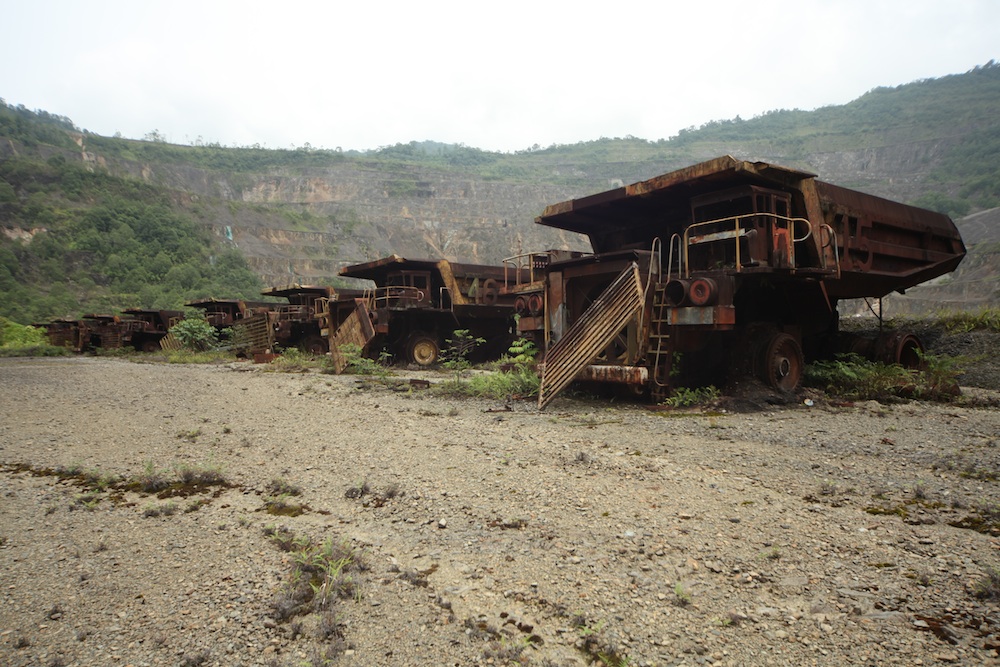
Old Trucks at the Panguna Mine.
She is the Minister for Community Government and also a long time activist on Panguna issues, she said during CANCONEX that they want to close the old chapter of Panguna as they move on to the new chapter.
She mentioned that there is a report; the PANGUNA MINE LEGACY IMPACT ASSESSMENT, which is set to be complete by August.
The report will help the People of Panguna understand the extent of the mine legacy issues.
The Panguna issue remains sensitive but parties in the efforts to re-open the mine are working closely together.
Panguna Mine. [[Photo//Llane Munau]]
Bougainville Copper Limited Chairman, Sir Mel Togolo was also part of the discussions at CANCONEX, he said BCL had a more community oriented approach and there is widespread acceptance for the mine’s reopening in the Panguna Area.
President Toroama who is also Minister for Minerals & Energy says all the discussions and dialogue between the Land Owners and the ABG, carefully considered support for local content and Resource Owners, he said this was paramount because it is the Land owners that own the Resource.
Theonila Roka stressed that what is important is a plan to see a more viable future for resource owners considering their attachment to the land and its resources, and they can be more sustainable after the project ends.

![Panguna Mine. [[Photo//Llane Munau]]](https://insidepng.com/wp-content/uploads/2024/07/WhatsApp-Image-2024-07-13-at-13.10.52.jpeg)