Author

Inside PNG

Browsing

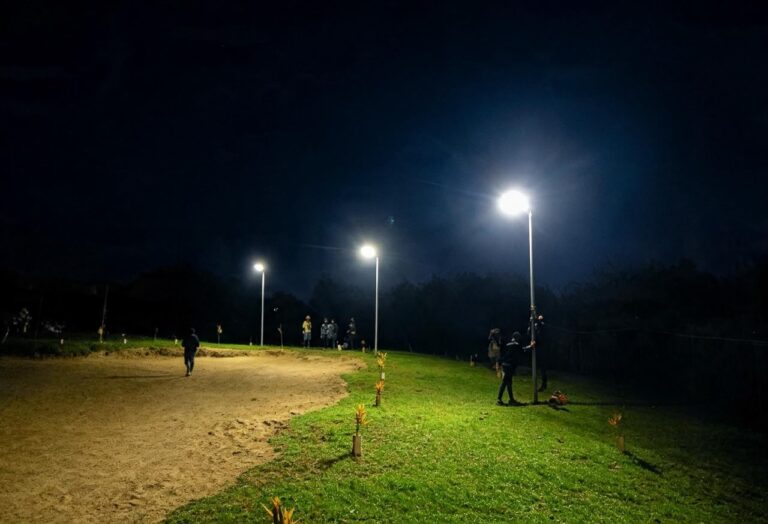
THE EXISTENCE of the Tenkile Conversation Alliance (TCA) is West Sepik Province is proving to bring in additional basic services like access to solar power.

TCA, Executive Director Matthew Akon said locals are now coming out of darkness marking an improvement in living standards for villages scattered across the foothills of the Torricelli Mountain Range in West Sepik Province.

Through Australia’s Pawarim Komuniti Partnerships (PKP) program, it partnered with TCA and local communities to deliver the Kamapim Pawa project across Aitape/Lumi and Nuku districts.

As of this week, 146 villages in total now have access to solar power and a reliable power supply.

TCA said solar power is improving lives, strengthening communities, and helping protect some of Papua New Guinea’s most endangered wildlife.

“When solar power came here, the people were overjoyed,” said Mr. Akon.

Since 2021, the project has installed 8,005 home solar systems and 350 solar streetlights, providing clean, reliable electricity to more than 24,000 people.

Many of these remote villages can only be reached on foot across rugged terrain.
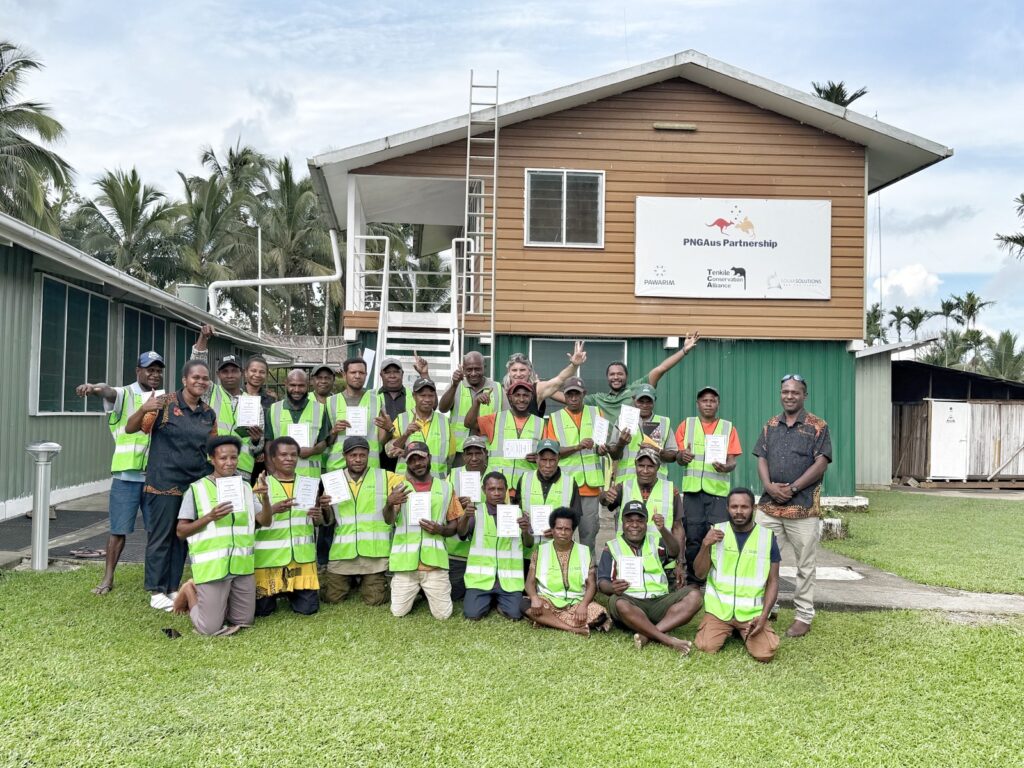
Located in the Lumi District of West Sepik province, the Tenkile Conservation Alliance is a NGO that focuses on protecting biodiversity in the Torricelli Mountain Range.The project focuses on villages that work alongside TCA to protect endangered species, including the Tenkile and Weimang tree kangaroos.

By providing households with solar lighting, communities no longer need to rely on burning bush materials for light.

This reduces pressure on surrounding forests, helping conserve critical habitat while improving daily life for local families.

The impact has been significant.

All households that received solar systems have permanently switched from their previous lighting sources, providing safer, cleaner, and more reliable light after dark.

While solar energy has transformed 146 of TCA’s partner villages, the other 43 communities that still lack access to solar power were included in a second solar project with help from the United Kingdom.

UK’s Foreign, Commonwealth & Development Office (FCDO) and PKP are now implementing a final ‘last mile’ phase of the project.

This phase will deliver an additional 1,500 home solar systems and 100 solar streetlights, ensuring more families benefit from reliable electricity.

As part of Australia and the UK’s commitment to locally-led development, the project has trained local Solar Champions to install and maintain the systems. By building technical skills within communities, the project supports long-term sustainability and local ownership.
EVERY hardworking Papua New Guinean deserves a comfortable retirement, whether they are on a formal payroll, running a small roadside business, or earning a living in the informal economy.

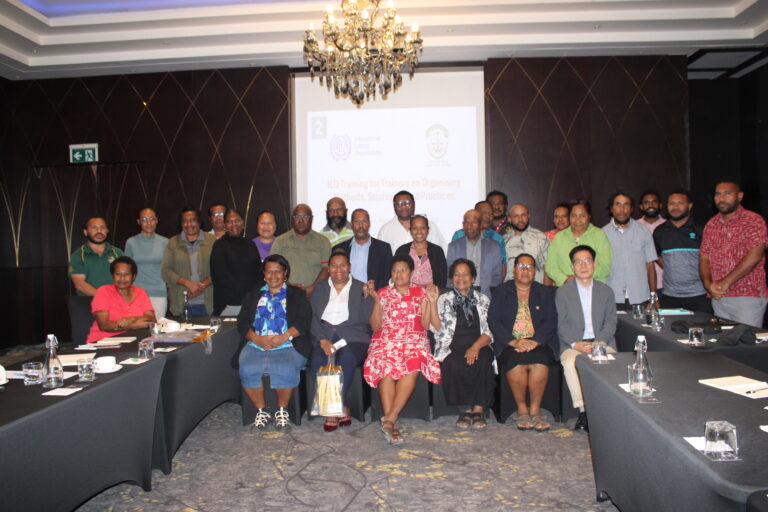
That was the strong message delivered by Nasfund Head of Marketing and Stakeholder Engagement, Melanie Lavaki, speaking on behalf of Nasfund CEO, Rajeev Sharma at the recent Papua New Guinea Trade Union Congress (PNGTUC) and International Labour Organization (ILO) partnership workshop in Port Moresby.

The three-day workshop, Training for Trainers on Organising Methods, Strategies and Practices, centered on strengthening awareness of national policies, labour laws, and social protection frameworks for informal workers, while mapping out ways trade unions can better organise and support the sector.

During a session focused on the present and future of social protection in the country, Lavaki addressed the widespread misconception that superannuation is only meant for employees in large, formal corporate offices. While employer contributions are compulsory for larger businesses, she reminded participants that smaller businesses with fewer than 15 employees and individual earners can easily save for their retirement through voluntary contributions.

To support this, Lavaki highlighted Eda Supa, Nasfund’s voluntary superannuation product tailored specifically for workers in both the formal and informal spaces, including self-employed tradespeople, market vendors, and non-citizens.

“Our aspiration at Nasfund is to see legislative reforms make superannuation access a mandatory right for every worker in PNG,” Lavaki said.

She challenged union representatives to actively promote superannuation as a vital source of replacement income in retirement, helping ordinary workers plan for long-term financial security rather than just focusing on when they finish working.

Lavaki also shared key policy recommendations put forward by the Association of Superannuation Funds of Papua New Guinea (ASFPNG), spearheaded by Nasfund CEO and ASFPNG President Rajeev Sharma.

The reform package calls for:

  • Universal superannuation coverage that explicitly captures informal economy workers;
  • Stronger legal protections for worker contributions and tougher employer accountability; and
  • Improved superannuation literacy and better preservation of retirement savings.

Through continued advocacy for broader coverage and stronger workplace protections, Nasfund maintains its drive toward a future where every worker in the country can end their professional lives and retire comfortably.


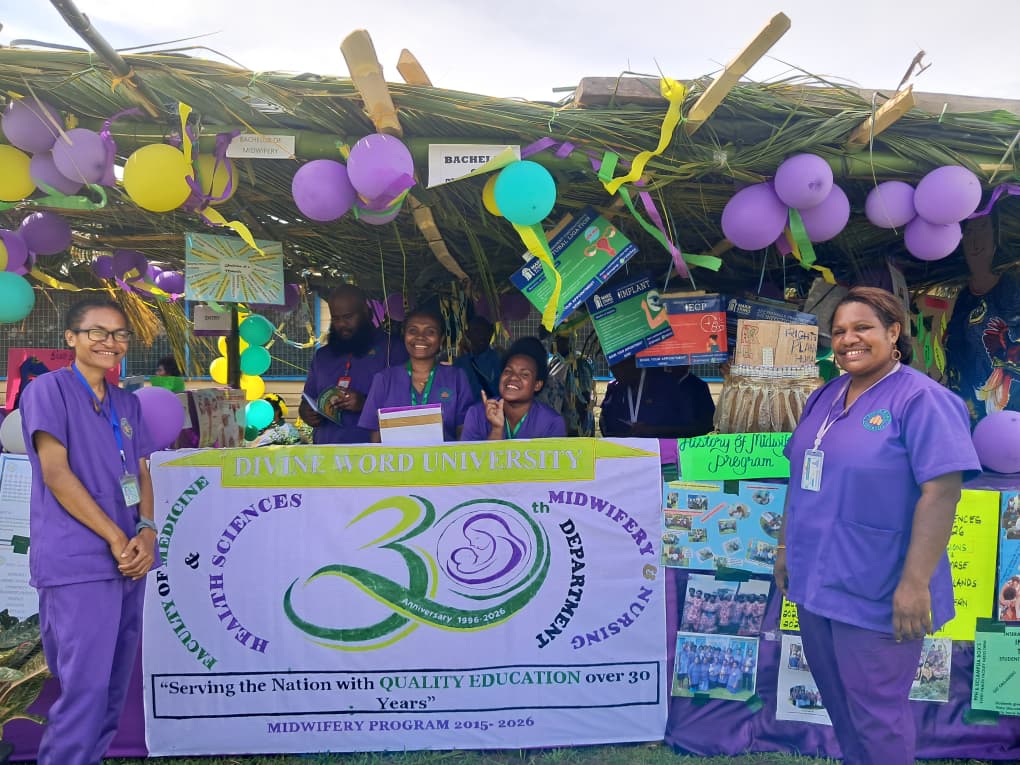
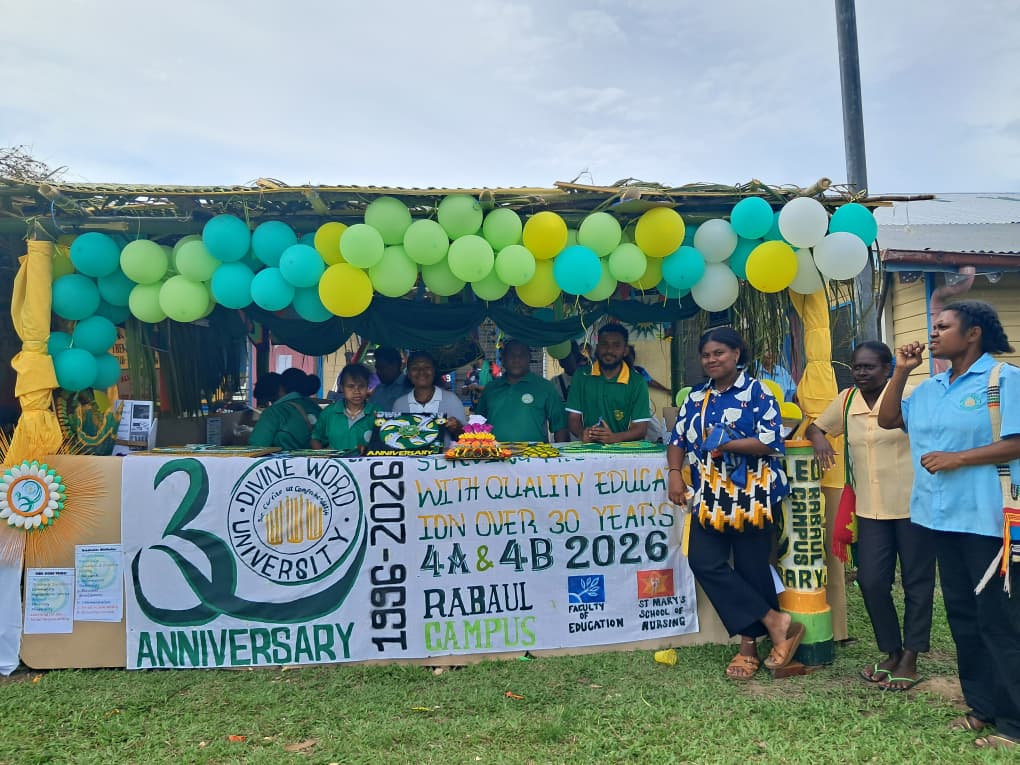
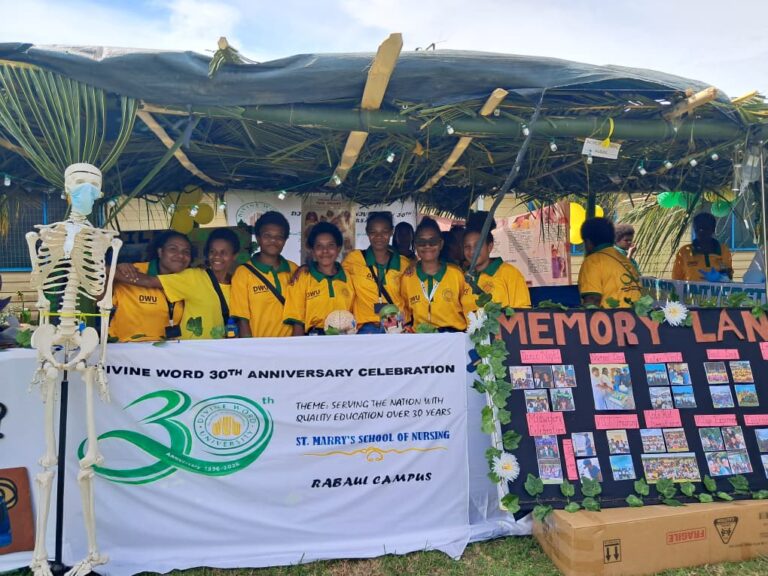
On Tuesday Divine Word University’s (DWU) Rabaul Campus commemorated a generational milestone, bringing together staff, students, alumni, and church leaders for a landmark celebration at the Kabaleo Teachers College grounds.

While DWU’s main headquarters is in Madang, the Rabaul Campus has firmly established itself as a vital beacon of higher learning across the New Guinea Islands.

That growth traces back to a strategic push under former DWU President, Father Jan Czuba, who championed the amalgamation of long-standing church-run institutions, St. Mary’s School of Nursing (SMSON) and OLSH Kabaleo Teachers College, into the university fold.

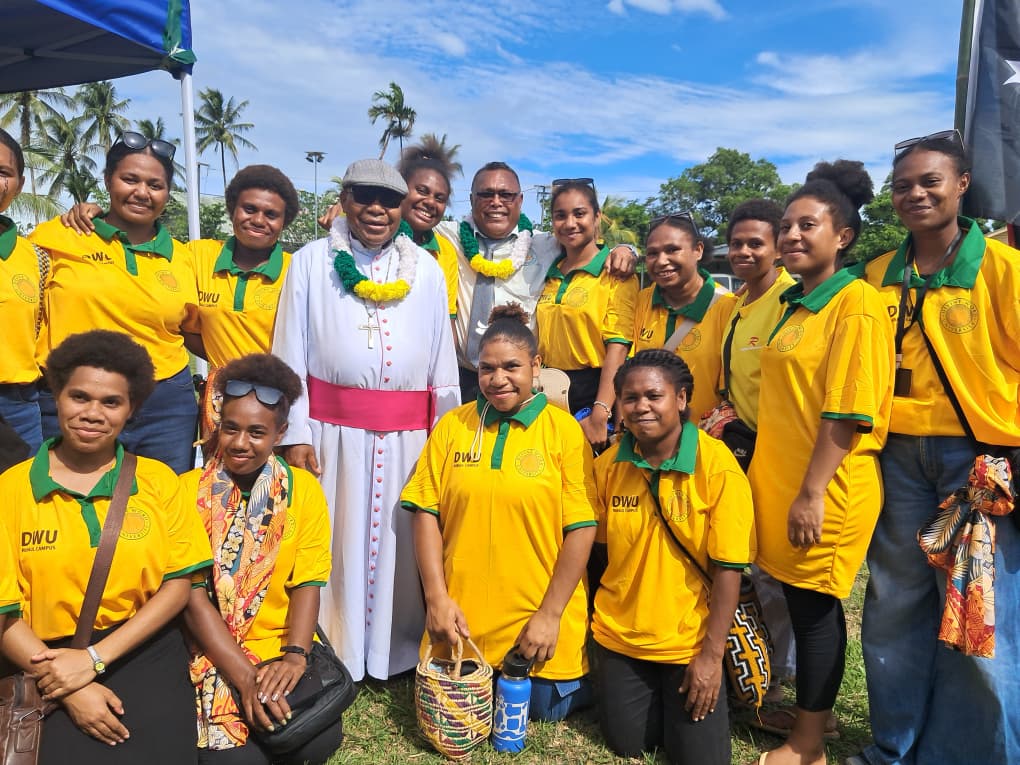
Final year student girls wearing yellow and green shirts
Final year SMSON students (1st batch bachelor program) with His Grace Archbishop Rochus Josef Tatamai MSC and DWU-RABAUL Campus Administrator, Mr Karaho Asimi.

By January 2015, the integration was complete, built on a shared philosophy to spare island students the cost and displacement of moving to the mainland while opening doors to degrees, master’s programs, and doctorates.

That exact vision of localized empowerment roared to life during Tuesday’s commemorations, which kicked off with a solemn Eucharistic Mass led by the Archbishop of the Archdiocese of Rabaul, Rochus Tatamai.

Kabaleo students led the liturgy, setting a reflective tone before the crowd shifted to the main arena for the flag-raising ceremony, the national anthem, and the national pledge.

After a lunch break, proceedings resumed with an opening prayer by Fr. Alphonse Dende, the school Chaplin at Kabaleo and a welcome from the campus administrator, Karaho Asimi.

Current DWU President Professor Fr. Philip Gibbs officially declared the anniversary open, joining alumni representatives in reflecting on decades of community impact.

The speeches made way for a vibrant showcase of student talent and academic history.

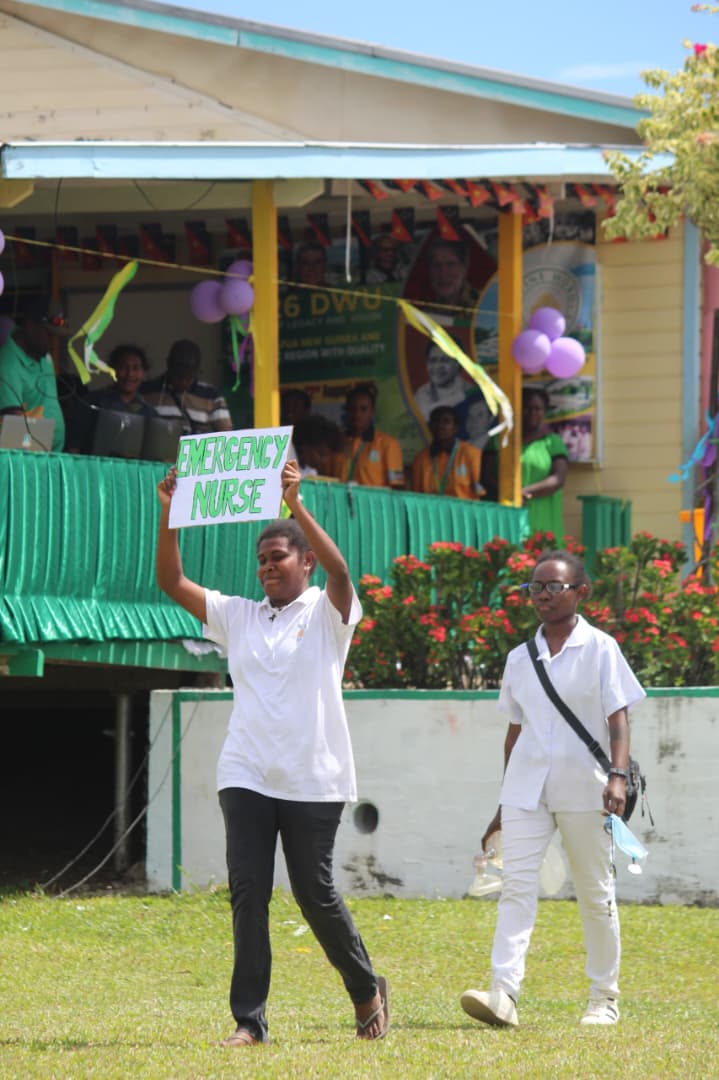
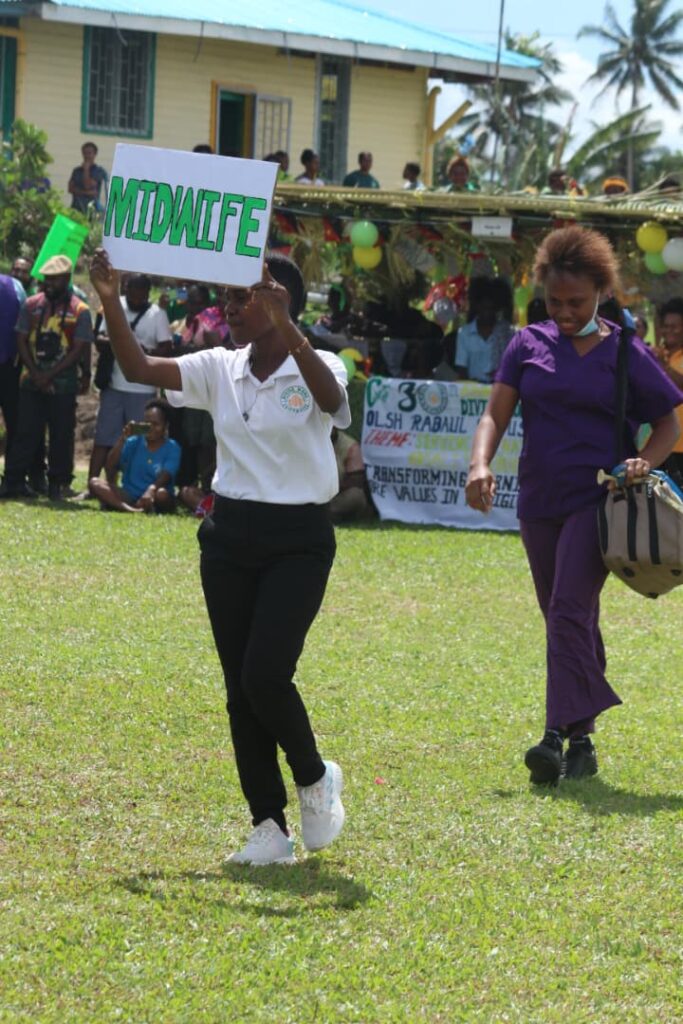
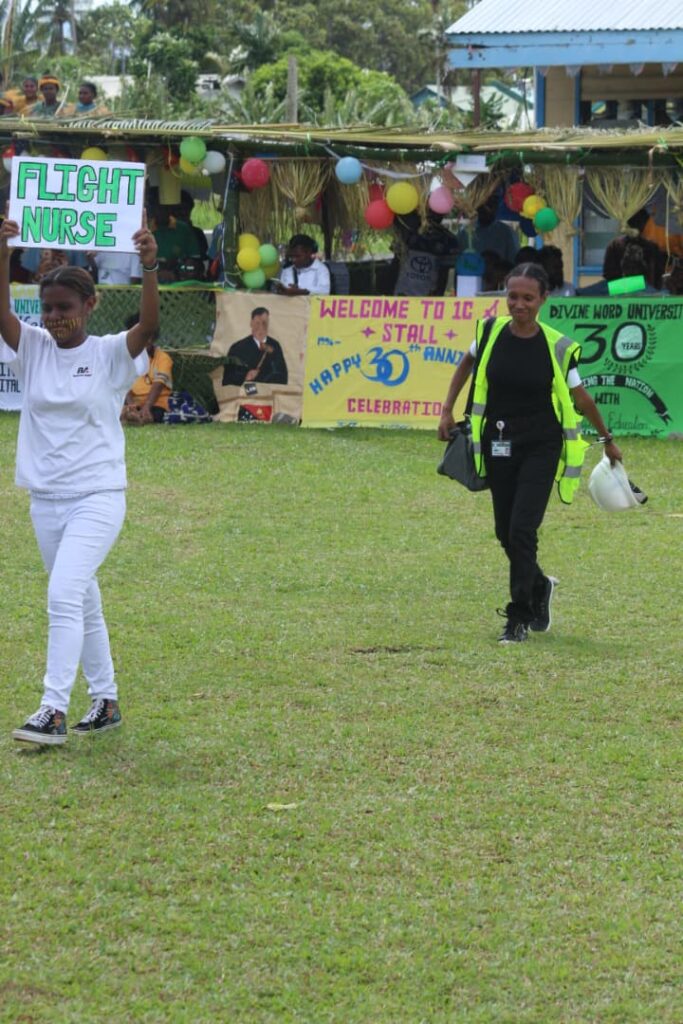
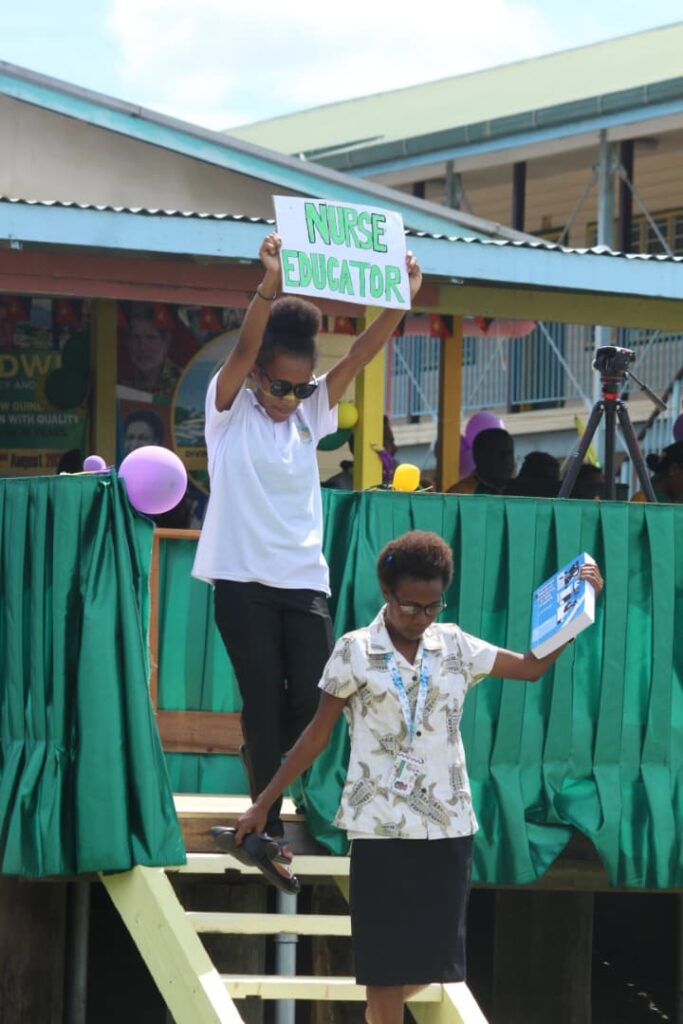
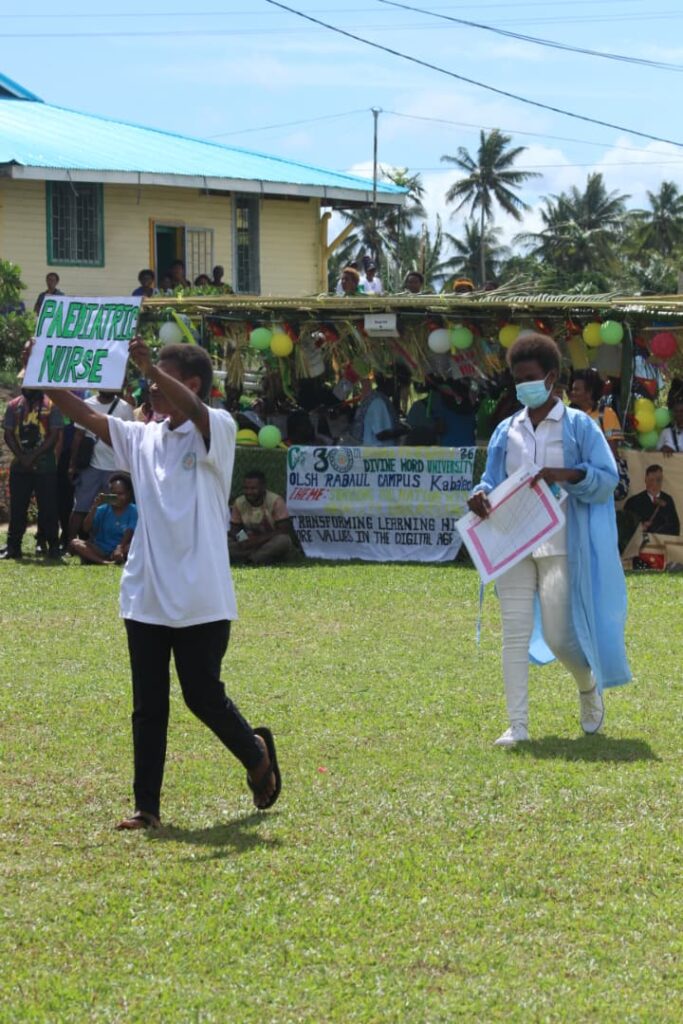
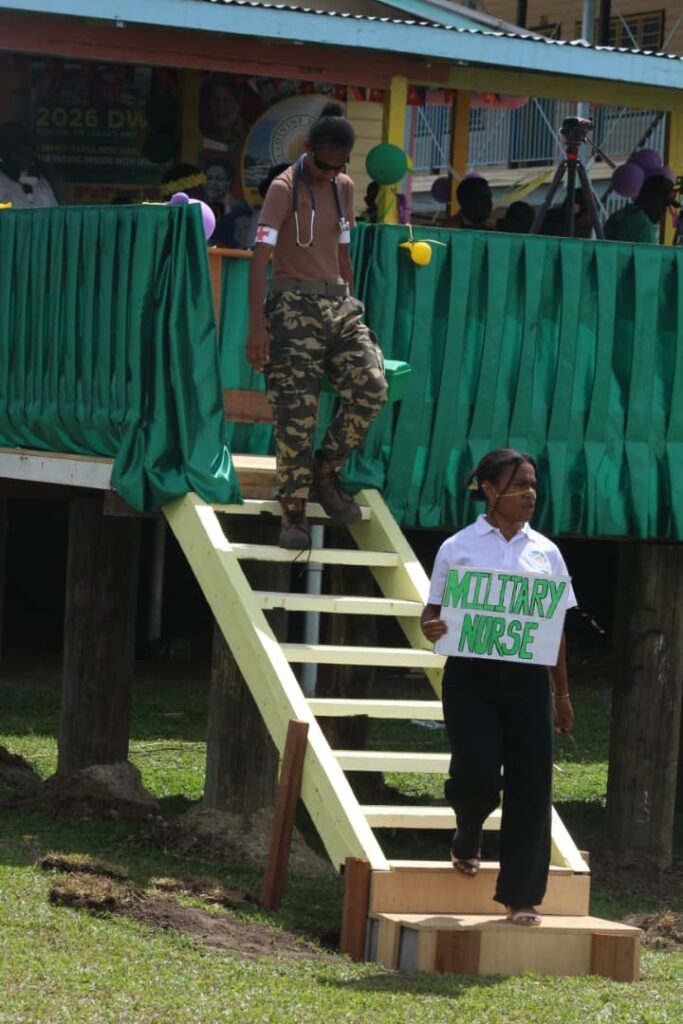
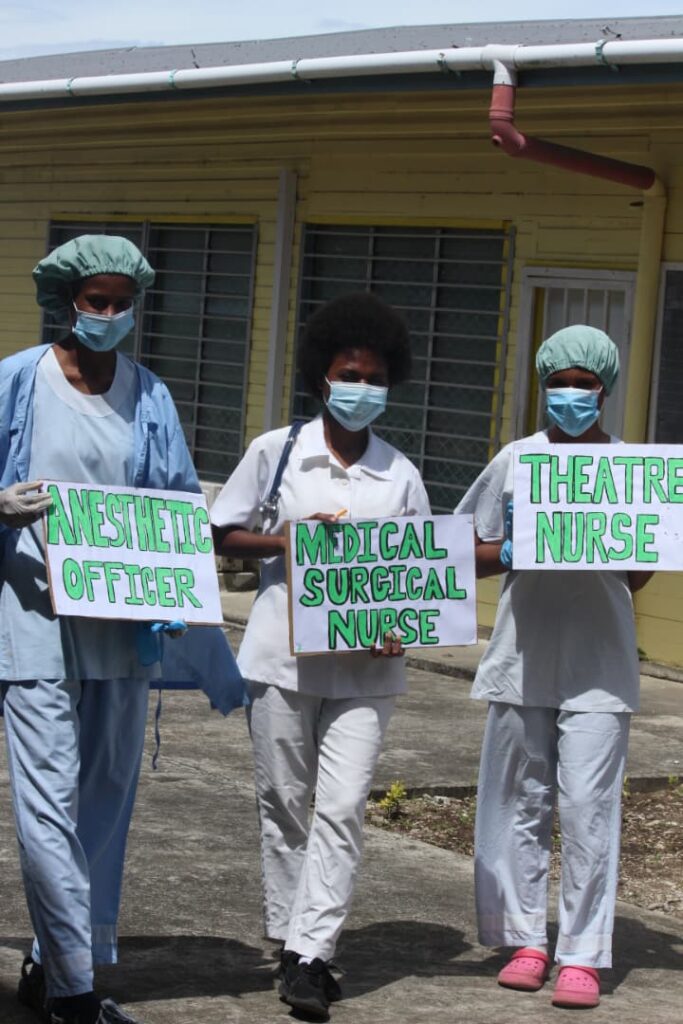
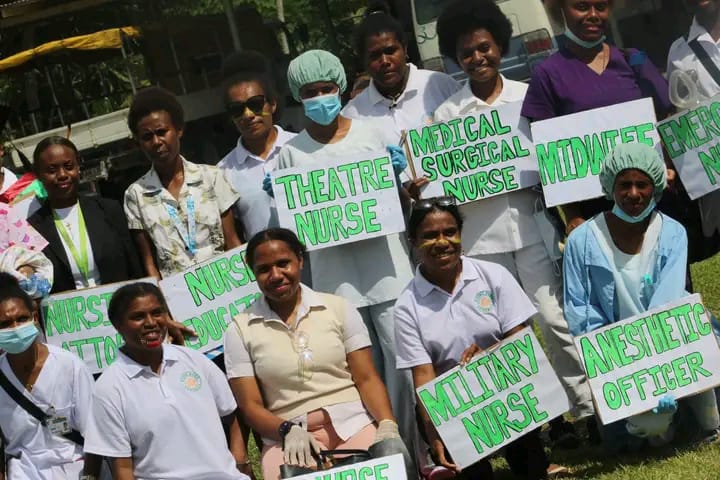
Traditional and contemporary dance routines lit up the grounds, running alongside a meticulously narrated historical parade that traced the evolution of nursing education in the region.

The procession marched forward from the foundational diploma graduates who have served since 2004, right up to the historic milestone of the pioneer Bachelor of General Nursing graduating cohort of 2026.

Students holding up the placards displayed during the parade.(Image/Priscilla Bultana)

Central to the parade and the institution’s enduring identity were DWU’s eight core values: Academic Excellence, Integrity, Respect, Hospitality, Learning for Life, Social Responsibility, Community Engagement and Service, and Diversity.

These principles were proudly displayed as placard bearers and students marched with faces painted in colors representing provinces right across Papua New Guinea.

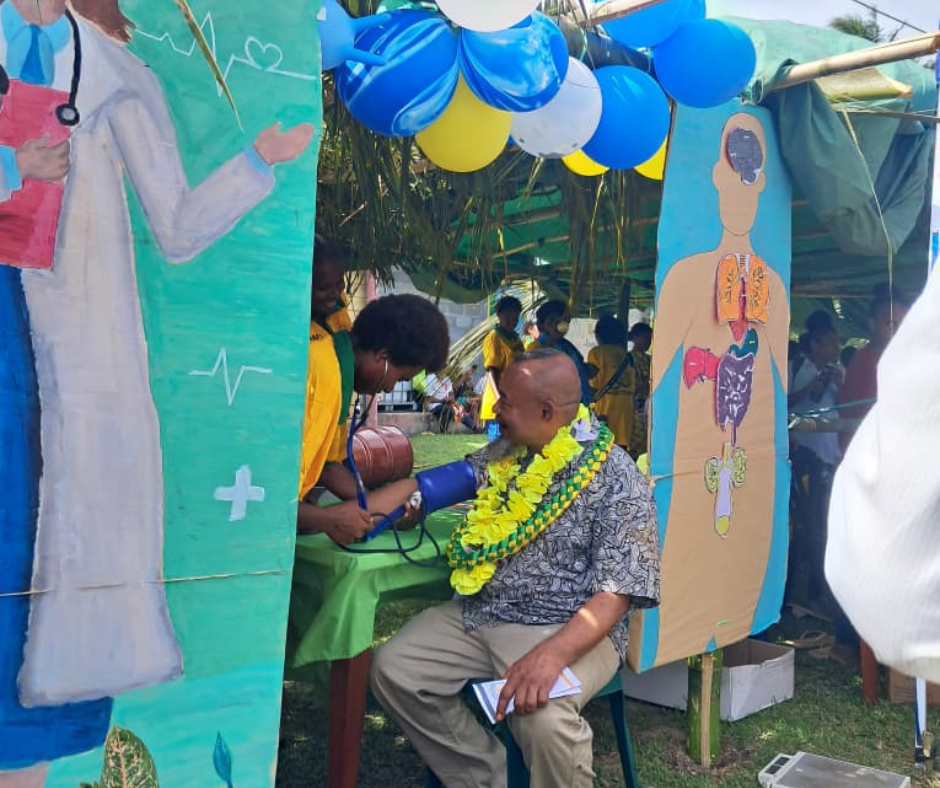
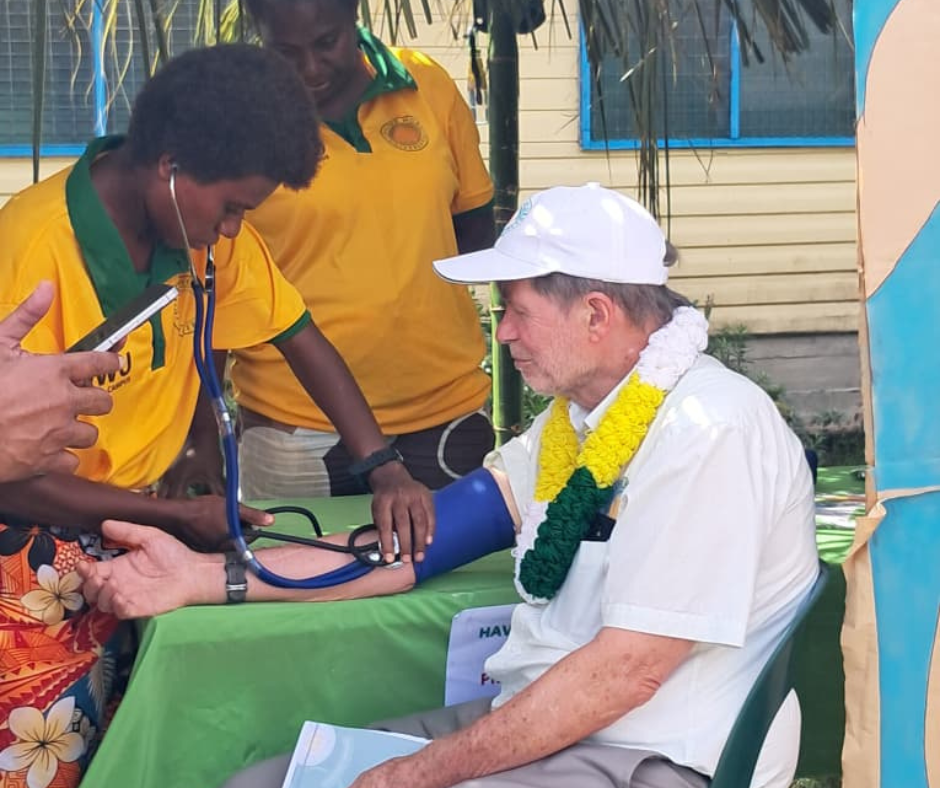
Cheers and excitement took over as judges and dignitaries toured the student booths. At the General Nursing display, visitors lined up for free health checks covering blood pressure, weight, height, and BMI (Body Mass Indices).

Good humor filled the tent as Rabaul Lord Mayor James Wong and DWU President Professor Fr. Philip Gibbs rolled up their sleeves to have their blood pressure taken by student nurses from the pioneer degree batch.

When the competition results rolled in, the Midwifery students claimed first place for their standout booth display, while Year 2 students representing SMSON took out the hotly contested DWU anthem song competition.

As the sun dipped behind Kabaleo, the day wrapped up with closing remarks from the campus administrator and Professor Fr. Gibbs, followed by a final blessing from Fr. Alphonse Dende, closing out a proud chapter of history, and setting sights firmly on the next thirty years.


ALL PACIFIC Islands Forum (PIF) member countries are now connected to the undersea telecommunications cables for the first time.

This announcement was made in Fiji during the PIF meeting this week.

This historic milestone driven by the Australian Government has helped delivered more than 10,300 kilometers of new undersea cables which now ensures every PIF member is connected to the global cable network.

Working alongside Pacific governments and development partners, Papua New Guinea’s closest neighbour, Australia who is a major bilateral partner in the Pacific, has helped support the undersea cable connectivity across the Pacific and Timor-Leste.

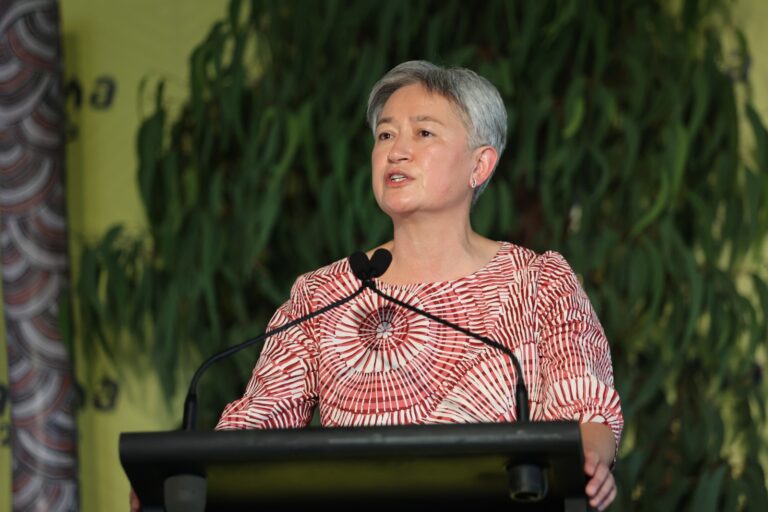
Australian Minister for Foreign Affairs, Senator Penny Wong said for the first time, every Pacific Islands Forum member now has access to the digital infrastructure needed to participate fully in the modern economy, backed with Australian support.

“A more connected Pacific is a more resilient Pacific. This infrastructure strengthens economic growth, supports essential services and will help underpin a more peaceful, stable and prosperous region,” said Minister Wong. 

Benefits of the undersea cables would see an increase in internet speed and lowest internet costs for internet users throughout the region.

Since 2018 Australia committed over $500 million to deliver cable projects across nine Pacific nations, including primary cable connections for Naoero, Solomon Islands, Timor-Leste, Tuvalu, Tarawa in Kiribati, and Kosrae in the Federated States of Micronesia.

Australia is also working with partners to strengthen the reliability and resilience of telecommunications infrastructure through support for second international cable connections in Tonga, Papua New Guinea, Palau and Solomon Islands.

Australian Minister for Pacific Island Affairs, Pat Conroy said faster, more affordable and more reliable digital services will help integrate our economies, making it easier for Pacific peoples and businesses to connect, and investment to flow across the region.

“With new connections comes greater opportunities, better information flows and knowledge sharing, supporting Pacific Island countries to fully participate in the global economy,” said Minister Conroy”  

A more connected Pacific advances the shared interests by PIF Members. It strengthens regional resilience, supports economic development and deepens connections between PIF member countries and their people.

The years of work put in by the Australian government is appreciated by PIF member countries.

These investments are being delivered in partnership with Japan, New Zealand, and the United States, as well as Taiwan.

They will help connect Pacific governments, businesses, communities and peoples to global networks and digital markets, opening new opportunities for trade, investment, innovation and economic participation.

Meanwhile Papua New Guinea has entered into a separate connectivity agreement with Australia under the Pukpuk Treaty which will see the delivery of three new submarine cables to Papua New Guinea.

Known as the Pukpuk Connectivity, the new subsea systems will provide high-capacity connectivity to the Northern part of Papua New Guinea, the Autonomous Region of Bougainville, and the Southern end of Papua New Guinea.

This was announced by PNG’s then ICT Minister, Peter Tsiamalili in December of 2025.

The Pukpuk Connectivity Initiative has as its objectives to;

–         Establish three new international-grade subsea routes, reducing reliance on single points of failure;

–         Expand access to underserved regions, including Bougainville;

–         Improve the stability and quality of national telecommunications;  and

–         Attract investment for hyper-scalers to deploy in PNG.


WHEN Police Minister, Willie Masiu stepped into the Lloyds Learning and Skills Development Academy in Arawa, he wasn’t just looking at classrooms. He was looking at Bougainville’s future.

The Autonomous Bougainville Government (ABG) minister toured the facility, hosted by the management of Lloyds Panguna Metals and Energy Limited, to witness how the academy is shaping the region’s young minds.

On behalf of the ABG and the people of Bougainville, he offered gratitude to the organization for stepping up to upskill local youth, steering them toward purposeful paths, and giving them a genuine start in life. He said individual personal development through these programs is the bedrock of a responsible Bougainville society.

Guiding the Minister through the Arawa Youth Centre was Sangram Mahapatra, the man spearheading the academy’s rollout. For Mahapatra and the leadership, the scope of the project reaches every corner of the region.

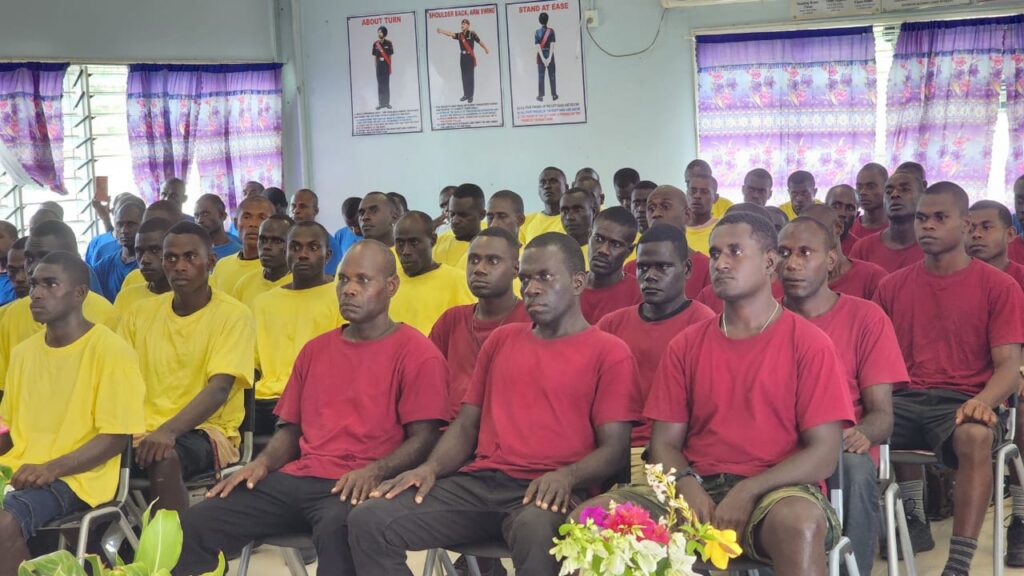
Lloyds Academy Students sitting on chairs in rows wearing red, yellow and blue.

“From North, South and Central Bougainville, they represent the entire spectrum of Bougainville society. We are making a beginning. It is our Chairman, B Prabhakaran’s vision and our mission that all Bougainvillean youth between the age of 20 to 40 have the privilege of undergoing education, skill-based training and consequent employment,” Mahapatra said.

“It is our firm belief that these three foundations can bring this energetic youth in the right direction of nation building. This is a humble start to what we hope would be a tool to transform Bougainville.”

Right now, 150 trainees are part of Batch 1, putting in the hard work across various learning, upskilling, and development programs. To ease the financial weight on families and allow trainees to focus entirely on their growth, every participant receives a stipend alongside provided meals throughout their training.


A STRONG sense of determination for self-governance and political independence from Papua New Guinea by September 2030 was displayed by President of the Autonomous Government, Ishmael Toroama yesterday.

In his opening address to the Joint Supervisory Body Meeting in Port Moresby, President Toroama said the Autonomous Bougainville Government came to the table not to re-negotiate the past, but to secure the future through a peaceful, jointly created process and through historic constitutional evolution.

Toroama said in all the joint meetings held between both parties, the Bougainville side has kept and met all requirements under the various agreements.

He said while Section 342 of the National Constitution indeed mandates Parliament to make a decision, he stressed that this decision cannot be divorced from the overwhelming democratic mandate of the referendum.

“Combined with the Melanesian Framework, this is the institutional pathway to Bougainville’s self-government and ultimately, to full sovereignty. This pathway reflects Bougainville’s final position on our timeline for self-government and, for political independence,” said Toroama.

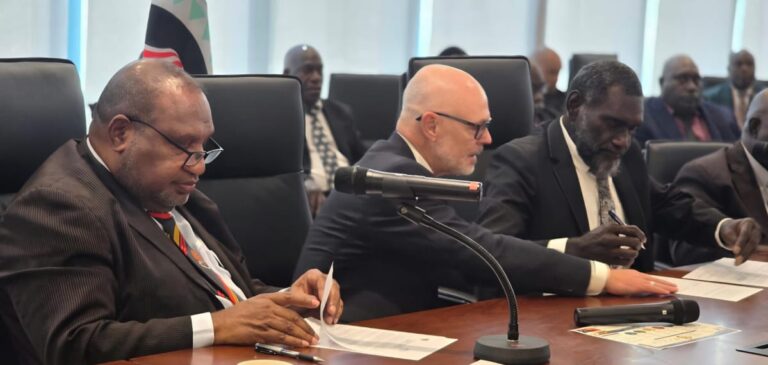
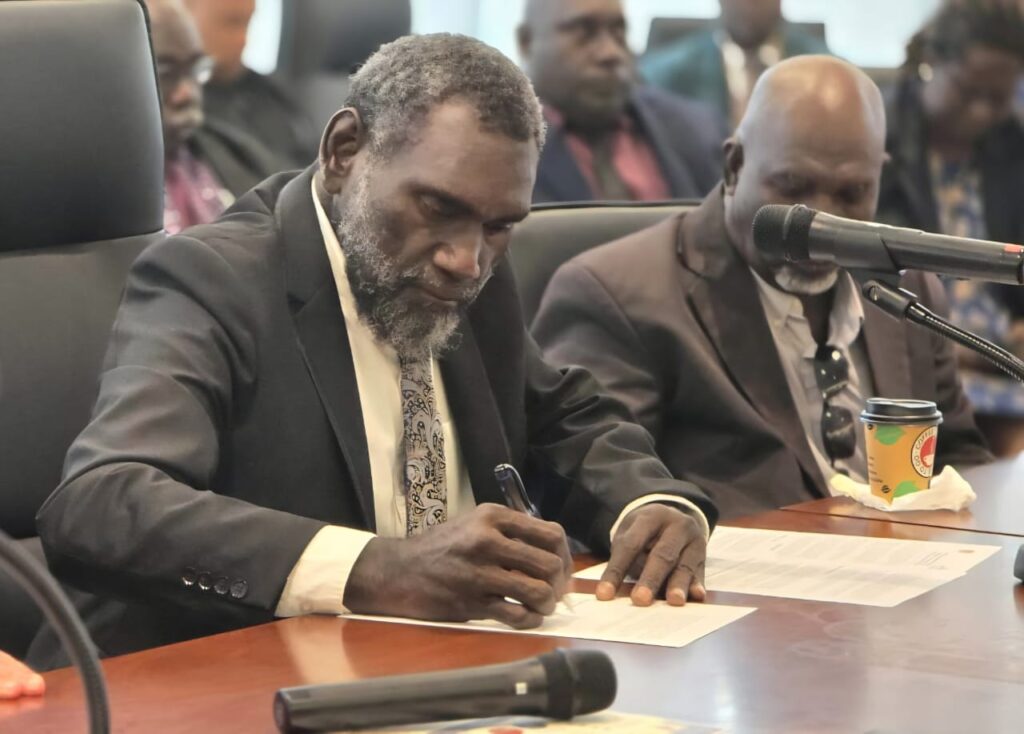
Dark skinned man in a suit signing a document on a brown table.
President of the Autonomous Region of Bougainville, Ishmael Toroama.

Prime Minister James Marape in his opening remarks, said that many meetings have been held between the governments since 2001. He wanted to put on record that the Referendum was done under the Pangu Administration in line with the 15-year timeline set out under the Bougainville Peace Agreement.

Marape said he is pleased that the Bougainville people understood that holding a referendum was the first process and now, the full parliament process needed to be carried out in order to complete the process.

“The Peace Agreement says parliament will rectify the results, Section 342 (of the Constitution) sub-section 2 says Parliament will make a decision,” said Marape.

In less than four hours of the meeting, the Melanesian Framework of 2026 has been endorsed as the agreed pathway that the Papua New Guinea Government and the Autonomous Bougainville Government will use, should the National Government endorse the Referendum Results.

This forms part of the Joint Supervisory Body (JSB) Meeting Resolutions signed between PNG Prime Minister James Marape and Minister for Bougainville Affairs, Manasseh Makiba on the PNG side and ABG President Ishmael Toroama and ABG Deputy President and Attorney General, Ezekiel Masatt on the Bougainville side.

The second document that was endorsed in the JSB is the Joint Consultation Report which will also be presented as part of the ratification process.

But before the JSB Meeting in Port Moresby today, Bougainville Leaders held a Forum in Buka and endorsed a three-stage pathway on the final position of Bougainville’s future. The pathway includes preparation for self-government until 1 September 2027, a period of self-government from 2027 to 2030, and independence in 2030.

The forum in Buka included representations from Civil Society, Women and Youth’s Group and Veterans who fought in the Bougainville Crisis.

The JSB meeting held at the Melanesian House opposite the National Parliament is the final meeting co-chaired by both governments before the Bougainville agenda goes to Parliament later this month.

Other development partners like the United Nations were present to witness the meeting and signing of the JSB resolutions. 


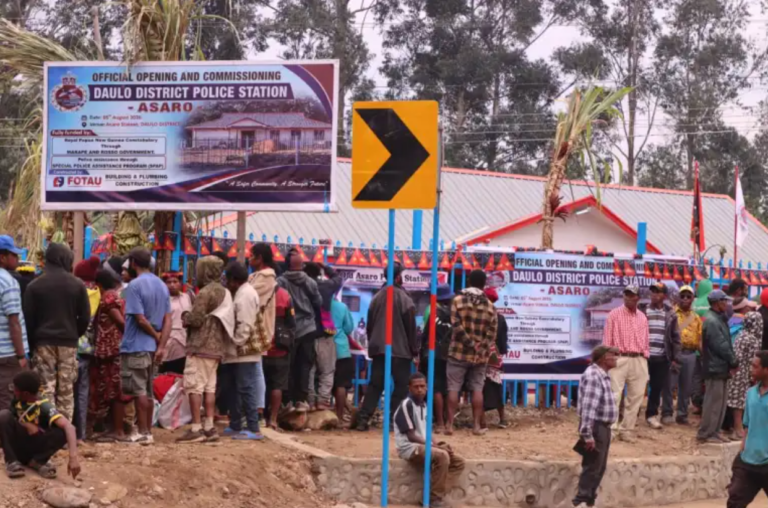
THE Daulo District Police Station in Asaro along the Okuk Highway has officially been opened for use after the completion of major refurbishment work.

Northern Division Commander Assistant Police Commissioner Peter Guinness who once lived opposite the station said it was refreshing to see an old station brought back to life.

“I lived here once as a junior officer, and now I am officiating the rebirth of Asaro Police Station after over 50 years in my current capacity as Northern Divisional Commander,” said Commander Guinness.

Built under the Special Police Assistance Program (SPAP), its launching this week in Eastern Highlands marks a boost for the Provincial Command.

First built in the early 1960s, the Asaro Police Station was demolished and rebuilt by the Royal Papua New Guinea Constabulary with government funding allocated through SPAP.

It will serve as a base for law enforcement between the townships of Goroka and Kundiawa and increase police presence along the Okuk Highway.

Common offenses reported to police along the Highlands Highway include traffic crimes like overloading, speeding and the use of unauthorized vehicles. 

“This new station will inspire members of Asaro Police to clamp down on highway crimes including smuggling of firearms and drugs, robberies, traffic infringements, accidents, and so forth,” said Guinness.

Commander Guinness, who represented the Police Commissioner, David Manning, officiated at the ribbon-cutting ceremony to signal the station’s reopening.

He said it was an emotional moment as this may be his last official engagement as he is due for retirement in a few weeks’ time.

“I must thank the Police Commissioner David Manning, his executive management, and the Marape-Rosso Government for funding this new infrastructure within my Command,” he said.

The Commander said these government initiatives would undoubtedly inspire members of the RPNGC to put more effort into their roles and responsibilities in the fight against crime.

“Asaro is a strategic location for police operations along the Highlands Highway,” he said.

More importantly, the RPNGC’s overall intent is to maintain security and safety of residents in Daulo and, more so, the thousands of commuters who travel along the Highlands Highway daily.”

“The Marape-Rosso Government, in its wisdom, allocated money under the SPAP initiative, and the RPNGC Executive, under the leadership of Commissioner David Manning, delivered this very critical asset,” he said.

Commander Guinness urged members of Asaro Police to look after the assets well and serve the community with pride and commitment.

Eastern Highlands Governo, Simon Sia, Goroka MP Aiye Tambua, and Daulo MP Ekime Gorosahu were also present to witness the official opening of the new-look Asaro Police Station.

Goroka MP Aiye Tambua pledged a K50,000 funding support for white goods for the police station while the local Daulo MP has told police he will also donate office equipment and white goods for the station.


IN BOARDROOMS across Papua New Guinea, the conversation is shifting.

For too long, finance has been treated as a closed-door specialized language spoken by a select few.

Last week, Nasfund Chief Financial Officer Debbie Oli decided to fling that door wide open.

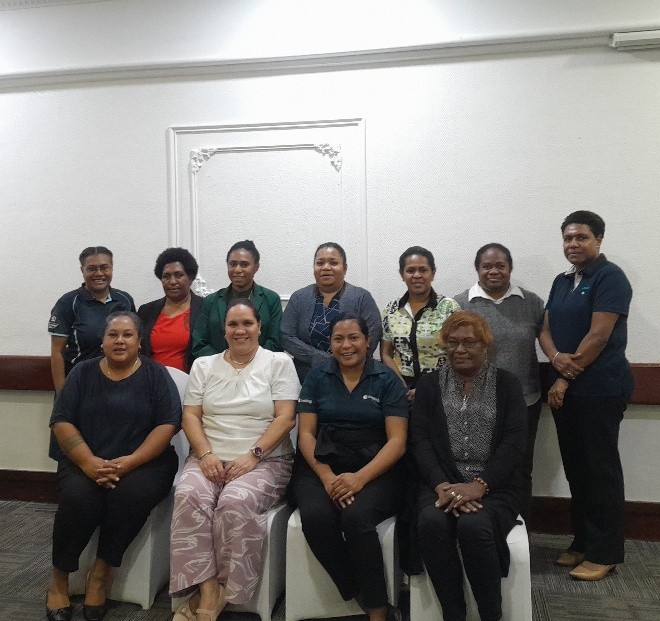
Speaking to Cohort 23 of the Business Coalition for Women’s (BCFW) Senior Executive Women’s Programme (SEWP), Ms. Oli delivered a lecture on balance sheets, arming a room full of PNG’s rising women executives with financial empowerment and confidence.

The three-month leadership initiative brings together women from diverse professional backgrounds. Some walked into Ms. Oli’s session with years of corporate experience but zero finance background; others sat alongside finance specialists.

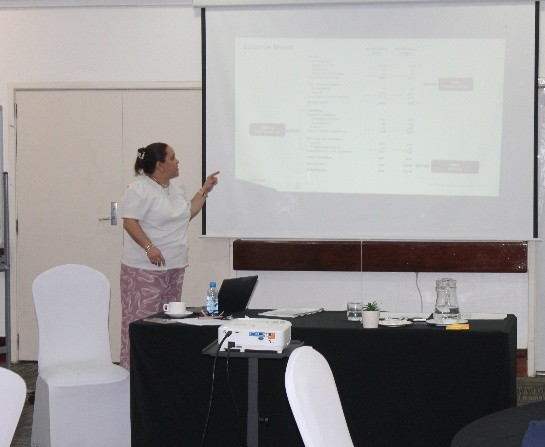
Woman wearing a white top and pink skirt making a powerpoint presentation at a whiteboard
Nasfund Chief Financial Officer Debbie Oli presenting on Financial Literacy at the SEWP Cohort 23 in Port Moresby last week.

“The program had a mix of women with no finance background at all and some finance specialists,” Ms. Oli said.

“My presentation focused on helping participants understand how to interpret financial statements.”

Instead of hiding behind corporate jargon, Ms. Oli broke down the fundamentals.

She guided the leaders through the three pillars of business reporting; the Balance Sheet, the Income Statement, and the Cash Flow Statement; showing how each tells a story about an organization’s health, performance, and sustainability.

For women stepping into senior management, understanding those stories isn’t optional; it is essential.

Ms. Oli emphasized the importance of recognizing the role of finance in any organization, teaching participants how to spot critical financial indicators and warning signs before making major strategic decisions.

But the empowerment didn’t stop at the office door.

Drawing from her wealth of expertise, Ms. Oli brought the lesson home, introducing practical tools like the Supa Calculator to help participants look at their own long-term financial wellbeing, retirement savings, and the biting reality of inflation.

“The exercise allowed participants to see how their spending habits could impact their future savings and to explore options that could help increase their Super balance over time,” she explained.

Reflecting on the session, Ms. Oli said the gathering turned into an interactive, meaningful conversation centered squarely on giving women the tools they need to make informed financial decisions, both professionally and personally.

The SEWP continues to equip Papua New Guinean women leaders with the knowledge, skills, and networks needed to thrive in senior leadership roles.


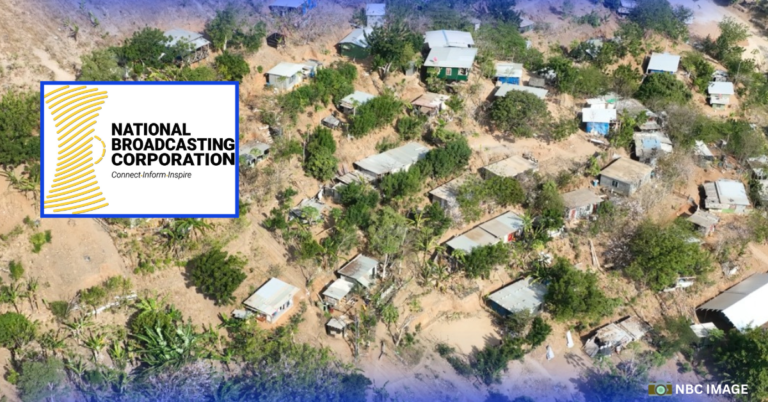
THE National Broadcasting Corporation (NBC) is taking decisive action to remove squatters living on its land at its 5-Mile headquarters in Port Moresby.

The state broadcaster’s Managing Director, Kora Nou, has issued a 21-day ultimatum to illegal settlers living on institutional land, telling them to pack up and move voluntarily or face a forceful police eviction.

The warning comes on the back of a weekend attack on the son of a senior NBC staff member.

He was physically assaulted within the headquarters’ vicinity, leaving him hospitalized and sparking a formal police complaint.

Mr. Nou wants the attackers identified and handed over to police immediately.

“We have re-established communication with the Metropolitan Superintendent and officers have been asked to carry out awareness among these illegal squatters so they can voluntarily move out within these 21 days,” Mr. Nou said.

“Failure to do so will result in NBC requesting the courts and police to evict them,” Mr. Nou added.

The situation highlights a growing security concern for public servants living on site.

According to the Managing Director, instances of harassment, physical attacks, and unruly drunken behavior have surged around the 5-Mile staff residences. He links the spike directly to an influx of informal settlers spilling over from recent urban eviction exercises elsewhere in the capital.

“May I remind everyone that the officers of the NBC throughout the country provide an essential service to our people every day, on weekends, and public holidays,” Mr. Nou stated.

“These officers and their families do not deserve such unprovoked physical attacks or daily intimidation as they carry out their work, especially within the confines of our institutional housing premises.”

Mr. Nou said NBC is now joining forces with the courts, the police, and the National Capital District Commission (NCDC) to push back against the lawlessness and clear the land.

Beyond security concerns, the clearing of the settlement paves the way for stalled institutional development.

Mr. Nou said the removal of the illegal squatters is consistent with an NBC Board decision to further develop the land.

“Funding for 38 staff houses has already been secured and NBC is only awaiting the issuance of a building permit to begin construction at 5-Mile,” Mr. Nou said.

“The land presently occupied by these illegal squatters is an integral part of this major development plan,” Mr. Nou said.


THE Papua New Guinea Tourism Promotion Authority (PNGTPA) has given K20,000 to the East New Britain Provincial Government to aid ongoing search and rescue efforts following a tragic boating incident near Pigeon Island.

The funds are earmarked to help emergency response teams cover vital operational costs as the grueling search for those affected by the disaster continues.

PNGTPA Chief Executive Officer Eric Mossman Uvovo said the Authority stood shoulder-to-shoulder with the people of East New Britain through the ordeal.

“On behalf of PNGTPA, I extend our deepest concern and support to the people of East New Britain. Our thoughts and prayers are with the families who have lost loved ones or are still waiting for news. Mr. Uvovo said.

He praised the relentless drive of the various agencies and volunteers deployed on the ground.

“We acknowledge the outstanding work of the East New Britain Provincial Government, the Provincial Disaster Office, the Royal Papua New Guinea Constabulary, the National Maritime Safety Authority, and all the volunteers and responders working tirelessly under difficult conditions. Their commitment to helping others is truly commendable,” Mr. Uvovo said.

While the Authority’s primary mandate centers on promoting the country as a premier tourism hotspot, Mr. Uvovo said the organization carries a broader duty to support local communities in times of crisis.

“East New Britain is one of Papua New Guinea’s leading tourism destinations, but more importantly, it is home to strong and resilient communities. When our people are facing hardship, it is important that we stand together. This K20,000 contribution is our way of supporting the emergency teams who are working around the clock to assist those affected,” Mr. Uvovo said.

He said the injection of funds is intended to keep rescue operations moving forward by easing immediate logistical burdens on the ground.

“We hope this support will ease some of the operational costs and allow emergency responders to continue their important work. PNGTPA is proud to stand alongside the East New Britain Provincial Government and everyone involved in this operation,” Mr. Uvovo said.

Looking ahead, Mr. Uvovo said the Authority remains committed to partnering with provincial administrations to safeguard tourism hubs across the country.

“Our tourism industry is built on the strength of our people and communities. Today, we stand in solidarity with the families affected by this tragedy and with everyone working tirelessly to bring the search and rescue operation to a successful conclusion,” Mr. Uvovo said.


Pin It