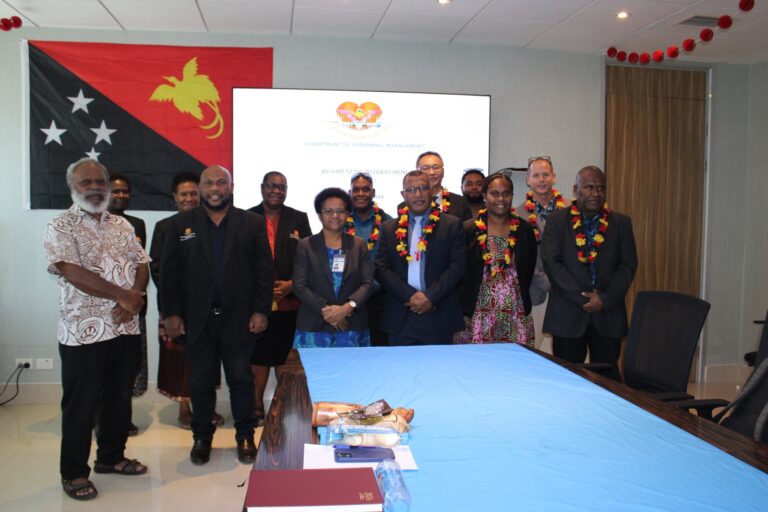
A delegation from Vanuatu has visited the Department of Personnel Management (DPM) to see firsthand how Papua New Guinea manages its public service “engine room,” with a specific focus on new housing projects.
The team from Vanuatu was in Port Moresby for the 7th Pacific Urban Forum. They used the visit to talk about the housing challenges facing the region and to look for new ways to provide homes for their own government workers back home.
The main goal for the Vanuatu group was to find practical ways to improve living conditions. DPM Secretary, Taies Sansan welcomed the visitors, highlighting that working together is the only way for Pacific nations to grow.
“Together, we can explore practical strategies to improve public service housing and ensure public servants have access to quality and sustainable living conditions,” Sansan said.
During the meeting, DPM Executive Manager, Nancy Levi explained the current plans for modern and affordable homes. She made it clear that giving staff a decent place to live is about more than just buildings, it’s about making sure the workforce is happy and productive.
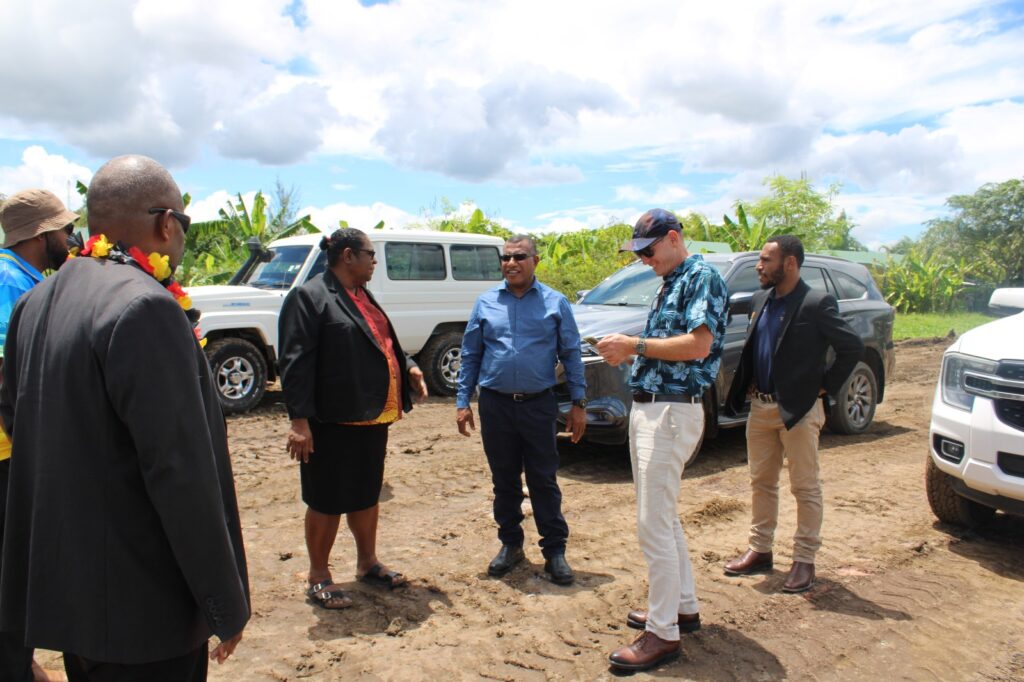
To get a better idea of the work being done, the delegation visited the proposed housing site at Bomana in the National Capital District. The visit showed off plans that mix modern design with environmental care, highlighting PNG’s role in leading these kinds of developments.
The site visit offered the Vanuatu team a look at:
Modern and affordable housing for government workers.
New designs that focus on the needs of families.
Long-term planning for public service growth.
The Vanuatu delegation said the experience was an “eye-opening learning opportunity.” They expressed their thanks to the DPM for the presentations, saying that the visit has opened doors for PNG and Vanuatu to work together more closely in the future.
Sansan added that the initiative is an investment in people. The DPM remains focused on finding housing solutions that actually meet the needs of the people serving the country.
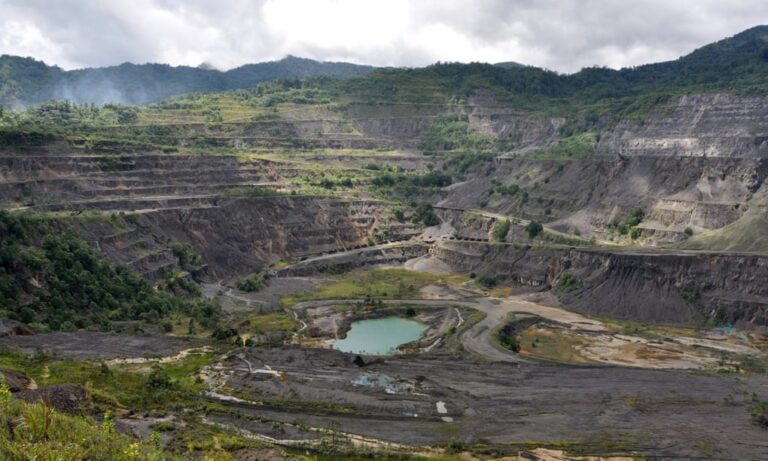
Landowners of the Panguna Special Mining Lease area are not pleased with the current negotiations by the Government of the Autonomous Region of Bougainville.
In a statement, the landowners claim they are being left out in the current negotiations.
The Panguna Osikayang Coalition, a civil society group representing the people who are directly impacted by the mine, are calling for a fair representation in consultations with the developers.
This week, the group demanded the ABG Government including developer Bougainville Copper Limited and partner, Lloyds Metals and Energy Limited to immediately halt all activities directly or indirectly concerning the mine, “these includes all ABG led community awareness programs that involve the planned dissemination of information relating to agreements and activities that indigenous resource owners were NOT involved in, are not ‘a party to’.”
Six key reasons were highlighted as references to cease activities concerning the reopening of the mine. The reasons include: • Unresolved Panguna Legacy issues • Lessons learnt from the first BCL agreement and the need to be inclusive • Lack of inclusive and equitable participation, and representation • Lack of transparency and accountability • Process and Governance Gaps and • Legal and Rights Considerations
The group emphasised the need for the ABG Government and the developer and its partners to have an open dialogue and be transparent with negotiations and agreements.
The Panguna Osikayang Coalition explained in the statement that their concerns stem from a wider community based stakeholder engagement and consultation meeting in Panguna, put together by a Technical Working Group comprising of concerned citizens of the impact communities.
Meanwhile, the ABG Government through the Media Office, says it remains committed to ensuring that landowners are empowered as key stakeholders in development.
The ABG community engagement program is already underway, and concerns raised by various interest groups will be addressed through this community engagement and dialogue.
In a move to ensure that every Kina of public funding translates into tangible service delivery, Certified Practicing Accountants Papua New Guinea (CPAPNG) has moved to professionalize the nation’s subnational financial systems.
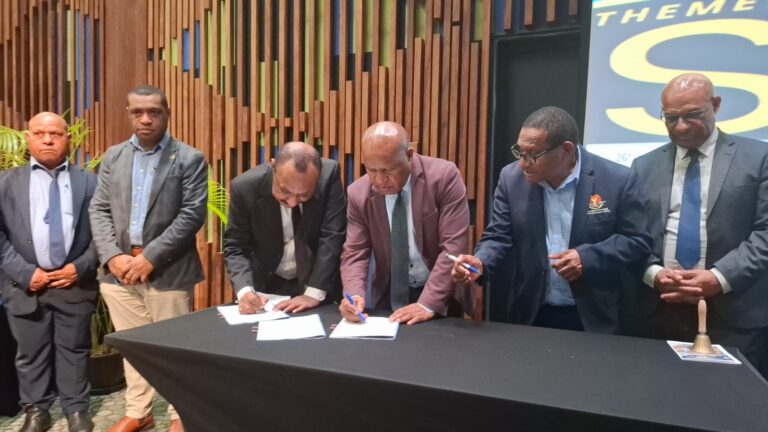
The 51-year-old institution has entered into a landmark Memorandum of Understanding (MOU) with the Department of Provincial and Local Government Affairs (DPLGA), positioning its nearly 10,000 members as the front-line defenders of accountability in provincial and district administrations.
The agreement, signed on Tuesday at the Hilton Hotel, signals a shift from administrative oversight to a rigorous, certification-led intervention.
The partnership is part of the base work of the PNG Reset @50 20-Year Roadmap, specifically targeting the national priority of transparency. CPAPNG President, James Gore emphasized that the association is stepping beyond internal affairs to act in the broader public interest.
“This partnership stands as one of CPAPNG’s key initiatives aligned with these national priorities,” Gore said.
“We remain politically neutral and work collaboratively with the government of the day.”
For the first time, a clear framework has been established to upskill and certify accountants specifically within the public sector. This move aims to fix the implementation gap that often stalls development projects at the district level.
According to President Gore, the MOU is not just about training, but about a fundamental structural change supported by proposed amendments to the Accountants Act.
“The MOU sets out a clear framework for capacity building, upskilling, and ultimately certifying public sector accountants under the CPAPNG umbrella,” Gore explained.
“This will be supported by proposed amendments to the Accountants Act, ensuring a robust pathway for professionalization within the public sector.”
By focusing on provincial and district finance personnel, the reform targets the very people responsible for planning, budgeting, and acquittals. The goal is to ensure that funds intended for schools, roads, and healthcare are managed with a high level of ethical and professional rigor.
“Through this collaborative framework, CPAPNG and DPLGA will support improvement in public sector accounting performance, support policy and legislative reforms, and deliver specialized training and capacity building for provincial and district finance personnel,” Gore said.
As Papua New Guinea ventures into its next 50 years as a sovereign independent nation, the pressure for transparent governance has never been higher. CPAPNG is now mobilizing to ensure the public sector meets the expectations of citizens and international partners alike.
“Together, we can lay the foundation for lasting reform and stronger financial stewardship across Papua New Guinea,” Gore concluded.
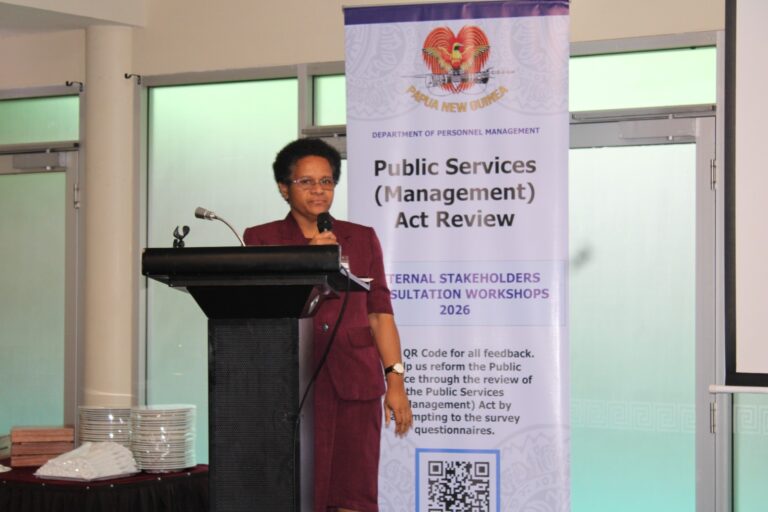
As part of the Government’s ongoing efforts to modernise and strengthen public sector governance, the Department of Personnel Management (DPM) commenced a public review of the Public Service Management Act (PSMA) on Monday.
DPM began the external consultations with agencies in the Social and Administration Sector this week, marking the first phase of wider national engagement.
Secretary for the Department of Personnel Management, Taies Sansan, told participants that the review aims to critically assess the existing Act, identify gaps and overlaps, highlight areas requiring improvement, and recommend reforms that will enhance efficiency, transparency, accountability, and professionalism across the public service.
“The Public Service Management Act is the cornerstone legislative framework governing the administration, management, and operations of the public service in Papua New Guinea.
Since its enactment in 1995, it has guided appointments, employment conditions, organizational structures, and the implementation of constitutional provisions related to State Services and Provincial Administrations,” Sansan said.
She stated that the PSMA has undergone several amendments and reviews since its inception, most notably in 1998, 2002, 2003, 2020, 2022, and a consolidation in 2024.
However, with the public service landscape rapidly evolving, a comprehensive review is now necessary to ensure the Act remains relevant, effective, and aligned with national priorities.
Sansan emphasised her vision for a “smarter, leaner, technology-driven public service” staffed with well-remunerated public servants who can contribute meaningfully and efficiently to national development.
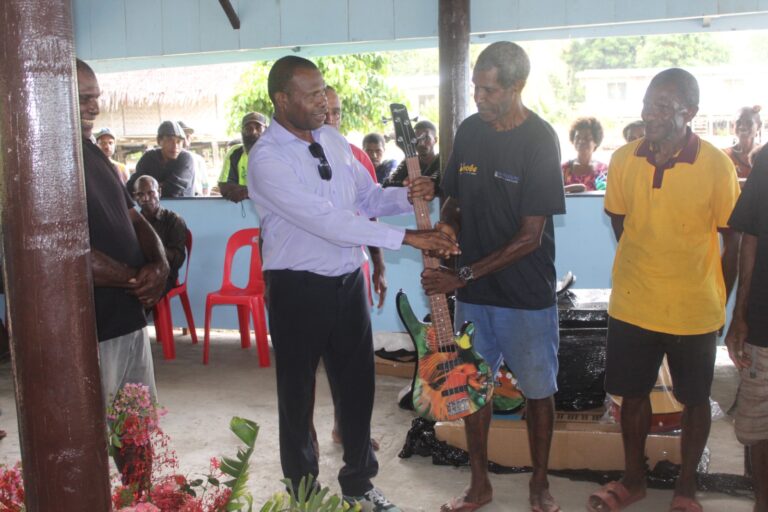
Musical instruments worth K15,000 were delivered to the ELC PNG Baya Parish at Malolo Seket, Ward 1 Hote, Salamaua LLG.
The instruments were purchased by the Huon Gulf District Development Authority (HGD-DDA)
The DDA Chairman and Huon Gulf District MP and Minister for Community Development and Youth and Religion, Jason Peter made the presentation over the weekend.
Hote, located inland of Salamaua LLG and bordering Bulolo District, is one of the most remote areas in the Huon Gulf District.
The instruments were officially delivered to the church team at Malolo Seket. Speaking during the presentation, community representative Mr. Geotau Lee highlighted the historical and spiritual significance of Baya Parish. He said that the parish was named after early missionary Edwig Baya, who first travelled into the area to spread the Word of God.
Mr. Lee described the presentation as a historic blessing for the people of Baya Parish, emphasizing that such support reflects the leader’s vision to include churches as a key pillar of development in Huon Gulf District.
“This is a blessing for our people. We thank God Almighty for giving wisdom, strength, and courage to a young and vibrant leader who continues to prioritize the spiritual wellbeing of our communities,” he said.
The Pastor of Baya Parish encouraged the congregation to remain steadfast in faith, uphold respect for leadership, and promote unity within the community.
The event was witnessed by local villagers, former Ward 1 Councillor Alex Awateng, and the newly appointed Ward 1 Councillor, Able Yasap, who all expressed their appreciation for the continued support from the Huon Gulf District leadership.
Huon Gulf MP, Jason Peter reaffirmed his commitment to inclusive development, stating that churches play a vital role in shaping communities and promoting peace, unity, and moral values across the district.
More than 40 asylum seekers, most of whom have committed crimes in Australia, will have their ankle monitors removed and curfews scrapped after the nation’s top court once again threw government policy into chaos.
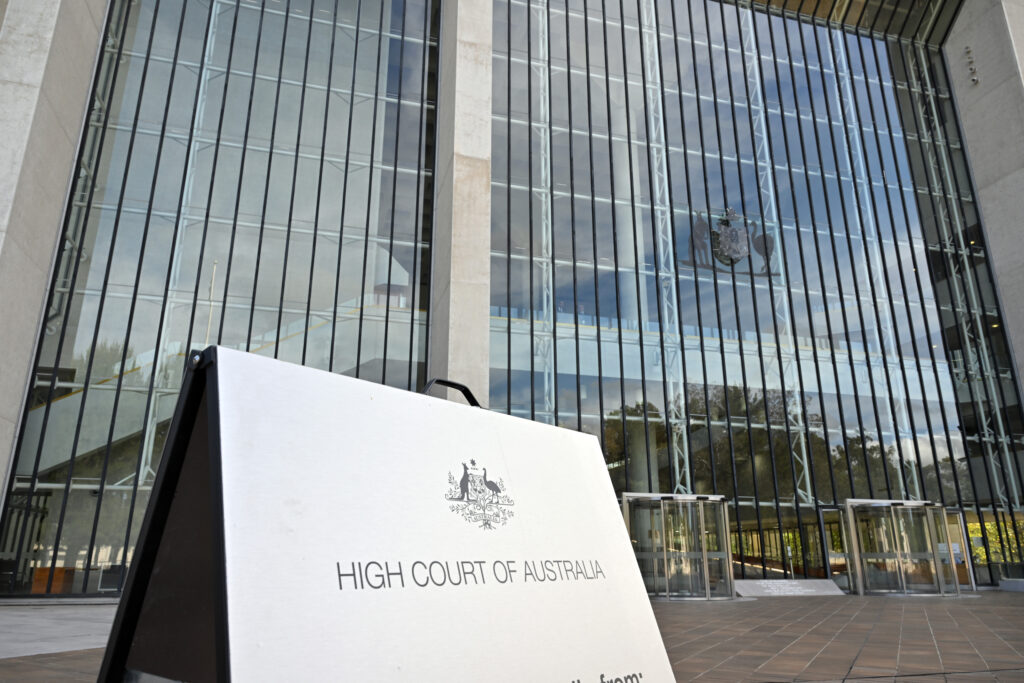
The High Court ruled in favour of Papua New Guinea-born man, who argued the conditions placed on him after his release from prison were unconstitutional.
In response, 43 foreigners will have their ankle monitors removed and curfews revoked and will instead be placed on conditions similar to being on bail, requiring them to check in regularly at a set location.
The government says it will now focus on deporting the group to Nauru, rather than redrafting immigration laws for a third time.
The High Court’s latest decision is a fresh blow to government attempts to monitor ex-detainees. (Lukas Coch/AAP PHOTOS)
The 36-year-old who brought the case is known only by the pseudonym EGH19. He was convicted of murder as a child and domestic violence against his wife and her father as an adult.
While prosecuted for the domestic violence, his protection visa was cancelled. He served his prison sentence and the government tried to deport him once he was released.
The man was required to wear a monitoring device at all times and stay at a designated address between 10pm and 6am each day.
The government maintained the measures were necessary to protect the Australian community.
But the High Court, by majority, found the conditions were invalid, in yet another blow to the government’s attempts to monitor people released from indefinite immigration detention.
The monitoring regime was introduced after a landmark 2023 ruling by the same court that indefinite detention was illegal if there was no reasonable prospect of the person’s removal from Australia in the foreseeable future.
The decision led to the release of 150 immigration detainees with criminal records, some of whom had convictions for serious offences such as murder and rape.
A number were arrested for allegedly reoffending after their release, sparking fierce public and political backlash.
The government reacted by introducing laws requiring some of the former detainees to wear ankle monitors and abide by a curfew, but those measures were struck down in 2024.
Labor was unlikely to redraft laws in response to the High Court’s decision but would instead focus on its plan to deport members of the cohort to Nauru under a secretive deal with the tiny Pacific nation, a senior government source said.
Twenty seven people have had Nauruan visas approved and a further six have travelled to the island country.
The electronic monitoring was never the government’s main focus, Home Affairs Minister Tony Burke said.
“While obviously the government would have preferred a different outcome, the government’s ambition was never about ankle bracelets. If someone has their visa cancelled they should leave,” he said in a statement.
Opposition Home Affairs spokesman Jonno Duniam called for new laws to respond to the High Court ruling to protect the community from the cohort.
“(These people) are some of the most dangerous that could possibly be in our community: convicted sex criminals, convicted murderers … we know what happens when these people are left unchecked,” he told reporters in Hobart.
Refugee advocates welcomed the court ruling, accusing the government of drafting laws on the run with no regard to fairness or the constitution.
“We work with people every day who are affected by these conditions – their lives have been turned upside down by these politicised punishments imposed on them simply because of where they were born,” Asylum Seeker Research Centre deputy chief executive Jana Favero said.
The cost of the High Court challenge will be paid by the federal government.
It has been twelve years since the first LNG Gas was exported out of Papua New Guinea and it has been twelve years since the National Government promised a 4.27 percent equity to landowners and Provincial Governments impacted by the PNG LNG Project.
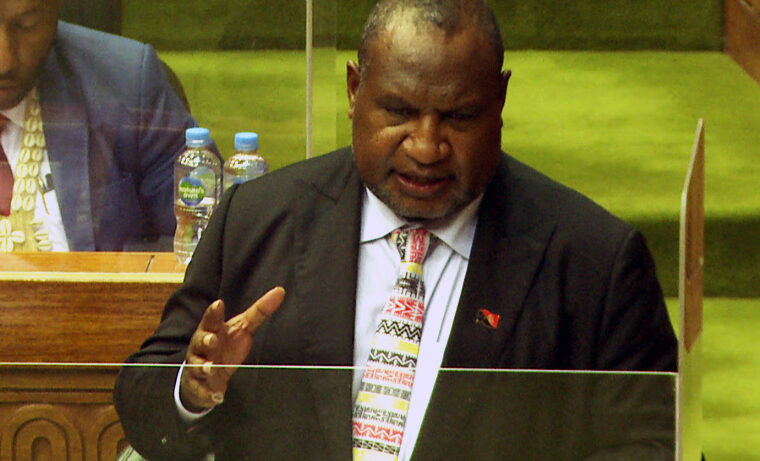
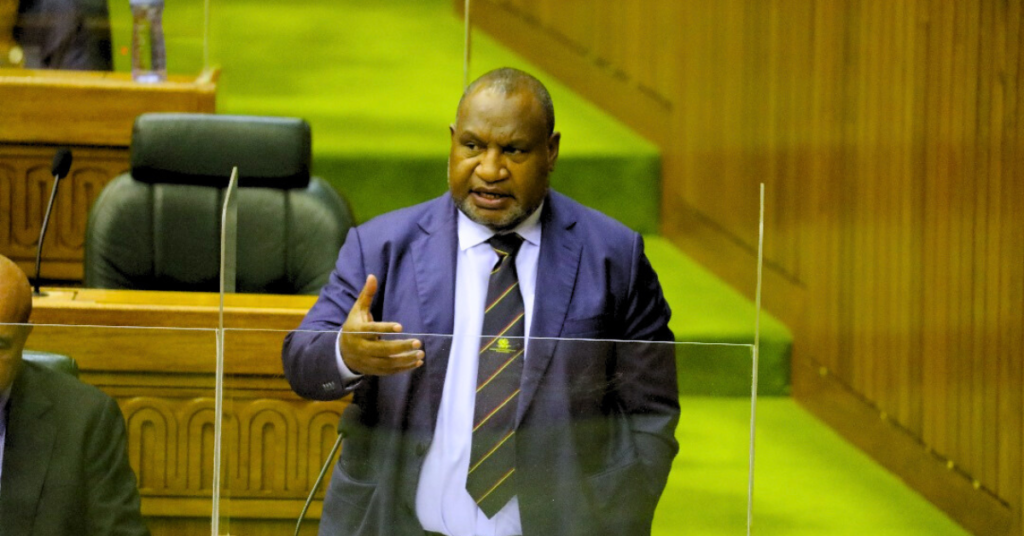
Komo Hulia MP Daniel Tindipi put the question to Prime Minister James Marape during parliament question time on Tuesday.
In response, Prime Minister James Marape reaffirmed the Government’s commitment to resolve this long-standing issues surrounding the 4.27 per cent PNG LNG equity, vowing to strengthen benefit-sharing arrangements for landowners and provinces, and advance national energy security.
Marape acknowledged that the 4.27 per cent equity component originally envisaged as a strategic benefit for landowners and the five provincial governments impacted by the PNG LNG project, remains an outstanding national issue more than a decade after the first gas production commenced in 2014.
“This equity component was intended as a meaningful participation mechanism for our landowners and provincial governments. It is now 12 years since first gas, and it is clear that this matter has not been fully resolved,” Prime Minister Marape said.
According to Marape, the 4.27 per cent equity originated from arrangements negotiated during the 2008–2009 Umbrella Benefit Sharing Agreement (UBSA), when the State, landowners, and provincial governments came together to enable the final investment decision of the PNG LNG project.
He said the equity was conceived as a form of “gifted participation” to ensure that the benefits of one of Papua New Guinea’s largest resource projects would extend beyond statutory entitlements under the Oil and Gas Act.
“This was over and above the legally mandated 2 per cent royalty and equity benefits. It was intended to give our people a stake in the project’s success and long-term returns,” he said.
However, the Prime Minister highlighted that despite the project’s significant contributions to the national economy including billions of kina in revenue since 2014 the intended beneficiaries have not been afforded the opportunity to exercise ownership or fully realize the value of this equity.
Marape confirmed that the Government has formally tasked Kumul Petroleum Holdings Limited with undertaking a full and transparent review of the 4.27 per cent equity, including its historical treatment, financial utilisation, and current status.
“We have asked Kumul Petroleum to present a complete information package to Cabinet. This includes what happened to the equity at the time of first gas, how it has been used over the years, and what value it holds today,” he said.
He stressed that the review will not be limited to the 4.27 per cent equity alone but will form part of a broader assessment of the State’s entire equity portfolio in the PNG LNG project, including the 16.57 per cent stake held through Kumul Petroleum.
“This is a holistic review. We are examining the full structure of our national equity interests to ensure accountability, transparency, and maximum benefit for our people,” he added.
Prime Minister made it clear that once Cabinet receives the full report, the Government will make a policy decision on how the 4.27 per cent equity should be allocated and managed going forward.
He emphasized that the Government is determined to ensure that landowners and provincial governments are properly recognized as beneficiaries, while also safeguarding long-term national interests.
“We will not rush this decision. It must be structured carefully to ensure fairness, sustainability, and direct impact,” he said.
The Prime Minister outlined a three-pronged approach under consideration:
Direct Benefit Distribution: Ensuring that a portion of the equity delivers tangible financial returns directly to landowners and provincial governments without unnecessary intermediaries.
Future Generational Savings: Establishing mechanisms to preserve part of the equity value for future generations, potentially through trust structures or sovereign-style funds.
Transparent Governance Framework: Implementing strong governance and accountability measures to ensure that benefits are managed responsibly and equitably.
The Prime Minister further clarified that while the 4.27 per cent equity is an important benefit, it is not a statutory entitlement under the Oil and Gas Act, unlike the 2 per cent royalty and equity provisions already being distributed.
“This component was a negotiated benefit, an additional allocation made in good faith to support landowners and provinces. That is why we must handle it carefully and responsibly,” he said.
He noted that existing benefit distribution mechanisms for statutory entitlements are already in place and could be leveraged to ensure efficient and transparent delivery of any future equity benefits.
Responding to calls for a review of existing agreements, including the Umbrella Benefit Sharing Agreement and related licence-based arrangements, Prime Minister Marape said the Government is open to reviewing these frameworks where provisions allow.
“We will seek technical advice on the review clauses within these agreements. If provisions exist for periodic review, we will activate them to ensure that agreements remain fair and relevant to present-day realities,” he said.
He acknowledged that some agreements may be overdue for review and assured stakeholders that the Government will engage constructively with landowners, provinces, and project partners. Advancing Domestic Energy Utilisation
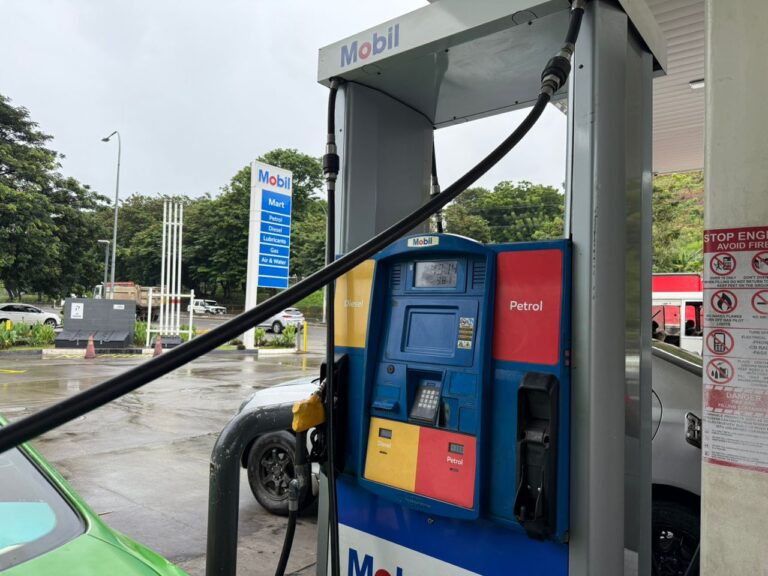
Prime Minister James Marape has assured Papua New Guineans that the government is putting in place emergency standby fuel arrangements and relief measures to shield the country from soaring global oil prices triggered by escalating conflict in the Middle East.
In a statement released yesterday, PM Marape said the government was not taking any chances with fuel security, especially given threats to key shipping routes such as the Strait of Hormuz.
“We are putting in place standby facilities to guarantee fuel security for our nation going forward,” the Prime Minister said.
“In light of what is happening globally, especially in the Middle East, we are not taking any chances.”
Prime Minister, James Marape.
He confirmed that economic and energy officials have been instructed to prepare relief measures, including possible targeted subsidies, to prevent international price spikes from hitting households and businesses too hard.
“Our goal is to ensure that the impact of global fuel price increases is not heavily felt here at home,” PM Marape said.
“We want to maintain fuel prices below the rate of inflation and ensure they remain at a realistic and affordable level for our people.”
The Prime Minister singled out State-owned Ok Tedi Mining Limited and its energy arm for early action, thanking the company for securing additional aviation fuel shipments and maintaining diesel stocks.
“Ok Tedi has moved early to secure additional aviation fuel shipments and, together with existing stocks and fuel already in transit, is helping to ensure continuity of Jet A1 supply for the aviation sector,” he said.
He also revealed ongoing talks with major importers Puma Energy and ExxonMobil to keep fuel flowing and examine cost-containment options.
The statement comes as global oil prices have surged dramatically. Before the latest Middle East flare-up, crude was trading around USD 64 per barrel. It rose to USD 100, then leapt above USD 150 this week, with some market forecasts now pointing towards USD 200.
Economist Paul Barker, responding directly to the Prime Minister’s statement, welcomed the government’s focus but warned that PNG faces serious longer-term challenges if the middle-east crisis drags on.
“It’s important that the PM, Treasurer and team give major focus and preparation on this, to ensure steady supply of needed fuel and to help restrain undue price impacts on consumers, especially lower income earners,” Mr Barker said.
Paul Barker, Economist.
He stressed the need to keep the public calm and avoid panic buying or hoarding, which could worsen shortages.
Barker noted that Ok Tedi has been keeping aviation fuel flowing for months during PNG’s foreign-exchange crunch and earlier disputes with Puma Energy. However, he raised concerns that the mining giant is being asked to step well outside its core expertise.
“There is invariably concern that this mining company may be being asked to diversify its activities well outside its core areas of expertise and focus, at some potential cost to its own functions and perhaps standards,” he said.
On the global picture, he explained that roughly 20 percent of the world’s oil normally passes through the Strait of Hormuz, which is now effectively closed to most shipping except Chinese vessels and some escorted Indian ships. This has thrown supply chains into chaos, with tankers stranded far from usual refineries.
“Prices have risen from about USD64/barrel before the attack was launched, up to USD100, before slightly dropping back… but that was soon shelved with Iran’s threat to close the straits,” Barker said.
“Oil prices this week have leapt above USD150/barrel with supplies offered well above that and forecasts rising over days to USD 200.”
While prices can fall quickly, as they did after the 2022 Ukraine invasion spike, Barker said this conflict shows “no clear path of resolution” and Iran could sustain the threat for a long time.
“PNG can help mitigate costs in the shorter run, but if high prices are sustained, which seems likely unless there’s some constructive breakthrough, it would be challenged to sustain strong counter-market pressure,” he said.
He added that the only silver lining for PNG would be higher revenues from the country’s own gas and oil projects, which could deliver a windfall to the State through taxes and equity stakes.
Meanwhile, the Independent Consumer and Competition Commission confirms that the Middle East crisis has disrupted domestic price hikes. While petrol cost is up by K0.13 per litre and diesel by K0.22 per litre for the month of March, these increases are based on the benchmark prices from February.
ICCC says domestic prices for the next month (April) will see the impact of the current Middle East crisis, and further updates will be released next month given the one-month lag in price calculations.
Community advocacy group ACT NOW! has once again calls on the PNG Forest Authority to publish the complete log export data for 2024 and 2025.
Campaign Manager Eddie Tanago says while the government has promised to ban all round log exports from January 2026, the PNGFA is yet to publish data on log export volumes for 2024 and 2025.
“For fifteen years detailed statistics about the volume of log exported from every logging operation across the country was available from independent monitoring firm SGS. But in 2024 SGS withdrew their services because of a backlog of unpaid invoices.
“Although the PNGFA said it was taking over the monitoring operations, since 2024 not one single report has been published and there is no monthly or annual data available for 2024 or 2025”.
ACT NOW! says with the lack of information available on log export volumes, the public will lose confidence in the Marape-Rosso governments plans to ban round log export.
“The Prime Minister has staked his international reputation on the promise to end all round log exports from PNG, it is therefore essential that PNGFA immediately publishes its data for 2024 and 2025.
In June last year, the PNGFA assured the Parliamentary Special Committee on Public Sector Reform that it would provide regular reports with all the monthly log export volumes from individual logging projects, but nothing has been produced.
ACT NOW! says the lack of log export data reflects a general failure by the PNG Forest Authority to publish even basic information on its management of forest resources.
The Forestry Act says there should be a public register of information on all commercial logging operations and logging permits but it seems this has never been established.
ACT NOW! says the lack of publicly available information on the logging industry and the lack of export data is just one reason why the sector continues to be plagued by widespread illegal logging and presents a major money laundering risk.
This has contributed to PNG’s recent grey listing by the international financial community.
New economic data released on Tuesday shows that Australia’s underlying inflation rate rose slightly in January, putting fresh pressure on the federal government as it prepares the upcoming budget.
According to the Bureau of Statistics, trimmed mean inflation the Reserve Bank’s preferred measure that ignores extreme price swings hit an annual rate of 3.4%. This is a small increase from the 3.3% recorded in December.
While the “headline” inflation rate, which covers all goods and services, stayed steady at 3.8%, the rise in underlying prices suggests that the cost of living remains stubborn.
The biggest factors pushing prices higher in January were, Housing costs, Food prices, Recreation and culture.
Finance Minister, Katy Gallagher said that the end of certain government power bill discounts played a role in the January numbers.
“We did see last month that inflation ticked up a little and we saw largely as a result of some of those temporary energy rebates coming off that influenced those,” she said.
For many Australians, the news is a double blow. Because inflation is staying higher than the Reserve Bank (RBA) would like, experts now expect further interest rate rises later in 2026. The RBA already lifted the cash rate to 3.85% in February.
Furthermore, the spike in costs means that real wages have fallen for the first time in over two years, as paychecks fail to keep up with the rising cost of groceries and rent.
The government is currently finalizing the Federal Budget, which will be handed down in May. Minister Gallagher said these new figures will be a major factor in their planning.
“The job for the government remains the same, being conscious that the decisions we make right for the economic circumstances of the time,” she said.
“So we’ll see what that data says, and we’ll make decisions based around that.”