Category

News

Category

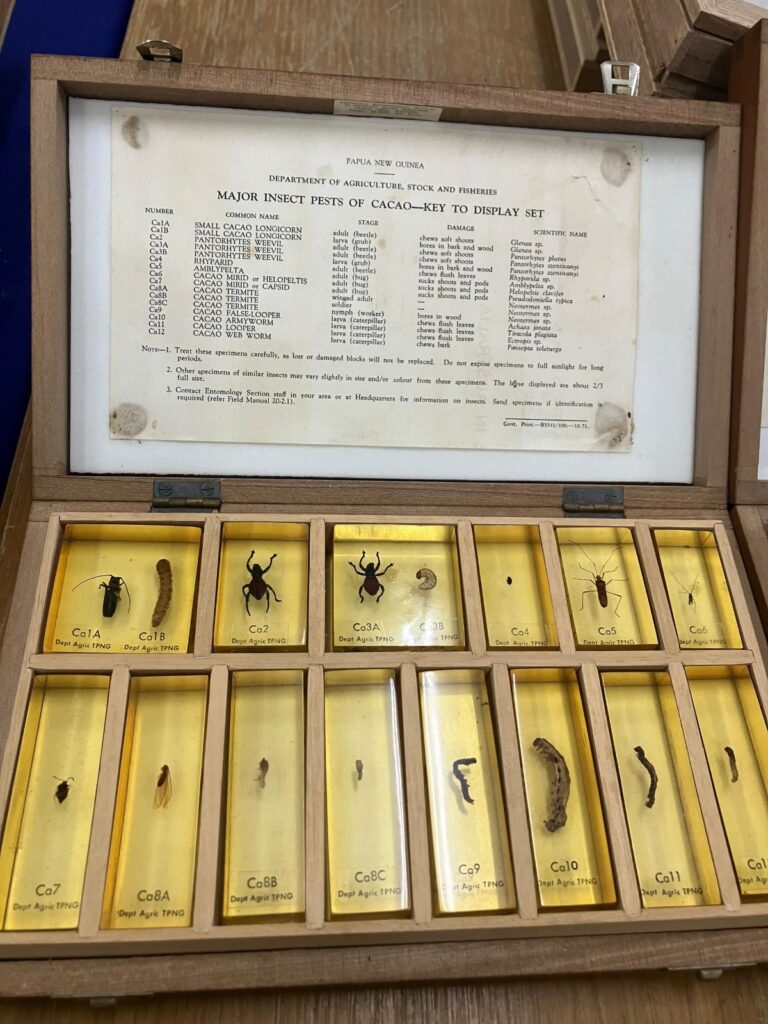
Renovation work has commenced at the National Agriculture Insect Collection Centre (NAIC) in Port Moresby.

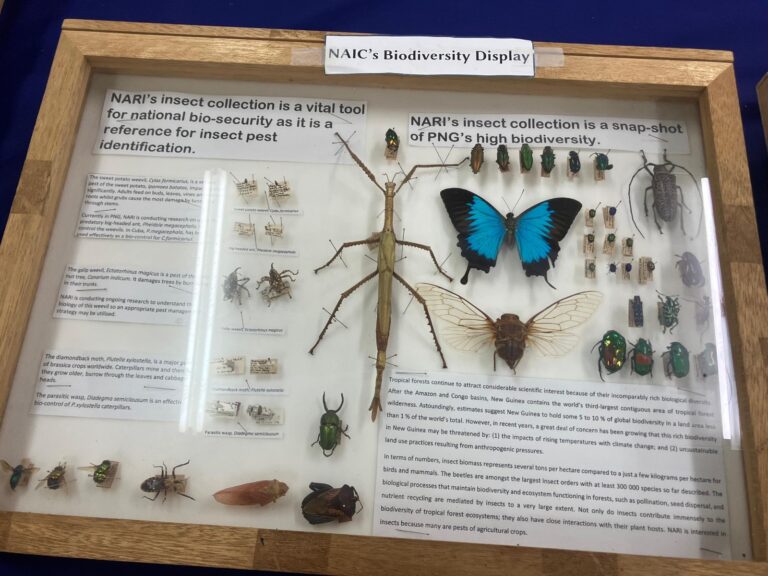
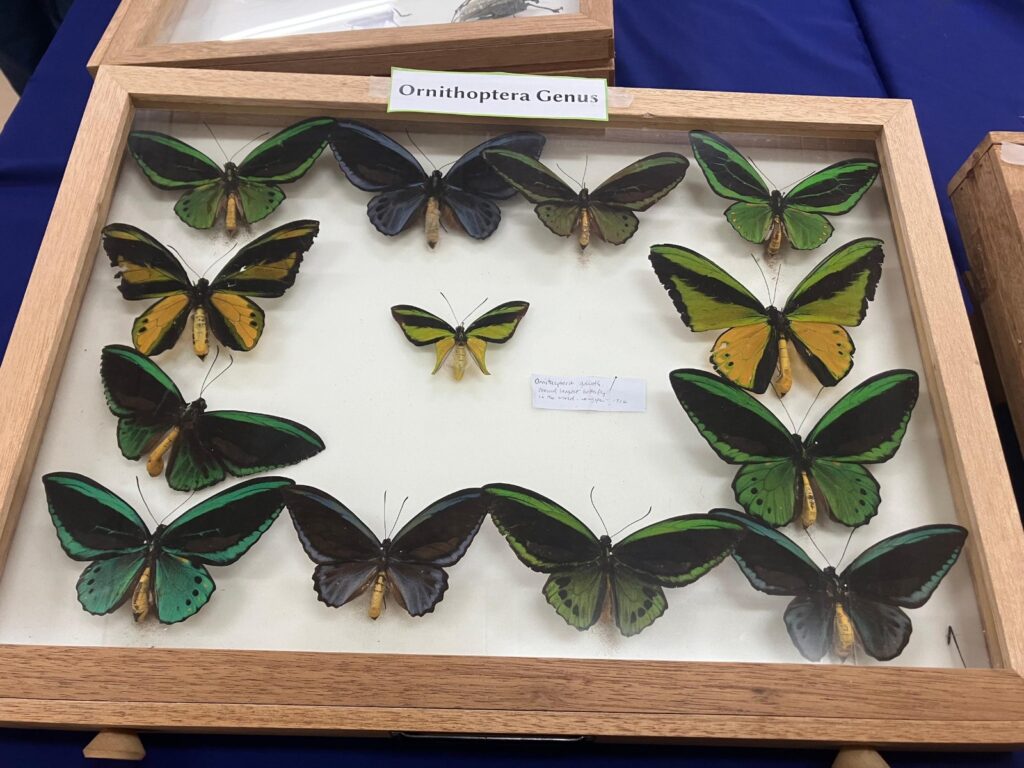
NAIC is an arm of the National Agricultural Research Institute and is the only national centre that houses over 90 000 specimens of insects.

Insect collections are essential for scientific research, education, and conservation efforts. They provide valuable resources for species identification, discovery, and monitoring of insect populations.

Properly preserved and stored specimens can be enjoyed and studied for hundreds of years, contributing to our understanding of biodiversity and the ecological importance of insects.

Development of the NAIC database began in 2018 with recording of 24 035 specimens belonging to 2 183 species from four orders: Lepidoptera, Hemiptera, Hymenoptera and Orthoptera.

The collection has now grown to 96 744 specimens with over sixteen orders.
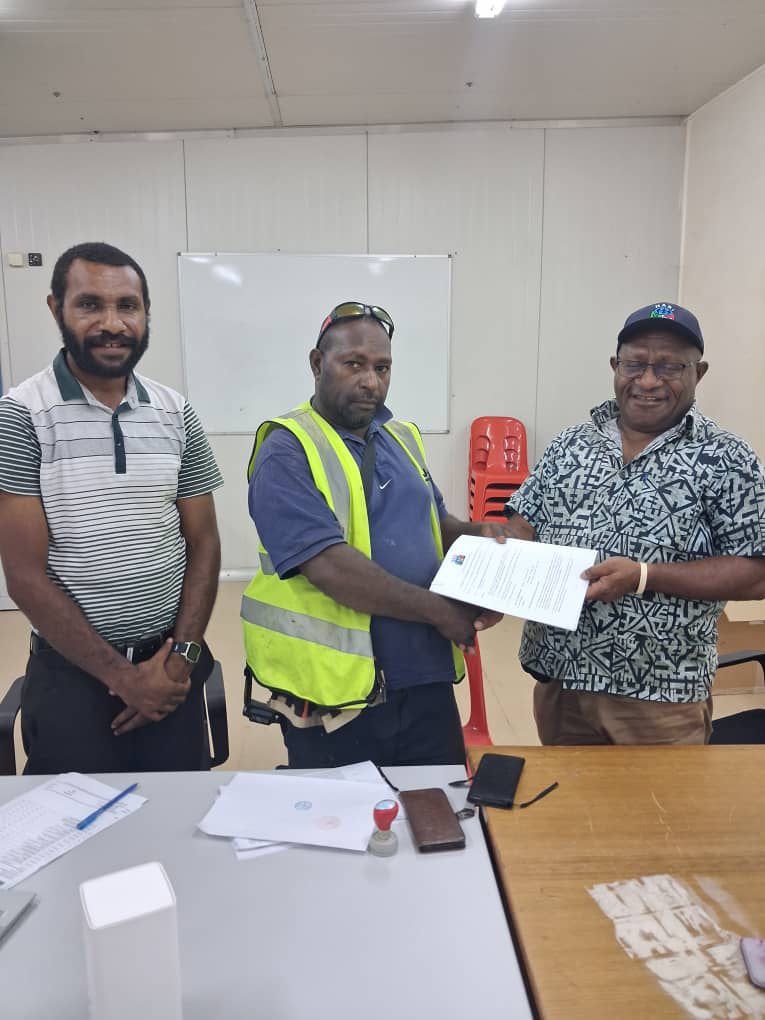
Through a tender process, NARI has awarded the contract to JS Engineering based in Port Moresby to carry out renovation works at the value of K 210,000.

The contractor was selected based on proven record of completing work on time and within budget.

The contract was signed between the contractor and the NARI Management on 2nd February 2026.

The renovation work will include purpose-built rooms to store and preserve insect specimens, work room to clean the specimens and the display room to showcase the specimens.

There is also general work to improve office and rest rooms for staff.

The Institutes Management received full funding in 2025 from the Department of National Planning, under the Public Investment Program (PIP).

Work is set to be completed in April 2026.
Preservation and data collection on the insects found in the country is key in agricultural research work. It helps scientists understand the nature of pest and diseases affecting crops.

Signing the contract on behalf of NARI, was Deputy Director General Dr. Peter Gendua.

Dr Gendua expressed gratitude to the National Government through the Department of National Planning for supporting this small but significant project.
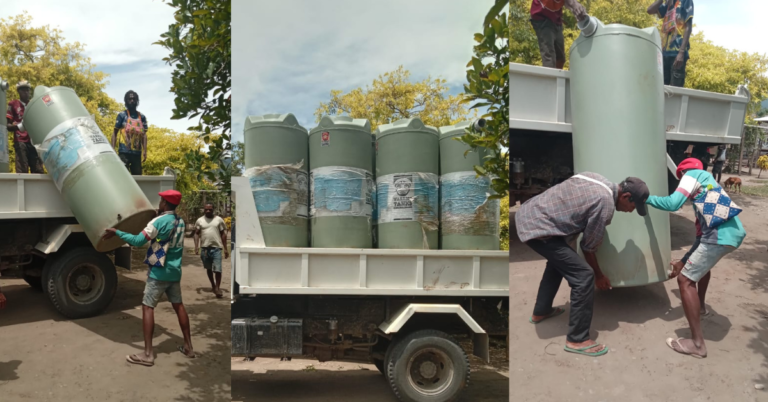
In Morobe’s Huon-Gulf District, a quiet transformation is taking place at the household level. As of February 2026, the District Development Authority has moved into the next phase of a long-term infrastructure plan, delivering 1,000-litre water tanks to families who, until now, have struggled with consistent access to clean water.

This initiative is the second half of a strategic rollout that began in 2024.

Over the last two years, the district distributed roofing iron to families, schools, churches, and health clinics. Now that those structures are complete, the district is following up with the means to make them functional with rainwater harvesting systems.

The rollout is prioritizing communities that have already utilized their previous building materials. This approach ensures that resources are not wasted and that the infrastructure translates immediately into a better quality of life.

The recent milestones include:

 – 10 water tanks delivered to families in need in Wampit.

 – 10 water tanks were delivered to Tararan village on Wednesday (February 4) morning and,

 – Zifasing in the 40 Mile area being identified as the next priority site for delivery.

By linking the roofing program directly to the water program, the district is ensuring that a sturdy roof provides more than just shelter, it provides a sustainable source of life.

Local MP, Jason Peter, who is also the Minister for Community Development, Youth and Religion, emphasized that the program is designed to serve the people for decades, not just months.

“Water is life,” he said.

“After supporting our people with roofing iron in 2024-2025, it is only right that we now follow up with water tanks so families can harvest rainwater and improve their daily living.”

“This support is for families, schools, churches, and clinics, and it will serve our people for many years to come,” Peter said.

For those who have yet to see these materials arrive, the Minister offered a guarantee of continuity.

“Those who did not receive roofing iron in 2024-2025, I want to assure you that distributions will continue this year. Once roofing iron is delivered and buildings are completed, water tanks will also follow to support proper water catchment,” the Minister added.

Managing the logistics of a district-wide distribution requires a focus on fairness. Electoral Team Project Manager, Mr. Bundy, said that the team is tracking which buildings are ready to receive the tanks to ensure the rollout remains efficient.

“Our team is delivering water tanks to communities that have completed their buildings using the roofing iron supplied in 2024-2025. For new recipients this year, roofing iron will be distributed first, and water tanks will follow. This ensures long-term benefits and fair distribution across Huon-Gulf,” Bundy explained.

The districts overarching goal indicates that a coordinated, people-centered approach to development brings health and dignity to the rural corners of Huon-Gulf.


For three decades, the promise of a Central City at Bautama has been little more than a series of groundbreaking ceremonies and stalled dreams. But yesterday, the dust finally began to rise in earnest.

Acting Prime Minister and Minister for Lands and Physical Planning, John Rosso, joined Central Governor, Rufina Peter at Bautama to move past the rhetoric of the past and launch three tangible projects which are, the Bautama Boom Toll Gate, a new Provincial Market, and a Residential Estate.

For the ordinary grassroots workers of Central Province who have long been guests in Port Moresby, this launch represents more than just infrastructure. It is a push for a home they can actually afford.

While this week’s launch marks a fresh start, the ghosts of past plans linger over the site. Former Governor, Robert Agarobe was a fierce advocate for this decentralization, often arguing that Central Province was a “stolen city” because it lacked its own administrative heart.

Agarobe’s vision was grand, a K2.5 billion city that would house the provincial government, a hospital, and a wharf, finally giving the province its own identity. While leadership has changed, the core mission remains, moving the people of Central out of the shadow of the National Capital District (NCD).

During the keynote, Rosso challenged the modern definition of affordable. He noted that while high-end developments target the wealthy, the backbone of the workforce is being left behind.

“People get confused about what affordable means,” Rosso said.

“There must also be options for low-income earners, which is under K100,000.”

He broke down the harsh reality of urban development, explaining that simply connecting power, water, and roads to a single 450-square-meter block costs a minimum of K100,000.

“Our bus drivers, taxi drivers, waitresses, and workers who cannot afford K700,000 homes should have access to allotments in the K50,000 to K100,000 range. That is where government must heavily subsidize infrastructure programs,” he added.

While the idea of Bautama is old, the additions launched this week are specific steps to make the city functional:

The Boom Toll Gate is designed for internal border security and revenue collection to fund provincial services.

The Central Provincial Market is a space dedicated to and for Central farmers to sell produce without the hassle and struggle of traveling into Port Moresby markets.

Residential Estate is the first phase of a housing project aimed at middle and low-income earners, being built in partnership with private developers like YFIG Builders.

The road to this moment has been long. Records show groundbreakings for a Central City as far back as 1995, 1998, and 2007, with much of the early funding vanishing without a trace.

Governor, Rufina Peter acknowledged this history of missed opportunities but insisted the time for delay is over. With K27 million already expended on these priority works and an estimated K300 million needed for the full city vision, the focus is now on transparency.

Rosso concluded with a plea to the traditional landowners to not sell their futures for a quick Kina.

“We must find solutions… so [landowners] do not lose their land. We need the right mix to support landowners, uphold honest government, and put roofs over our people in the name of development.”


A 35-year-old mother has broken her silence on the heartbreaking death of her newborn baby at Angau Memorial Provincial Hospital, alleging a serious failure in duty of care and a total breakdown of clinical protocols.

Elizabeth Narun, a first-time mother, says her daughter did not die suddenly but “deteriorated over time” while she repeatedly begged staff for medical intervention during a four-day ordeal that began on New Year’s Day.

Ms. Narun was 42 weeks pregnant when she was admitted to the Angau Labour Ward at 12:30pm on January 1, 2026. Because she was post-term, her antenatal plan was clear, she was to be assessed and induced if labor did not progress.

“That evening, I was assessed and found to be 1 cm dilated,” Narun wrote in a facebook post that is being shared among users in and around Lae and Port Moresby.

“At that time, my baby’s heartbeat was normal, and movements were good.”

However, the following day, January 2, she claims the documented plan was ignored. Despite her concerns, a different doctor performed an artificial rupture of her membranes.

“I was advised that I would be reviewed at 1:30pm, and that induction would follow,” she said.

That review never happened. Instead, Ms. Narun spent the next 24 hours in a desperate cycle of following up with nurses and midwives who she says showed “no urgency.”

System Under Siege

The tragedy comes as the Morobe Provincial Health Authority (MoPHA) admits the hospital is at a breaking point. In a general statement released this week, MoPHA Chairman David Wissink highlighted a significant funding-to-demand gap.

Angau is currently tasked with an impossible mandate, it is funded as a provincial hospital but acts as the regional referral center for all four provinces in the Momase Region (Morobe, Madang, East Sepik, and West Sepik).

“We are effectively running a national-scale operation on a provincial functional grant that is underfunded and overstretched,” Wissink stated.

He added that healthcare workers are being “asked to do the impossible with limited resources.”

“No Mother Should Have to Beg”

By the morning of January 3, the doctor who authored the original report identified a “serious error“, Ms. Narun had been wrongly transferred to the antenatal ward. Though augmentation was ordered, Ms. Narun says she waited another full day with no action.

Induction finally began at 4:24am on January 4. By then, a stress test showed the baby was in distress. While waiting for an emergency Cesarean section, Ms. Narun went into spontaneous labor.

“My baby required resuscitation at birth, cried, and was placed on oxygen,” she recalled.

“That was the last time I saw my baby breathing.”

At 2:30 pm, she was told her baby had died in the NICU.

A Call for Accountability

Distraught but determined, Ms. Narun said she is sharing her story not to cause outrage, but to ensure no other mother has to experience her pain.

“No mother should have to beg for care. No family should have to beg for answers,” she said.

“My baby did not die suddenly. This occurred in the context of missed induction and significant delays in care.”

As the MoPHA calls for a National Funding Realignment to address the regional pressure on Angau, Ms. Narun is simply asking that her daughter’s life be recognized.

“She was loved, and she deserved better,” she said. “My baby mattered.”


LAE, MOROBE PROVINCE – Joshua Kepas, a 28-year-old father of two residing in Lae, has raised alarms over critical medicine shortages at Angau Memorial Provincial Hospital. Mr. Kepas told InsidePNG that his family was forced to rush to a local shop last night to purchase Panadol for his elder sister, who is currently admitted at the facility after suffering severe stomach pains on Monday.

According to Mr. Kepas, the family only discovered the shortage when a senior health officer prescribed the basic painkiller as part of her treatment, noting that the hospital had no stock available. This forced the family to travel to the Food Mart shop in town to secure the medication themselves.

Beyond the lack of medicine, Mr. Kepas described a dire situation within the hospital’s walls. He reported that the Accident and Emergency area was heavily congested, with very sick patients and their guardians forced to sleep on hospital floors and benches in the triage and outpatient sections.

He characterized this level of overcrowding and the scarcity of essential drugs as a significant failure of government priorities.

Kepas speaks of medicine shortages at Angau Memorial Provincial Hospital.
Picture of Joshua Kepas, Lae Resident.

The current crisis persists despite local efforts to bridge the gap. In December of last year, the Lae City Authority assisted the hospital with K200,000 worth of medical supplies to combat a nationwide shortage. This support is part of an ongoing initiative by Lae MP and Deputy Prime Minister John Rosso.

However, Mr. Kepas argued that while such donations provide brief relief, they are merely temporary fixes for a massive systemic problem. He warned that unless the government prioritizes healthcare funding and the Morobe Provincial Health Authority ensures effective management, more lives will be lost to diseases that are otherwise curable.

Angau Memorial Provincial Hospital serves as the primary referral center for Morobe’s ten districts and the Highlands region. It also houses the National Cancer Unit, which provides specialized care for patients from across Papua New Guinea.

The facility currently operates under the management of the Morobe Provincial Health Authority.


DAVOS, Switzerland – Prime Minister James Marape has positioned Papua New Guinea (PNG) as a premier destination for global capital, highlighting the nation’s strategic neutrality and consistent economic growth during the 2026 World Economic Forum (WEF).

Speaking on a high-level panel titled “Where are we with emerging markets?”, Marape highlighted PNG’s unique ability to thrive despite escalating geopolitical tensions in the Pacific region.

Addressing a global audience of business leaders and policymakers, the Prime Minister emphasized PNG’s role as a diplomatic and economic bridge.

“Papua New Guinea is placed in the middle of East and West, with our cultural affinity to the east and our democratic style of government with the west.”

He reaffirmed the nation’s steadfast foreign policy, which he credited for maintaining a stable investment climate in the five years following the COVID-19 pandemic.

PM James Marape speaking on a panel discussion in Davos, Switzerland.
Prime Minister James Marape at the 2026 World Economic Forum in Davos, Switzerland.

“The government of PNG tries its best to walk the fine line, with the foreign policy of ‘Friends to all and enemies to none’, developing a fine balance with how we relate as an emerging economy in the last five years after COVID.”

The Prime Minister presented a robust balance sheet for the PNG economy, noting that the country has defied global downturns through disciplined fiscal management and a pivot toward the non-resource sector.

“We have posted above 4 percent growth consistently for the first time in the last five years and kept inflation below the running average for the last 50 years.”

“Diversifying away from our traditional anchor economy area in mining and petroleum and shifting to the non-resource sector economy.”

To illustrate the country’s reliability, Marape pointed to the success of major energy players TotalEnergies and ExxonMobil. He highlighted a significant milestone for the nation’s premier LNG project as evidence of PNG’s maturity as a borrower and partner.

“ExxonMobil has operated our biggest LNG project since 2008 with first export in 2014. Seventy (70) percent of the $22billion project was bank financed and recently, that has been retired six months earlier.”

Marape concluded his address by advocating for a shift in global investment patterns toward Southeast Asia and the Pacific. He defined emerging markets as the home of fresh capital that flows toward opportunity whenever traditional markets become restricted.

“In my view, emerging markets are where fresh capital is, capital that knows no boundaries and that capital will flow elsewhere in cases where markets are squeezed or economic focus is restricted.”


The National St John Ambulance has entered a new era with the appointment of Kai Tane as Chief Executive. Following a rigorous selection process, the National St John Council confirmed that Tane officially took the helm on November 17, 2025, bringing nearly twenty years of experience as a paramedic and health sector leader to the role.

Council Board Chair, Isikeli Taureka expressed high confidence in the appointment, noting that Tane’s background in clinical excellence and senior governance is vital for the organization’s future.

“We are confident that Kai Tane will lead National St John Ambulance with integrity, vision and a strong focus on service excellence. The Council looks forward to working closely with him as we continue to serve the communities across the country,” Taureka said.

The transition follows the interim leadership of Dr. Arabella Koliwan, whose contributions were warmly acknowledged by the board.

“Dr. Koliwan provided steady and effective leadership that ensured continuity for the organization, and we thank her sincerely for her contribution,” Taureka added.

With the formal announcement now public, the Council, staff, and volunteers have welcomed Tane as they look toward a new chapter of service for the people of Papua New Guinea.


Ok Tedi Mining Limited (OTML) has released its 2025 financial results, recording unaudited revenue of K9.3 billion (US$2.3 billion) and a dividend payout of K1 billion to Papua New Guinea.

The state-owned miner exceeded its production targets for the year, yielding 106,018 tonnes of copper, 298,350 ounces of gold, and over one million ounces of silver. These results follow a two-year strategic shift aimed at tightening operational execution across its sites.

The financial report highlights a reduction in company debt, which fell from K709million in 2023 to K370million by the end of 2025. This fiscal tightening occurred alongside K1.09 billion in tax payments and K178 million in royalties.

 The company also directed K766 million toward the Tax Credit Scheme and K37million into training programs.

While the figures show growth, the year was not without difficulty. OTML faced several operational setbacks, including power-related disruptions and infrastructure challenges. Management attributed the ability to maintain performance levels to revamped planning and the execution of major project shutdowns.

Expansion remained a key part of the year’s activity, marked by the acquisition of the Misima Gold project and the growth of Ok Tedi Energy.

These moves are part of the company’s “Growth 2050” strategy, which seeks to extend the mine’s relevance in the national economy.

Managing Director and CEO Kedi Ilimbit said that the year’s outcomes were a testament to the workforce’s performance.

“2025 has been another exceptional year for Ok Tedi. Our strong performance reflects the discipline, commitment, and professionalism of our workforce and reinforces the value of operating a 100% PNG owned mining company for the benefit of our people,” Mr. Ilimbit said.

Looking toward 2026, the company has adopted Disciplined Delivery as its internal theme, signaling a focus on maintaining safety and operational reliability as it continues its long-term expansion plans.


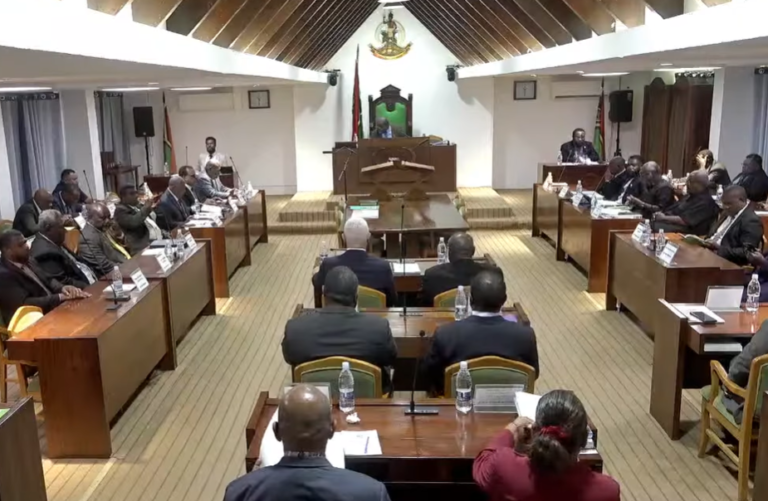
After surviving its first year intact following the 2024 earthquake election, Prime Minister Jotham Napat’s coalition enters 2026 with rare momentum. Despite defeating a no-confidence motion and settling long-standing teacher pay disputes, the government faces mounting pressure to clean up state institutions.

The Year of Records

The Napat administration’s first year was marked by high-stakes wins and legislative activity:

  • Climate Leadership: Won a historic ICJ advisory opinion on climate justice.
  • Labor Peace: Signed a VT4.25 billion deal to resolve teacher salary grievances.
  • Judicial Rigor: Successfully applied the 2023 Electoral Act to replace a convicted MP without a by-election.

The Shadow of the “Golden Passport”

The primary threat to public trust remains the Commission of Inquiry report into the citizenship-by-investment scheme. Despite the report being finished, the government’s silence has fueled rumors of a political house of cards.

“The public remains in the dark… poor regulation produces internationally embarrassing headlines.”

Demands for Reform

As the 14th legislature moves forward, critics are calling for three specific shifts:

  1. Legislative Transparency: In 2025, nearly 300 new laws and regulations were passed, yet few reached the public or the Parliament website.
  2. Public Service Accountability: Leaders are calling for an end to “nepotism and inefficiency.” Despite orders to stay open, many offices still close for lunch, hindering revenue.
  3. Constitutional Consistency: High-level errors, such as a discriminatory by-law banning menstruating women from markets, highlight a need for better legal vetting at the State House.

The Road Ahead: 2026 and Beyond

While Vanuatu has avoided the democratic retreat seen in other parts of the world, its future depends on whether the Napat government chooses transparency over secrecy. With President Nikenike Vurobaravu’s term ending in 2027, the “mutual accountability” between the State House and the legislature will be tested.

As media veteran Moses Steven noted, the nation requires “a new mentality to serve the public.” If the government can release the citizenship report and overhaul the civil service, 2026 could mark the end of a decade-long decline in public trust. If not, the current stability may prove to be a temporary calm before the next political storm.


Source: Devpolicy Blog (devpolicy.org), from the Development Policy Centre at The Australian National University.

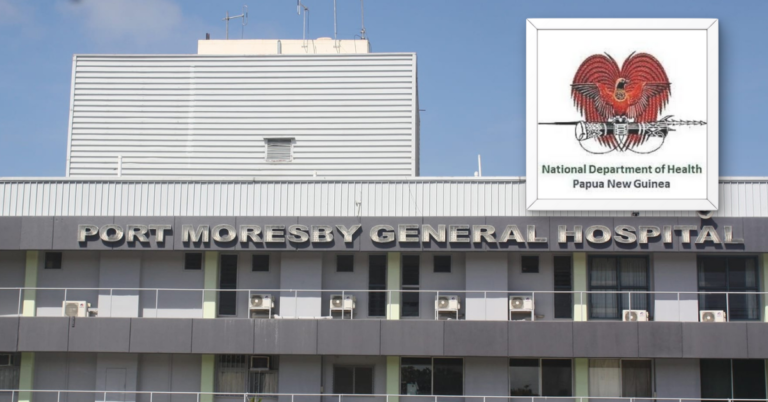
Health authorities have issued a nationwide alert following a rise in Influenza A (H3N2) cases, triggering a high-level response from the National Department of Health (NDoH). The surge, confirmed through laboratory testing at the PNG Institute of Medical Research (IMR) in Goroka, comes as the health sector undergoes a major leadership transition and receives a historic K3.21 billion funding boost in the 2026 National Budget.

Stability and “Over-Drive” in Health Leadership

The outbreak has become an immediate priority for newly reinstalled Health Secretary Pascoe Kase, who officially took office on January 8, 2026. Addressing the department during a handover ceremony, Kase acknowledged the immense pressure on the system but promised a swift return to operational efficiency.

“As Secretary, I will provide the much-needed leadership to bring stability and normalcy back to the Health Department,” Kase stated.

“The issues of trust, disharmony, accountability, and poor performance will be addressed immediately.”

The shift in leadership is supported by Health Minister Elias Kapavore, who has ordered the sector to “shift gears”, to meet national health targets. Kapavore highlighted that the government is backing this mandate with significant resources, including a 15.8% increase in the 2026 health budget to strengthen infrastructure and medical supply chains.

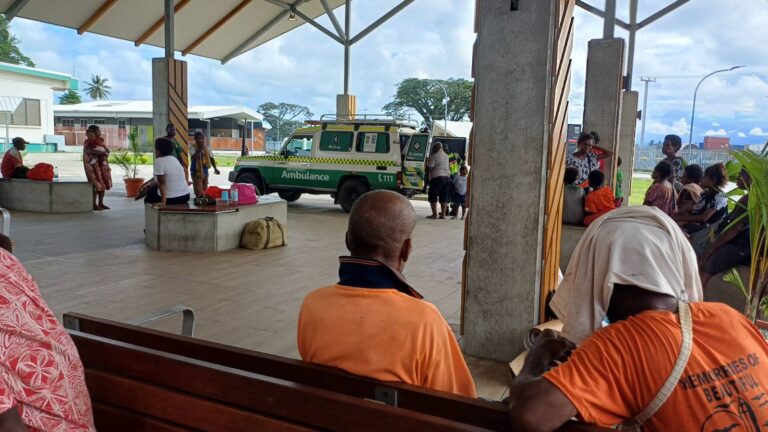
The impact of the virus is being felt most acutely in urban centers. In Lae, the Morobe Provincial Health Authority and Angau General Hospital report a “noticeable rise” in patients presenting with flu symptoms.

Dr. Kipas Binga, CEO of the Morobe Provincial Health Authority, said surveillance teams are monitoring the situation closely. While the influx of patients is significant, Binga reassured the public that the illness is currently manageable.

To date, officials have confirmed that the outbreak is “not a case for concern” regarding fatalities.

Public Health Advisory: Protecting Your Family

The Department of Health is emphasizing community-led prevention to curb the spread of H3N2. Officials advise all citizens to maintain strict hygiene, including frequent handwashing with soap or alcohol-based sanitizers after being in public areas or using PMVs.

The health message is clear: Practice respiratory manners by covering your mouth with a tissue or elbow when coughing or sneezing. To protect the wider community, anyone feeling unwell is urged to stay home from work, school, or local markets. Avoiding crowded and poorly ventilated areas is also highly recommended.

Home Care and Seeking Medical Help

For those experiencing mild symptoms, the NDoH recommends prioritizing rest and hydration through water, lemon tea, and clear soups. Traditional remedies like hot water steaming are encouraged to clear congestion. While paracetamol can be used to manage fever and body aches, authorities warned against self-medicating with antibiotics, which are ineffective against viral infections.

Families are urged to monitor vulnerable members, including the elderly and young children. Medical help should be sought immediately if a patient experiences shortness of breath, chest pain, or persistent confusion.


Pin It