Category

News

Category

Prime Minister, James Marape has issued a stern directive to Papua New Guinea’s public sector, calling for a total “reset” of the government machinery as the nation transitions from its Golden Jubilee celebrations into its 51st year of independence.

Speaking ahead of tomorrow’s Public Service Opening and Dedication Service, the Prime Minister emphasized that the event is a mandatory call to action for all Ministers, departmental heads, and public servants, rather than a mere ceremonial tradition.

A Shift from Celebration to Delivery

Following the conclusion of PNG’s 50th Independence Anniversary, Marape signaled that the period of national festivities has ended, and a period of aggressive implementation must begin.

“We have celebrated our past. Now we must build our future,” the Prime Minister stated.

“Our people have given us a mandate. Our development framework is clear. Our priorities are set in MTDP IV. There is no excuse for delay, confusion or complacency.”

The Prime Minister’s remarks highlight a sense of urgency, noting that the country’s success depends on the efficiency of its workforce. He warned against the loss of productive time to “unnecessary delays” and “inefficiencies,” stressing that the responsibility of nation-building extends beyond the executive level.

“When it is work time, it must be work time,” he said.

“This country cannot be built by just the Prime Minister, Ministers or department heads. It must be built by every officer, from the highest executive to the front-line public servant.”

The “Critical” 20-Year Window

The Prime Minister framed the current era as a pivotal 20-year phase that will ultimately define the country’s trajectory for future generations. He identified this period as the window in which PNG must maximize economic growth, bolster infrastructure, and eradicate systemic corruption.

“The next 20 years will decide everything; how big our economy becomes, how strong our infrastructure is, how safe our communities are, and how clean and efficient our public service will be,” Marape said.

“This is when we must grow our economy the fastest, build our infrastructure the greatest, strengthen our law-and-order system, protect our sovereignty, and eliminate corruption.”

Accountability and Action

Central to this vision is the performance of the public service. Marape noted that while policies are firmly in place through the Medium Term Development Plan (MTDP) IV, the burden of proof now lies in the execution of those plans.

“Every ministry, every department, every agency already knows what it must do,” he said.

“Our national priorities are clearly set out in MTDP IV. We do not need more talk. We need action.”

Tomorrow’s dedication service in Port Moresby is expected to see full attendance from government leadership and board members of State-Owned Enterprises, serving as the formal launch of what the Prime Minister described as the “next leg” of the national journey.

“This is our reset moment,” Marape concluded.

“The work starts now. The expectations are high. And every public servant has a role to play.”


Sparks are flying on social media as a viral video creates a whirlwind of debate around Papua New Guinea and its vast linguistic landscape.

At the center of the storm is a reel uploaded by global influencer Yuji Beleza, who, during his travels in Japan, crossed paths with Papua New Guinean, Joseph Baki Kaore.

As is the nature of Yuji’s content, he asked Kaore to say something in his native language so Yuji could try to guess its origin. Kaore warned Yuji that it might be a difficult guess, but proceeded to give it a try.

@yuji_beleza

Final Language Boss 🇵🇬 . Papua New Guinea has the most languages in the world. There are nearly 850 languages. 10% of the world’s languages are in Papua New Guinea 🇵🇬 . #papua #africa #japan #papuanewguinea #languages

♬ original sound – yuji_beleza

“Rabirabi namona,” Kaore answered. A greeting in the Roro language of the Kairuku District in Central Province.

This simple exchange has seen many Papua New Guineans sharing conflicting opinions. A large segment of the audience argued that Kaore’s response did not represent the “main” language of the country, suggesting he should have spoken in Tok Pisin, the most widely used vernacular in Papua New Guinea.

Others, however, stood by Kaore. They pointed out that as a man hailing from Kairuku, a district in the Central Province, he correctly answered in his local Roro dialect. This highlights a crucial distinction: while Tok Pisin is one of Papua New Guinea’s three official recognized languages, it is not an indigenous language in the same way Roro is. Tok Pisin evolved originally as the local creole but languages like Roro are the ancient, rooted identity of the people and the land itself.

Diversity as Strength, Not Conflict

This debate is, in many ways, nonsensical. Papua New Guinea is the most linguistically diverse nation on earth, boasting over 860 distinct languages. The argument over which language “best” represents the country ignores the very fact that defines us.

One single language cannot be the defining tongue of Papua New Guinea because our 1,000+ tribes are built on the foundation of 860+ different ways of speaking.

This viral moment serves as a call to action for the people of Papua New Guinea. Rather than disputing which language is ‘official’ enough, the nation should celebrate this as a victory for all 860+ voices on the global stage. True national identity is found in honoring every local dialect and recognizing that our beauty lies in our complexity, not in a forced uniformity.

Beyond Words: The Greeting Controversy

It wasn’t just the spoken words that were scrutinized. Another point of contention was the greeting Kaore displayed, a respectful act where two people touch foreheads.

Joseph Kaore showing Yuji Beleza how people greet eachother in the Kairuku way.

Critics online (largely uninformed) were quick to claim this gesture resembled the Hongi of the Māori culture. However, this form of greeting is traditional practice in the Kairuku culture of the Central Province, as well as several cultures in the Gulf Province.

Rather than labelling this gesture as pirated from Māori culture, it should be viewed as a testament to the deep cultural ties among Pacific nations. While we are geographically spread across the ocean, we share deep ancestral roots and a Pacific history that naturally results in cultural similarities.

A Call for Cultural Education

Instead of dividing ourselves through debate, this viral moment should be viewed as an opportunity to learn. It is a reminder that as people coming from such a diverse background, more education is needed regarding our own neighbors’ customs.

While schools host annual cultural shows and traditional dances are showcased every September 16th for Independence Day, we must ask: Is this enough?

Is enough being done to preserve PNG’s unique dialects and traditions, or is the country falling prey to the homogenizing influence of the Western world? When a “standard” identity is favored over tribal roots, people risk losing the very things that make them unique.

While the world marvels at Papua New Guinea’s diversity in language and cultures, Papua New Guineans must also improve their knowledge about other Papua New Guinean cultures to be able to tell the world about them.


More than half a million accounts have been wiped from Facebook, Instagram and Threads since under-16s were banned from social media in December.

Meta, the tech giant behind the three platforms, said it had removed 544,052 accounts belonging to teens in a compliance update a month after the ban came into force on December 10.

Between December 4 and 11, Meta said it took down 330,639 Instagram accounts, 173,497 Facebook accounts, and 39,916 Threads accounts it believed belonged to those under 16.

Teenagers are also banned from using other platforms such as TikTok, Snapchat, X, Reddit, Kick, and YouTube, with the onus on tech giants to detect and deactivate accounts.

Fines of up to $49.5 million apply if they fail to take “reasonable steps” to remove under-16 users.

Communications Minister Anika Wells said the ban would protect children from online harms and the negative impact of addictive algorithms.

“With one law, we can protect Generation Alpha from being sucked into purgatory by predatory algorithms described by the man who created the feature as ‘behavioural cocaine”,” she said in a National Press Club speech before the ban’s launch.

In its update, Meta took aim at the ban, arguing it failed to increase the safety and wellbeing of young Australians as they could still use platforms like YouTube in a logged-out state.

“The premise of the law, which prevents under 16 year-olds from holding a social media account so they aren’t exposed to an ‘algorithmic experience’ is false,” the tech giant said.

“Platforms that allow teens to still use them in a logged-out state still use algorithms to determine content the user may be interested in – albeit in a less personalised way that can be appropriately tailored to a person’s age.”

App stores should be required to verify age and obtain parental consent before children can download any app, Meta said.

“That is the only way to guarantee consistent, industry-wide protections for young people … and to avoid the whack-a-mole effect of catching up with new apps that teens will migrate to,” it said.

Prime Minister Anthony Albanese has said the rollout wouldn’t be perfect but other countries were following in Australia’s footsteps.

“It won’t be perfect because this is a big change,” he said before the ban kicked.

“I’ve been asked … what will success look like? Success is the fact that it’s happening. 

“Success is the fact that we’re having this discussion, parents are talking to their children around the breakfast table.”

Meta wants the government to engage with tech companies to “find a better way forward” including incentivising industry to raise the standard in providing safe algorithms.


Copyright @ AAP 2026

Perhaps not surprisingly, 45-year-old Venus Williams views age as just a number.

The seven-time grand slam champion will this month become the oldest woman to feature in the main draw of the Australian Open, after being granted a wildcard.

Williams, who hasn’t played outside North America since 2023 having battled health and injury problems, is also competing in the Hobart International starting Monday.

Ranked 582, she played Auckland last week and took a set off world No.52 Magda Linette in an opening-round loss.

“(I’m) hitting the ball so well. Had a lot of opportunities to take control of that match and let some slide away,” Williams said in Hobart on Sunday.

“It’s great to be in those positions to actually cross the line. I can’t expect to be perfect … as much as I want to be.”

Williams has played more than 1000 top-level singles matches since turning professional in 1994 as a 14-year-old and spent 11 weeks at world No.1.

Williams and younger sister Serena, the winner of 23 grand slam singles titles including seven Australian Opens, have been credited with redefining women’s tennis and attracting new audiences.

The veteran now comes up against players more than half her age who have grown up with modern string and racquet technology.

“I feel like Serena and I were part of a big change in women’s tennis. Over time too the equipment has changed,” Williams said.

“I’ve had to adjust my game based on (things like) new strings. I think I’m a student of the game, I like to watch and learn from other players.

“(But) when you walk on the court, I’m so focused on what I want to accomplish. Winning and losing knows no age.”

Williams hasn’t played in Melbourne, where she made the final in 2003 and 2017, for five years and will break the age record set by 44-year-old Kimiko Date in 2015.

She was coy on whether it would be the last time people would see her on Australian soil.

“I don’t know and even if I did know I wouldn’t say. Right now I’m focused on the moment,” she said.

In her first visit to Tasmania, wildcard Williams will meet fellow veteran, 38-year-old German world No.43 Tatjana Maria, in the Hobart first round.

“When I first got here … in the air you could smell eucalyptus and I was like ‘this is my place’. I was like, we’ll get my passport changed,” she joked.

She said she was hoping to draw on the rage of Serena, who lost in the quarter-finals in Hobart in 2007 before going on to win her third Australian Open title.

“I remember how upset she was, I’ll never forget that,” Williams said.

“She was able to channel all that … to being able to play well in the Australian.”

Williams returned to the tour in July less than a year after having surgery for uterine fibroids and said her motivation remained high.

“It’s a beautiful sport. I love what I do and it’s a blessing and honour to keep doing it,” she said.


Copyright @ AAP 2026

If you think you’re paying too much for a cup of coffee, there’s good news and bad.

The positive is that the extraordinary spike in the cost of beans, which caused cafes and supermarkets to increase prices in the past two years, has stabilised.

Drought in Brazil, the world’s dominant coffee grower, led to an 86 per cent spike in Arabica bean futures – the benchmark price for wholesale importers – since the start of 2024, Rabobank commodities analyst Paul Joules says.

As conditions gradually recover, prices have retreated from the record highs of about $US4.20 a pound in February 2025 to about $US3.70 a pound, and Mr Joules expects further falls by the end of 2026.

The bad news is that this doesn’t mean consumers will be paying any less for a cup of java any time soon.

Ben White, national sales manager at specialty roasters Padre Coffee, warns coffee drinkers should expect cafe prices to rise another $1 to $1.50 this year.

Commodity prices are still much higher than the pre-2024 average, which rarely climbed above $US2 a pound.

Even if they return to those levels, other cost pressures have been unrelenting.

For Padre, which operates five cafes across Australia and a roasting operation, raw beans account for approximately two-thirds of the cost of producing a bag of roasted coffee, with other inputs such as rent, electricity, wages and packaging comprising the remainder.

Then there’s the cost of turning the roasted beans into a cup of coffee, which means more variable costs such as milk and disposable cups, and overheads including electricity, rent and capital expenses.

“Profits have been absolutely squeezed for cafe operators,” Mr White says.

Coffee prices have undoubtedly risen as a result but despite apocalyptic warnings that Australians will soon find it hard to buy a coffee for single figures, they have not kept pace with costs.

The cost of an average flat white rose about 10 per cent nationwide between 2023 and 2025, according to digital payments data retrieved from cafes across Australia by point-of-sale software provider Square.

In Sydney, a flat white cost about $5.04 on average in 2025, up from $4.61 in 2023. 

Cafes have suppressed price rises amid tepid demand and high competition, which has seen profit margins fall from about 3.5 per cent to less than 2.5 per cent, Australian Restaurant and Cafe Association chief executive Wes Lambert says.

“This is putting a lot of pressure on the industry and the cafe segment in particular, and that’s leading us to see, according to CreditorWatch, one in nine cafes and restaurants going into liquidation in the past 12 months,” he says.

“Ultimately, unless demand increases or prices increase, the industry is going to stay in the doldrums when it comes to profitability.”

Consumers will essentially have to decide on a trade-off between low prices and quality of product and service, Mr White says.

“There’s always going to be a customer base that is price-conscious but ultimately we’ve identified that quality is a really big factor, as well as that customer experience,” he says.

It’s a similar story for chocolate makers, although relief for the industry might come sooner.

Cocoa futures shot up at the start of 2024, amid similar weather disruptions in West Africa, where the bulk of beans are produced.

After peaking at about $US12,000 a tonne, wholesale prices are back down to about $6000 a tonne following an aggressive supply response by growers, including ramping up fertilisers and pruning to boost yields, Rabobank’s Mr Joules says.

Because cocoa and coffee trees take a relatively long time to cultivate compared to other agricultural commodities such as wheat, supply chains are particularly susceptible to inclement weather and shortages take a while to resolve.

Mr Joules isn’t expecting the cocoa market to return to surplus until the 2026/27 season.

Currently, prices remain about two to three times the long-term average.

Independent chocolate makers like Li Peng Monroe and Peter Channells of Canberra-based chocolatier Jasper and Myrtle are particularly susceptible to price fluctuations.

The pair are relatively lucky to have missed out on the worst of the price spike.

They ordered their last major shipment of 150 tonnes of cocoa beans from Bougainville in Papua New Guinea in 2023, when prices were about half what they are now.

But if prices remain at current levels when they need to restock at the end of this year, the viability of the business will be at risk.

“Obviously, I’ve got to find the capital to pay for the shipment, and it’s not tens of thousands – they might be hundreds of thousands (of dollars), so not many small businesses will have that kind of money sitting around,” Ms Monroe says.

Given chocolate makers are also facing the same inflation pressures in their overheads as cafes, Mr Channells says he can’t imagine any producers dropping prices

Growth should at least stabilise now the worst of the supply challenge is over.

“But the chocolate system is highly dependent on what happens in West Africa and that can turn on a dime at any minute,” he says.


Copyright @ AAP 2026

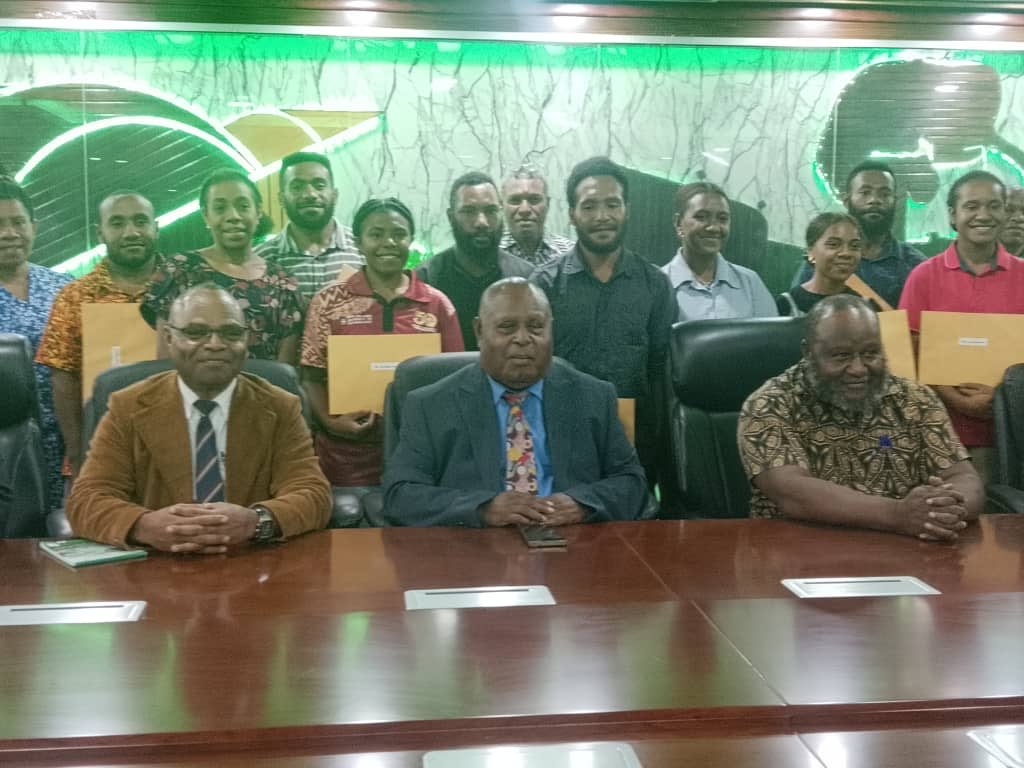
PNG Forest Authority Acting Managing Director, John Mosoro presented Professional Work Experience Certificates yesterday (January 7) to 15 students from the University of Technology  studying the Bachelor of Science in Forestry Degree program.

Eight young men and seven women took part in a 24 -day training program under various directors at the Forest Authority Headquarters in late November and December last year (2025).

Mr Mosoro congratulated and encouraged the students to utilize what they have learnt.

PNG Forestry Executives and Unitech Forestry Students
PNGFA Acting MD, John Mosoro (Centre).

He explained to the students before presenting the certificates that forestry plays a key role in PNG’s development and must not be isolated from other sustainable resource sectors.

” I want you to have a different mind-set towards the forestry sector, forestry is not just about timber and log exports, it is about our people and welfare and how they can benefit from their resources.

Forestry must not be isolated in PNGs development, it is integrated into the Medium Term Development Strategy Plan and Vision 2050.

” Forestry and PNGFA play a key role in the development of PNG. We assist and give licenses to landowners to develop their resources and gain economic and other benefits as well as open up road links to rural parts of PNG under the Connect PNG programme, ” Mr Mosoro said.

He assured the students that PNGFA will recruit the best by merit. They will be sent out to the field under different directors initially to gain hands on experience and build up their careers in forestry and other sectors.

“I want to groom up and coming young minds. I want the best in forestry and will employ by merits, ” Mr Mosoro said.

One of the student trainees Miss Mona Lisa Ten said it was a privilege and wonderful to gain professional work experience at PNGFA.

” At Unitech we learn out of text books. We do not get hands on experience. This 24-days with the PNGFA directors was an insightful and eye opening experience. It was a wonderful experience, I would be happy to be employed by PNGFA and start out on the field, ” Miss Ten said.


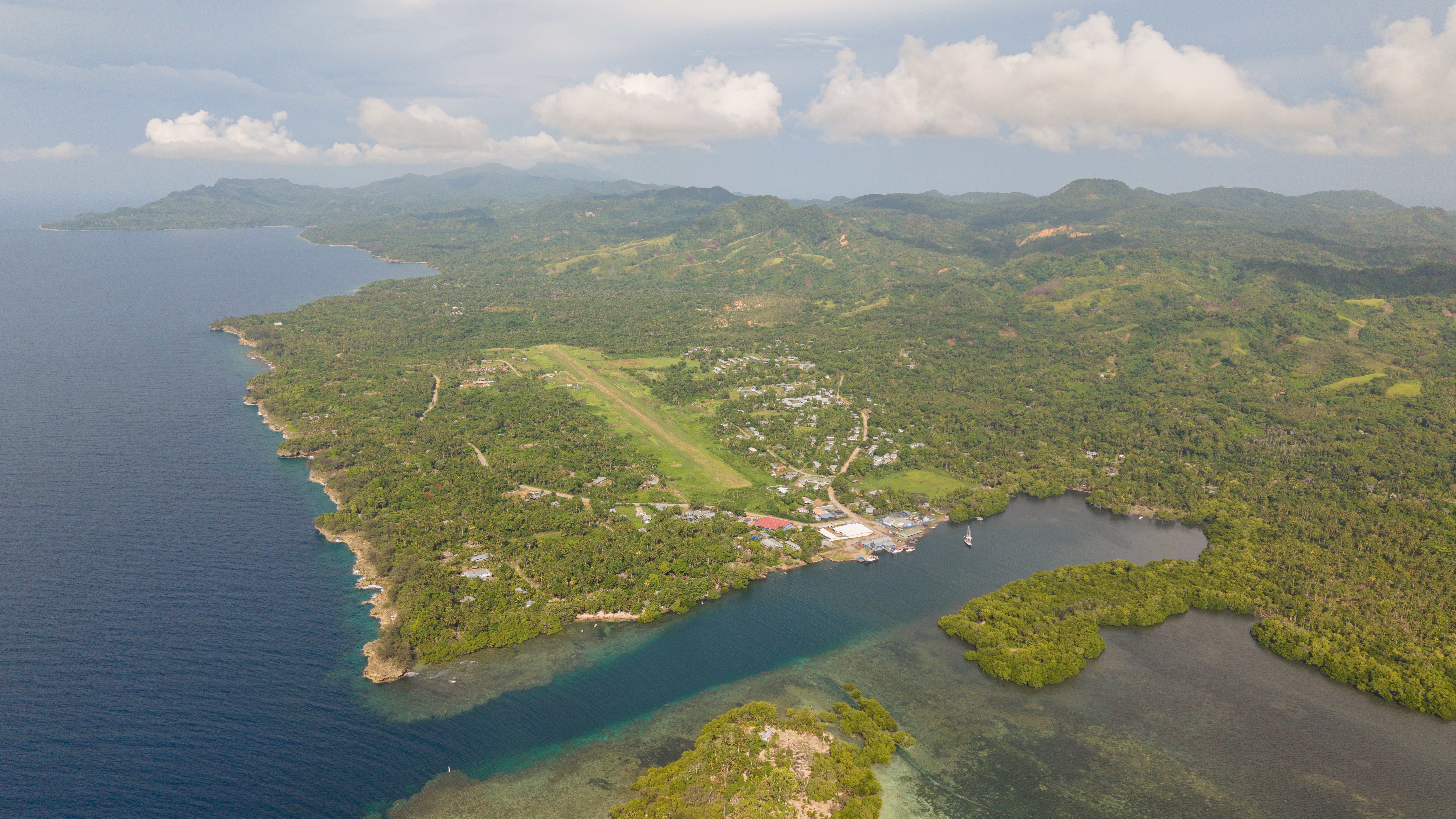
A new era of economic opportunity is on the horizon for the people of Misima. Following its acquisition of the Misima Gold Project last May, Ok Tedi Mining Limited (OTML) has officially launched a five-year roadmap that promises to bring more than just mining to the region; it aims to rebuild the island’s core infrastructure.

The ambitious plan, detailed during a series of community engagements in early December, outlines a path to full-scale production by 2030. However, for the local residents, the most immediate impact will be felt long before the first ounce of gold is poured.

In a departure from traditional mining timelines, OTML has committed to upgrading community essentials during the initial feasibility stage. This means that while engineers are studying the pits, work crews will be focusing on the island’s everyday needs.

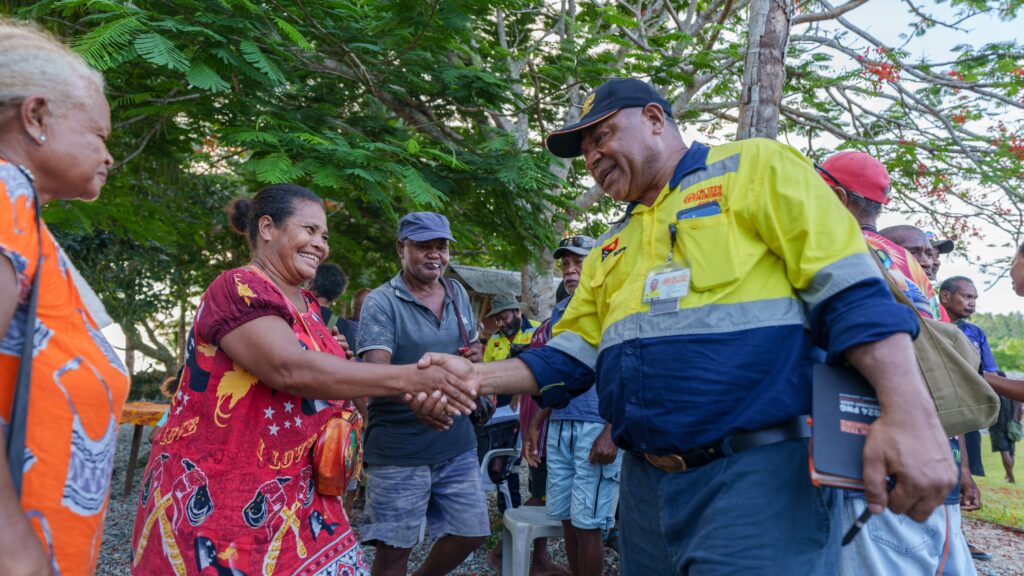
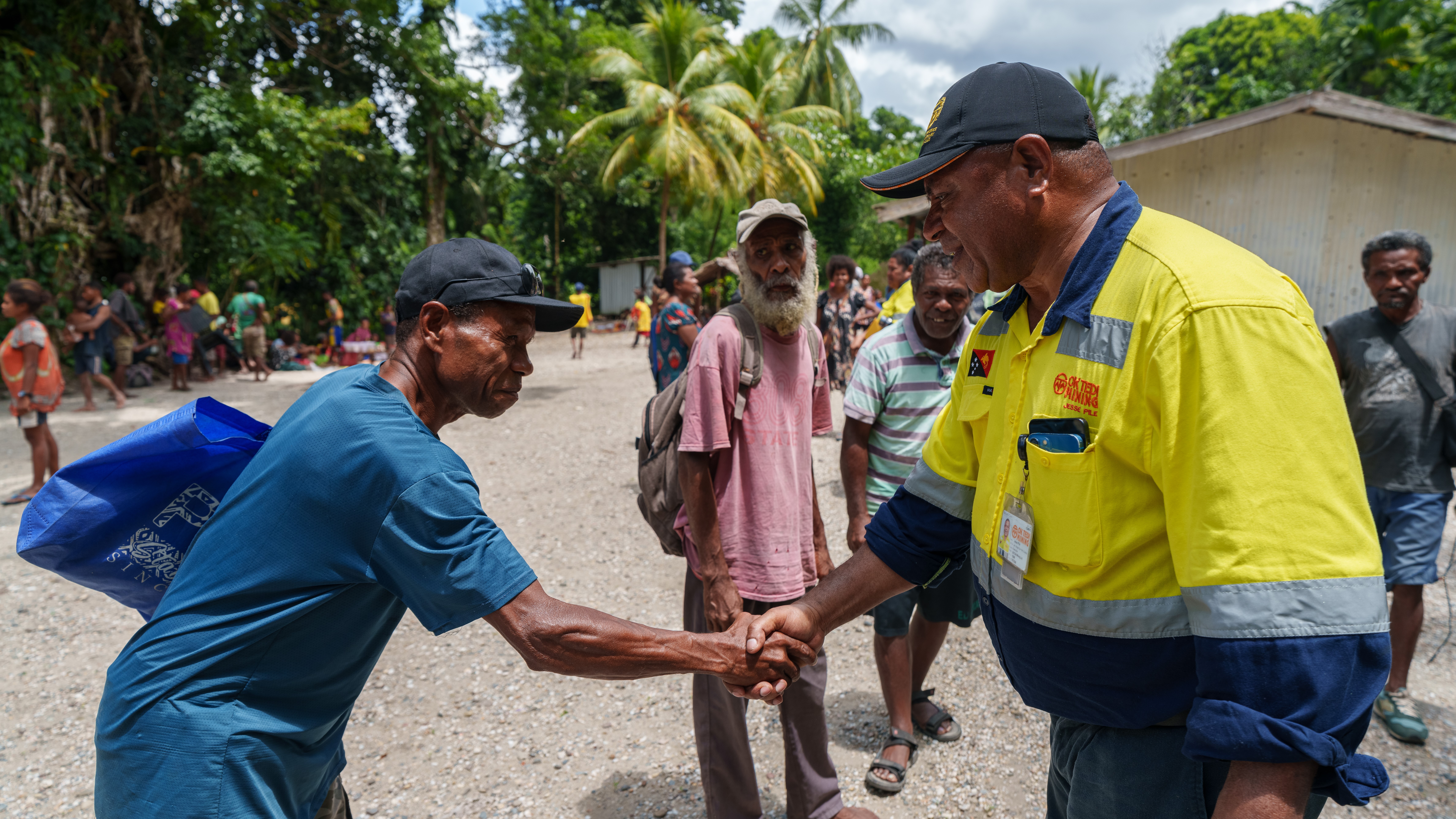
“We’re not waiting until production to make a difference,” said Jesse Pile, Ok Tedi’s General Manager for Social Performance and Sustainability.

“Roads, power, water, and support for schools and the hospital will start early. These improvements will benefit communities long before the mine is operational.”

These early investments are designed to serve a dual purpose, providing a “goodwill” foundation for the islanders while creating the necessary logistics network to support the mine’s development.

The project is structured into three distinct phases, each bringing different levels of activity and opportunity to the island:

PhaseTimelineKey Activities
1. Feasibility & Permitting2026-2027Exploration at Umuna, Ewatinona and Kulumalia; environmental studies; infrastructure upgrades.
2. Construction2028-2029A massive surge in local activity as the processing plant and site facilities are built.
3. Production2030Full-scale commercial operations and long-term economic returns.

“Once permits are secured, construction will transform Misima into a hub of activity,” Mr. Pile noted.

“This phase is about building the capacity to operate safely and efficiently.”

Leveraging 40 years of experience from its operations in the Star Mountains, Ok Tedi is positioning the Misima project as a model of responsible development. The company is focusing heavily on doing things right from the start, particularly regarding environmental and social safeguards.

The ultimate goal is to restore the economic engine of the island, which has been quiet since previous operations ceased years ago.

“Before the end of 2030, we aim to see Misima in full production again,” Mr. Pile said.

“This will bring real opportunities for jobs, spin-off business, and long-term benefits for the island.”

The success of the project hinges on the relationship between the miner and the landholders. Early reports from the December meetings suggest a warm reception from the local population, who have been eager for a sustainable path toward modernization.

“Community support is the foundation of this project,” Pile emphasized.

“We’ve seen incredible positivity from Misima people, and we will continue to engage openly, transparently, and honestly.”


Prime Minister, James Marape has issued a blunt ultimatum to communities across the country to stop protecting criminals or face the full weight of the law.

As police intensify “Operation Kumul 23” to scrub illegal firearms from the country’s most volatile regions, the Prime Minister made it clear that the era of hiding hired gunmen behind village walls must end. The government’s stance, he says, is now one of absolute zero tolerance.

The recent surge in police activity, specifically in the Tsak Valley of Wapenamenda in Enga Province, isn’t a random sweep.

According to Marape, it is a surgical strike based on deep intelligence that follows not just the gunmen, but the money.

“The operation at Tsak Valley, Wapenamenda, was a targeted operation,” Prime Minister Marape said.

“Police were acting on intelligence relating to known hired gunmen operating within the province.”

The Prime Minister revealed that authorities have successfully mapped out the networks fueling tribal warfare, including those who bankroll the violence from the shadows.

“I want to inform Enga Province, Southern Highlands, Hela and communities right across the country that police have assembled sufficient intelligence, including financial trails, on gunmen and those sponsoring these fights,” he warned.

“Police will not be recalled. Police will remain at work.”

A central theme of the Prime Minister’s address was the protection of the innocent. He expressed frustration with criminals who use their own families and neighbours as “human shields” to evade capture, often leading to tragic outcomes during confrontations.

“If you are a criminal and police come for you, surrender,” Marape urged.

“Do not fight back. Do not use innocent people as shields, because when that happens, innocent lives are put at risk.”

To the law-abiding citizens in these “hotspot” areas, the Prime Minister’s message was one of both reassurance and a plea for calm:

“If police come to your community, do not be hostile. Do not fight back. Cooperate. If you are innocent, show that you are unarmed and pose no threat. Police are not there to target innocent people.”

For those who continue to harbor fugitives or maintain illegal arsenals, the consequences are now permanent. Under current laws, the illegal possession of a firearm carries a sentence of life imprisonment.

Marape emphasized that the burden of safety rests on the community’s willingness to reject the culture of violence. He pledged that while the State would take responsibility if innocent people were harmed during operations, the “firm, relentless enforcement” would not waver.

“Our country is tired of criminals hiding behind communities and emerging to cause violence,” the Prime Minister concluded.

“Supporting the police means safer families, safer communities, safer districts and safer provinces.”


Across the Pacific, rural women are bearing the brunt of a changing climate.

Floods devastating crops, disappearing resources for cultural weaving and economic hardship fuelling gender-based violence, human-driven global warming is taking a toll on women in the region.

Louisa Wall is a First Nations representative and former Aotearoa New Zealand MP who has long advocated for gender equality and human rights.

Funnelling more resources into projects to help Pacific women adapt to climate change is a priority for her as someone who has recently taken on the role of Oceanic Pacific Mobilisation Advisor at the upcoming Women Deliver gender equality conference to be held in Melbourne.

There are already funds available for climate adaptation, such as the recently-installed Pacific Resilience Facility, set up to ensure long-term, community-scale financing for flood-resilient roads and other projects.

But Ms Wall wants more going to women and girls directly.

“You already have a vulnerable population group, which are women and children, and then you add in this existential threat of climate,” she told AAP.

“It exacerbates the ability of women to live healthy, contributing, successful lives, where they have the autonomy to cultivate their own food or to use the raw materials around them to build crafts.”

Ms Wall will join like-minded advocates in pushing the issue ahead of the 2026 United Nations climate talks.

The annual talks are to be held in Turkey but with Australia in a “president of negotiations” role and a pre-COP meeting to be held in the Pacific islands.

Australia and the Pacific were bidding to co-host the conference in Adelaide but pulled out last-minute after a protracted stand-off with Turkey.

Ahead of COP31, Ms Wall will be helping have Pacific women’s voices heard at the flagship gender equality summit to be held in Melbourne in April next year.

Taking place in the Oceania Pacific region for the first time, the forum will provide an opportunity for women to share first-hand experiences of life under a changing climate and showcase female-led adaptation measures already taking place, Ms Wall said.

A common experience across the Pacific is the loss of raw materials used in weaving mats, baskets and other wares, crafts that can have cultural significance and provide a source of income for women.

Food security is another major problem, with crops knocked around by storms, pests and other conditions fuelled by climate change, and fishing stocks depleted by compromised coral reefs and marine habitats.

And, with worsening economic instability from failed crop yields and no goods to sell, the risk of physical and sexual violence is growing.

More competition for resources can prevent children going to school, Ms Wall said, forcing more women into early marriages and perpetuating cycles of inequality.

Ms Wall acknowledged her own privilege as someone spared from the horrors of sea level rise-forced migration and other extreme climate impacts, and stressed the importance of giving rural Pacific women the space to share their own stories.

“It’s incredibly important that women’s voices are part of any discussions related to climate change,” she said.

“The implications actually are about whether or not people can survive.”


Copyright @ AAP 2025

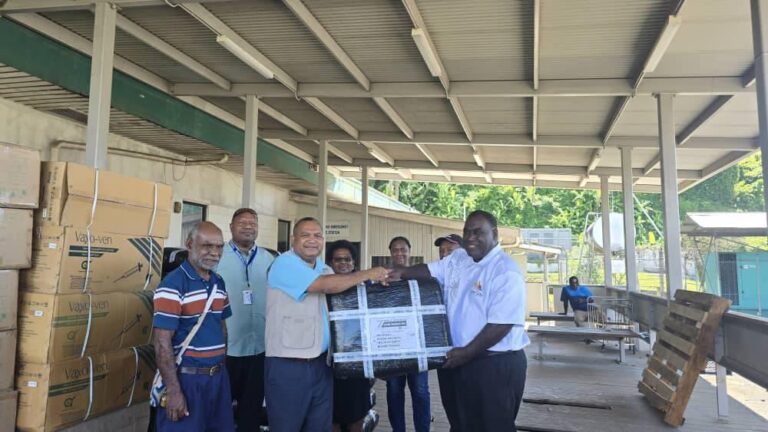
The Angau General Hospital in Lae has received a K200,000 worth of essential medicine supplies this morning from the Lae City Authority (LCA).

Urban clinics in the city also received similar supplies a week ago at a tune of K130 000.

This is an ongoing aid from LCA to Morobe Provincial Health Authority, especially Angau and Lae District clinics, to complement the support from the national government.

Meanwhile, the Morobe Provincial Health Authority is still working on addressing the issue of staff shortage at the Angau Memorial Provincial Hospital’s Emergency and Accident Unit.


Pin It