Author

Inside PNG

Browsing

With the onset of El Niño, Agricultural experts are warning that the country faces a high probability of a shortened wet season, likely followed by extended periods of below-average rainfall.

National Agricultural Research Institute is encouraging the public and farmers to look at options to save clean drinking water, ensure farming continuity and food security.

The El Niño brings the risk that some areas will have a shorter than expected wet season and lower than expected rainfall which will make farming more difficult later in the year, particularly in areas where the wet season is expected to be followed by a dry season with less than normal rainfall.

Learning from serious droughts in 1997 and 2016, NARI research has developed technologies and a series of drought-coping strategies for rural communities, covering the stages of drought preparation, farming during a drought period and post drought recovery.

Many of these strategies have already been taken up by communities through awareness programs and training by NARI and partners but NARI calls for a much wider response.

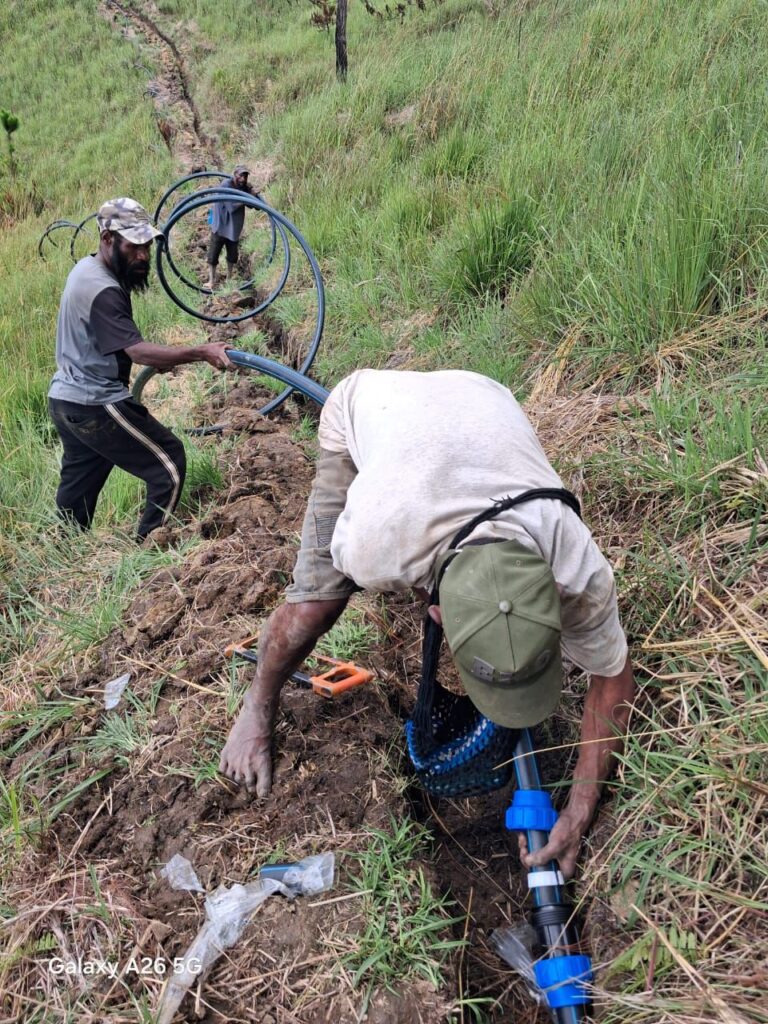
A primary concern is the protection of clean drinking water. As water tables drop during prolonged dry periods, rural communities often face difficulty in sourcing water that is safe for household consumption. While irrigation could serve as a safeguard for crops, it remains largely under-utilized in many regions.

In response to the growing dry spell, some laboratory facilities of NARI in Port Moresby have opened their testing services to help farmers verify water quality in streams and boreholes before using them for irrigation.

Agricultural advisors through the office of NARI are encouraging communities to shift their management practices immediately to better prepare for the months ahead.

Diversification of crops: Drought-hardy crops like the African yam and cassava are useful additions to food security. Both can stay in the ground longer and produce good roots/tubers under dryer conditions, reducing risk of food shortage during longer dry periods.

Seed Preservation: Seed saving techniques ensures planting material is available for recovery post drought. “Storage Sand Sprouting” is a newly developed technique to save and protect storage roots of sweet potato during predicted drought and frost recovery.

Varietal selection: Shifting toward early-maturing and drought-tolerant crop varieties is being highlighted as a necessary step to reduce the risk of total harvest failure.

While technical strategies exist to mitigate the effects of El Niño, the primary challenge remains the equitable distribution of resources and information to the most vulnerable districts.

Local and provincial authorities are being urged to play a more active role in the coming weeks by establishing localized seed-multiplication centers and small-livestock breeding programs. By distributing these resources, NARI officials aim to ensure that rural farmers have consistent access to the planting materials and technical support required to maintain production throughout the climate event.

Residents and farmers are encouraged to contact their provincial or district agricultural extension offices to identify the specific crop varieties and livestock management techniques best suited to their local environment.

Interventions such as simple irrigation techniques, water harvesting technology, silage for livestock feed, seed saving techniques, rapid crop multiplication techniques, sweet potato weevil management, wheat and rice cultivation and processing and other useful information are available for the public and farmers.

For nine months, a vanilla farmer waits. That is the time between the orchid flower and the mature bean, requiring a long period of delicate manual labor that begins with hand-pollinating every single bloom.

For years, farmers in East Sepik Province were trapped in a destructive cycle that ruined the crop’s potential. They struggled with poor farm layouts, vine diseases, and guesswork during curing and processing. Lacking proper tools or storage, farmers faced panic selling. Rushing their vanilla to market too early to beat tropical humidity and local crime, they accepted very low prices from middlemen just to get immediate cash.

Nancy Fale, a veteran grower known locally as Mama Nancy, whose family has grown vanilla for nearly 30 years, remembers these struggles firsthand.

“Vanilla once gave my family good income and a better life,” she says. “It felt like a dream, but when the industry faced major calamities, we struggled financially.”

To break this cycle, the EU-STREIT PNG Programme, implemented by the Food and Agriculture Organization of the United Nations (FAO), stepped in with better methods and solutions. In the fields, the Programme introduced organic treatments for diseases alongside tools and training for precise vine care.

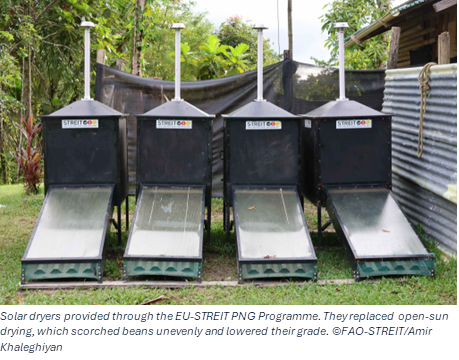
Next, the Programme focused on post-harvest processing by introducing a solar dryer with internal shelves. Traditionally, farmers dried vanilla on open mats under the direct sun, which scorched the pods unevenly and lowered quality. The solar dryer solved this by circulating heat evenly.

“The colour is now even all around,” Nancy says. “Nice, shiny black beans. That is the best quality.”

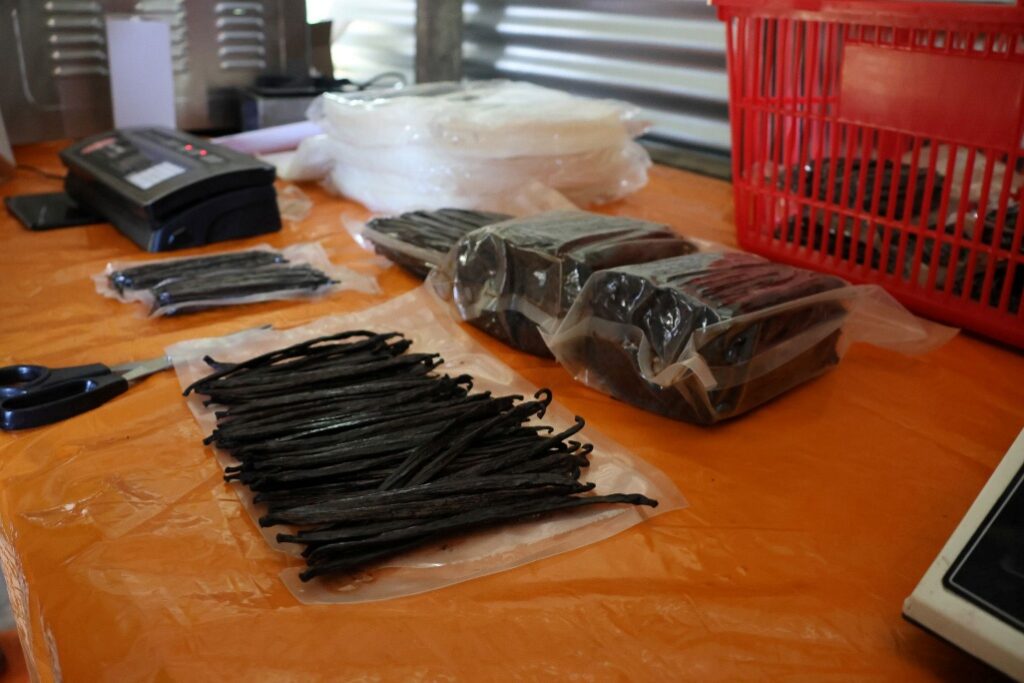
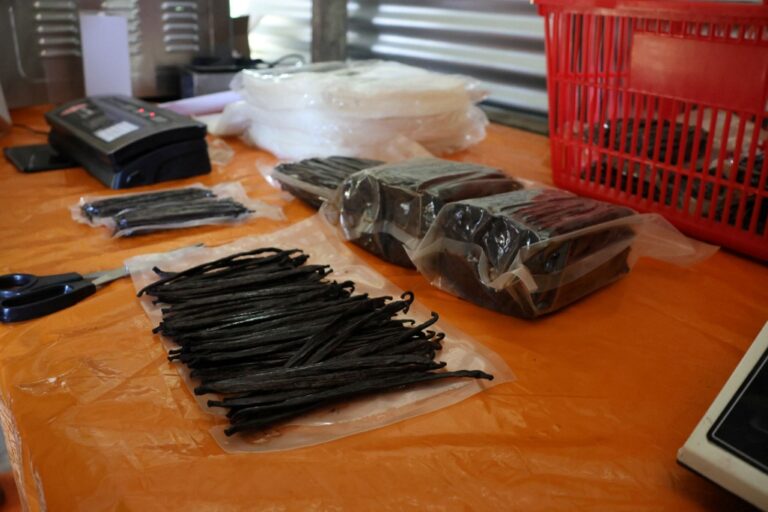
The Programme paired the dryer with a solar-powered vacuum sealer, which stopped panic selling. By sealing the cured beans airtight, Nancy can store her vanilla for years, bypass exploitative local prices, and wait for the right overseas buyers. Her prices now range between PGK350 and PGK600 per kilogram, with an export sale to Thailand hitting that top rate.

Cured vanilla beans, sealed airtight for storage. The vacuum sealer lets farmers hold their beans in good condition and wait for a better buyer instead of selling in a rush. ©FAO-STREIT/Amir Khaleghiyan

Over four years of using this setup, her business has sold roughly 200 kilograms of cured beans, worth at least PGK70,000. Nancy compares the cash flow of vanilla to cocoa.

“Cocoa is two-week sales,” she says. “It is like people’s fortnight money. But vanilla is like a once-off retirement pay. If you keep 20 kilos and a good buyer comes, you make good money in one hit.”

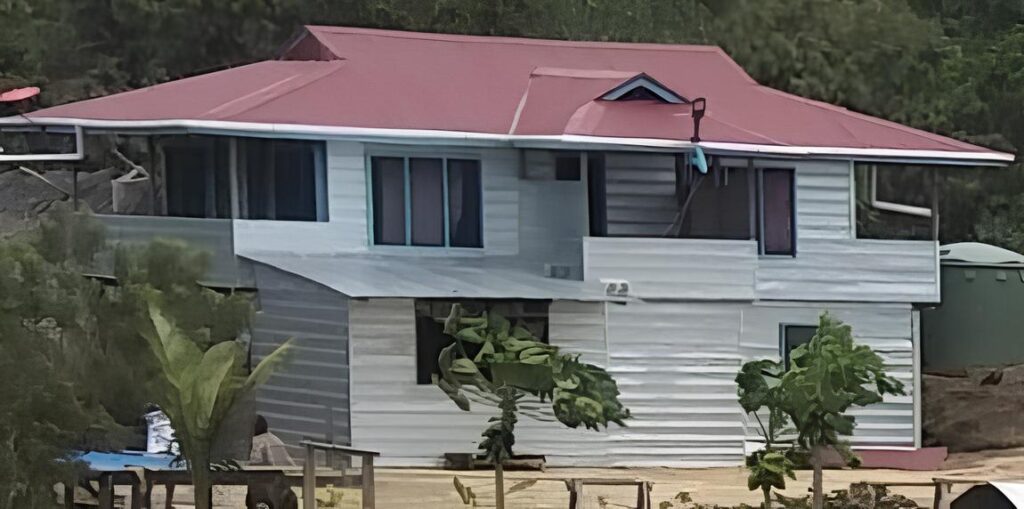
This crop now provides steady money for long-term projects. For Nancy, the earnings built her family a permanent house from timber and concrete blocks, purchased water tanks, and kept her children in school.

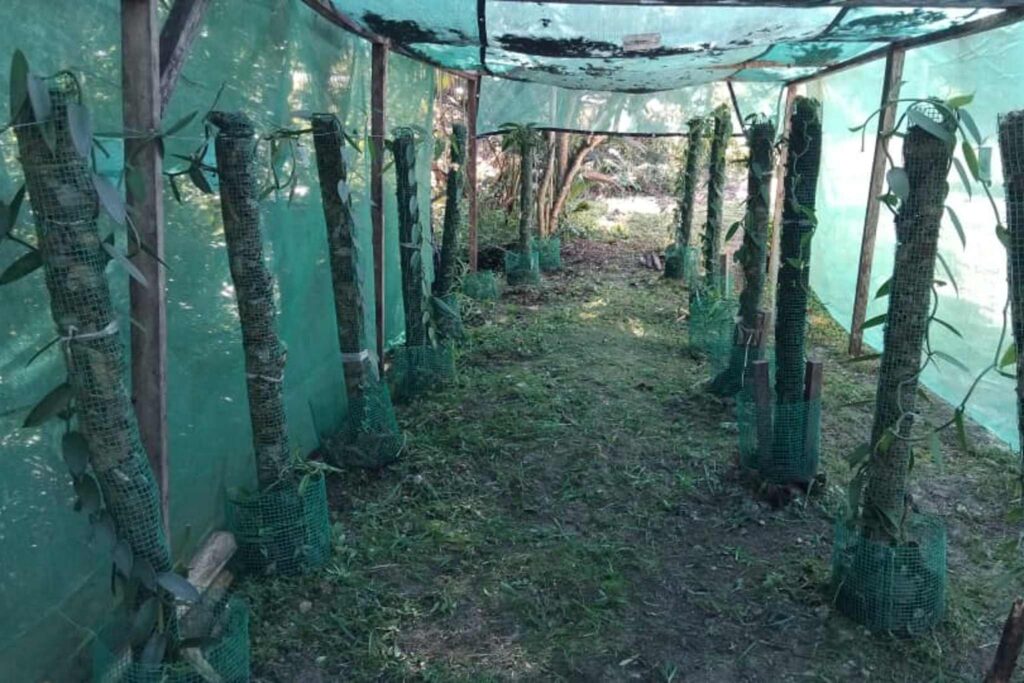
To protect these profits from theft, her son, Nollan, built a shade house close to the home. This setup allows more vines to grow in less space under the family’s watchful eye.

An innovative shade structure pioneered by Nancy’s son, Nollan, for growing vanilla closer to home, where the vines are easier to watch and harder to steal. © supplied

Farmers lost their love for vanilla because they kept losing their harvest, Nancy says. The Programme, she says, has brought the value back, giving them the confidence to grow it again.

The Programme also worked to share the workload and earnings fairly between men and women. Traditionally, women did the heavy daily work of pollination, maintenance, and curing, yet men claimed all the money. To correct this, the Programme introduced a Farming as a Family Business system.

Nancy embraced the training, establishing a 50-member women’s group to help widows, single mothers, and young girls.

“Farming should be a family business, not only the father’s business,” Nancy explains. “When we involve the whole family, the mindset changes.”

Under this system, families manage vanilla income together and openly discuss goals. Today, the 50 women in her group manage their own money and speak in community meetings with confidence.

Her message to the rest of the Sepik region is simple, “stop picking unripe beans, stop rushing the curing process, work as a family, and protect your vines.” Nancy has proved that a farmer who can protect her crop and choose when to sell is running a true business, now, she is waiting for the rest of the region to catch up.

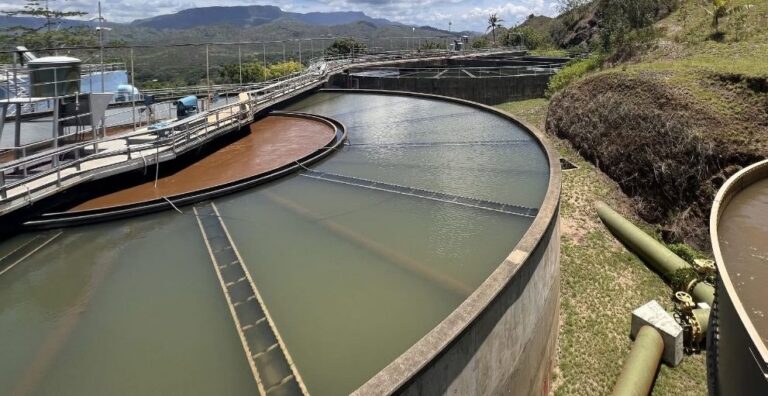
Port Moresby’s daily water supply could fall from 180million litres during emergency repairs to the Rouna 1/3 raw water pipeline, Water PNG has confirmed.

Chief Executive officer James Young says this is not a total shutdown of the city’s water supply, despite claims circulating on social media. “There is no doubt that this is a serious situation with a significant reduction in the water supply that will require rationing, but it is not a total shutdown,” Mr. Young said.

JAMES YOUNG,
CEO – WATER PNG

Water PNG confirms preparatory work has started on the most critically damaged section of the Rouna 1/3 pipeline. During repairs, raw water will continue to flow into the Mt. Eriama Water Treatment Plant through the Rouna 4 pipeline before distribution to the city.

Engineers are replacing air release valves along the pipeline corridor to reduce the period of partial shutdown. No dates have been set for the works.
“It also has to be made clear that no dates have been set for repairs, with preparations underway that will reduce the period of partial shutdown to a minimum,” Mr. Young said.

Once repair dates are confirmed, Water PNG will run ‘significant advanced awareness’ campaigns with water rationing schedules and regular updates. Other interconnections are being developed to increase supply during the works.

Mr. Young stressed that replacement of pipe sections is essential and that the entire 13.5 kilometers of the Rouna 1/3 pipeline will eventually need to be replaced.

The CEO urged residents and businesses to follow formal channels for updates, saying misinformation online had caused public concern.

“The public will be fully informed by Water PNG, as part of a ‘whole-of-government’ response to these repairs, as information comes to hand,” he said.

THE Papua New Guinea media fraternity is in mourning following the tragic passing of Genesis Ketan, a vibrant trailblazer who served as the Treasurer of the Media Council of Papua New Guinea (MCPNG), a dedicated trainer, and a deeply cherished colleague.

Ms. Ketan passed away peacefully after a courageous battle with Rheumatic Heart Disease and Mitral Valve Stenosis, leaving behind a profound legacy of integrity, leadership, and mentorship that has touched newsrooms across the country and the wider Pacific region.

President of the MCPNG, Neville Choi, speaking on behalf of the Executives and Management Council, said the media fraternity in the country was in shock at the news of Ms. Ketan’s passing.

“We are in mourning. We have lost one of our best and brightest. Gen was an inspiration to many in the industry today. Her role as one of our first local Media Trainers was outmatched only by her determination to build and encourage young journalists and colleagues whenever she saw there was a need to.”

Stepping Up to Lead

Ms. Ketan’s leadership was defined by her willingness to step up when her peers needed her most. In 2023, while representing PNGFM as News Manager, she was elected by the MCPNG Membership to the Executive Board Position of Treasurer.

As Treasurer, Ms. Ketan successfully led the process of establishing the Council’s finances just in time for the staging of the Inaugural MCPNG Media Summit in 2025 to commemorate World Press Freedom Day, and the return of the PNG Media Awards event of the same evening.

Empowering the Next Generation

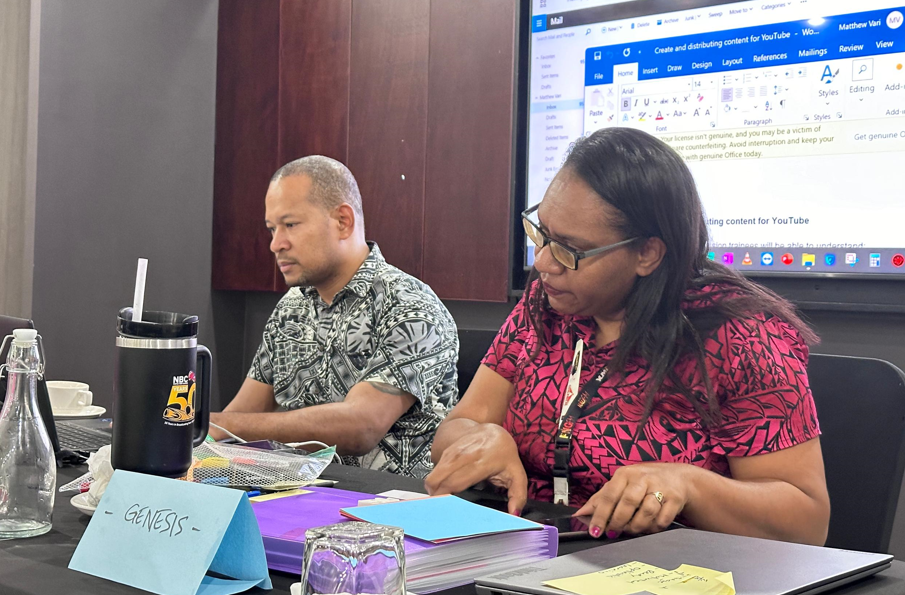
Beyond her executive duties, Ms. Ketan was passionately dedicated to modernizing PNG journalism. She was the Council’s Nomination alongside Post-Courier Digital Director, Mathew Vari to be the first two senior journalists representing the Council to receive Training of Trainers skills on Social Media Best Practices, facilitated by BBC Media Action in 2025.

Out of the first cohort of TOT participants from across the Pacific, Ms. Ketan and Mr. Vari were the first to roll out a series of training for mainstream media digital officers Lae, Mt. Hagen, Kokopo and Port Moresby.

Genesis Ketan
Post Courier Digital Director, Mathew Vari (left) with Genesis Ketan (right) during one of their training sessions on Social Media Best Practice in Port Moresby.

A second Training of Trainers by BBC Media Action saw the pair return to build on their skills, now with Verification and Fact-Checking Skills. These were new skillsets they were to impart via another set of training workshops for mainstream media. Immediately on her return, Ms. Ketan sent a message saying she and Mr. Vari had learnt so much new information and content that she was excited to share with the rest of the digital teams in the media.

Tragically, the first of this second round of training was recently held in Buka. It was the first training which she would not be able to be part of.

A Fierce Champion for ‘Inside PNG’

Ms. Ketan’s impact was personal, intentional, and deeply felt by those breaking new ground in the industry. To InsidePNG, Ms. Ketan was a colleague who extended words of encouragement and support for their cause.

“She believed in our potential to lead, supported our women-owned and run media company, and expressed her belief in our capabilities,” said Kila Wani, Managing Director for InsidePNG.

She encouraged each of the team members individually to keep fighting the good fight, to never back down, and to lead in the face of adversity.

“Her hope for our team will be honored and cherished, and she will be missed dearly.”

An Indelible Regional Impact

Ms. Ketan’s exuberance and forthright attitude drew many to her, and she impacted the lives of many young media friends and colleagues – not just in PNG, but across the region. Her first regional media experience came in September of 2024 when she attended the Pacific Islands News Association (PINA) Summit in Niue as a representative of the MCPNG.

MCPNG President, Neville Choi said, “Gen attended the 2024 PINA Summit in Niue representing the Media Council. It was also her first PINA Summit, so she had many questions. Afterward she expressed how she had learned so much about regional media and its personalities.”

Genesis Ketan
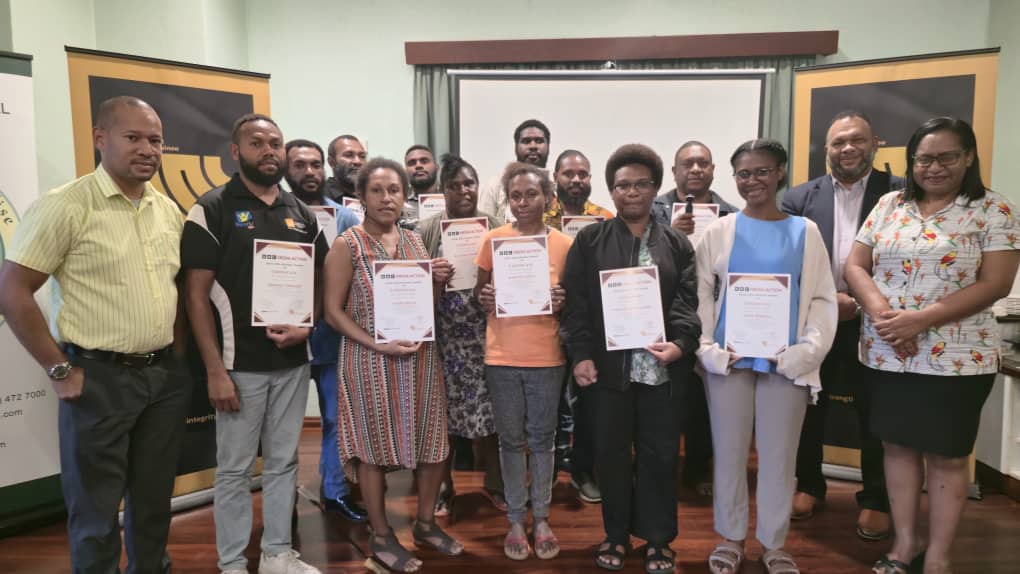
Social Media Best Practice training – Lae cohort with trainers Mathew Vari (far-left) and Genesis Ketan (far-right) and Media Council President Neville Choi (back-right)

This first positive experience helped her build her confidence in speaking on behalf of PNG Media, on any stage. Her last formal representation of PNG Media came as part of an official MCPNG Delegation to the Global Investigative Journalism Conference in Kuala Lumpur last year. This conference exposed her to ways to improve investigative journalism and media training in PNG.

Even in her most recent role as a producer of a panel discussion at the 2026 Media Summit, her individual mentoring and encouraging of her panelists (mostly editors) displayed her passion to build younger colleagues.

‘Holding the Line of Truth’

Those who worked alongside Gen remember a woman of immense strength, profound empathy, and zero pretense.

“Gen inspired us all. If it wasn’t a critical analysis of something you had done, it would be through words of encouragement for you to be better, and not to apologise for being where you are because of your own hard work,” said Choi.

“To her staff, she was firm. To her friends, she was loyal to a fault. To those whom she pulled aside to impart words of wisdom to, she will never be forgotten.

“To her colleague executives of the MCPNG, Gen was hope. Hope that the future of PNG media rested in one of what could turn into many sets of hands that would hold the line of truth and integrity. The Media in PNG has lost one of its best.”

The national media landscape has lost a cherished colleague, a sister, and a dear friend. On behalf of the Members of the Media Council of Papua New Guinea, thoughts and prayers are with Gen’s husband Ray, her beautiful young children, her extended family, and her tribe.


Rugby league’s most respected and longest-serving coach, Wayne Bennett, has launched a blistering attack on the NRL Bunker, arguing that the video referee system does more harm than good for players and the millions of fans who follow the game.

In a country like Papua New Guinea, where every NRL weekend is debated on the streets and inside homes from Port Moresby to Mt Hagen, Bennett’s explosive comments ring true for local fans. The seven-time premiership-winning coach believes the game was much better when we simply trusted the on-field referees.

The Super-coach was left furious after a controversial play-the-ball decision went against his South Sydney Rabbitohs side, leading to a crucial match-winning try for the Manly Sea Eagles.

“They have all the opportunity to make a decision and to see it and they still get it wrong,” Bennett said.

Bennett, who has coached an incredible 972 games across a legendary 40-year career, revealed that NRL management actually called him to apologize for the blunders in that game. But the apology didn’t change his mind. He wants the Bunker completely gone.

“I’m a fan of no Bunker, I can tell you,” Bennett stated. “I’d rather just the game played on with life and accept it like we always accepted it.”

For PNG fans who grew up watching traditional, fast-flowing footy, Bennett’s words make perfect sense. He argues that while other global sports like soccer, basketball, and American gridiron use video technology sparingly, the NRL has become completely obsessed with it, halting the game’s natural momentum.

One of Bennett’s biggest issues is how long decisions take, forcing fans to stare at the big screen while the excitement drains out of the stadium or the TV room.

“We put ours up on a board, on a replay board, it could be two or three minutes,” Bennett says.

 “You’re just sitting there watching, making your own opinion about it all, and then we still get it wrong.”

The NRL mastermind believes rugby league fans across the world, including the game’s most fanatic supporters in PNG, would be much happier returning to the days of fast-paced, continuous action where a referee’s word was final.


Source: Australian Associated Press

Dozens of local technical students are set to gain critical on-the-job experience following a new partnership designed to tackle Papua New Guinea’s youth skills gap.

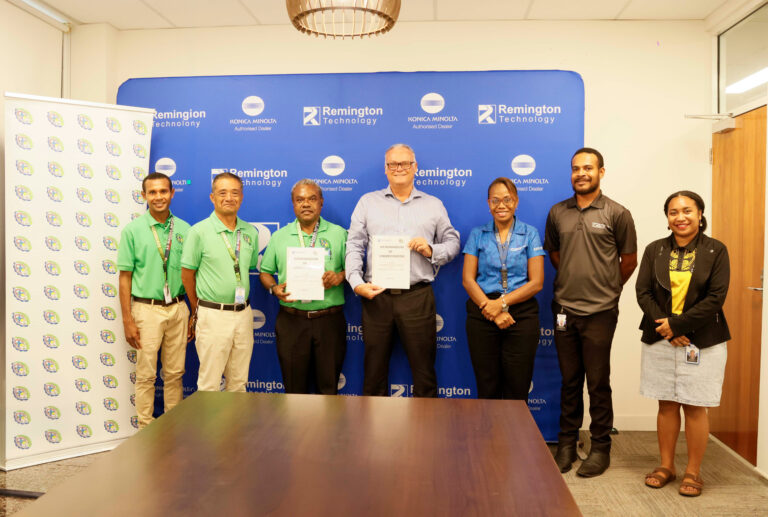
Don Bosco Technical School (DBTS) Gabutu and local tech firm Remington Technology have finalized a formal agreement that inserts corporate workplace training directly into the school’s academic calendar.

The initiative aims to give students immediate, practical experience across various technical trades, moving them straight from the classroom into Remington’s active operational environments.

The learning also goes both ways. Under the reciprocal deal, DBTS instructors will step into the corporate world to deliver customized professional development and upskilling sessions for Remington’s existing workforce.

The agreement was signed by DBTS Gabutu Principal Martin Dai, Deputy Principal Kenneth Gonzales, and Remington Group CEO Justin Kieseker.

Kieseker emphasized on the importance of the ongoing relationship, stating that Remington’s continued investment in technical institutions is a foundation of its mission to foster a highly skilled local workforce and create a better future for PNG’s youth.


Australia and Queensland star Valentine Holmes has announced he will represent the Cook Islands at this year’s Rugby League World Cup, hosted by Australia and Papua New Guinea.

The 30-year-old Dragons back is eligible through his mother, Lucy, and will join a strengthening Aitu squad coached by Karmichael Hunt. Though injury kept Holmes out of last year’s qualifiers, he previously joined the team in a mentoring capacity during a cultural trip to Rarotonga.

Following a standout two-try performance against Brisbane, Holmes confirmed his commitment to his heritage.

Holmes joins an impressive Cook Islands roster that features established NRL talent like Kayal Iro, Brendan Piakura, Marata Niukore, and Davvy Moale.

However, the Aitu face an incredibly challenging group stage draw against rugby league heavyweights Fiji, New Zealand, and Australia.

This campaign marks the Cook Islands’ fourth appearance at a World Cup tournament, and the team will be aiming to leverage Holmes’ experience to advance past the group stage for the first time in their history.


Source: Australian Associated Press

The “M1 derby” between Brisbane and Gold Coast is a literal family affair for the Haas brothers. Titans forward Klese Haas, 24, has spent his life looking up to his 26-year-old brother, Broncos star Payne. Now an established NRL player in his own right with 70 games under his belt, Klese will clash with Payne for the fifth time this Saturday at Suncorp Stadium, with their head-to-head record currently tied at 2-2.

Despite the looming on-field battle, the brothers share a tight bond.

“We talk almost every day and he’s probably the first person to message me after games and see how I pulled up, so it’s really good,” Klese said. “He always calls me and gives me like a paragraph of stuff to work on after games, so it’s good to have someone to lean on like that.”

The stakes are high for both teams. The defending premier Broncos have dropped four straight games to sit 11th, while the 16th-placed Titans are desperate to snap a five-game losing streak. Following Brisbane’s recent frustrating loss to St George Illawarra, Klese expects a fierce challenge.

“After a loss, they want to get their season back on track, so we’re expecting a bit of hostility going up there, but we’re all ready for it,” Klese said. “If I’m being honest, we’re pretty confident.”

While club commitments will keep them on opposing sides for the foreseeable future, with Klese locked in at Gold Coast and Payne heading to South Sydney next year, the brothers hope to unite internationally for Samoa at the end-of-season World Cup.

“To have that opportunity to represent our culture, our heritage together, it would mean the world to us,” Klese said. “So fingers crossed.”


Source: Australian Associated Press

The future of Papua New Guinea ultimately rests on its public servants, leadership class, and everyday citizens working together with shared purpose, discipline, and a collective commitment to the country’s development. Concluding a major address, Prime Minister James Marape stated that nation-building is not the responsibility of one person, one government, one party, or one sector of the economy.

Speaking at the People’s Party fundraising dinner at the Stanley Hotel in Port Moresby, Marape challenged citizens to shift their fierce loyalty away from sporting teams, like State of Origin’s Maroons and Blues and redirect it toward building a people-focused political culture.

While sporting teams bring passion, he said, they do not build roads, improve hospitals, create jobs, or grow the economy. Political institutions must exist as deliberate vehicles to improve the daily lives of ordinary citizens, emphasizing that support should be given to parties based on policies, commitment, and integrity.

Political stability is a prerequisite for human development, rather than a reward for politicians.

Citing the legacy of late former Prime Minister Sir Mekere Morauta, Marape said that structural stability enables a government to keep its focus entirely on national progress and local service delivery.

Turning to political partnerships, the Prime Minister commended coalition partner People’s Party because its core pillars education, law and order, and anti-corruption align closely with the PANGU-led coalition’s people-first agenda. He paid special tribute to Enga Governor and party founder Sir Peter Ipatas, stating that Sir Peter’s decades of leadership demonstrate how consistent service translates directly into positive development outcomes for local communities.

In addressing the nation’s financial status, Marape highlighted the expansion of Papua New Guinea’s economy, which has surged from K17 billion in 2002 to over K130 billion today. This expansion allows the State to fund larger budgets and secure the resources necessary to invest in health, education, roads, law and order, and opportunities for the people.

Looking ahead to the 2027 National General Election, the Prime Minister stated that forming a government is a privilege reserved for political institutions that are organized, strategic, purposeful, and genuinely committed to serving the grassroots.

He reminded citizens that the country’s democratic system provides equal opportunities for all political parties to present their policies and seek a mandate to govern. He urged the public to tune out political distractions, carefully scrutinize party platforms, and hold leaders strictly accountable to their visions.


Pin It