InsidePNG announced the appointment of Ms. Charmaine Yanam as its new Editor-in-Chief today.
Ms. Yanam, who has extensive experience as a news journalist across radio, television and most recently in the civil society space, will now lead the InsidePNG team as it builds its focus into investigative journalism.
A co-founder of InsidePNG, Ms. Yanam was a member of the EMTV News Team which was terminated en masse in 2022 under controversial circumstances.
“InsidePNG emerged from a group of 24 TV News Journalists, Cameramen and Video Editors who took a stand against bullying and intimidation in their newsroom.
“Now I have the opportunity to lead this team of intrepid truth seekers who are InsidePNG. Our focus now is on strengthening our investigative journalism capacity,” Ms. Yanam says.
As Editor-in-Chief, Ms. Yanam will be responsible for overseeing all editorial operations at InsidePNG, ensuring that the publication maintains the highest standards of journalism and delivers accurate, reliable, and relevant news and information to our readers.
All correspondence related to editorial matters, inquiries, and feedback should be directed to Ms. Yanam in her capacity as Editor-in-Chief.
InsidePNG is confident that under Ms. Yanam’s leadership, it will continue to be a trusted source of information, providing readers with valuable insights and perspectives to stay informed and engaged with current affairs.
Ms Yanam is also one of two co-founders of Inside PNG.
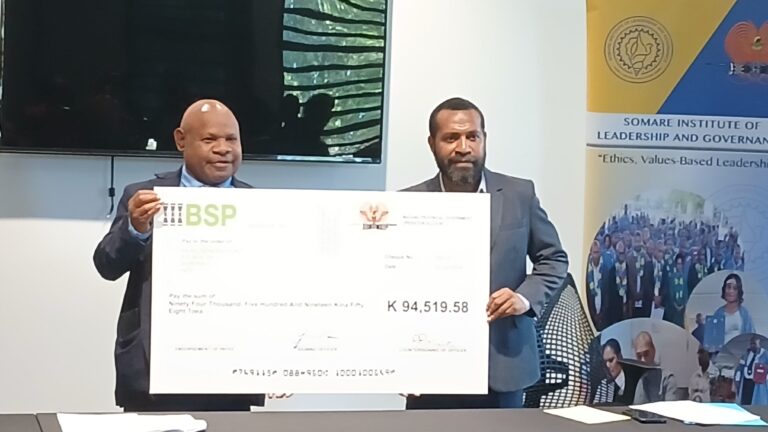
Madang Governor Ramsy Pariwa presented K94 000 to the Somare Institute of Leadership & Governance as school fee payment for 19 public servants from Madang Province who are currently studying at the institute.
Pariwa presented the cheque to SILAG CEO Michael Barobe.
The Governor acknowledged the importance of capacity building for public servants in the province to help them effectively deliver government services throughout the province.
SILAG CEO Michael Barobe (LEFT) Madang Governor Ramsey Pariwa (RIGHT).
“It’s the responsibility of every government to empower human resource. As we all know school fee is a big problem in our country that we all face. I was able to pay part of my own school fees with copra and I recognize the challenge students go through.
“I was inspired to initiate the Provincial Government School Fee assistance program when I saw how it greatly assisted some of my course mates from Morobe and Enga while studying at the University of Papua New Guinea some years back. Now that I am in the capacity to create this assistance, I took it on for Madang students studying throughout the country. The program is called “Sir Peter Barter Scholarship Assistance Program”.
SILAG CEO Barobe emphasized that when a province has competent people in the workplace, the province will be moving because they have the right tools.
“He (Pariwa) knows the importance of human resource in his province,” said Barobe.
He said while many things are learnt on the job, it is important for certification to allow an employee to excel in that role.
Barobe also challenged other Governors to invest in building their human resource capacity for effective service delivery in the country.
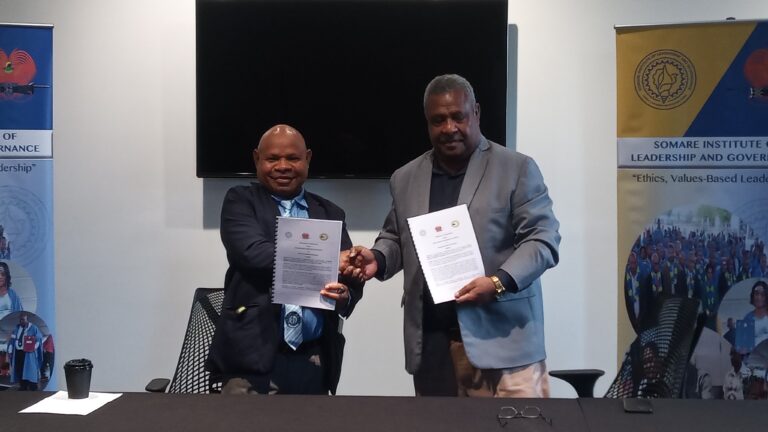
The National Procurement Commission is partnering with the Somare Institute of Leadership and Governance (SILAG) to facilitate capacity building programs within the Commission.
A Memorandum of Agreement was signed today to signify the commencement of this partnership.
The collaborative agreement aims to enhance public service capacity and foster effective leadership through projects relating to course design, delivery and other learning and development interventions that are to be undertaken by and between SILAG and NPC.
This step taken seeks to promote effective leadership and good governance within these public service organizations.
The objectives outlined in the MOU are that both SILAG and PNC work together to identify capacity and training needs, design suitable training programs, deliver needs-based training and asses it’s impact.
SILAG will extend it’s learning services to support NPC’s capacity building programs, learning interventions and other objectives both at the Head Office and Provinces.
SILAG CEO, Michael Barobe said this agreement is in line with NEC approved Public Sector Training for Improved Service Delivery.
“The policy is intended to advance the government’s plans and desire to make the entire pubic service machinery appropriately functional through systematic training and recruitment that ensures merit-based appointments to public service positions.
Foreigners working in Papua New Guinea will no longer need to lodge separate applications for employment visa and work permits.
Immigrations and Citizenship Service Authority has announced the creation of an online Sponsor Portal that merges work permit and working resident visa into a single digital application.
Acting Chief Immigration Officer, Wellington Navasivu said the Sponsor Portal provides businesses with streamlined process to lodge the combined work permit and employment visa online with a system that directly interfaces with the immigration’s Border Management System.
“Users of the system can input data and pay the necessary Migration Services Fee online at the convenience of their office anytime instead of physically visiting the Immigration office.”
The portal aims to also improve processing time and enhance customer service through the interface which allows sponsors to see the status of application and interact with ICSA.
“The Sponsor Portal will slowly phase out work permit and the end result will be a working resident visa. This means that the users of the portal will no longer get a work permit letter and ID card, instead they will receive a working resident visa which gives them the lawful permission to enter the country and work.
The portal can be accessed on the ICSA’s website with a one-time new registration of USD25 and USD75 for online administration fee per application.
The standard Migration Service Fee of US$380 is charged on each application.
Thousands of Papua New Guineans have signed up to an international multi-level marketing scheme that is being pursued in court in the United States for allegedly defrauding hundreds of thousands of people of over 400 million kina.
As many as 13,000 Papua New Guineans have signed up to the scheme, known as Onpassive.
The Orlando, Florida-based business promises individuals hefty returns from a one-time investment of $US 97 (about 375 kina) and monthly subscription fees. The company claims that investors will share in the profits from the sale of an array of software products that it has developed, and which will be released in the near future.
However, the products have failed to materialize. The U.S. financial regulator, the Securities and Exchange Commission (SEC), last August filed a civil complaint alleging that the business and its owner, Ashraf Mufareh, have since 2018 perpetrated an “illegal pyramid scheme.”
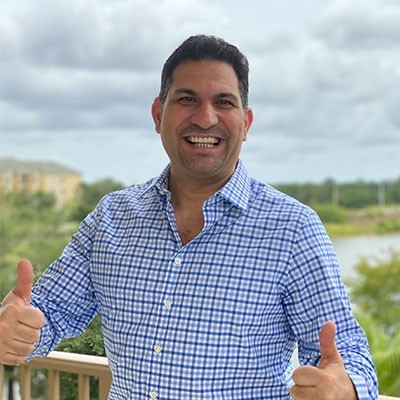
Onpassive owner, Ashraf Mufareh.
Pyramid schemes are a classic form of fraud in which participants are made to pay money up front, and then urged to earn their money back by recruiting new people into the fraud. The small number of people at the “top” of the pyramid can make large amounts of money, while the far greater number of people at the “bottom” lose out.
In Papua New Guinea, the scheme is being led by David Bakau, a former employee of Lloyd’s Bank in Arawa, Bougainville, who became a senior member in the late 1990s and early 2000s of the U-Vistract fraud run by Noah Musingku.
The U-Vistract scam took money from thousands of victims across PNG, Australia, and the Pacific while promising stratospheric returns that never came through. Musingku is still wanted for arrest by PNG authorities, and is currently holed up with loyalists in his home village in Siwai district, Bougainville, where he has declared himself king.
In an interview with Inside PNG, Bakau said he had long ago walked away from Musingku’s scam. But he said that, despite allegations by U.S. authorities, Onpassive was a legitimate company.
“I have no questions about it, because the legal team are handling that,” Bakau said
Onpassive Dubai.
“We believe in [Onpassive owner Mufareh’s] integrity,” he added. “I followed him in 2019 when the company was barely nothing, and they’ve basically built and I’ve seen everything developed from there.”
Bakau told Inside PNG that he had not yet made any money from Onpassive, but stands to make a 25 percent commission on each 375 kina sign-up fee paid by the scheme’s PNG investors when Onpassive’s software finally launches. He said an issue with data migration has temporarily delayed the release of the software products, which are touted as being part of an integrated artificial intelligence ecosystem that will replace platforms like Google, Zoom, and Facebook.
However, disgruntled former scheme members say such delays are simply part of the alleged scam.
U.S. regulators have alleged that Mufareh and his wife have instead used the money on personal expenses including online retail purchases, upscale dining, TV subscriptions, groceries, salon and spa visits, and the purchasing of stocks.
Bakau said he is unphased. “In every business, there’s a risk,” Bakau said. “Nobody owes anybody. So Ash [Mufareh] doesn’t owe us, we don’t owe him anything”, he said.
Onpassive and Ash Mufareh did not respond to questions.
YouTube videos and social media postings show that Onpassive’s network has targeted PNG since 2019, just a year after the inception of the alleged scam. A closed Facebook group run by senior scheme participants, named “Onpassive Nation -— Papua New Guinea”, has 5,400 members.
Reporters from Inside PNG contacted 10 to 15 Papua New Guineans who have participated in the scheme or have been drawn in by others, but all refused to speak on the record or simply did not respond.
According to the U.S. SEC’s 2023 complaint, as of March last year, Onpassive had received over $US108 million from 800,000 investors around the world.
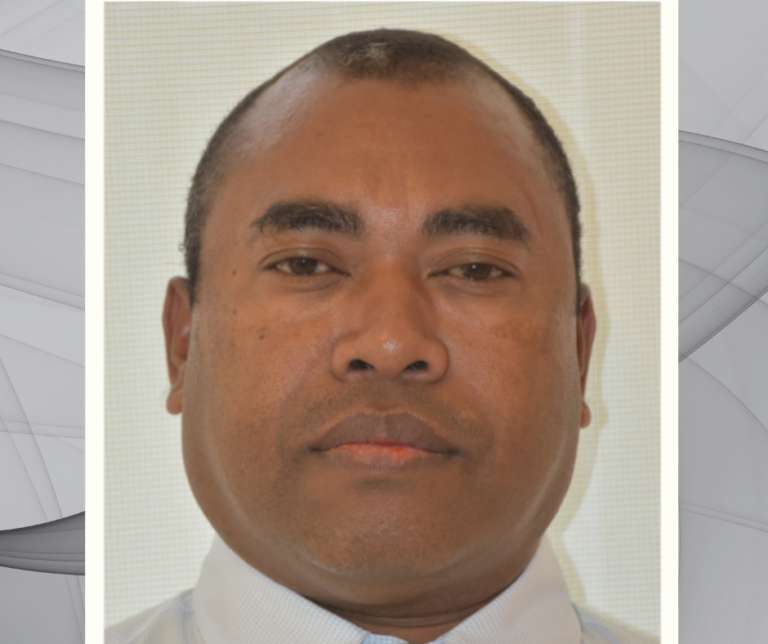
A refugee who has been battling with the Office of the Immigrations and Citizenship Authority has filed another court proceeding to summon the Acting Chief Migration Officer (ACMO), Wellington Navasivu to appear in Court for the recent charges laid against him.
Masum Mozumder, a refugee who had laid formal complaints against Navasivu, says he did not drop the charges against the accused.
He said he was shocked to learn from one of the daily newspapers that the Police Commissioner dropped all the charges and cited reasons that the matter is before the court.
Lawyer representing Mozumder, Solomon Wanis said the case before the court between Immigrations and his client was an appeal filed against the Court’s decision to grant his client Refugee status.
He said that appeal, was however withdrawn by the state on Monday (22nd July 2024).
Following the Court’s decision in December 2023 to grant full refugee status to Mozumder, he initiated the process to have the Acting Chief Migration Officer arrested for deprivation of liberty.
On the 9th of July, Navasivu was arrested and charged at the Boroko Police Station for;
– Unlawful Detention
– Attempt to pervert the course of justice and
– Abuse of Office.
He was later released on his “own recognizance” by NCD Metropolitan Superintendent Commander, Silva Sika.
“Own recognizance” is a legal term referring to a type of release that does not require the defendant to post bail and is based on a written promise by the defendant to appear in court when summoned.
It is alleged that Navasivu, as the Deputy Chief Migration Officer in charge of Compliance and Enforcement Division with PNG Immigrations and Citizenship Authority signed a detention notice dated 15th August 2023, for Mozumder, a Bangladeshi refugee to be detained and deported.
His actions allegedly defied court orders that were on foot pending the determination of the December decision.
Following this arrest, Navasivu’s office released a brief explaining that “he signed the approval to detain the Bangladeshi man in compliance with the Migration Act and ICA’s duty to protect our community from non-citizens who can cause harm to our community”.
Since the arrest of Navasivu, the matter is yet to appear before the committal court in Waigani for arraignment.
Wanis said it seems police have shelved the case, therefore they are asking the court to intervene.
On behalf of his client, he is seeking the court’s orders to compel the Police Commissioner and the Arresting Officer, Mr Philip Otto who are both named as the 2nd and 3rd Defendants respectively, to bring Navasivu (1st Defendant) to face the charges against him.
Mr Wanis pointed out that section 37 (3) of the Constitution states “A person charged with an offence shall, unless the charge is withdrawn, be afforded a fair hearing within a reasonable time, by an independent and impartial court.
He also pointed out Section 55 of the District Court Act, where it states “A person taken into custody for an offence shall be brought before a Court or a Magistrate as soon as practicable after he is taken into custody.
Files were served to all the defendants on Wednesday (25th July, 2024).
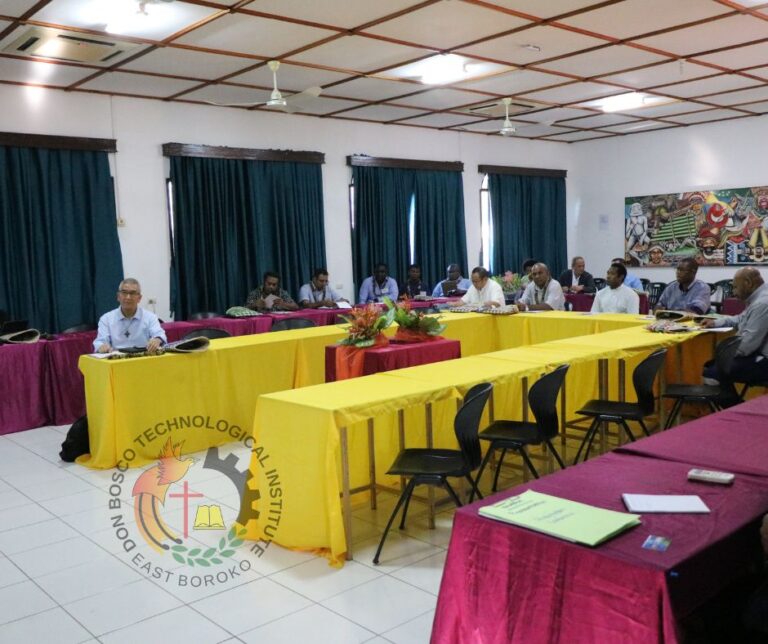
The 2ndDon Bosco Technological Institute or DBTI Stakeholders Conference was held at the Emmaus Conference Centre from the 11th – 13th July. The conference consisted of a 3-day convention with discussions focused on the theme “Dreaming together for DBTI to be a University”.
Invited guests and speakers who were present at the conference were stakeholders from the education, government and industrial sectors, members of the clergy and from among the Salesians, DBTI Alumni, and fellow DBTI staff that contributed towards the conversations and discussions surrounding the likelihood of the institution transitioning into an advanced higher educational institution.
After a traditional welcome by DBTI students from the Autonomous Region of Bougainville with dance and wind-pipe music, Fr. Greg Bicomong, PGS Provincial and Chairman of the DBTI Governing Board, welcomed all participants, emphasizing the vision, determination, and commitment of the PGS Vice Province through different Provincial Chapters to pursue a university status for DBTI.
The conference was graced by the presence of the keynote speaker, a prominent figure within the education sphere, Professor Kenneth Sumbuk who was the former Vice-Chancellor of the University of Papua New Guinea and is currently a member of the Oxford University Convocation.
Professor Sumbuk is an avid supporter of the vision of DBTI to transition into a university as he congratulates the Salesians for the milestones it achieved in “filling the gap in the educational needs of the country.” Professor Sumbuk believes that DBTI has already ticked many of the requirements for being a university, but that DBTI would need to assure and maintain quality standards as it responds to the educational crisis that threatens the country.
The Catholic educational institutions were amply represented in the Conference. Bishop Peter Baquero, Bishop of Kerema, and the bishop in-charge of education, reminded the assembly that Don Bosco was invited in Papua New Guinea (PNG) not by government and business entities, but by the Catholic bishops in order to educate and evangelize PNG youths through Don Bosco’s brand of education, especially in the field of technical education.
The bishop challenged DBTI to be faithful to the Salesian charism and the Preventive System of education by caring for the less privileged and by discerning the future of DBTI not in answer to a need but in response to God’s call.
Supporting comments were made by Dr. Alfred Tivinarlik, a Christian Brother and Principal of the St. Peter Chanel Catholic College, who emphasized the role of the Catholic Church in providing qualified teachers in PNG, as he recognized that much more had to be done to match the educational needs in the country.
Fr. Ronilo Javines represented the IUS, the worldwide association of Salesian higher education institutions. Proposing that DBTI be a benchmark for academic excellence and program diversity as well as for integral ecology, the IUS East Asia Oceania (EAO) Coordinator envisioned DBTI as the cornerstone of educational excellence and innovation among the IUS-EAO institutions.
Dr. Gerardo Largoza from De La Salle University (DLSU) Manila represented the International Federation of Catholic Universities (IFCU), of which DBTI is also a member.
As Executive Director of Strategic Management and Quality Assurance at DLSU, he shared what DLSU has learned in its 25th year anniversary as a university that can benefit DBTI. As President of Divine Word University in Madang, Fr. Philip Gibbs SVD, shared practical insights on how to transition to a university status with the help of seven areas of strategic planning. Likewise, optimistic sentiments were shared and presented by the President of DBTI, Fr. Ariel Macatangay, on the dream to transition DBTI into an Entrepreneurial University, while explaining that such dreams are attainable by a vision for socio-economic sustainability, transformational leadership, and effective collaboration and research to ensure such plans reach fruition.
Government and civil society officers were also present through the messages of Kevin Kalis, Assistant Director at the National Training Council, Samson Wangihomie, Chairman of the Teaching Service Commission, and John Tul of the PNG Education Advocacy Network, as well as the participation of Dr. Kilala Devete-Chee from the National Research Institute.
Some successful DBTI alumni shared their insights in the persons of Dr. Jerome Oko, Administrator at the Divine Word University, Port Moresby campus, Omar Palaming, Founder and CEO of PhilIT System in the Philippines, Godfrey Morisa, Owner and Executive Director of GMT Automation and Mr. Leslie Brown, representing the Corporate Bosco, the federation of alumni in Papua New Guinea and Solomon Islands.
A unique feature in this conference was the involvement of three educational leaders from other parts of the world, who made their presentations via Zoom online platform. The following presented various roadmaps from their respective institutions for DBTI to learn from: Br. Mario Olmos, Rector at Don Bosco University in Salvador, Fr. Stephen Mavely, Founder and former Vice-Chancellor of Assam Don Bosco University in India, and Dr. Peter Bamkole, Deputy Vice-Chancellor for Administration at the Pan-Atlantic University in Lagos, Nigeria.
The Samarai-Murua District Development Authority is the 3rd DDA to sign an agreement with Mama Bank to facilitate all payments of its tertiary assistance program.
The arrangement is to ensure tertiary fees for students sponsored by the districts are paid on time so it does not affect their studies.
Samarai-Murua District this year has allocated K1.7 million for school fee assistance.
MP Isi Henry Leonard said while waiting for the DSIP funding to be processed, the bank will assist to pay for all Samarai-Murua students attending tertiary institutions throughout the country and abroad.
Once the DSIP component of that funding is made available, the DDA will release it directly to the bank to reimburse the funds.
Both the bank and the DDA clarified that this is not a loan.
This arrangement is part of plans to establish a Mama Bank branch in the district.
Two other DDA’s that have signed similar agreements with the Mama
bank are Kerowagi District in the Simbu Province and Rigo District in Central.
Panguna Mine issues took center stage at the recent CANCONEX Resource week hosted by the Papua New Guinea Camber of Resources and Energy (PNG CORE).
Despite being closed for more than 30 years the mine is in the stages to re-open but legacy issues that have been left by Bougainville Copper Limited’s operations until its closure need to be addressed.
The President and his cabinet of the Bougainville Executive council granted an extension of the exploration license, EL_01 to Bougainville Copper Limited (BCL) on the 28th of January, 2024.
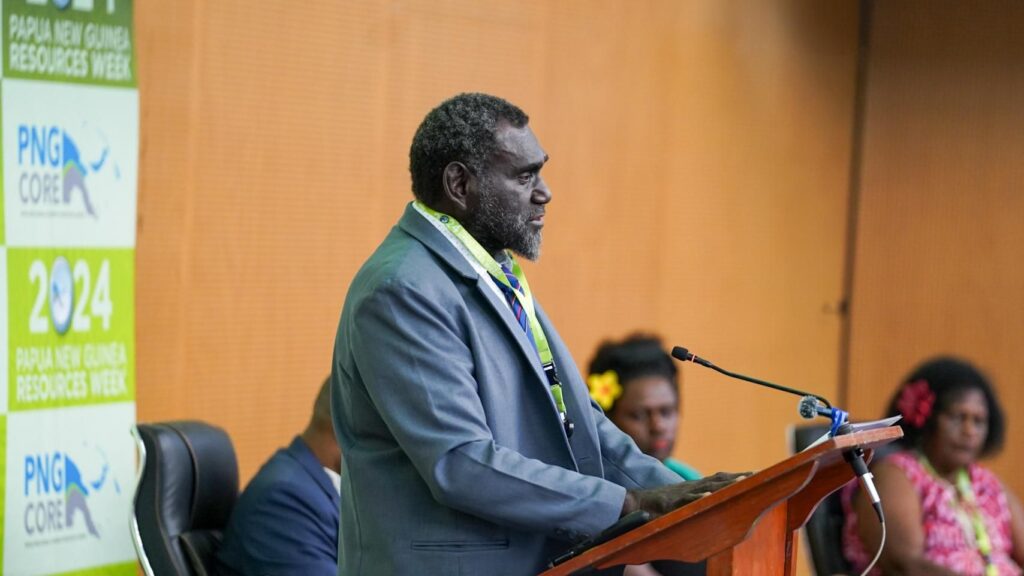
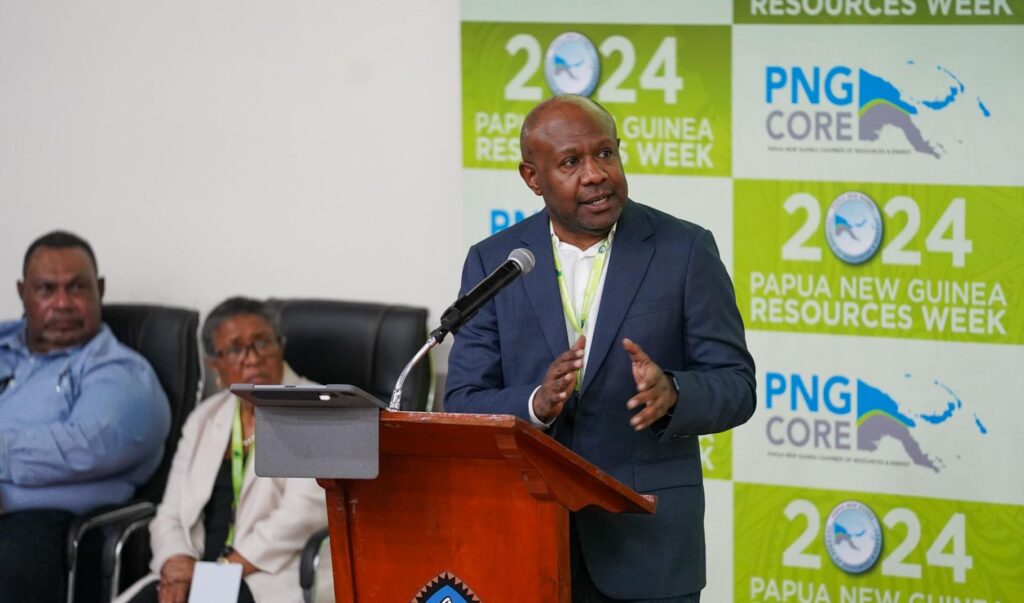
President of the Autonomous Region of Bougainville, Ishmael Toroama speaking during CANCONEX. [[Photo: PNG Media]]
The Panguna Project is already licensed under an Exploration License for a term of five years.
What the Land owners and the people directly affected by the mine want, is to get some closure to the legacy issues, which include the environmental destruction caused by the mine.
Present at CANCONEX was President of the Autonomous Region of Bougainville, Ishmael Toroama, who gave an overall report on the legacy issues of the mine including the way forward to reopening Panguna.
Theonila Roka Matbob, member for the Ioro Constituency in Central Bougainville, is a Panguna mine landowner and she is very vocal about the legacy issues left by the mine.
Old Trucks at the Panguna Mine.
She is the Minister for Community Government and also a long time activist on Panguna issues, she said during CANCONEX that they want to close the old chapter of Panguna as they move on to the new chapter.
She mentioned that there is a report; the PANGUNA MINE LEGACY IMPACT ASSESSMENT, which is set to be complete by August.
The report will help the People of Panguna understand the extent of the mine legacy issues.
The Panguna issue remains sensitive but parties in the efforts to re-open the mine are working closely together.
Panguna Mine. [[Photo//Llane Munau]]
Bougainville Copper Limited Chairman, Sir Mel Togolo was also part of the discussions at CANCONEX, he said BCL had a more community oriented approach and there is widespread acceptance for the mine’s reopening in the Panguna Area.
President Toroama who is also Minister for Minerals & Energy says all the discussions and dialogue between the Land Owners and the ABG, carefully considered support for local content and Resource Owners, he said this was paramount because it is the Land owners that own the Resource.
Theonila Roka stressed that what is important is a plan to see a more viable future for resource owners considering their attachment to the land and its resources, and they can be more sustainable after the project ends.
President of the Papua New Guinea Chamber of Resources and Energy or PNG CORE, Anthony Smare says the Community Affairs and National Content Conference and Expo or CANCONEX is a safe space for uncomfortable courageous conversations.
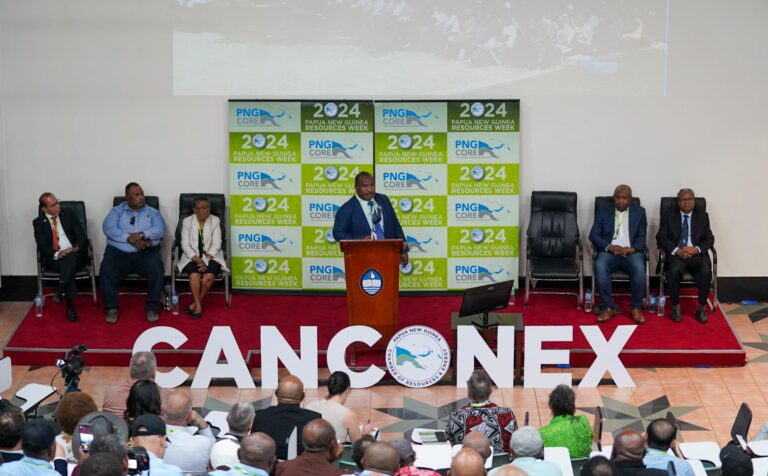
Smare made the comment during the conclusion of the 2024 National Community Affairs & National Content Conference & Expo. CANCONEX, the conference and Expo started on the 1st and ended on the 3rd of July, and was hosted by the University of Papua New Guinea.
There were presentations by companies and stakeholders in the Mining, Petroleum and Energy sectors, and afterwards panel discussions, creating interaction between Resource Landowners, activists and Major Companies in the extractive and Energy industries.
With the focus on Community Affairs and Local Content, discussions on challenges and innovations in improving and addressing issues of national interest, that affect resource landowners and companies alike, were presented to over a thousand attendees over the three days.
One of the highlights of the CANCONEX was a continuation of last years inaugural CANCONEX in Lae, which featured the Issues of Bougainville; this years edition also welcomed the resource landowners from Bougainville and key partners which included the Autonomous Bougainville Government (ABG), the Bougainville Copper Limited (BCL) and the Panguna Land Owners.
Sensitive discussions on the legacy issues of the Panguna mine and the progress of reopening the mine took center stage, with the audience very much in tune.
The President of the Autonomous Region of Bougainville (AROB), Ishmael Toroama, was present, he gave a speech and later the president was part of a panel discussion with BCL, and representatives of the Landowners, which included Theonila Roka Matbob, member for the Ioro Constituency in Central Bougainville, which is part of the Panguna mine area.
President of PNG CORE, Anthony Smare was invested in the conversations and facilitated the panel discussion, on Bougainville issues, he stressed during the closing of CANCONEX that the discussions were informative and very diverse.
“We need safe spaces for uncomfortable courageous conversations, we saw this in the session, the ABG President was here and Bougainville Copper Limited was here, BCL was not welcome back to Bougainville for 20 years, But I was surprised to hear them say that, mining was essential to grow their economy, as the President had said.
“But they were doing it in a way that they knew they had legacy issues and through processes such as remediation in which the people and the ABG are involved in, and that illustrates the importance of having safe spaces where extremely diverse views can be heard where people don’t take it personally but they realize its important to build a future where people feel included and they own that future,” Smare added.
With the convergence of resource owners and companies together not all views are agreed to, but like the President of PNG CORE alluded to in his closing remarks, the convention attendees are always expected to keep an open mind when observing discussions.
“I salute the companies that support this and that sponsor this, because they know that the people that are most uncomfortable with these conversations are the companies themselves, when they hear being mentioned.
“CANCONEX is successful because of what we want people to commit to when they come in, which is to open your mind to opinions which you don’t agree with, with people you don’t necessarily agree with or that you think you have nothing in common with, someone you have never met before, and this event only works because of the commitment the attendees make, you attend all the sessions and you talk to the interns the CEOs, Resource Landowners and community activists you have a whole spectrum that come here,” Smare added.