Author

Inside PNG

Browsing
[[Photo: Hiri Coral PNG/Facebook]]
Attaching coral fragments to a metal spider frame. [[Photo: Hiri Coral PNG/Facebook]]
Hiri Coral PNG's coral beds underwater.
Healthy coral growth on a reef star coral frame. [[Photo: Hiri Coral PNG/Facebook]]

**This article includes photos taken from Hiri Coral PNG’s Facebook page. Click here to see Hiri Coral’s Facebook Page**

**This article was produced with the support of Internews Earth Journalism Network**

The Supreme Court of Papua New Guinea has issued an order staying the National Executive Council’s decision to promote and appoint Commodore Philip Polewara as Chief of Papua New Guinea Defence Force and Colonel Opa Lari Opa as Deputy Commander of the PNGDF, pending the outcome of Major-General Mark Goina’s court case.

In August of 2023, the Prime Minister James Marape suspended Defense Commander Major-General Goina for three months to allow the General Board of Inquiry (GBOI) to investigate a fatal shooting incident involving two servicemen, one soldier and a civilian during a training exercise in Kupiano, Central Province.

The shooting incident happened on July 4th, 2023.

Presiding Judge, Justice David Cannings, issued the court’s orders, under sections 19 and 5(1)(b) of the Supreme Court Act, effectively putting on hold the National Court’s earlier decision from May 14, 2024, in case OS(JR) 177 of 2021, and the associated proceedings.

Key elements of today’s Supreme Court’s ruling include:

  • 1. Stay on NEC Decisions: The court stayed the NEC’s decisions published in National Gazette No. G386 on May 24, 2024. This includes the revocation of Major-General Goina’s appointment as Commander and Chief of the PNGDF and his discharge from the rank of Brigadier-General. Additionally, the promotions of Commodore Philip Polewara to Rear-Admiral and Colonel Opa Lari Opa to Brigadier-General, along with their new appointments as Commander and Chief, and Deputy Chief of the PNGDF respectively, are also stayed.
  • 2. Restraints on New Appointees: Commodore Philip Polewara is restrained from occupying the office of Commander and Chief of the PNGDF and performing related duties, except in his capacity as Acting Commander under his previous appointment. Similarly, Colonel Opa Lari Opa is restrained from assuming the office of Deputy Chief of the PNGDF and performing associated duties.
  • 3. Prohibition on Implementation: The order prohibits all officers, servants, and agents of the NEC and the Attorney-General from taking any steps to implement the NEC’s decision, including conducting hand-over takeover ceremonies.
  • 4. Stay on Related Proceedings: The court also stayed National Court proceedings in case OS(JR) 102 of 2023, involving Major-General Goina and Prime Minister James Marape among others, pending further order.

A directions hearing for Goina’s case is scheduled for July 1, 2024, at the Supreme Court before Justice Cannings at 1:30 pm.

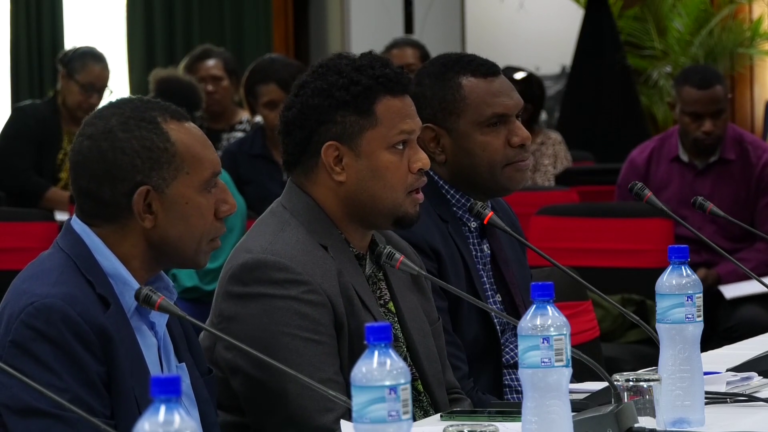
The perception that Papua New Guinea’s standard of Journalism is dropping was part of discussions during the three days of Inquiry into the role and impact of Media In Papua New Guinea, the inquiry facilitated by the Parliamentary Committee on Communications unearthed an interesting predicament that faces the Mainstream Media Industry in Papua New Guinea.

The perception that there is a drop in the standard of journalism and the quality of journalists in recent years has been attributed to many factors.

During the inquiry three participants mentioned that the low standards of education at the secondary school level is a contributing factor toward the low output at the university level.

President of the Media Council of Papua New Guinea and seasoned journalist, Neville Choi, said many media houses have to retrain graduates because they are not grasping the basics that lead to a promising career in journalism.

Poor grammar and writing skills have been a clear indication of the drop in the level of journalism, Universities have argued that they are research institutions and are not responsible for basic English and grammar.

Independent Journalist and renowned Papua New Guinean Journalist, Scott Waide called for more funding to be put into the education system to improve the facilities to foster better teaching and learning.

Scott Waide said he had in previous years trained a lot of journalists and cameramen, he also saw that it was easier to recruit those outside of the school of journalism and train them to be journalists.

Professor Cecilia Nembou, Vice Chancellor of the University of Papua New Guinea concurred with shared statements on the drop in education standards in both the University and the Secondary school system.

Professor Nembou mentioned that as a university, they require the best lecturers, however, that costs money.

She says academic staff of the university should not be viewed as public servants and be limited to a public servants pay ceiling.

She added that Universities, especially Government run institutions should be given the freedom to set their own salary packages to lure qualified lecturers to improve the standards.

She highlighted that salary packages for academics was really poor, and that it was the same at the secondary school level where teachers are being paid poorly as well.

Scott Waide also emphasized the need for education geared towards utilizing recent and trending innovations in Technology, this will in turn help students to be more efficient and innovative to help improve workflow and maximum output.

THE Secretary for the Department of Information Communication and Technology, Steven Matainaho, says his department is on their fourth draft of a Media Development Policy that would improve training and capacity for Media personnel and state-run institutions like universities, that provide courses on journalism.

This was highlighted during the inquiry into the role and impact of media in Papua New Guinea hosted by the Permanent Parliamentary Committee on Communications; a committee made up of members of parliament.

Matainaho added that the Media Development Policy is in its draft phase, and as the name suggests is a Media Development Policy and not a regulatory policy.

Many in the Media fraternity were concerned that the policy was a way to control or regulate the Media, which would infringe on the democratic right of free speech, however, those claims were brushed aside by the Secretary.

To support the policy, the Secretary added that when they did a survey and a public consultation, they found out that there is an immediate need for training and capacity development.

Matainaho added that the Government is not doing enough to provide training incentives for universities.

The majestic Kikori River, one of the life-lines of the Great Papuan Plateau, spanning 144km meandering into the Gulf Delta holds an abundance of flora and fauna that has sustained the local people for generations.

For as long as the Veraibari villagers can recall, they have never felt threatened by this majestic wonder, until recent years.

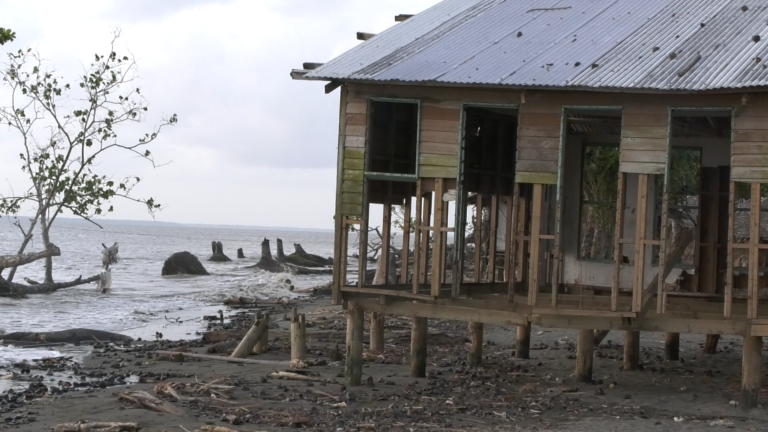
Mr Tofinga Isaiah remembers a village that once had long sandy beaches and hundreds of mangroves as buffers, protecting the village.

The village sits at the mouth of the Kikori River. The long sandy beach is now, only a memory for Isaiah.

Memories his children and grand children will never have.

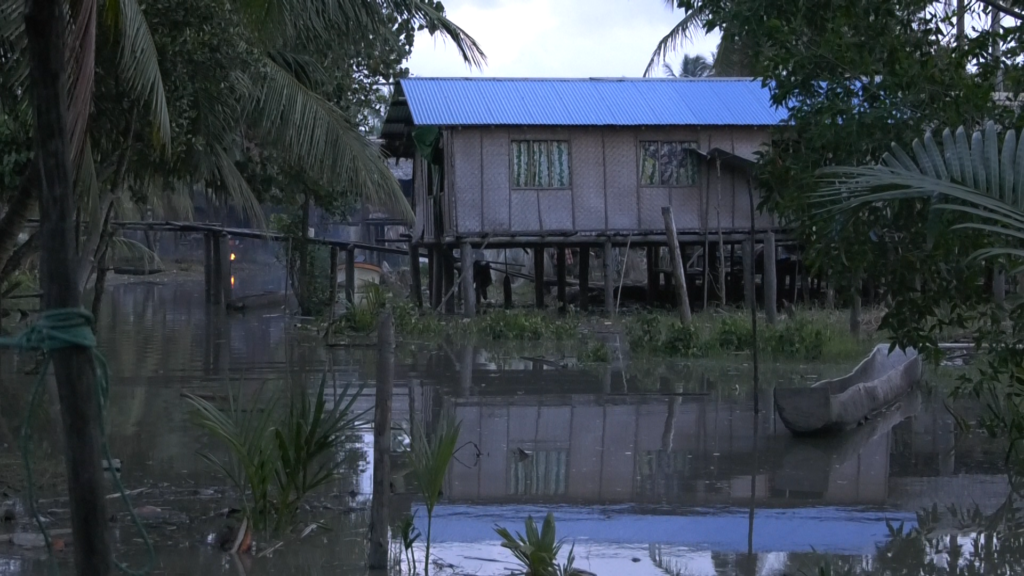
As the sea level continues to rise, it floods the basin, pushing water further back inland, affecting villagers that have lived in harmony with the river and the sea for many years.

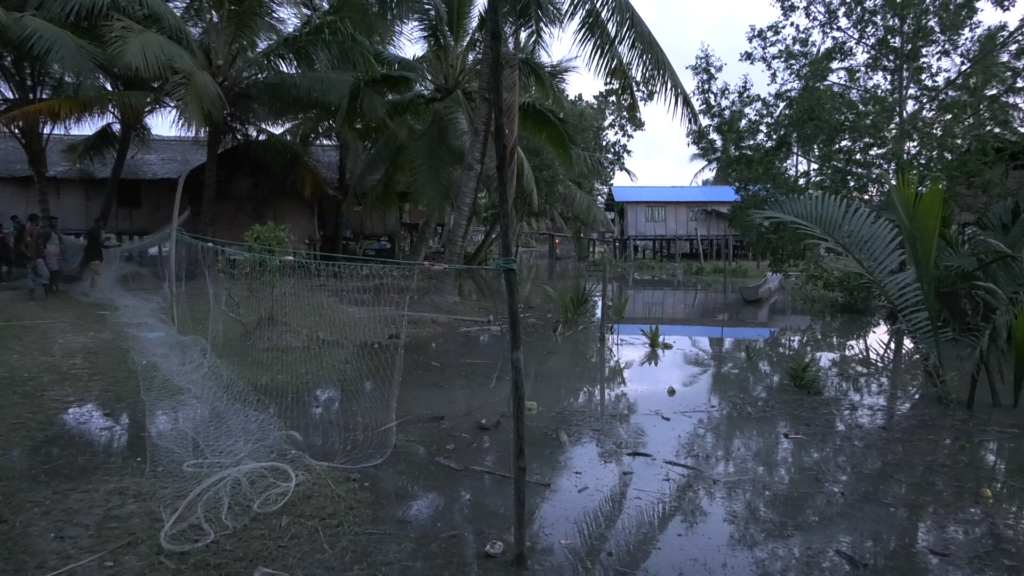
A picture of a house standing in a pool of water caused by rising sea levels at Veraibari village.

Sea level rise is an effect of climate change, due to the extreme releases of green house gases such as carbon dioxide and nitrogen into the atmosphere by manufacturing companies throughout the world.

Developed countries emit 90% of the total green house gas emissions.

And while the government cuts deals with developed countries to claim climate funds and donor assistance, the very people suffering from the impact of rising sea levels are left clueless about their future.

A youth leader, Gary Toru said they have a fair idea of what climate change is, but they need help to put a stop to it. He spoke in “tok pisin”.

“Mipla save olsem long overseas, ol kukim planti oil na gas na displa kamapim climate change. Mipla lukim senis kamap long ples so mipla nid long stopim displa climate change”. (We understand that the burning of oil and gas by countries abroad is causing climate change. We are seeing the impact first hand so we need to stop climate change).

Seeing the knowledge gap and its challenges, Piku Biodiversity Network (PBN) has stepped in to assist Veraibari villagers understand the global aspect of climate change and how the impact is felt locally.

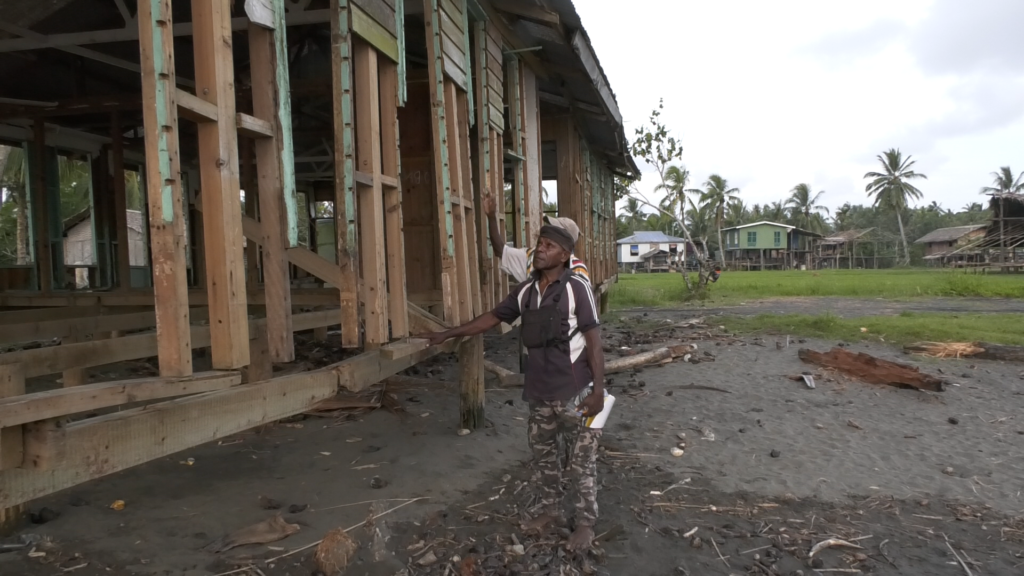
Two men looking at a rundown shelter that looks like it used to be a house.

Director and founder of PBN, Yolanie Amepau said it’s important for the impacted villages to understand, that what they are experiencing is the changing of the climate.

“They also have to understand words such as impact and adaptation and mitigation,” she explained.

“The word climate change is new. It’s new to a lot of communities.

“We know a lot of communities that are being dispossessed because of climate change and Veraibari is one of them. Veraibari is a village caught between the river and the sea.

“The workshops we conduct is to understand their interpretation of climate change and how they plan to address the negative impacts”.

The workshop sees representatives from organizations such as Environment Defenders and the Climate Change Development Authority together with Piku Biodiversity working together to demonstrate collaboration in addressing this crisis.

Ms Amepau said the community leaders are looking at relocating the village and that exercise would cost over a million kina; money the villagers don’t have.

But while plans for relocation are on foot, Isaiah thinks the only solution for now, is building a sea wall.

“I think the only solution we believe to help us control the climate change forcing waves, is to build a sea wall. We tried other solutions but it has not worked.”

Fishing net tied to two sticks placed in the centre of a pool of water at Veraibari village.

Isaac said the other land belongs to someone else, they simply cannot infringe. His concern is they would not have the freedom to hunt, make gardens and gather food freely to sustain their families.

While non-government organizations continue to assist with capacity building so villagers are in a better position to help themselves, the solution to protect their village and their people is in their hands.

The Climate Change and Development Authority (CCDA) unfortunately do not have the funding to assist, despite thousands of kina being committed by donor agencies.

The Acting Managing Director for CCDA, Ms Debora Sungi confirmed that most funds are parked with implementing agencies for capacity building workshops only.

CCDA is in the process of creating policies that will see a 5% equity from Carbon Deals retained by the authority to assist communities who are impacted by climate change.

For now, as negotiations continue at the top level and globally, for communities such as Veraibari village, they will have to summon community resilience and strength that has existed for generations to adapt to the new conditions in the village and also come up with community-based solutions to mitigate the impacts.

**This article was produced with the support of Internews Earth Journalism Network**
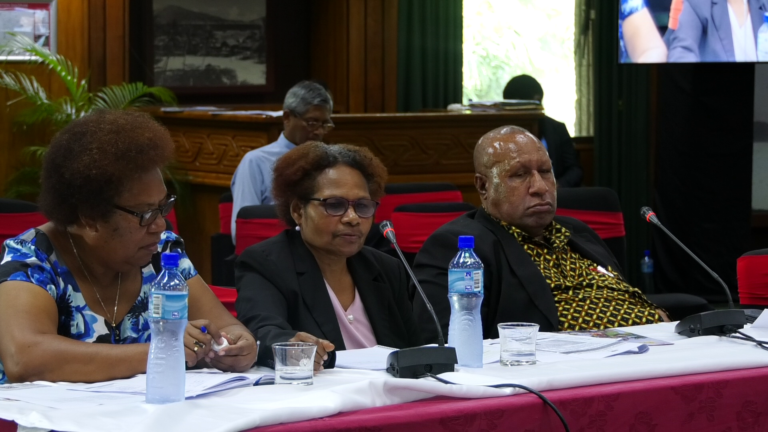
Anna Solomon a veteran journalist with 40 years experience now provides training for Journalists at the Wantok Niuspepa. A weekly newspaper and the only Tok Pisin language newspaper in PNG.

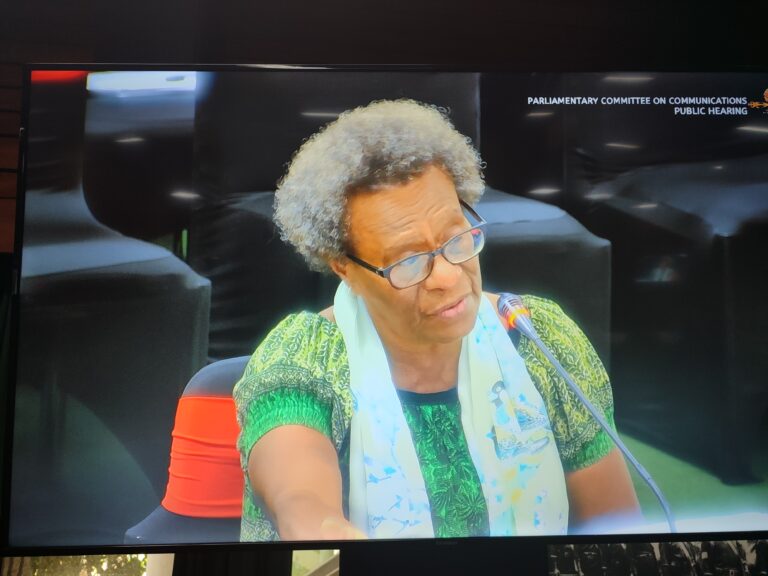
Ms Solomon who spoke during the public inquiry on Media in Papua New Guinea, asked if the Parliamentary Committee can work with the Media Industry to set up a Complaints Tribunal that can address issues affecting Media in PNG.

She also called for better Tok Pisin writers as it is one of two main languages that leaders, especially Parliamentarians, use in PNG to communicate with their voters.

At the commencement of the 3-day Inquiry (Tue 21st – Thursday 24th, May 2024) media houses also called for Parliamentarians and the public to understand how the industry functions.

The public inquiry focused on the “Role and Impact of Media in Papua New Guinea” and was led by the Permanent Parliamentary Committee on Communication, with an aim to improve the standard of Journalism within the country.

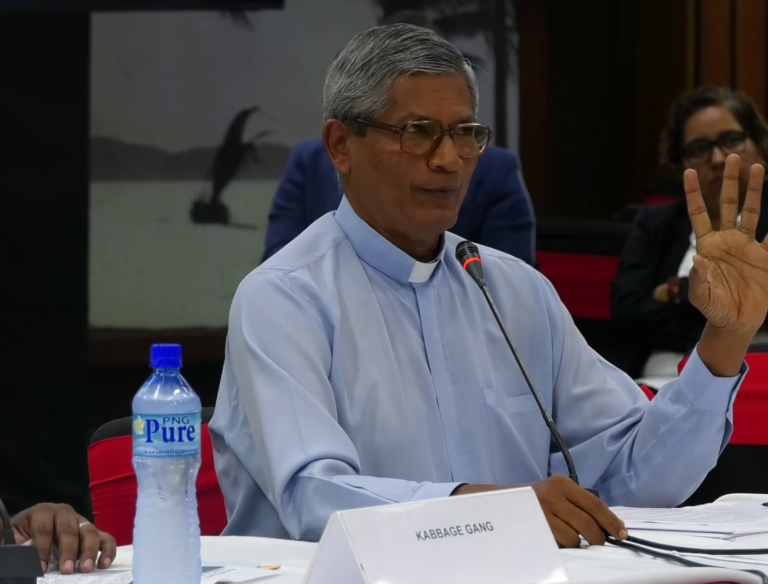
Fr Ambrose Pereira, the editor of Salesian Bulletin, produced by the Catholic Church for its readers stressed the need for media literacy to be taught in secondary schools as a way to prepare young people for a career in Journalism.

A crucial point raised by the clergyman is for PNG to prepare for the advancement of technology, particularly Artificial Intelligence (AI).

Fr Ambrose emphasized this at the recent public inquiry into the role and impact of Media in Papua New Guinea which was set up by the Permanent Parliamentary Committee on Communications on 21st – 23rd May 2024.

The Committee claims the objective is to improve the standard of Journalism in PNG, restoring the integrity of Journalists and the ethics of Journalism.

The committee’s terms of reference included misinformation, disinformation and sensationalized reporting, the role of media organizations, regulatory standards and the question of whether Media Freedom exists in PNG.

While mainstream and social media influencers presented their cases before the committee, they were also encouraged to make recommendations. The general feeling among media workers is the need for media education.

The Food and Agriculture Organization of the United Nations (FAO), as part of the EU-STREIT Program in Papua New Guinea has officially opened a Cocoa Export Market Depot in Vanimo, West Sepik Province.

This facility is the first dedicated cocoa export-oriented depot in the province.

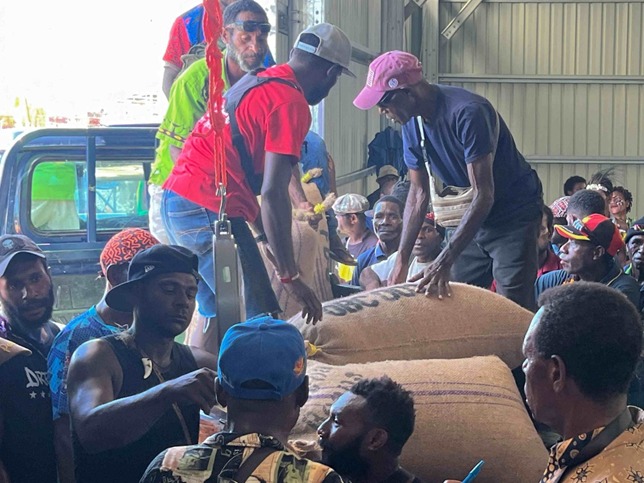
The Cocoa Export Market Depot, with an investment of PGK1.67 million and a storage capacity of 50 metric tons, is aimed to support 20,000 farming households and enhance market access and opportunity to premium prices for their cocoa beans.


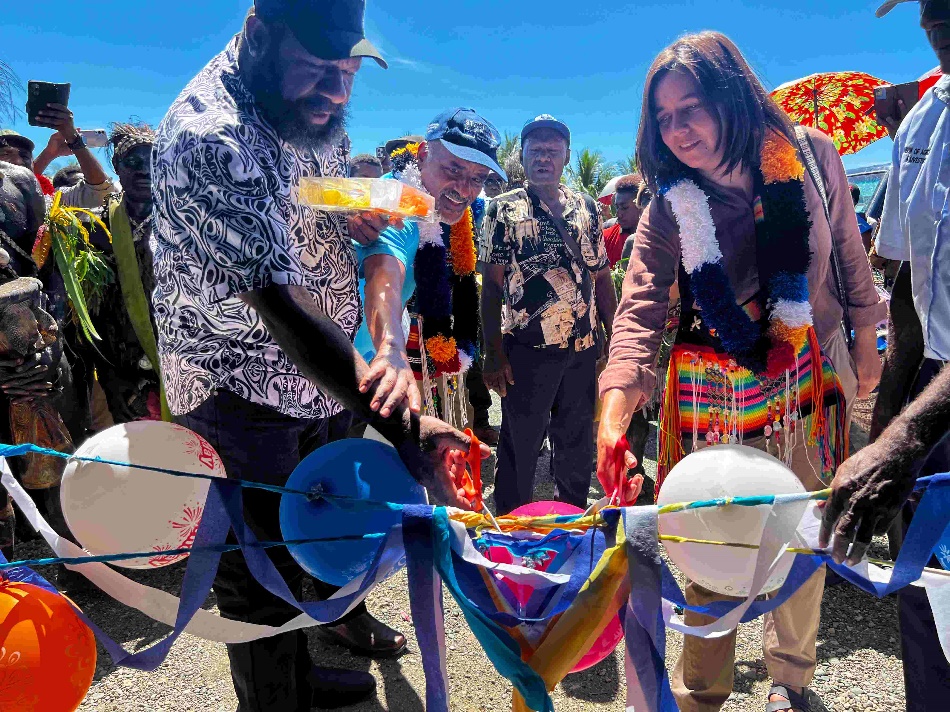
Ribbon cutting of the Cocoa Export Depot facility by Provincial Governor Tony Wouwou and representatives from FAO  and EU-Streit.
Ribbon cutting of the Cocoa Export Depot facility by Provincial Governor Tony Wouwou and representatives from FAO and EU-Streit.

The depot was handed over to the Provincial Government and will be managed West Sepik Investment Limited; the business arm of the Provincial Administration of West Sepik.

The newly established Cocoa Export Market Depot is part of FAO’s commitment to improving the livelihoods of local cocoa farmers by providing proper storage, facilitating better marketing, and enabling farmers to sell their cocoa at higher prices.

This initiative also marks a significant step towards increasing sustainable production of cocoa in West Sepik.

The inauguration event saw the presence of several distinguished guests from the European Union and United Nations including Governor of West Sepik Province, Tony Wouwou.

Governor Wouwou expressed his gratitude to the European Union for funding this important facility for the people of West Sepik Province.

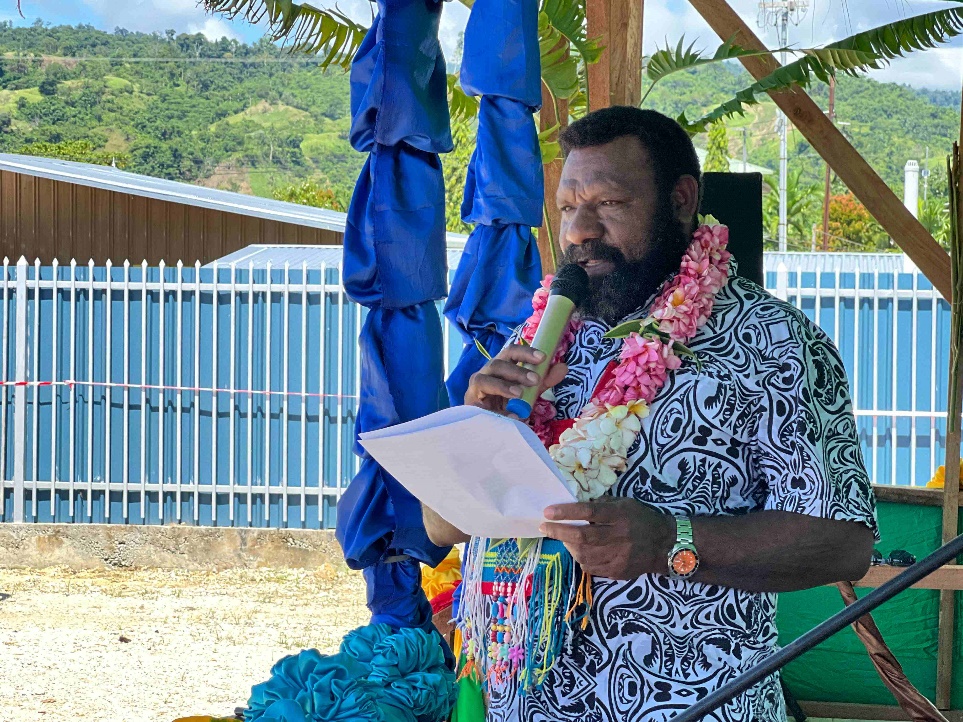
WSP Governor, Tony Wouwou wearing a blue print shirt with a lei around his neck, holding a mic up to his face and bunch of papers in the other at the Cocoa Export Depot launch and opening.
West Sepik Governor, Tony Wouwou.

“I commend the FAO-led EU-STREIT PNG Program for facilitating the construction and establishment of this essential facility.

“This initiative will enhance the productivity of cocoa and significantly improve the livelihoods of our cocoa farmers by providing critical marketing services here in Vanimo,” Governor Wouwou said.

Kesang Phuntsho, speaking on behalf of the UN Resident Coordinator in Papua New Guinea, reaffirmed the United Nations commitment to continued collaboration with the government and local communities.

“In Papua New Guinea, cocoa ranks third among agricultural export crops, contributing approximately 14% of agricultural exports.

“The opportunities for growth are significant, and ensuring the sustainability of our achievements is crucial,” she said.

EU-STREIT PNG Program Coordinator, Ali Said Yesuf, expressed his satisfaction with the progress of the project.

“I am extremely pleased to see this initiative come to fruition. This support, provided by the EU-STREIT PNG Program, aims to enhance the cocoa value chain.

“Our objectives are to improve marketing, ensure farmers receive fair prices, and establish Vanimo as a hub for cocoa exports. This will motivate farmers and transform the economy of West Sepik.”

After 25 fruitful years of educating young Papua New Guineans from around the country alongside the teaching of Christian values and teachings, the Don Bosco Technological Institute or DBTI this year celebrates its 25th Silver Jubilee with a number of events to commemorate this milestone in the history of the institution.

On the 11th of May, the APEC haus in Port Moresby was graced with the presence of stakeholders, sponsors, past-pupils, donors, members of the Catholic clergy, family and friends who were present for the 25th Silver Jubilee Fundraising Dinner.

 The event was to celebrate and sustain the achievement of DBTI in reaching 25 years, yet to also maintain partnership with stakeholders towards the advancing in development of the institution in playing a key role in educating young men and women to become “good Christians and honest citizens” as St. John Bosco intended.

 As part of DBTI’s contribution to nation building despite the grim reality surrounding the quality of education in the country, the providing of quality education towards the betterment of the country has always been at the forefront of DBTI’s teaching objectives.

Such was the sentiment shared by the President of DBTI, Fr. Ariel Macatangay SBD during his speech to mark the welcome note of the event.

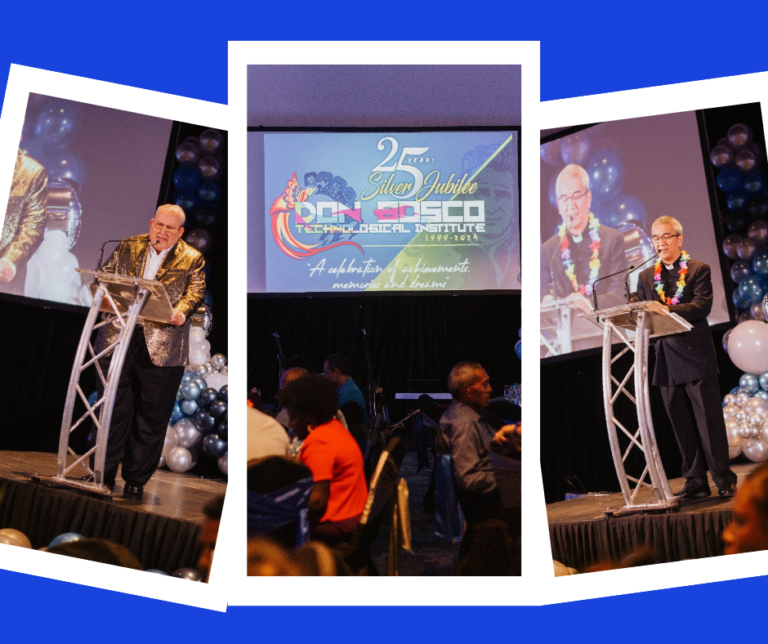
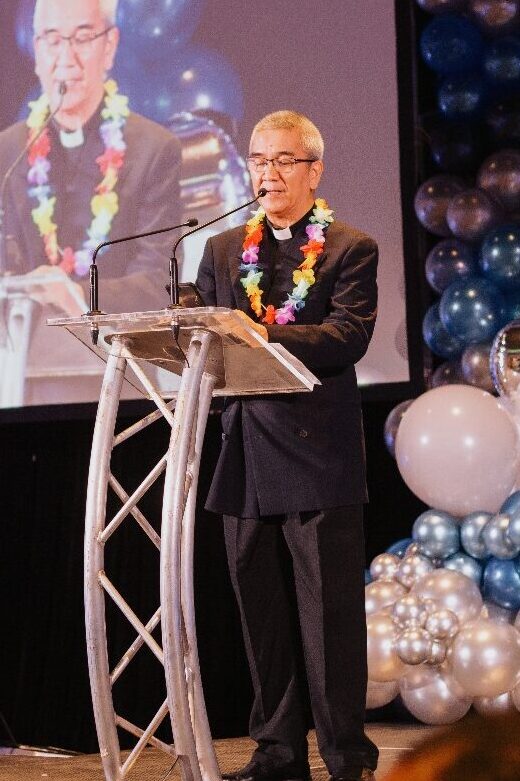
President of DBTI, Fr. Ariel Macatangay SBD, standing on stage delivering a speech.
Fr. Ariel Macatangay SBD, President of DBTI delivering his speech.

“Besides DBTI’s potential in being a partner for technological training, DBTI can also be your partner in boosting the education in Papua New Guinea.

In its May 2024 Papua New Guinea Economic Update entitled “Invest in Your Children,” the World Bank paints a dim picture of the education crisis in PNG and “focuses on the urgent need for more and better investment in education to address a human capital crisis in PNG.”  

With a total of 21 technological programs offered at the institute, this was a key statement and was emphasized on depicting the belief in ensuring that the young citizens of the nation are to possess healthy minds, God-fearing hearts, and skilled hands in order to be contributing and productive members of the community.

The same was noted and emphasized by the Guest Speaker and the Member for Moresby South, Justin Tkatchenko.

“The Catholic church has done a lot towards the educating of young Papua New Guineans”, he said.

“The takeaway from this event is that we can all achieve so much through effort and partnership for the nurturing and excelling of our young people”, he further added in regards to the importance in the benefits of working together to ensure that young women and men have access to quality education they deserve.

Tkatchenko has been a supporter towards the upgrading and development of educational institutions within his electorate.

Further complimentary remarks to mark the celebration of DBTI’s Silver Jubilee were shared and cemented by alumnus, Godrey Morisa, the Managing Director of GMT Automation who elaborated on the importance of institutions such as DBTI that has given many past pupils as himself, the opportunity to have access to quality education and achieve dreams and goals they had set forth in life.

DBTI was established in 1999, with its first batch of 75 young men as pioneer students and further opened its doors in 2001 accepted its first female students to be part of the educative community.

The institute has over a total of 800 students in 21 different technological programs.

THE Peoples National Congress Party or PNC has endorsed two candidates for the Maprik and Sohe By-Elections.

Hildeanne Wefin, a former banking finance executive and founder of WomenLink PNG will contest the Maprik Open seat in East Sepik province. 

Ms Wefin holds two Master’s degrees in Business Administration and Applied Finance. 

Party Leader, Peter O’Neill said Hildanne Wefin’s dedication to gender equality and her impressive educational background and extensive professional experience make her the right choice.

The seat was left vacant following the death of then MP and PNC man, Gabriel Kapris who passed on in August 2023. 

Meanwhile, the Sohe Open seat in the Northen province was left vacant after a Supreme Court Ruling in November last year that upheld a National Court decision declaring the election of Pangu Party’s Henry Amuli null and void due to bribery. 

Amuli is recontesting this seat under the Pangu banner.

Sixteen candidates are contesting the Sohe Open seat including only female candidate Delilah Gore, the petitioner in the Court of Disputed Returns. 

In the 2022 National General Elections, she contested under the PNC banner, however, in this by-election, the former MP (2012 -2017) has been endorsed by Social Democratic Party while PNC has endorsed Paulinias Uhena, the runner up in 2022. 

Uhena is a former senior public servant who served as Manager Finance with the Oro Provincial Administration for 35 years. 

The Maprik and Sohe by-elections will be held simultaneously with polling scheduled to start 25th May and end 29th May 2024.

Writs will be returned from 14th June to 18th June 2024.

Pin It