In a momentous occasion celebrating Papua New Guinea’s 50th anniversary of independence, Moemoana Safa’ato’a Schwenke, the reigning Miss Samoa and Miss Pacific Islands, is set to arrive in Port Moresby.
Dubbed “the Pacific’s living crown,” Schwenke’s visit holds deep cultural and historical significance for the region.
Born into a family dedicated to cultural preservation, Moemoana’s life embodies the belief that culture is a superpower.
An artist, dancer, environmental advocate, and UNICEF Pacific Regional Ambassador, she uses her platform to honour ancient traditions while advocating for modern Pacific voices.
Her work, which includes collaborations with institutions like the Australian Museum, blends artistry with advocacy for environmental awareness and youth empowerment.
Moemoana’s reign as Miss Samoa and Miss Pacific Islands 2023–2024 is particularly historic.
She is the first person to follow in her mother’s footsteps, Maryjane McKibbin Schwenke, who held the same titles nearly 30 years ago.
This legacy highlights the enduring strength of Pacific women and the cultural heritage they protect.
Her visit to the Pacific Fashion Summit and GENESIS – PNG Fashion Week 2025 Showcase is not just symbolic; it’s a strategic move to show how fashion can be a vessel for sovereignty and a platform for dialogue.
With Air Niugini as the official air carrier, Moemoana will join other regional and international guests to contribute to this landmark occasion.
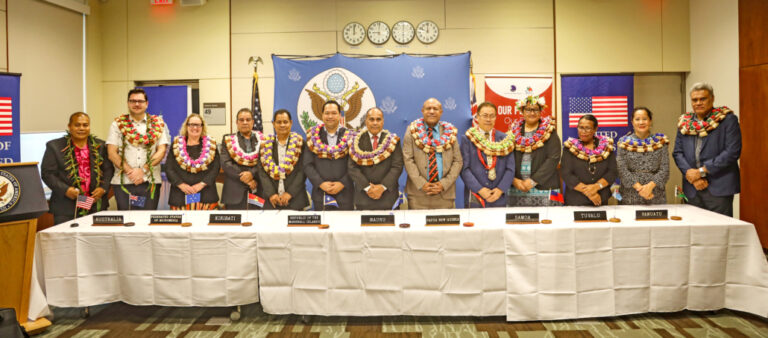
The Pacific Islands Forum Fisheries Agency (FFA) announced that it has received a US$60 million payment for 2024 from the United States government under the Economic Assistance Agreement (EAA) associated with the Treaty on Fisheries.
The payment, which was confirmed by U.S. Deputy Secretary of State Christopher Landau earlier in the week, will be allocated to the 16 Pacific Island Parties that comprise the FFA’s membership.
“This is a positive and welcome development, and a clear demonstration of the US Government’s commitment to the EAA, the Treaty, and its cordial relationship with Pacific Island States,” said FFA Director-General Noan David Pakop.
Pakop expressed confidence that the initial payment would be a positive sign for the future of the agreement.
“We are confident that this initial payment will pave the way for the approval of the 2025 payment and future payments under the EAA,” he said.
The Treaty on Fisheries, which allows U.S. purse seine fishing vessels to operate within the Exclusive Economic Zones (EEZs) of the Pacific Island Parties, has been in effect for 37 years since it came into force in 1988.
Its terms and conditions have been periodically renegotiated, with the latest extension concluded in June 2024, extending the agreement for the next 10 years (2023-2033) with revised terms and a new financial package.
The 16 Pacific Island Parties involved are: Australia, Cook Islands, Federated States of Micronesia, Fiji, Kiribati, Marshall Islands, Nauru, New Zealand, Niue, Palau, Papua New Guinea, Samoa, Solomon Islands, Tonga, Tuvalu, and Vanuatu.
Australians are consuming record amounts of meth, cocaine, and heroin, according to the latest wastewater analysis. The findings, released by the Australian Criminal Intelligence Commission, reveal that nicotine use is also on the rise.
This insatiable demand for illicit drugs is a boon for international crime groups and dealers who are profiting from Australia’s lucrative market. The commission’s analysis, which began in 2016, detected a surge in the consumption of major illicit drugs nationwide.
In the year leading up to August 2024, Australians consumed more than 22 tonnes of meth, cocaine, heroin, and MDMA (ecstasy). This drug consumption has fueled the illicit drug trade, with an estimated $11.5 billion spent on these substances.
Methamphetamine (ice) consumption rose to an estimated 12.8 tonnes. Use of other drugs also saw significant increases: cocaine was up almost 70%, MDMA nearly 50%, and heroin almost 15%.
According to Shane Neilson, a drug specialist with the commission, the market is rebounding after a drop in consumption due to tighter border controls and lockdowns during the COVID-19 pandemic. The high prices Australians are willing and able to pay compared to other global markets are driving the business.
Mr. Neilson explained that drug traffickers will send tonnes of product to Australia’s borders, knowing that whatever gets through will generate enough profit to outweigh any losses from seizures.
“It’s just a relentless determination of transnational and domestic serious and organized crime groups to continue to supply the Australian market,” he said.
Organised crime groups are also believed to be behind a rise in illicit tobacco, though it’s impossible to determine how much of the nicotine consumed was obtained on the black market. Ketamine use is also increasing, with forensic analysts believing most of the drug being consumed is illicit rather than for medical or veterinary purposes.
A similar situation exists with cannabis. While thousands of people are medically prescribed the drug.
“Although the number of users of medicinal cannabis is increasing, it’s small relative to the overall use of cannabis,” Mr. Neilson noted.
The crime commission stated that the multi-billion-dollar expenditure on illicit drugs sends profits solely to organized criminals.
“There is no taxation on these profits, and economically it does have an impact,” Mr. Neilson said.
The latest National Drug Strategy Household Survey found that nearly one in two Australians aged 14 and over (10.2 million people) have used an illicit drug in their lifetime. An estimated one in five (3.9 million) have used one in the past 12 months.
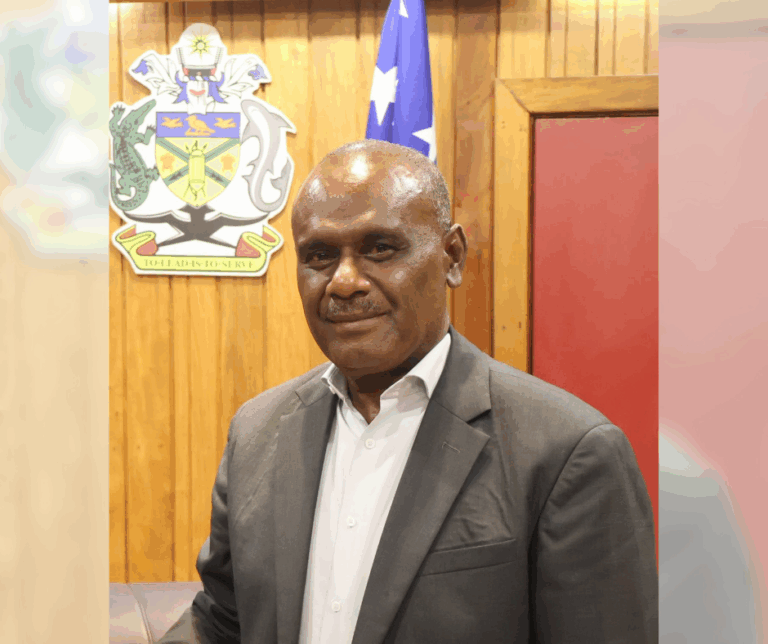
SOLOMON Islands Prime Minister, Jeremiah Manele’s recent decision to exclude global powers from the upcoming Pacific Islands Forum (PIF) leaders’ meeting has sparked considerable debate in Western media.
While some outlets have framed it as a snub or a sign of growing Chinese influence, a closer look at Manele’s background as a seasoned diplomat suggests a more strategic motivation.
Having served in various diplomatic roles prior to becoming Prime Minister, Manele is known for his measured approach and deep understanding of international relations.
His comments regarding the PIF decision, therefore, should not be dismissed as mere oversight or the result of external pressure.
Diplomatic Background drives Strategic Move
Prime Minister Manele’s decision is deeply rooted in his extensive background as a career diplomat. For decades, he has worked to advance the Solomon Islands’ interests on the international stage, giving him a unique perspective on managing relationships with powerful nations whilst prioritizing regional unity.
Manele’s experience includes serving as a counselor and later Chargé d’Affaires at the Solomon Islands Permanent Mission to the United Nations in New York from 1997 to 2002.
He also held senior roles within the government, including Permanent Secretary of the MFAET and Secretary to the Prime Minister and Cabinet. These positions have given him a comprehensive understanding of the domestic and international considerations that shape his nation’s foreign policy.
In explaining the rationale behind the move, Manele explicitly referenced the 2023 Rarotonga Leaders’ Communique.
“It is a sovereign decision for Solomon Islands as the host. We are deferring the dialogue partners meeting because the process for the review and reform of the Post-Forum Dialogue is ongoing,” Manele says.
This emphasis on regional ownership and the need for a strengthened internal approach to engaging with external partners emphasizes a strategic objective.
Manele is seemingly prioritizing the unity and autonomy of the Pacific Islands Forum, while allowing member states the space to define their own terms of engagement before being potentially pulled in different directions by competing global interests.
“The deferral aims to give the region time to strengthen our collective approach to engaging with our partners,” he further elaborated.
While the potential participation of Taiwan and China’s strong opposition are widely speculated to be a contributing factor, Manele’s public statements have consistently focused on the procedural aspects and the need to reinforce the Forum’s internal processes.
This diplomatic manoeuvring could be interpreted as an attempt to prevent a divisive issue from overshadowing the core agenda of the PIF, which traditionally centers on pressing regional concerns like climate change, the protection of the Pacific Ocean, and sustainable development.
The decision has elicited varied reactions from both within, and outside the Pacific.
While some leaders have voiced concerns, others appear to understand the strategic rationale.
President of Palau, Surangel Whipps Jr, whose nation maintains ties with Taiwan, has publicly supported the deferral, suggesting a degree of regional understanding for Manele’s approach.
Ultimately, Jeremiah Manele’s diplomatic background lends assurance to the interpretation that the decision to defer dialogue partners is a calculated move, prioritizing regional solidarity and a more unified approach to external engagement.
Whether this strategic gambit will serve the long-term interests of the Blue Pacific remains to be seen, but it undoubtedly reflects a deliberate and well-meaning effort to navigate the complex geopolitical landscape with the region’s best interests at heart.
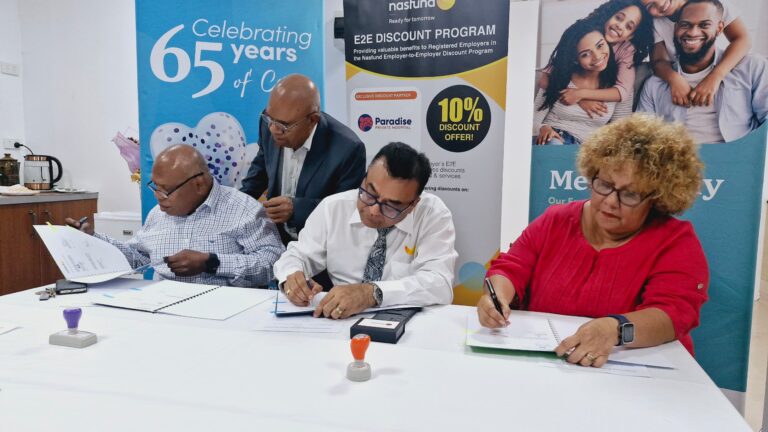
The agreement, signed on Thursday, August 7th, 2025, makes PPH a new loyalty partner for Nasfund’s Employer to Employer (E2E) Discount Program and the Member Discount Program (MDP).
Under the partnership, Nasfund members and employers will receive a 10% discount on a variety of healthcare services at PPH, including outpatient and emergency services, maternity care, and diagnostic imaging like X-rays and ultrasounds. To get the discount, members must show a valid Nasfund membership card, while employers need to present a Nasfund E2E card.
“This initiative reflects a shared commitment to improving healthcare accessibility and affordability for Papua New Guineans,” Nasfund CEO Rajeev Sharma stated.
PPH Chairman Dr. Robin Sios, who signed the agreement along with Co-Owner Mrs. Janet Sios and CEO Dr. Polapoi Chalau, expressed excitement about the collaboration.
“We are excited about this loyalty program and to partner with the Fund to support promotional efforts to raise awareness of the benefits available to our Nasfund members and employers at our hospital,” said Dr. Sios.
Mrs. Sios added that the partnership is particularly meaningful because PPH is a nationally owned hospital and a large portion of its clients are already Nasfund members.
South Sydney Rabbitohs legend, Alex Johnston is now free to begin early negotiations to become the first player for Papua New Guinea’s new NRL franchise.
Johnston, who recently signed a two-year contract extension with the Rabbitohs, has a special clause in his deal that allows him to start talks with the new team before the usual cut-off date. This gives the PNG franchise a major advantage in securing a high-profile player with deep ties to the country.
Johnston’s grandmother was born in Papua New Guinea, and he is a proud representative of the Kumuls, having played 10 Tests for the national team. His connection to the country is well known, and he has often spoken about his love for PNG and its passionate fans.
South Sydney CEO, Blake Solly confirmed the special arrangement stating “Alex said with his connection to PNG it would be cool to be player number one.”
“He has been a captain of the national team, played 10 Tests and is revered in PNG. He will always have a home here at Souths, but if Alex and his family do decide they want to be part of the PNG team on its entry to the NRL competition; we respect and support that decision,” Solly added.
During a recent visit to PNG, Johnston expressed his strong interest in joining the new team.
Beyond playing for the new franchise, Johnston is also motivated to represent the Kumuls in the 2026 World Cup, which will be co-hosted by Australia and Papua New Guinea. He hopes to help the team go further in the tournament than ever before.
“My motivation has always been to win competitions. Now it’s also to create a legacy and play for my family and make them proud,” Johnston said.
“I want to encourage those young kids playing rugby league to dream big.”
Currently, Johnston is closing in on the all-time NRL try-scoring record. With 207 tries in 239 games, he is just six tries shy of Ken Irvine’s record of 212. He will have a chance to add to his tally this weekend when the Rabbitohs take on the Gold Coast Titans.
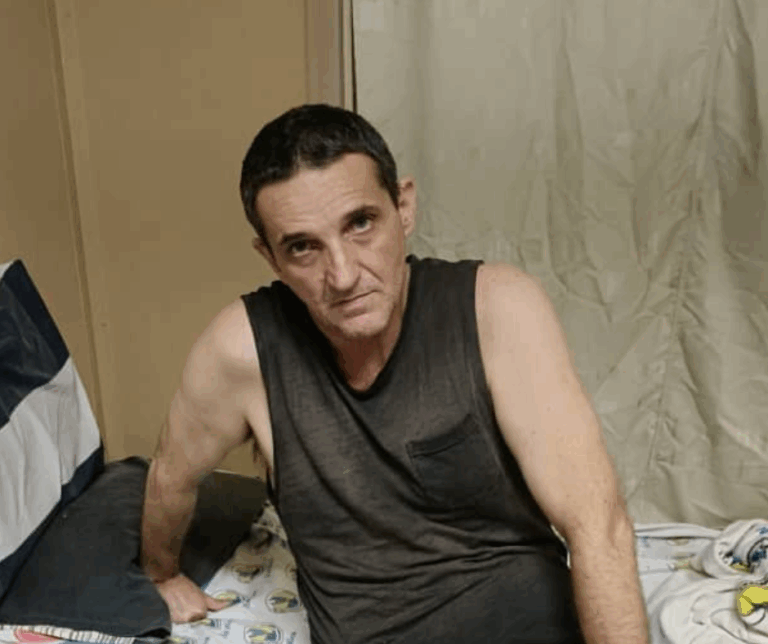
Papua New Guinea’s Supreme Court in Port Moresby has ordered the release of 52-year-old Italian citizen, Carlo D’Attanasio after a successful appeal.
The Supreme Court overturned the National Court’s decision, following an appeal by D’Attanasio through his lawyer David Dotaona against the State.
The court found that the original verdict, which convicted D’Attanasio, was unsafe and unsatisfactory.
The State’s Allegations
According to the State, D’Attanasio, a 52-year-old Italian national, was jointly accused with three other Papua New Guineans of knowingly concealing 611 kilograms of cocaine between February 1, 2020, and July 26, 2020. The cocaine was valued at two-hundred-million-kina (K200,000,000).
The State alleged that D’Attanasio and his co-accused, Morgan Mogu, met in 2018 in Milne Bay.
In early 2020, Mogu was told of a “big job” coming up, and in March-April 2020, a yacht would drop off cargo at Kupiano, Central Province. The co-accused allegedly transported the packages to Papa-Lealea in Central Province towards the end of July 2020, to be loaded onto a small plane.
On July 26, 2020, another accomplice, John Cutmore, landed a small plane at a makeshift runway. The plane crashed upon take-off, and the group removed the cocaine packages and hid them in the bush.
The Original Trial and Conviction
At the trial, the State relied on 137 exhibits of tendered evidence, including records of interviews with the four accused. There was no oral testimony, and all accused, including D’Attanasio, remained silent. After hearing submissions, the trial judge accepted the State’s allegations and convicted the four accused of money laundering.
Grounds for Appeal
The appellant, Carlo D’Attanasio, decided to appeal the National Court’s decision. His grounds of appeal, presented by his lawyer David Dotaona, argued that the trial judge erred in law and fact in two respects: First, by misinterpreting the elements of the offense, when the state’s allegations, even if sustained, did not support a conviction under section 508B(1) and second, by entering a conviction in the absence of sufficient admissible evidence, specifically that:
The State’s case was based entirely on tendered evidence without oral testimony.
Reliance was placed on uncorroborated evidence from a sniffer dog’s search of D’Attanasio’s yacht.
The trial judge misapplied the principles of circumstantial evidence by not assisting a reasonable and innocent explanation of evidence tending to implicate D’Attanasio in his record of interview, and
Evidence from co-accused was used against the appellant, contrary to the principles of accomplice evidence.
Key Evidence and Timeline
According to the determination of the appeal, D’Attanasio admitted to sailing his yacht, MV Badu, from South America.
According to records, D’Attanasio sailed to the Royal Papua Yacht Club marina on March 26, 2020. Due to COVID-19 protocols, he was told to anchor in isolation for 14-days.
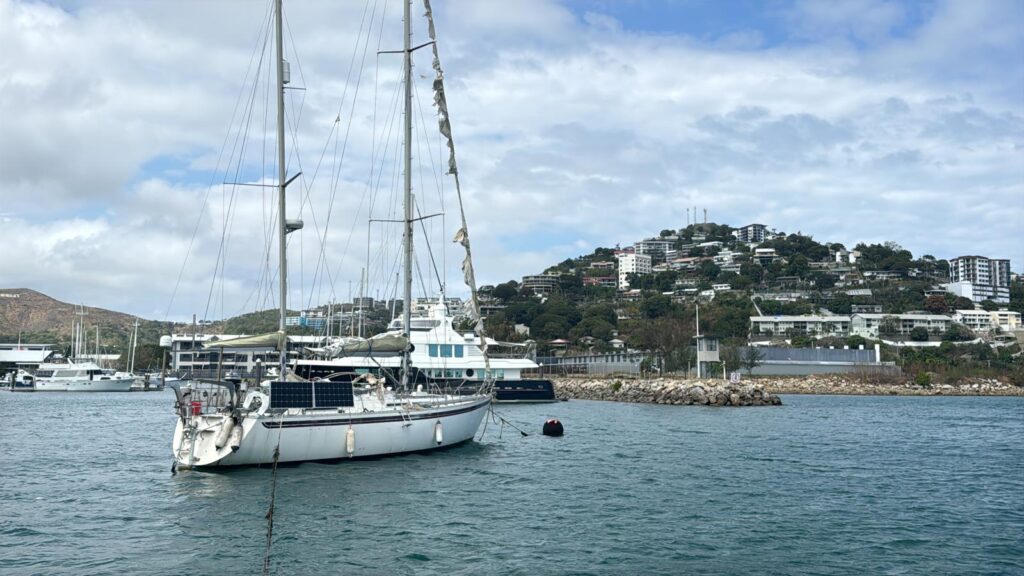
MV Badu
Between April 9 and 14, 2020, D’Attanasio made repeated requests to come ashore via radio. He completed documentation at the Royal Papua Yacht Club mid April 2020, and the yacht was cleared by Customs on April 20, 2020.
Due to COVID-19 protocols, Customs did not search the yacht.
D’Attanasio’s passport had expired on March 7, 2020.
In early July 2020, D’Attanasio informed the Royal Papua Yacht Club that he intended to go to Alotau. On July 26, 2020, the plane piloted by John Cutmore crashed at Papa-Lealea.
On 27th of July, 2020, Cutmore surrendered himself to the Australian High Commission, and was interviewed by Police on July 30, 2020.
Also on July 30, 2020, D’Attanasio’s co-accused were arrested, and 28 bags of cocaine located in the bush. That same day, D’Attanasio sought clearance to depart for Bali on August 1, 2020. Clearance was issued on the morning of August 1, but the vessel did not depart.
On August 3 and 4, 2020, a search of the MV Badu by police and customs, with assistance from a sniffer dog, indicated four areas of interest within the yacht. A small quantity of cocaine, 50 grams, was found in a plastic bag. However, no comparison was made between this cocaine and the 28 bags found at Papa-Lealea.
Supreme Court’s Decision
The Supreme Court determined that this was a “borderline case” due to the unclear disputed facts. The court found that while the circumstances were suspicious, the evidence was not strong enough to exclude a rational inference other than D’Attanasio’s guilt.
The three-man bench, comprising Justice David Cannings, Peter Toliken, and Teresa Berrigan, ruled that the conviction of the 52-year-old Italian citizen by the National Court was unsafe and unsatisfactory.
The court ordered that D’Attanasio’s appeal be allowed, the conviction quashed, and a verdict of not guilty substituted.
The decision was handed down in Waigani, National Capital District, on Thursday, July 31, 2025.
The now-free Carlo D’Attanasio, who is currently hospitalized with colorectal cancer, thanked his lawyer, David Dotaona, and expressed faith in PNG’s justice system. He is in close communication with the Italian Embassy to arrange his return home.
Solomon Islands Prime Minister, Jeremiah Manele is setting a clear example for transparent governance in the Pacific.
Manele hosts a press conference twice every month, to brief journalists on the government’s latest activities, policies, and plans.
It is a commitment, he says, reflects his administration’s view of the media as a vital bridge between government and citizens.
“It’s important in terms of transparency and accountability,” Manele told InsidePNG and In-depth Solomons in an exclusive interview.
“It’s an opportunity where we can inform our people through the media on the implementation of government programs, policies, activities, even upcoming visits or the outcome of those we’ve undertaken.”
A Positive Shift from Past Leadership
His approach has been praised as a welcome departure from previous leadership styles.
“Manele’s decision to face the media and field questions from journalists is a huge step towards open government, transparency and accountability,” said Ofani Eremae, President of the Media Association of Solomon Islands (MASI).
“This is something that had been missing under the last leadership of Manasseh Sogavare,” he added.
“Regionally, I think Manele’s approach aligns more closely with norms seen in countries like Papua New Guinea, where Prime Minister James Marape holds media engagements, though sometimes more sporadically.”
Solomon Islands Broadcasting Corporation’s News and Current Affairs editor Fredrick Kusu said the fortnightly press conferences are welcome news for journalists in Solomon Islands.
“The decision to conduct regular press conferences with journalists is a positive development because it allows journalists to ask questions about governance directly to the Prime Minister,” Kusu said.
“This transparency enables the public to stay informed about what is happening in the country, especially at the government level,” he added.
In Solomon Islands, Journalists at a recent press conference hosed by the Prime Minister, Jeremiah Manele. [[Photo/SI PM’s Media]]
Countering the Rise of Misinformation and AI Manipulation
This practice is rare among regional leaders and comes at a time when AI-generated fake content and disinformation campaigns are rife online.
“What goes out to our people must be factual and true,” Manele said. “Misinformation can be a source of instability and disunity.”
Eremae agrees.
“Journalists must treat the challenge of disinformation and AI-generated content as both a professional and civic duty, adapting their skills and vigilance to protect truth, democracy, and public trust,” he emphasized.
“Our member organisations are aware of these challenges and have internal mechanisms to safeguard their content.”
PNG Media Calls for Greater Access and Structure
In neighbouring Papua New Guinea, media leaders have also recognised the need for more structured engagement with the government.
“PNG government leaders and state agency heads would benefit more from a robust and direct engagement with the media,” said Neville Choi, President of the Media Council of PNG (MCPNG).
“Transparency and accessibility are important to get their message out to the people, which is why the media continues to push for more in-person conferences and open communication.”
He added that while PNG has media access channels, much of it is informal and reliant on personal relationships with officials; a system that lacks consistency.
“Much of the access comes through direct contact with particular journalists or through government media units, and when the PM decides to hold an in-person media conference,” Choi said.
Information Access with a Responsible Framework
Access to government information in Solomon Islands is guided by its commitment to freedom of expression, though some limitations apply based on subject sensitivity according to PM Manele.
Once cabinet conclusions are formally adopted, journalists could approach the relevant ministries for further details.
“It depends on the nature of the subject,” Manele noted. “Some issues, particularly those related to national or international security, are understandably sensitive.”
MASI has been working to ensure that journalists are well equipped to handle such responsibilities professionally.
“One of MASI’s goals is to ensure the media acts responsibly and ethically,” said Eremae. “But government authorities also have a responsibility to provide reporters with information when it is requested. That’s how fair and balanced reporting happens.”
Building Journalistic Capacity and Awareness
Both MASI and MCPNG are actively strengthening their respective media sectors through training and advocacy.
“The MCPNG is currently supporting the roll-out of the Foundations of Journalism training program,” said Choi. “This training is an extremely effective mechanism which will bridge a perceived gap between the journalism knowledge and principles in media training schools, with skills received on the newsroom floor.
“We’re also compiling a discussion paper on AI and its implications for PNG’s media,” Choi added.
“There is a clear need for newsroom leaders to better understand AI tools and risks, especially as we approach the 2027 elections.”
Foreign Policy and Media in a Multipolar Pacific
On regional dynamics, PM Manele reiterated Solomon Islands’ “friends to all” policy.
In a landscape where global powers are increasingly vying for influence across the Pacific, including through media initiatives, he emphasized that his government remains focused on partnerships that advance national development.
“We are friends with Australia, China, the US, Japan, everyone. Our interests are developmental.
“We’re a geographically spread country with major infrastructure, health, and education challenges. So, we work with all partners to meet those needs.”
Collaboration Across Borders: A Shared Media Mission
As cross-border issues like environmental crime, organized corruption, and digital manipulation grow, both MASI and MCPNG say newsroom collaboration is crucial.
“Many of today’s biggest stories; corruption, organized crime, environmental destruction, do not stop at national borders,” Eremae said.
“Working together across the region helps expose these issues and strengthens journalism overall.”
“Collaborations like that of InsidePNG and In-depth Solomons foster exchange, deepen understanding of local contexts, and improve the quality of reporting,” said Choi.
“These efforts also make it harder for misinformation or criminal networks to escape scrutiny across jurisdictions.”
There are now 50 days to go before Papua New Guinea celebrates a milestone of 50 years of political and economic independence.
Prime Minister James Marape called on Papua New Guineans to embrace this significant countdown as a time of national reflection, renewed purpose, and thanksgiving to God, who has guided the country through five decades of independence.
“Fifty years ago, our founding fathers laid the foundation of this sovereign nation with a bold vision that Papua New Guinea, though culturally diverse, would stand united, independent, and blessed.
As we mark 50 days to our Golden Jubilee, I encourage every Papua New Guinean, young and old, to take this time to look back, give thanks, and look forward with faith and courage,” Marape said.
Drawing inspiration from scripture, he referenced Leviticus 25:10, which speaks of the Year of Jubilee as a time of liberty, restoration, and return.
“The Bible speaks of the 50th year as a Jubilee, a sacred time of freedom, forgiveness, and restoration. I believe this is not just a political or historical moment, but a spiritual one for our people and our nation. God has been gracious to Papua New Guinea, and now more than ever, we must honour Him for bringing us this far,” he said.
The Prime Minister said the countdown to September 16 should be embraced by all sectors of society — from schools and Churches to the business community and civil society — as a time to celebrate, reconcile, and rededicate ourselves to building a better and more inclusive PNG.
A Legacy of Progress and Resilience Over the last five decades, Papua New Guinea has faced its share of challenges, from economic fluctuations and law and order issues to global pandemics and natural disasters. Yet, the Prime Minister stressed that the resilience and spirit of the people have been the country’s greatest asset.
“Despite all odds, we are still standing stronger, wiser, and more united than ever. This 50th Independence Anniversary is not just a mark of age, but a testimony of God’s sustaining grace and our people’s perseverance,” Marape said.
“From the remotest village to the highest Office of Government, every Papua New Guinean has played a role in this journey. The story of PNG is not just one of policies or politics it is a story of faith, family, community, and resilience,” Marape said.
Marape reiterated his Government’s commitment to building a stronger, self reliant, and God-fearing nation. He acknowledged that while much has been achieved, there is still work to do in areas such as education, health, infrastructure, law and order, and wealth creation.
“We will enter the next 50 years with greater intent to take back our economy, empower our people, and honour God in how we govern and lead. As we count down these 50 days to September 16, let us commit ourselves as individuals, families, churches, and communities to be part of this new chapter,” he said.
Climate change isn’t just a distant threat for our Pacific island communities; it’s a daily struggle impacting homes, food, and livelihoods.
Helen Tony, who lives in the small, low-lying village of Unakap on Vanuatu’s Nguna island, knows this reality all too well.
For 15 years, Helen has seen how a changing climate makes life harder. Growing fruits and vegetables has become a challenge, especially after cyclones bring destructive insects. Her husband too, is catching fewer fish because the reefs and ocean ecosystems are damaged by extreme weather, warmer waters, and ocean acidification.
Their family of five relies on income to buy food from local markets, but even Helen’s traditional craft of weaving mats, fans, purses, and baskets from pandanus leaves has been hit.
“To weave them… the leaves need to be dry but more rain than is typical has been shrinking her output and the cash she generates selling her wares.”
A Constant Battle for Recovery
Vanuatu, an archipelago familiar with volcanoes, earthquakes, tsunamis, and landslides, is no stranger to disaster and the long road to recovery. However, the added burden of climate change impacts and more intense cyclones and storms is making it increasingly difficult to bounce back.
Pallen Abraham Philip, World Vision’s humanitarian emergency security affairs manager, notes that while cyclones have always been part of life, they’re now stronger and hitting out of season.
“They’re still in the recovery mode, then the next hits,” he explains.
This was evident with Category five Cyclone Pam in 2015 and the twin tropical cyclones Judy and Kevin that tore through just days apart in 2023.
Finding Solutions, Facing New Challenges
Significant funding is crucial for vulnerable regional and rural communities to recover and adapt. Vanuatu receives support through various programs, including the Green Climate Fund on Nguna and neighbouring islands, backed by the Vanuatu government and Save the Children.
Australia’s $50 million contribution to this is part of its broader $100 million Pacific Resilience Facility, which supports small, high-impact initiatives to help communities prepare for disasters.
Whitely Tasaruru, the Nguna and Pele area climate change manager for Vanuatu’s Community-based Climate Resilience Project, works to ensure adaptation measures like coastal tree planting, seawall construction, and coral restoration work together.
For Nguna, the long-term goal is to gradually relocate low-lying villages to higher ground. In the short term, communities want to protect buildings and infrastructure, including the road connecting coastal communities.
Mr. Tasaruru says planting more vegetation and trees along the shoreline will help, as will a planned seawall in an erosion-prone spot.
However, climate solutions can sometimes create new problems. For example, building a road to higher ground for relocating households has involved mining sand from the island’s beach for the cement structure.
“But extracting the sand has created openings and channels on the beach that are leaving nearby settlements more exposed to storm surge and wash damage.”
“Many community members here have concerns,” Mr. Tasaruru shares, suggesting sourcing sand from Port Vila on the mainland island of Efate as a better option.
Innovation Amidst Adversity
On neighbouring Pele, Salome Kalo from Pilliura village has championed a solar-powered food dryer. With sandy, less productive soil, food security is a concern, especially with storms.
The dryer, which uses warm air to preserve produce, “helps us a lot,” says Ms. Kalo. Unfortunately, their dryer was destroyed in a storm a few months ago. “We have to build that again this month.”
Like Nguna, Pele communities are also scouting higher ground for future relocation. Edward Lani from Pilliura village expects their way of life to change when they move away from the beach.
“There are people who live along the coast, they depend entirely on the ocean for food but if they move inland, it would change their way of getting food for the household,” he explains.
But for Mr. Lani, moving inland isn’t his biggest worry. He’s more concerned that young people will leave the island entirely to escape the worsening environmental conditions.