Author

Inside PNG

Browsing

Work has begun on setting up the process for Papua New Guineans to join the Australian Defence Force ( ADF ) under the Pukpuk Treaty.

PNG Prime Minister, James Marape said the Australian recruitment system will be used for the selection process and it will be based on Australian established standards and requirements.

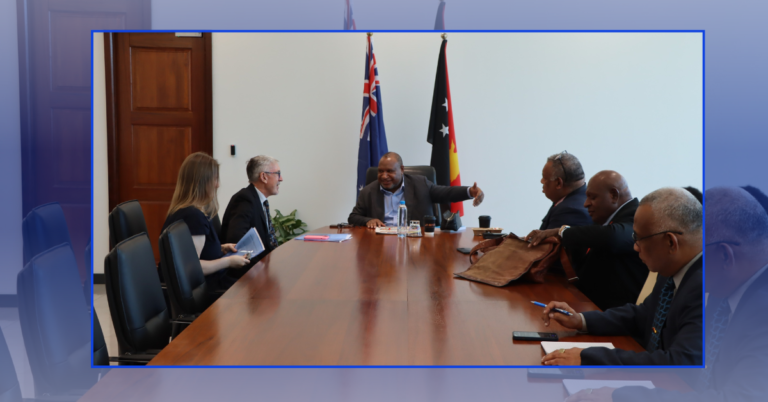
A meeting held between Marape and Australian High Commissioner to Papua New Guinea, Ewen McDonald in Port Moresby focused on the practical work required between the Papua New Guinea Defence Force, the Australian Defence Force and relevant Government Agencies to establish the Recruitment pathway.

“Those who are successful will be enlisted into the Australian Defence Force and will have a pathway to Permanent Residency and Australian Citizenship under the arrangements being developed,” said Marape.

The Pukpuk Treaty was signed between the Prime Ministers in Canberra on 6 October 2025, and legally binded on 7th July 2026. This means Papua New Guinea now has an alliance with Australia. Under the Pukpuk Treaty, Australian Defence Force will have access to Papua New Guinea Military bases.

Following the meeting between Commissioner McDonald, Marape said relevant Agencies from both countries will work on the detailed Recruitment arrangements, including eligibility, selection, training, immigration, permanent residency and citizenship processes.

“Our legal clearance has been completed on the Papua New Guinea side, and work is now progressing to enable qualified Papua New Guineans to be selected and enlisted into the Australian Defence Force,” Prime Minister Marape said.

Marape explained that the recruitment will not be automated, applicants will need to meet the required assessments and satisfy the standards of the Australian Defence Force before they will be recruited.

“Our responsibility as Government is to work with Australia to create the pathway and ensure that Papua New Guineans are properly informed, prepared and given a fair opportunity to compete for recruitment,” said Marape.

The Prime Minister said the Initiative was one of the important practical outcomes being advanced under the Papua New Guinea Australia Mutual Defence Treaty, commonly known as the Pukpuk Treaty.

“Papua New Guineans who are selected will be employed and enlisted into the Australian Defence Force, and those who meet the relevant requirements will be provided with a pathway to become Australian citizens,” said Marape.
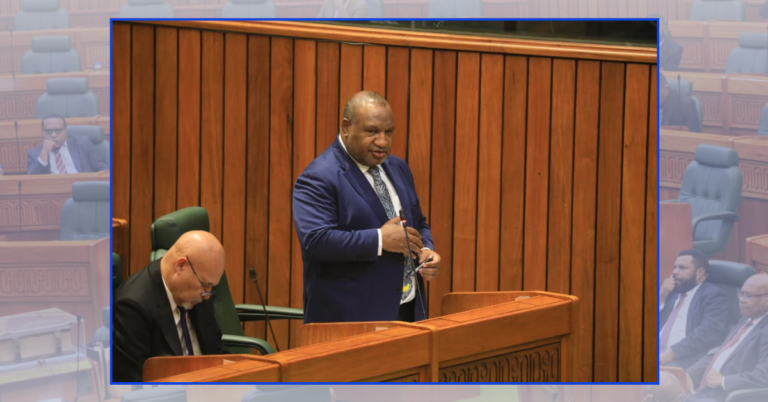

Papua New Guinean Prime Minister James Marape has rejected suggestions that PNG’s reaffirmation of its One China Policy was the result of political pressure or economic coercion.

Marape said the issues between Beijing and Taipei are matters for those directly concerned to resolve peacefully.

“Papua New Guinea does not intend to become entangled in issues that fall outside our jurisdiction or our national interests,” said Marape.

Marape rejected the assertions that Papua New Guinea’s decision resulted from coercion.

His comments come as a response to remarks by Taiwan’s Foreign Minister Lin Chia-lung regarding Papua New Guinea’s decision to close the Taiwan representative office in Port Moresby and the reaffirmation of PNG’s longstanding recognition of the People’s Republic of China.

Marape described the claims as inaccurate and a misunderstanding of Papua New Guinea’s sovereign foreign policy.

“Papua New Guinea is an independent and sovereign nation. Our foreign policy is determined by our national interests and by decisions made through our constitutional processes, not by pressure from any external power,” said Marape.

Marape said the PNG Government has maintained a One China Policy since 1976.

“This has been the consistent position of successive governments for nearly five decades and remains the official policy of the Independent State of Papua New Guinea,” said Marape.

Last Friday, PNG Foreign Minister Justin Tkatchenko announced the immediate cessation of operations and the physical presence of the Chinese Taipei Economic Office in Port Moresby.

The directive to close the Taipei Economic and Cultural Office in Papua New Guinea came 36 years after it was first set up in 1990 as the Trade Mission of the Republic of China (on Taiwan) in Papua New Guinea.

Marape said this is a conscious Government policy decision and reflects Papua New Guinea’s long-established foreign policy and our commitment to international law and the principles of the United Nations Charter.

“We recognize the Government of the People’s Republic of China in Beijing as the sole legitimate Government of China. We also recognize and respect China’s sovereignty and territorial integrity, just as we expect all nations to respect Papua New Guinea’s sovereignty and territorial integrity,” said Marape.

The Prime Minister said Papua New Guinea has no intention of becoming involved in the cross-Strait dispute.

In the statement Tkatchenko released last week, it linked the decisive action to NEC decision No. 144/2026 that the physical presence of the Chinese Taipei office will no longer be recognized or required under the jurisdiction of Papua New Guinea.

Tkatchenko said this decision was communicated to the Chinese Ambassador in Port Moresby, Yang Xianguang, before a formal statement was released on the government decision to close the Taipei Office located in Port Moresby.

“The National Government views this administrative alignment as a necessary step toward deepening state-to-state trust, reinforcing the shared values, and elevating the bilateral relationship between Papua New Guinea and the People’s Republic of China,” said Tkatchenko.

However, Taiwan’s Ministry of Foreign Affairs Spokesperson Hsiao Kuang-wei said the move was made without prior consultation with Taipei, prompting Taiwan to lodge a strong protest and continue engaging with Papua New Guinea through diplomatic channels.

Hsiao added that Taiwan does not accept PNG’s unilateral decision, further elaborating that the representative office would remain open, safeguard Taiwan’s rights and interests, and provide necessary services to Taiwanese citizens.

The statement from Tkatchenko’s Office said Papua New Guinea deeply values its long-standing, strong partnership with China and the Marape-Rosso Government will look forward to exploring new avenues of strategic cooperation, expanded trade, and economic development that will benefit both countries.

Marape concluded that PNG’s position is clear, principled, and unchanged and will continue to uphold the One China Policy while maintaining friendly relations with all countries based on mutual respect, peaceful cooperation, and our shared commitment to international law.


North Queensland Cowboys will deploy a fresh halves partnership in an effort to maintain their National Rugby League finals push, bringing back Jake Clifford to join forces with Tom Dearden.

Clifford spent last week’s defeat against the Dolphins on the bench, but he makes his return as the eighth-placed Cowboys prepare for a crucial Queensland derby against Brisbane.

The Cowboys run the risk of dropping out of the top eight if they suffer a defeat against the Broncos, who secured a victory over ladder-leaders Penrith last weekend.

Saturday’s inclusion of Clifford, recognized as a more traditional kicking half, shifts Jaxon Purdue into the centres while placing Zac Laybutt among the interchange reserves.

During their run to the 2024 finals series, North Queensland enjoyed memorable success by introducing Clifford into their halves rotation, eventually advancing all the way to a semi-final clash against Cronulla that year.

Todd Payten’s squad holds a 6-4 record when Dearden and Clifford start together in the halves this season, having last utilized the pairing back in round 10.

Co-captain Dearden suffered a severe ankle injury during that fixture against Parramatta and only made his comeback last week.

Brisbane hooker Billy Walters has been named on the interchange bench, marking a potential first National Rugby League appearance since he sustained an anterior cruciate ligament injury last September.

Melbourne’s pursuit of a sixteenth consecutive National Rugby League finals appearance received a significant lift with star halfback Jahrome Hughes returning from a minor hamstring strain.

The former Dally M medalist pairs up with Tyran Wishart to face South Sydney on Friday, as the eleventh-placed Storm realistically require five victories from their last six matches to secure a top-eight berth.

Melbourne have brought Moses Leo into the backline to fill the vacancy left by Will Warbrick, who is sidelined for the remainder of the season due to an achilles tendon injury.

Lachlan Hubner steps in to replace injured Souths captain Cameron Murray at lock, with the New South Wales representative facing up to four weeks on the sidelines during this critical run toward the finals.

Tallis Duncan is also unavailable for the next two to three weeks due to a hamstring problem, opening up a center position for Latrell Siegwalt.

Matt Dufty retains his position at fullback for the Rabbitohs, who have named Jye Gray among the interchange reserves for the third straight week.

Lehi Hopoate of Manly will wear the fullback jersey against Cronulla as Tom Trbojevic commences another period on the sidelines with a hamstring issue.

Sydney Roosters captain James Tedesco returns following the head knock he sustained playing for New South Wales in the State of Origin decider, though teammate Lindsay Collins will sit out the match against Newcastle as he continues his recovery from a concussion.


Source: Australian Associated Press

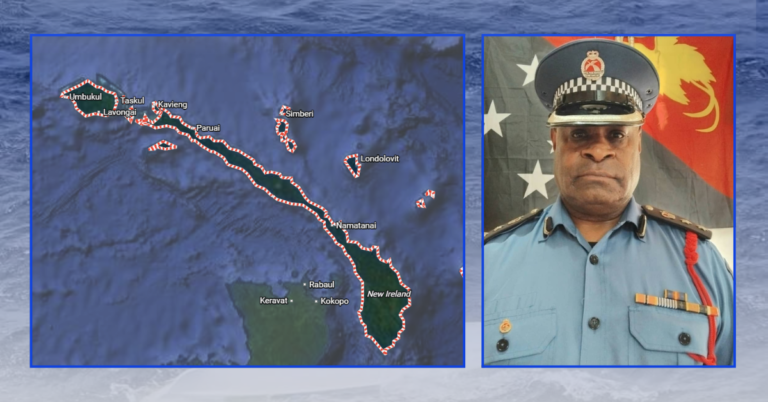
New Ireland Police Commander, Superintendent Albert Beli stated that police observed that many ‘new faces’ are entering the island province, and they are concerned these movements will affect police work in the lead up to the elections.

Beli said tribal violence, evictions in Port Moresby and economic challenges are some push factors in the movement of people into New Ireland.

“New Ireland is no longer like it was five years ago in 2022. Things have changed. We have seen evictions in the nation’s capital and other parts of Papua New Guinea,” said Beli.

Police in the province are gearing up towards the Security Operations for the 2027 National Elections. New Ireland Province has three seats in the National Parliament. Two are electoral seats which are Namatanai and Kavieng Districts and one regional seat.

In a research paper published by Wilson Kumne, a Senior Research Officer with the Economic Policy Research Program at the PNG National Research Institute in 2024, the population growth of New Ireland was predicted to have a 19 per cent increase in total population.

However, that report does not capture the eligible voting population and that is the concern raised by the police commander in New Ireland.

“People who cannot make it in Port Moresby or elsewhere due to evictions are trying to return to their localities because of various issues, including tribal fights, economic challenges, and other personal reasons,” said Beli.

Beli says police require updated data from the Electoral Commission in the province on the total number of eligible voters in New Ireland to help with planning for the 2027 National General Elections.

“Yes, for the New Ireland Police Command, based on my observations in Kavieng and an assessment across the four corners of the region, comprising 58 small islands and mainland New Ireland, I think in terms of confidence and assurance to deliver this coming 2027 National General Election, we are ready,” said Beli.

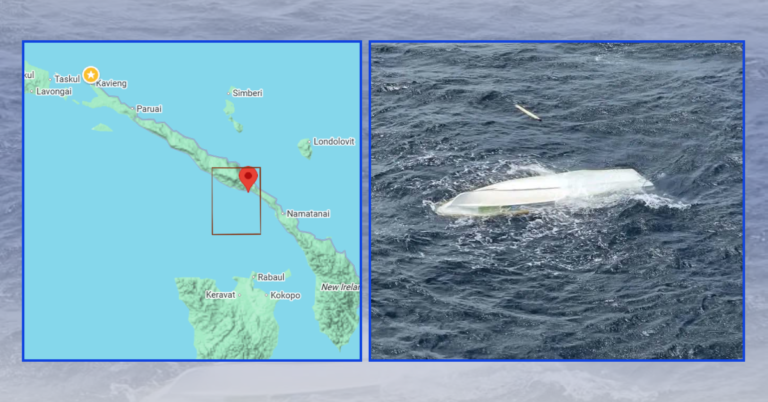
The search and rescue mission in East New Britain has yielded a crucial lead with the deployment of a Manalos Aviation helicopter from Lae.

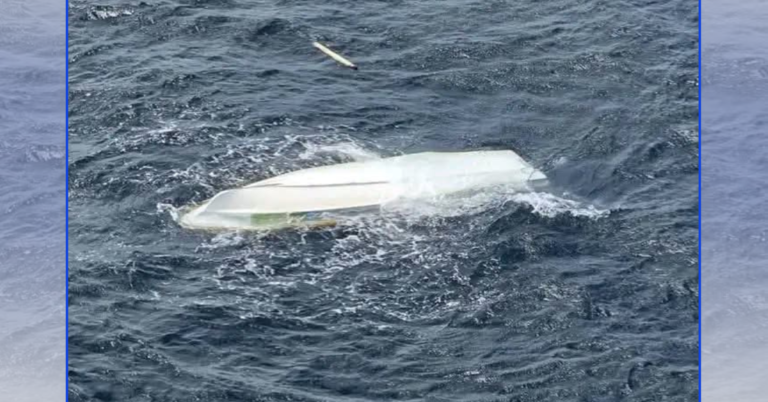
Operating with two spotters aboard, the helicopter crew successfully located a capsized banana boat floating toward Kolube Kona off the coast of Namatanai in the New Ireland Province just after 11:00 AM yesterday. Despite this discovery, there remains no sign of the missing travelers.

Incident Timeline and Initial Response

East New Britain Disaster Committee Chairman Levi Mano met with families of the missing to provide an update on the search efforts. According to Mano, authorities learned on Saturday at approximately 4:45 PM that the victims encountered disaster while traveling from Pidgeon Island back to Pangpang Paradise Island.

A statement issued by the East New Britain Provincial Administration confirmed that an immediate local search was initiated by a Ward Member in the Duke of York Islands. However, those initial efforts were severely hampered by rough seas and strong winds, low visibility and a lack of initial sightings

The Survivors’ Ordeal

The two boat skippers are currently the only known survivors of the incident. Authorities reported that the men managed to swim an incredible 16 kilometers from the site of the capsized vessel before being rescued at Baii Village in the Kombiu LLG of Rabaul District.

Locals reported that both men used a container and a pallet to keep afloat for at least five hours.

The provincial government’s statement confirmed that the survivors swam ashore to Baii Village to raise the alarm. At 5:00 AM on Sunday, July 19, 2026, police retrieved the men and transported them to Kokopo Police Station for interviews to aid the ongoing response. Both skippers remain in police custody, assisting authorities with information to support the search operation.

Shift from Rescue to Recovery

East New Britain Police Commander, Chief Superintendent Amanda Kates, has held multiple briefings with local families at the Kokopo Wharf to share updates.

Kates delivered a somber assessment to the families, stating that the operation has transitioned from a rescue mission to a recovery mission.

“What that means is we are looking for deceased, and I want to put that very plainly that it has been two days and it is looking grim,” said Kates.

Initial marine searches launched Sunday morning by disaster and police authorities, utilizing two police boats, the PPC Manning and an RPNGC 90-horsepower vessel, had to be called off due to hazardous conditions, including very strong winds and severe sea swells.

Despite these setbacks, Chief Superintendent Kates emphasized a unified multi-agency front from the National Disaster Centre, National Maritime Safety Authority, RPNGC and local corporate partners

The search operation continues today.

THE search and rescue operation for the East New Britain boat tragedy has shifted into an aerial recovery mission after one of the capsized boats was spotted drifting off the coast of New Ireland Province.

Preparations are underway to retrieve the boat today, to help gather information and assist ongoing investigations. On Monday (July 20), a National Government helicopter deployed through the National Disaster Office and the National Maritime Safety Authority carried out aerial sweeps. The search covered the west coast of New Ireland, the north and south coasts of East and West New Britain, and parts of Pomio, though searchers did not spot any human bodies.

Earlier marine searches involving seven parties, including two police boats and the Governor’s team, were called off due to rough seas. Two survivors, identified as the skippers, previously went ashore at Baii Village on Saturday night and were picked up by police.

The East New Britain Provincial Administration released a detailed update on the incident, which happened on the afternoon of Saturday, July 18, 2026, around 3:00 pm outside Pidgeon Island.

The tragedy involved four East New Britain Provincial Health Authority staff and their families. The updated manifest confirms a total of 27 people were on board the two boats returning from Pangpang Island in the Duke of York Islands to Kokopo, including 14 adults and 11 children.

The families and individuals involved include the households of Manuel Sialis, Raymond Maramun, Clive Peni, and Victor Touran, alongside Dotty Eron and James Noah.

The Provincial Disaster Centre has urged the public not to share unconfirmed information or social media speculation, asking communities to rely only on official updates.

Travelers are reminded to check weather conditions, avoid alcohol while operating boats, wear life jackets, share travel plans, and carry reliable communication devices. The public is also advised to keep children safe and avoid trees and powerlines during strong winds linked to El Niño weather patterns.

The administration acknowledged the efforts of all agencies, community leaders, and volunteers involved, stating that thoughts remain with the affected families.


The Department of Lands and Physical Planning or DLPP has concluded its Capacity Audit Program in Madang Province, setting a benchmark for provincial land governance and service delivery across the nation.

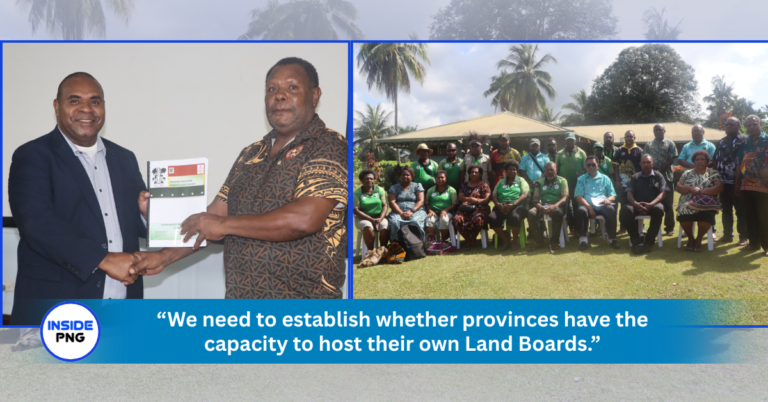
Led by Secretary Benjamin Samson, a high-level delegation from the department carried out the audit from June 28 to July 3, 2026. The program forms part of a broader departmental initiative to decentralize key land functions, including Land Board and Physical Planning Board powers, directly to the provinces, assessing whether local administrations have the necessary resources to manage increased responsibilities.

During the program, the delegation met with Madang Provincial Lands Officers to evaluate staffing structures, operational systems, and service delivery capabilities. These consultations allowed officials to identify local operational needs and discuss strategies to boost performance, governance, and compliance with national standards.

Upon completing the assessment, Secretary Samson formally presented the Capacity Audit Report to the Madang Provincial Administration. The report details the audit team’s findings, practical recommendations, and a proposed divisional structure designed to reinforce the Provincial Lands Division ahead of future decentralizations.

Reflecting on the milestone, Secretary Benjamin Samson said the Capacity Audit forms part of the Department’s ongoing commitment to building a capable and effective workforce that can deliver quality land services across the country.

“We need to establish whether provinces have the capacity to host their own Land Boards and Physical Planning Boards. This is essential to ensure land matters are managed locally, rather than relying on the National Lands Department,” Samson said.

Madang joins East Sepik, West New Britain, and New Ireland as the fourth province to undergo the audit program. Looking ahead, the DLPP stated that it will maintain a strong partnership with provincial governments to roll out the audit’s recommendations and continuously improve the efficiency of local lands offices.


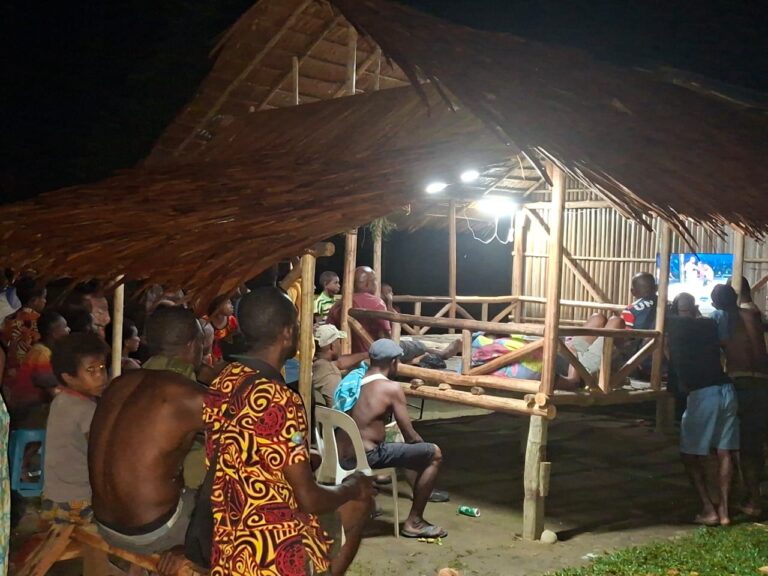
Hundreds of residents in some of Papua New Guinea’s most remote communities are experiencing television or TV for the very first time, courtesy of entrepreneur, fashion pioneer, and philanthropist Natasha Tamanabae.

The project has delivered Digi TV services to Ioma Station, Datama, Iaudari in Ward 7, and Eraga and Dabo Villages in Ward 6 within the Tamata Local Level Government (LLG) of Sohe District. For these areas, which have long lived without access to an electricity grid or telecommunications network, the arrival of television is a transformative lifeline that directly benefits local families.

Rather than just offering entertainment, the initiative connects isolated villages to the rest of the country. By bringing television to these areas, the project directly benefits local families by providing children and adults with valuable educational programming to support learning where resources are scarce. It also keeps families informed with national and international news, public awareness campaigns, and vital emergency information, while connecting remote households to major cultural and sporting moments that unite the country, such as rugby league and the FIFA World Cup.

“This is about ensuring that our people are not left behind,” Tamanabae said.

“Every Papua New Guinean deserves access to information, education and the opportunity to stay connected with our nation and the wider world. This project is about creating hope, expanding opportunities and reminding our rural communities that they matter.”

Building on a legacy of community service inspired by her family and the renowned Tamanabae brothers, Ms Tamanabae focused the project on empowering everyday people and lifting the isolation faced by remote villages.

Community members have enthusiastically welcomed the rollout, praising it as a vital step that allows families to follow national events and participate in the cultural moments that unite the country.

“This milestone is not simply about installing television,” Tamanabae added.

“It is about bringing information where there was isolation, education where there were barriers, and opportunity where there were few resources. Every child deserves the chance to learn. Every family deserves to stay informed. Every community deserves to feel connected.”

Looking ahead, Ms Tamanabae hopes this project will spur further investment in infrastructure, communications, and essential services for remote regions across the country, proving that grassroots commitment can drive lasting change.

“This is only the beginning,” stated Tamanabae.

“Our vision is to see stronger infrastructure, better education, improved healthcare, greater connectivity and sustainable economic opportunities for every rural community. Development should reach every village, regardless of how remote it may be.”


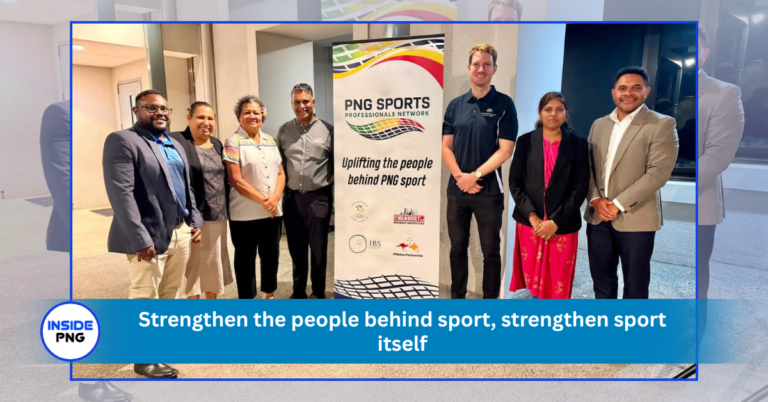
A new national platform dedicated to connecting, developing, and empowering the people behind sports in Papua New Guinea has been launched in Port Moresby.

Known as the Papua New Guinea Sports Professional Network (PNGSPN), it was founded by International Olympic Committee Member Auvita Rapilla and Alex Davani.

The network is built around four guiding principles: Connection, Capability, Knowledge Sharing, and Enablement. Its vision is to be Papua New Guinea’s most connected and influential platform for the people shaping the future of sport.

PNGSPN is designed to bring together sports administrators, coaches, officials, executives, educators, sports scientists, medical professionals, volunteers, and other practitioners who contribute to Papua New Guinea’s sporting system.

Speaking at the launch at the Australian High Commission, PNGSPN Chair Auvita Rapilla stated that the Network had been created to strengthen the people behind sport and ensure they were better connected to seize the opportunities ahead.

“With the Brisbane 2032 Olympics, PNG NRL franchise, and many regional and international opportunities ahead, this is the right time to invest not only in our athletes, but also in the people who lead, manage and support sport,” said Rapilla.

Papua New Guinea Olympic Committee President Emma Waiwai, who welcomed the launch, stated that the Network complemented the PNGOC’s long-standing commitment to developing people across the sporting movement.

“Strong teams are built on strong organizations, and strong organizations are built by capable people. The PNG Sports Professionals Network provides an important platform for sports administrators and professionals to connect, share knowledge, learn from one another and continue building their capability across the sporting system,” said Waiwai.

PNGSPN has been created to foster greater connection, knowledge sharing, leadership, and collaboration across the sporting sector at a time when Papua New Guinea is entering what many believe will be a defining decade for sport.

It focuses on connecting and uplifting the administrators, coaches, officials, managers, educators, sports science and medical professionals, volunteers, and leaders whose work makes sporting success possible.

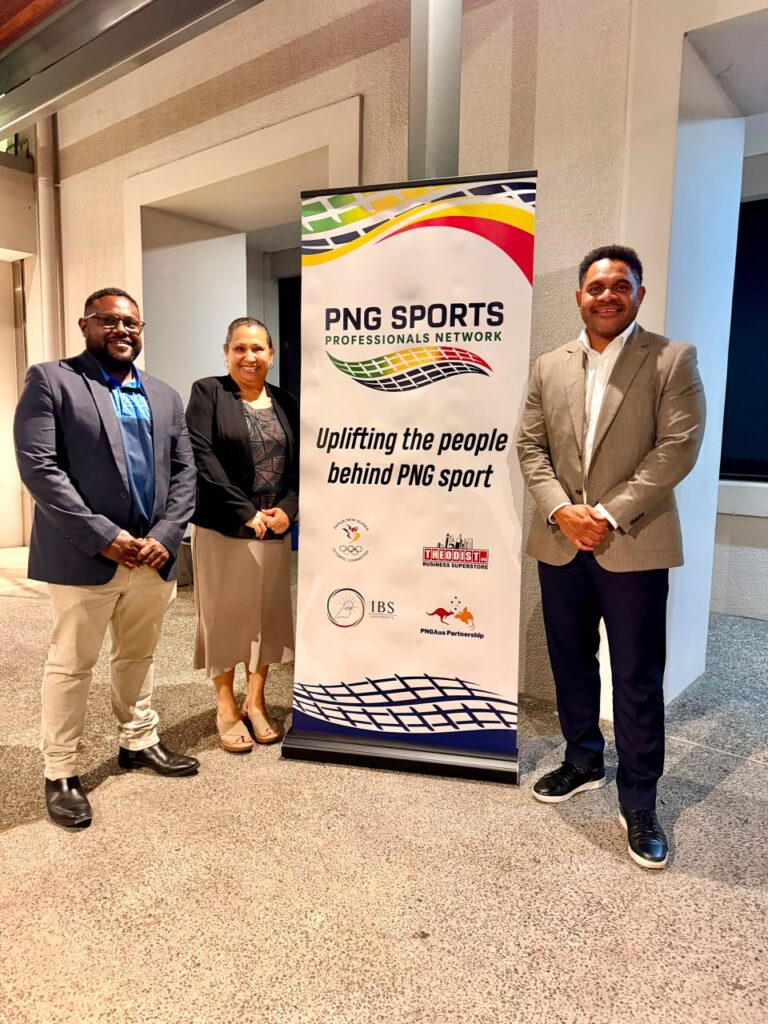
PNG Sports Professionals Network Launch Team
The Steering Committee made up of Auvita Rapilla, Alex Davani and Milton Kisapai.

“When we strengthen the people behind sport, we strengthen sport itself,” said Rapilla.

She acknowledged the contribution of the PNGSPN Steering Committee and thanked the organizations that had supported the establishment of the new network.

“I would like to sincerely thank my fellow Steering Committee members, Alex Davani and Milton Kisapai, whose commitment, strategic thinking and hard work have helped turn this vision into reality,” said Rapilla.

Rapilla also expressed her sincere appreciation to the founding partners—the Papua New Guinea Olympic Committee, IBS University, the Australian High Commission, and Theodist.

Realizing these opportunities will require collaboration across the entire sporting sector, as no single organization can do this alone. By bringing people together across sports, the Network will strengthen the country’s sporting system and ultimately contribute to stronger performances for Team PNG and for sport throughout Papua New Guinea.

The Network will initially bring sports professionals together through three core engagement streams: Leadership Conversations, Connect & Share knowledge sessions, and Networking Events, providing opportunities to build relationships, exchange practical experience, and collaborate across Papua New Guinea’s sporting sector. PNGSPN also announced its founding agenda, which includes a national leadership conversation on How Sport Can Shape the Next 50 Years of Papua New Guinea, an industry forum on The Business of Sport in Papua New Guinea, and the inaugural PNG Sports Forum, planned for 2027.

The Network is open to those working in and around sport in Papua New Guinea, and interested individuals will have opportunities to attend events, contribute ideas, share knowledge, mentor others, and help shape the future direction of the Network.

The PNG Sports Professionals Network website is now live and will serve as the Network’s central hub for news, events, membership information, and future activities.


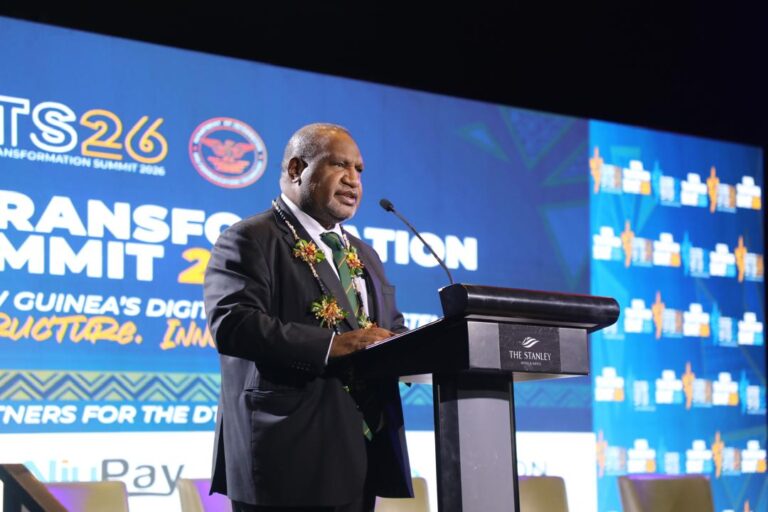
The Papua New Guinean government is hosting the Digital Transformation Summit and Pacific Cyber Week in Port Moresby with representation from Pacific island countries, including Australia.

The summit will cover discussions on cyber security, artificial intelligence, digital public infrastructure, online safety and cybercrime and will culminate with the Pacific ICT ministers conference.

PNG’s newly appointed ICT Minister, Robert Naguri stated that trusted, inclusive and resilient digital development is critical to Papua New Guinea’s digital future.

“As we accelerate technologies such as artificial intelligence, trust must be at the center of our approach,” said Naguri.

PNG Prime Minister, James Marape stated in his opening remarks that Pacific countries should adopt a united approach to digital transformation, artificial intelligence (AI) and cyber security. Marape said the region must work together to ensure technology drives development while protecting national and regional security.

“Papua New Guinea’s leadership in hosting these events demonstrates the country’s central role in shaping the Pacific’s digital future,” said Marape.

Marape said the vastness of the Pacific region, though separated by thousands of kilometers of ocean, can now be bridged through ICT infrastructure, digital platforms and communication highways that connect the Pacific in real time.

Australian High Commissioner to PNG, Ewen McDonald said the Pacific Cyber Week and the Digital Transformation Summit are about turning ambition into action.

“By bringing together governments, industry and partners, these events will help our Blue Pacific harness digital technologies safely and securely, in ways that reflect our Pacific priorities and values,” said McDonald.

The Pukpuk Digital Connectivity Initiative is a key area in the discussions this week. It is anticipated to expand Papua New Guinea’s international cable connectivity, alongside the PNG Telecommunications Blueprint, an independent assessment designed to inform future investment and reform priorities.

The Digital Transformation Summit and Pacific Cyber Week demonstrate Pacific leadership, the strength of the PNG–Australian partnership, and the value of regional cooperation in building a secure, resilient and inclusive digital future for the Blue Pacific.

Australian Ambassador for Cyber Affairs and Critical Technology, Jessica Hunter said both meetings provide an important opportunity to discuss current and emerging ICT challenges and opportunities in the region.

“Australia remains committed to working with Pacific partners to strengthen cyber resilience, support trusted technology and ensure our region can safely harness the opportunities presented by critical technologies, including artificial intelligence,” Hunter said.

Those present at the opening of the Digital Summit include Prime Minister James Marape, Minister for Information and Communications Technology Robert Naguri, Australian High Commissioner to Papua New Guinea and Special Envoy for the Pacific and Regional Affairs Ewen McDonald, and Australian Ambassador for Cyber Affairs and Critical Technology Jessica Hunter.

PM Marape, when reflecting on Papua New Guinea’s digital journey, said more than a decade ago, the government was already exploring digital initiatives.

“Looking back, it is remarkable how quickly this landscape has changed. ICT is no longer a side conversation within government. It is becoming central to how we deliver services, grow our economy, strengthen governance and protect our national interests,” said Marape.

He said today artificial intelligence is transforming almost every aspect of ICT and is becoming the dominant global conversation.

Marape said the issue had featured prominently during his participation at the World Economic Forum and the World Governments Summit in Dubai, where discussions centered on the rapid growth of AI and digital technologies.


Pin It